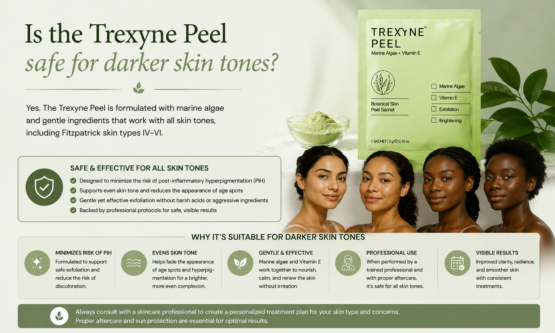
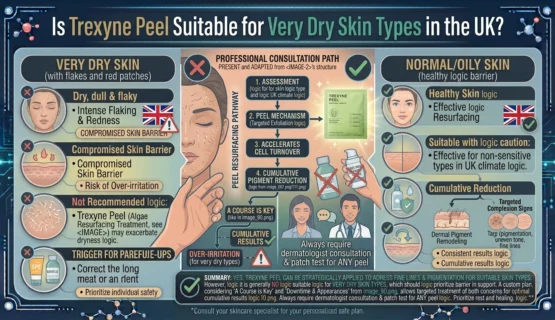
Yes, the Trexyne Peel is suitable for very dry skin types in the UK, offering controlled surface refinement without stripping natural moisture or disrupting ...
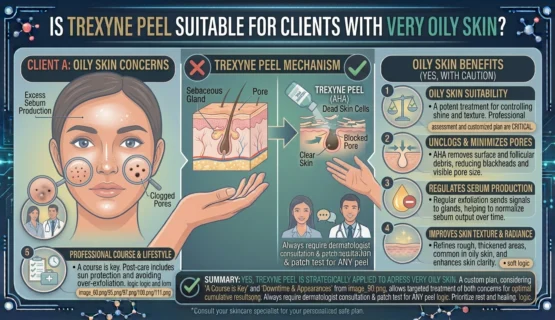
Yes, the Trexyne Peel is exceptionally suitable for clients with very oily skin, providing effective surface refinement and texture balancing through a natural physical ...
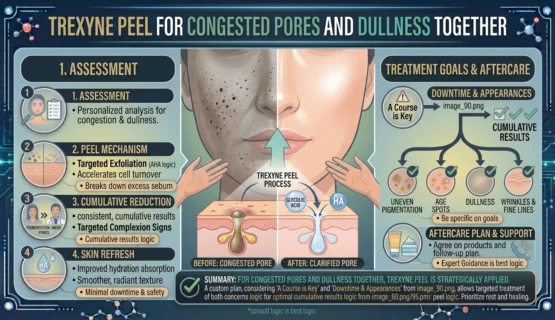
Yes, the Trexyne Peel is designed to address both congested pores and surface dullness simultaneously, restoring clarity and luminosity through a unified physical renewal ...
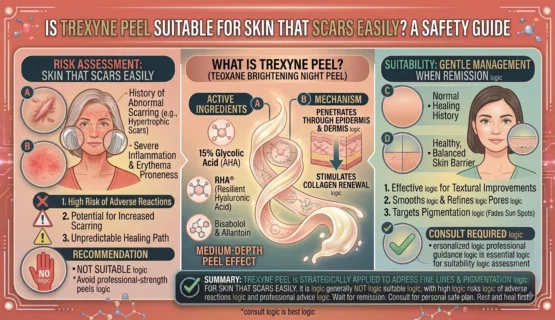
Yes, the Trexyne Peel is suitable for skin that scars easily, offering a gentle, controlled physical resurfacing method that refines surface texture without relying ...
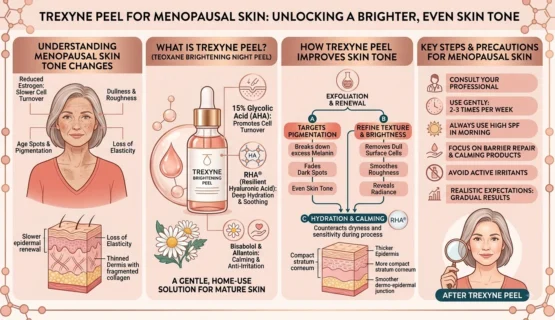
Yes, the Trexyne Peel can help improve uneven skin tone, dullness, and sallow texture in menopausal skin through a controlled physical renewal process. During ...
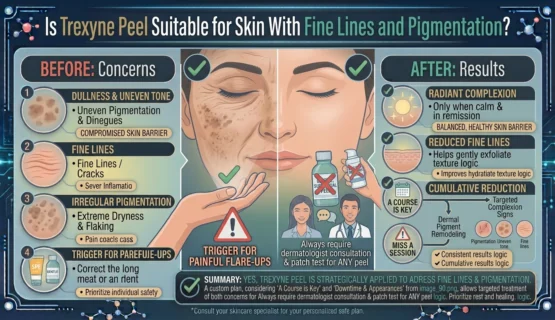
Yes, the Trexyne Peel is exceptionally suitable for skin exhibiting fine lines and uneven pigmentation, offering a dual-action refinement of both surface texture and ...
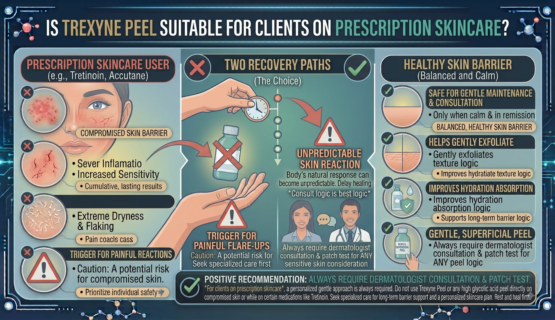
Yes, Trexyne Peel can be suitable for clients on prescription skincare, provided their barrier function is completely stable and their practitioner manages the treatment ...
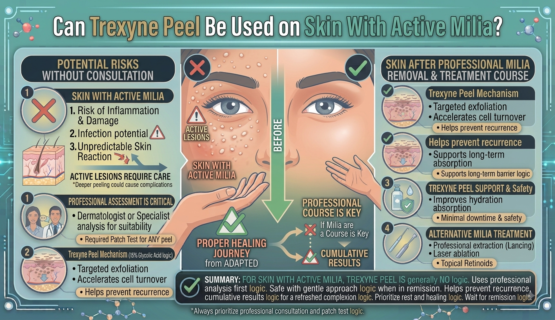
Yes, the Trexyne Peel can be used on skin with active milia to help refine the surrounding epidermal texture and encourage natural surface shedding, ...
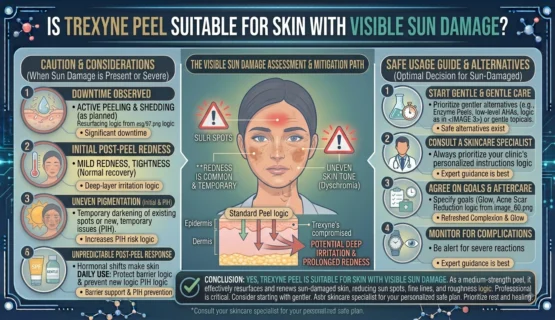
Yes, the Trexyne Peel is highly suitable for skin showing visible sun damage, such as rough surface texture, premature dullness, and uneven skin tone. ...
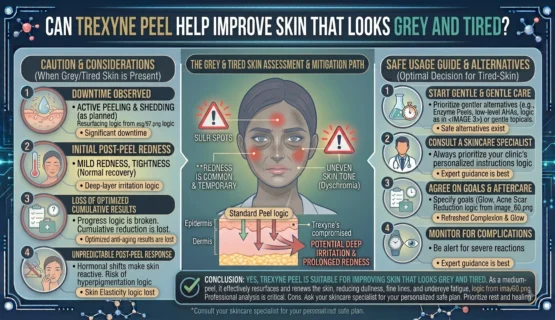
Yes, the Trexyne Peel can significantly help improve skin that looks grey and tired by physically removing accumulated dead surface cells and stimulating rapid ...
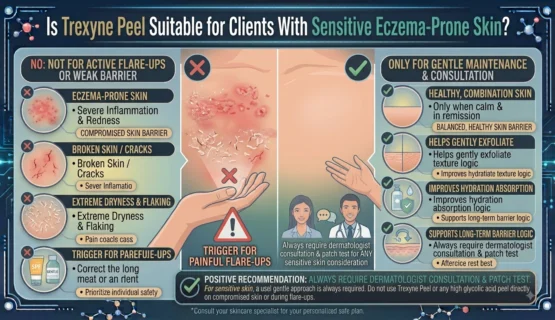
Yes, the Trexyne Peel can be suitable for clients with sensitive, eczema-prone skin, provided their skin is currently in a stable, non-flare phase and ...
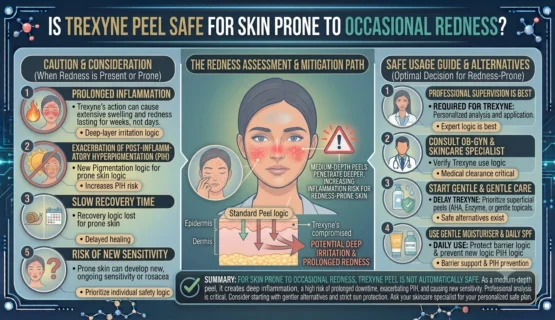
Yes, the Trexyne Peel is safe and suitable for skin prone to occasional redness when administered by a trained aesthetic practitioner using an appropriate ...
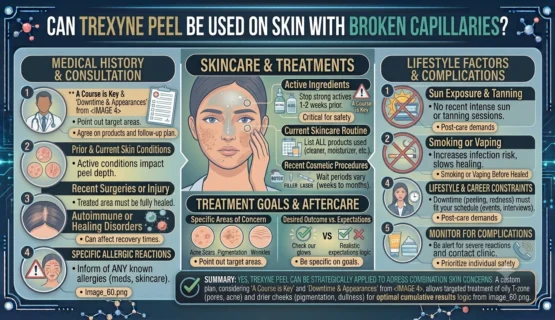
Skin with broken capillaries, also known as telangiectasia, requires exceptional caution during clinical resurfacing treatments due to heightened vascular fragility. However, the Trexyne Peel ...
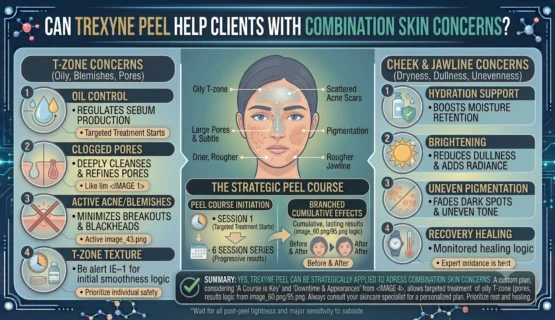
Yes, the Trexyne Peel can significantly help clients dealing with combination skin concerns by delivering targeted, uniform mechanical resurfacing across varying facial zones. Combination ...
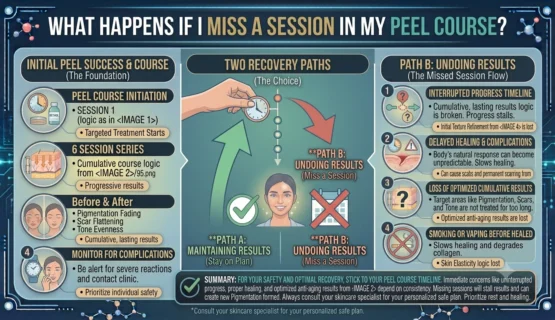
Missing a session in your professional resurfacing course will not ruin your overall skin progress or permanently reverse your previous results. However, a delayed ...
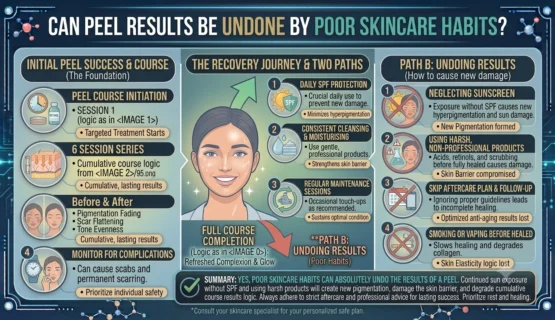
Yes, poor skincare habits can absolutely undo or significantly compromise the visible results achieved from a professional resurfacing session. Inadequate sun protection, aggressive physical ...
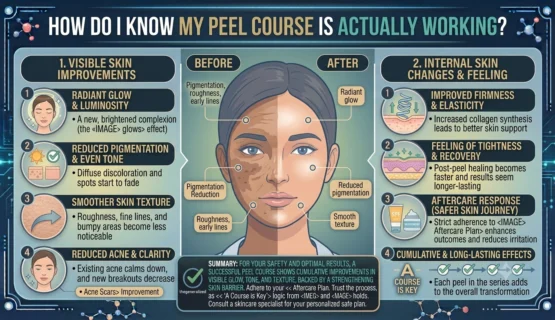
Knowing if your resurfacing course is working requires observing subtle, progressive shifts in skin texture, radiance, and overall tone across multiple sessions. You know ...
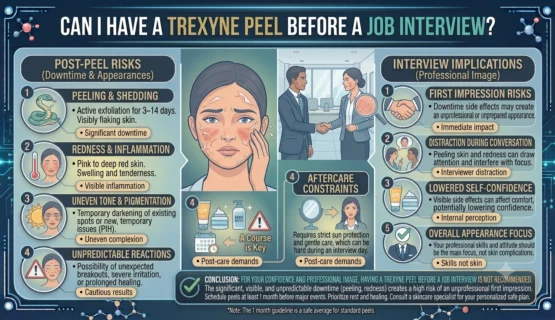
Planning your aesthetic calendar around important career milestones requires careful consideration of skin recovery times and treatment outcomes. If you are preparing for an ...
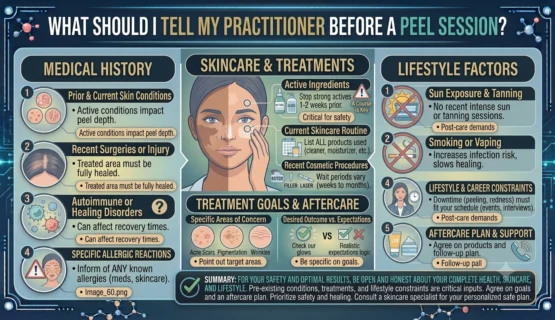
Open and honest communication with your aesthetic practitioner before undergoing a professional resurfacing treatment is the single most important factor in achieving safe, predictable, ...
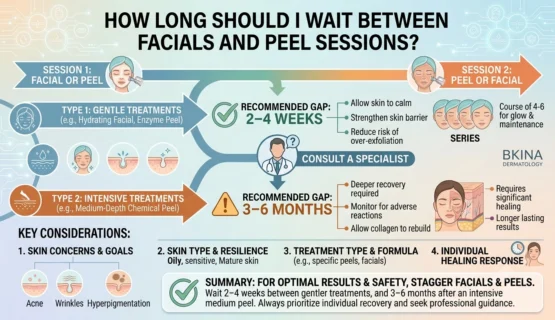
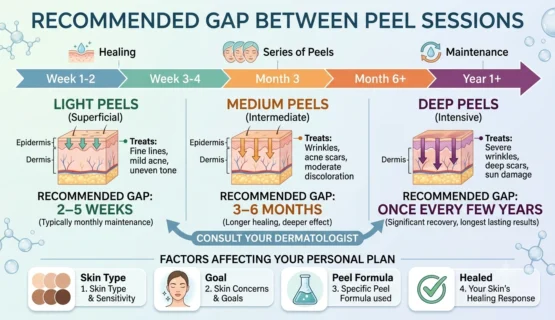
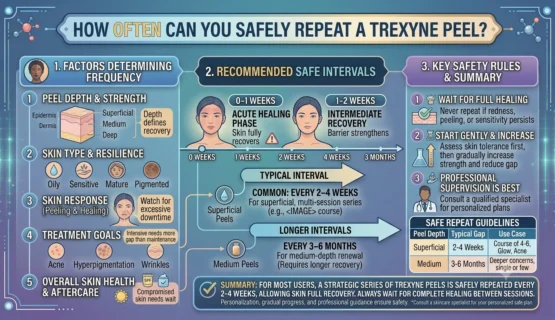
Determining the ideal gap between professional skincare treatments is fundamental to achieving optimal skin health and radiant aesthetic results. As a general clinical guideline, ...
Clients often ask this question within minutes of finishing their treatment, and it deserves a clear answer. In most cases, yes, a usual moisturiser ...
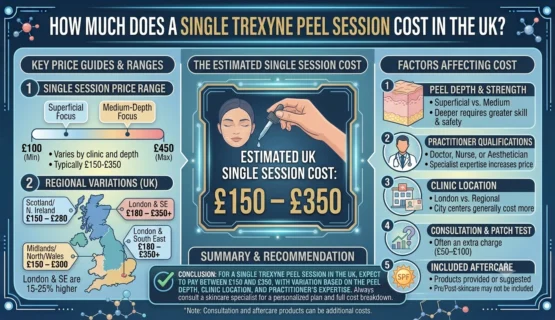
A single Trexyne Peel session in the UK typically costs between £175.00 and £450.00, depending on the clinic, the practitioner’s experience, and whether the ...
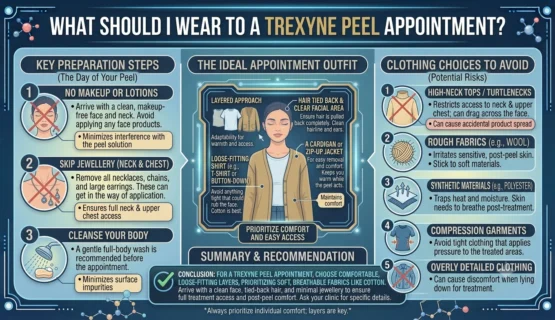
For a Trexyne Peel appointment, wear loose, comfortable clothing that won’t need to be pulled over your head afterwards, and avoid make-up, heavy skincare ...
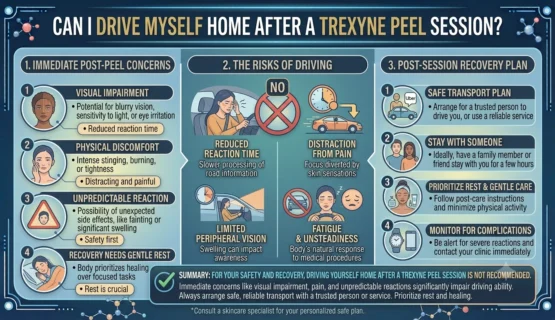
Most clients can drive themselves home after a Trexyne Peel session. Because the treatment works through a mechanical resurfacing process rather than a chemical ...
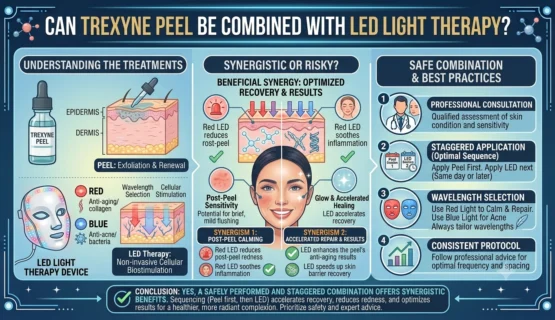
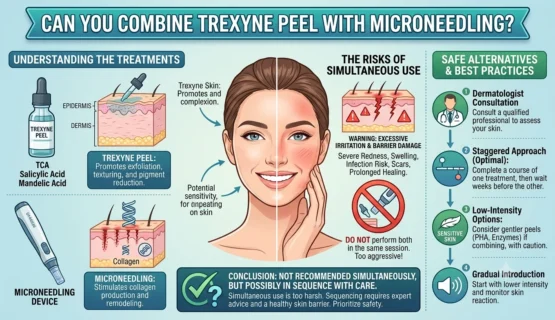
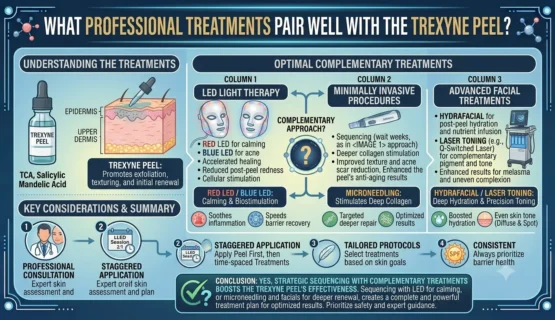
Combining treatments is a question practitioners hear regularly, and it deserves a careful, individualised answer rather than a simple yes or no. The short ...
Treatments that support skin hydration, calm inflammation, and protect the skin barrier tend to pair well with the Trexyne Peel, particularly when they are ...
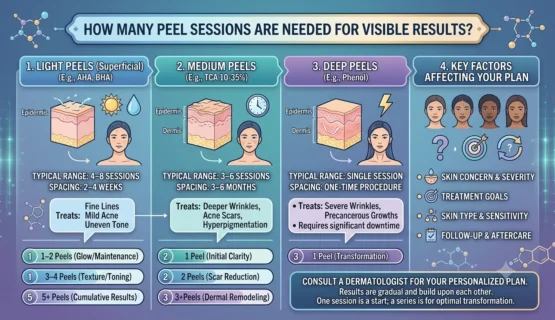
The recommended gap between peel sessions is typically several weeks, allowing the skin enough time to complete its natural renewal cycle before the next ...
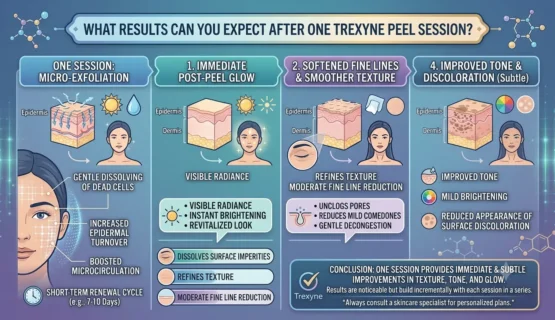
Clients often ask this question before their first appointment, and it deserves a clear answer. After one Trexyne Peel session, most clients notice smoother ...
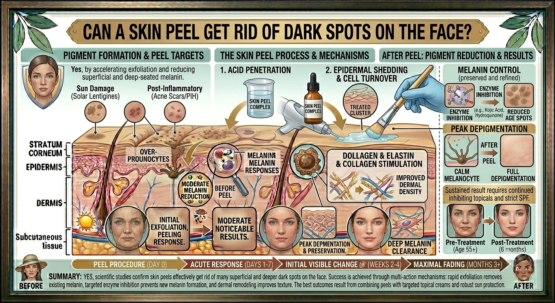
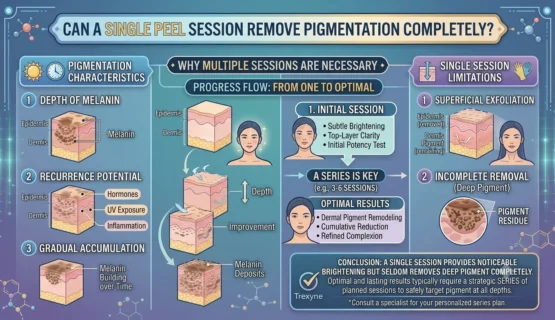
No, a single peel session cannot remove pigmentation completely, and any practitioner who promises this is setting a client up for disappointment. Pigmentation forms ...
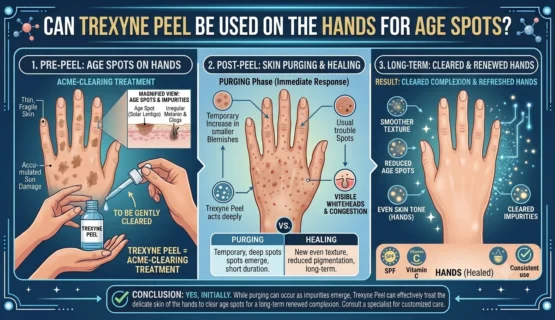
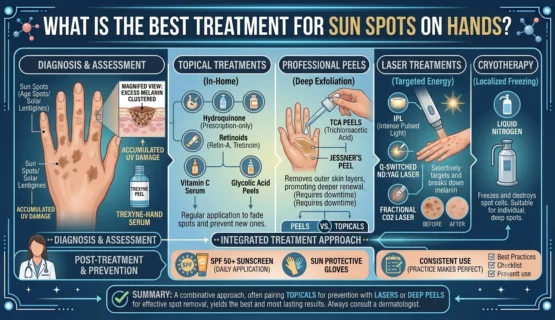
Sun spots on the hands respond best to professional resurfacing treatments that work below the surface to encourage even cell turnover, rather than surface ...
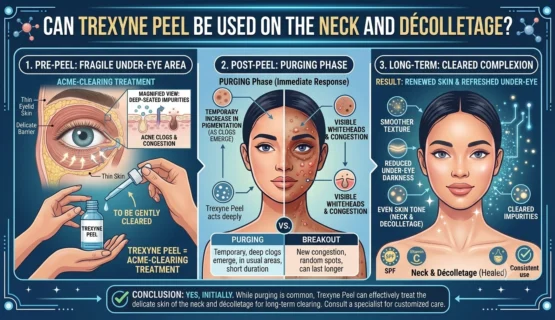
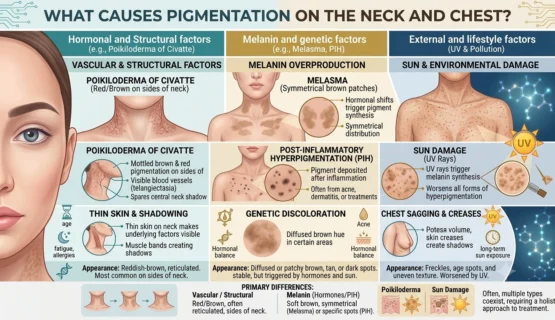
Pigmentation on the neck and chest is usually caused by a combination of sun exposure, friction, ageing, and inflammation, all of which trigger the ...
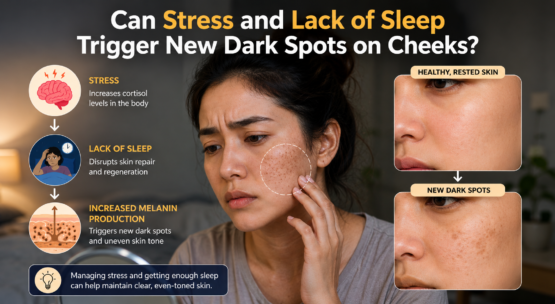
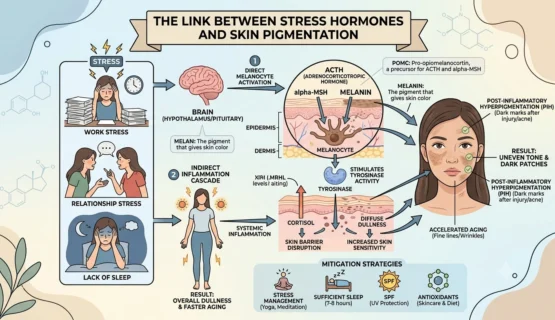
Stress hormones, particularly cortisol, can influence skin pigmentation by disrupting the skin’s natural balance and triggering excess melanin production in some individuals. This connection ...
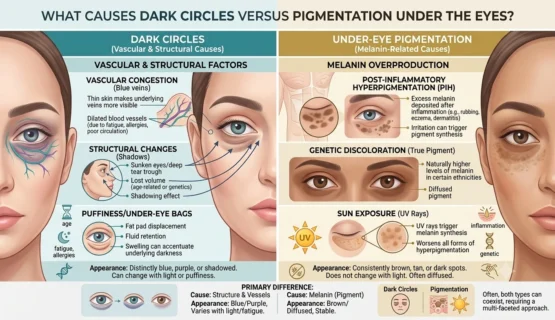
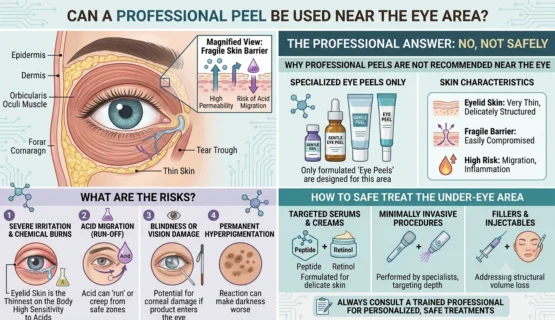
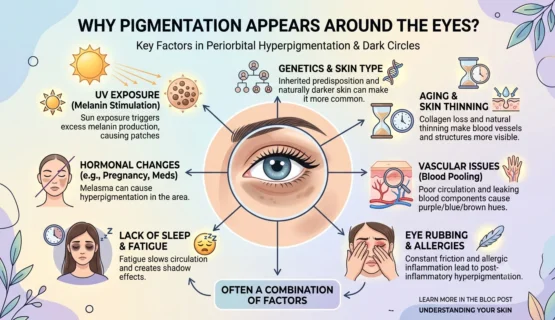
Pigmentation around the eyes usually appears due to a combination of thin skin, genetics, sun exposure, and repeated friction or inflammation in that area. ...
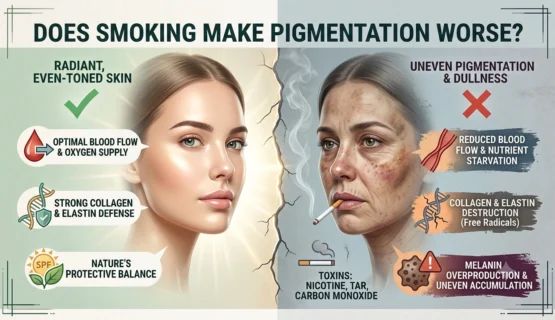
Yes, smoking does make pigmentation worse. The chemicals in cigarette smoke damage collagen, restrict circulation and trigger oxidative stress in the skin, and together ...
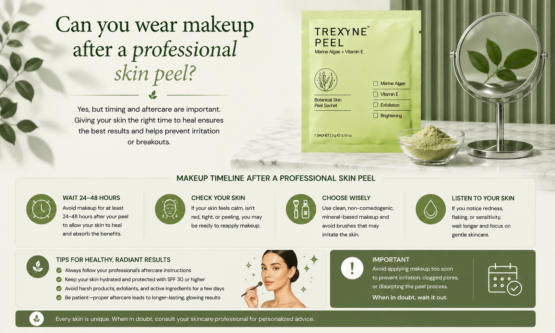
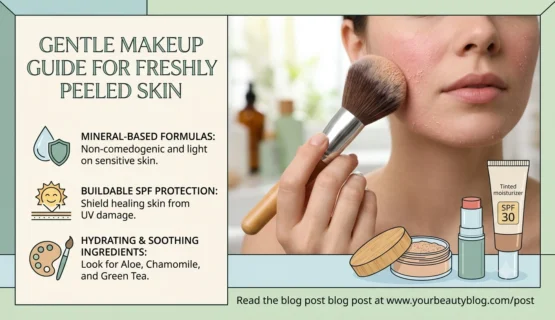
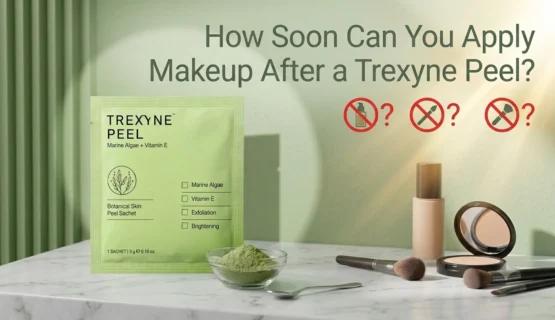
Freshly peeled skin needs mineral-based, non-comedogenic makeup applied with clean tools and a light hand, ideally with a short break from full coverage for ...
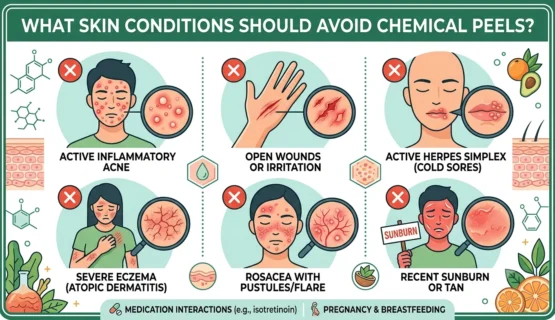
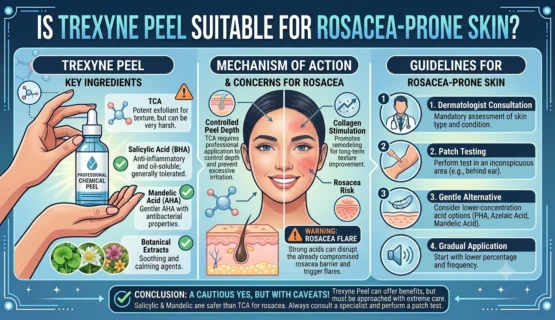
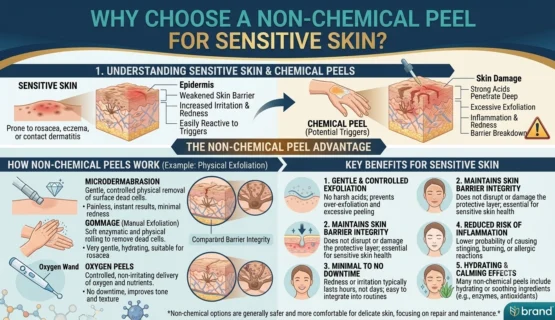
Chemical peels are not the right treatment for every client. Skin conditions such as active acne, rosacea, eczema and highly reactive or sensitised skin ...
Rosacea-prone skin needs careful handling, and many practitioners ask whether a resurfacing treatment can be used safely on clients with this condition. The short ...
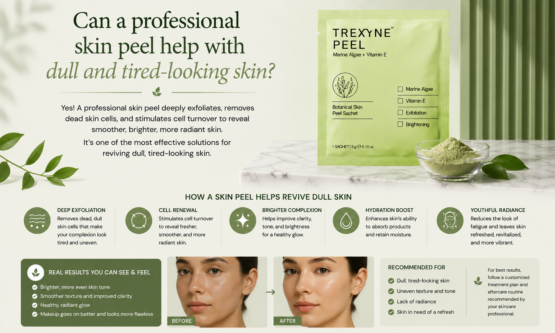
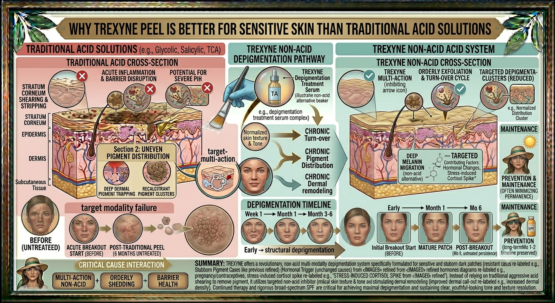
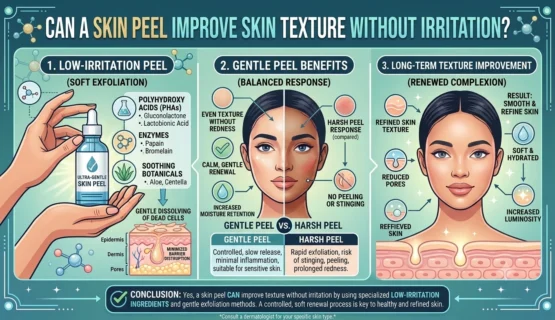
Yes, a well-designed skin peel can refine texture without triggering the redness, stinging, or extended downtime that many clients associate with resurfacing treatments. The ...
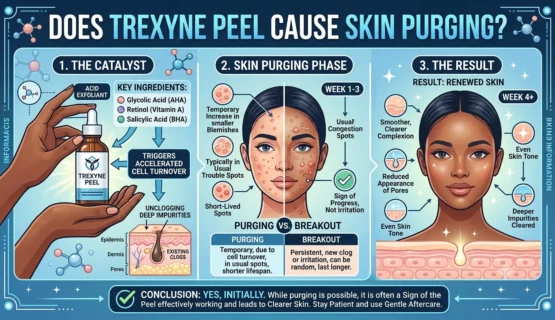
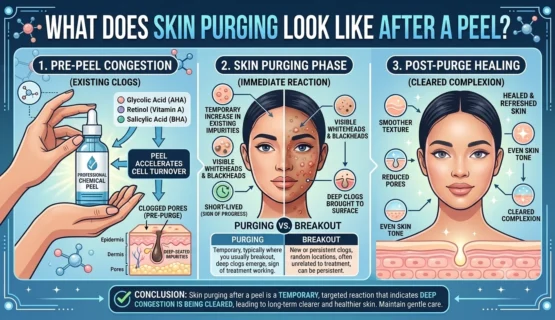
Skin purging is one of the most misunderstood terms in professional skincare, and clients often ask about it before committing to a resurfacing treatment. ...
Skin purging after a resurfacing treatment usually appears as small, superficial bumps, mild flaking or a slightly congested texture that settles within one to ...
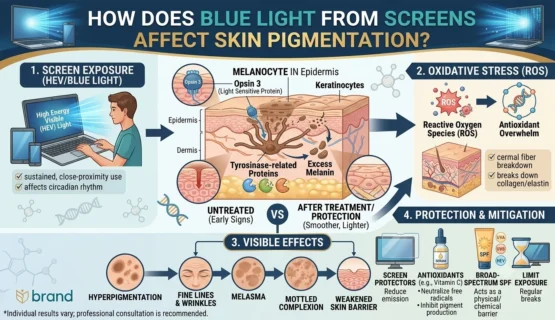
Blue light from screens can contribute to uneven skin tone over time, particularly in clients with darker skin types or existing pigmentation concerns. Unlike ...
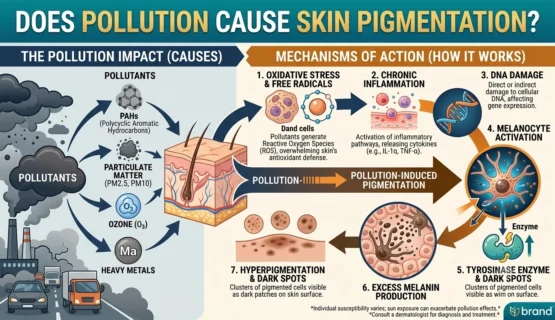
Yes, pollution is now recognised as a genuine contributor to skin pigmentation, alongside more familiar triggers like UV exposure and hormonal changes. Airborne particles, ...
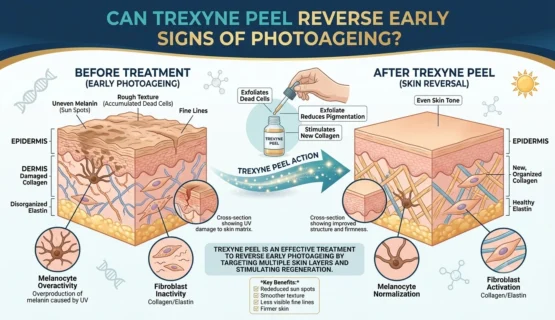
Trexyne Peel cannot reverse photoageing, and no honest practitioner should claim any treatment can turn back time completely. What it can do is support ...
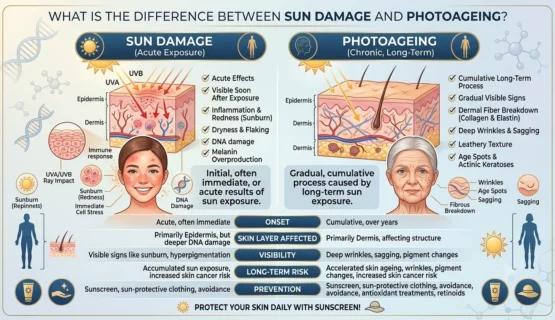
Sun damage and photoageing are often used interchangeably, but they describe different stages of the same process. Sun damage refers to the immediate and ...
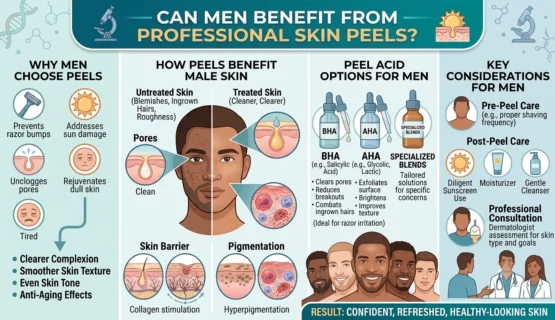
Yes, men can benefit significantly from professional skin peels. Male skin tends to be thicker, oilier, and more prone to congestion than female skin, ...
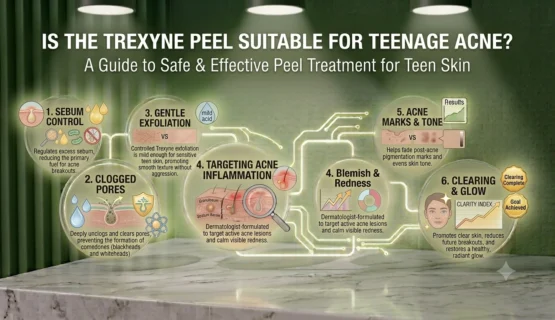
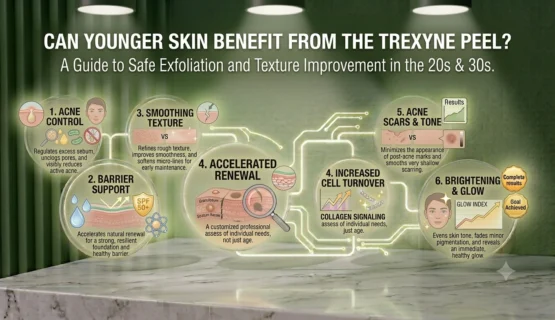
Resurfacing treatments are often associated with mature skin, but younger clients increasingly ask whether treatments like this suit their skin too. The honest answer ...
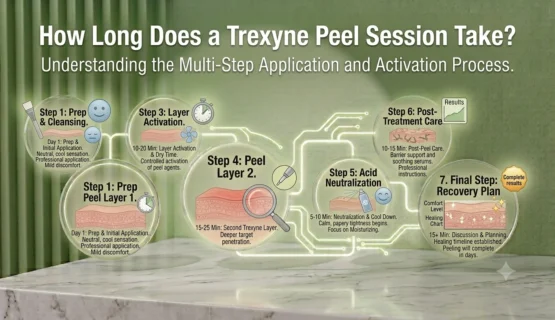
A Trexyne Peel session itself typically takes between 30 and 60 minutes, depending on the treatment area, the intensity level selected within the tiered ...
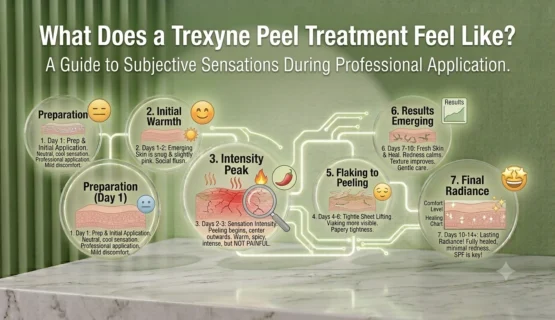
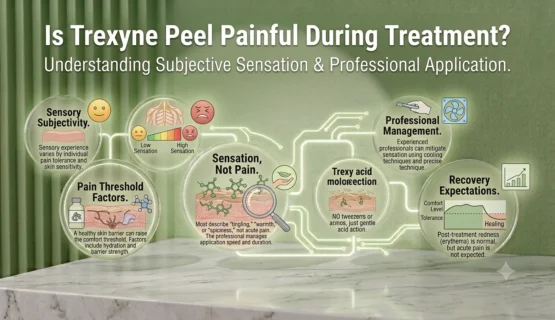
Clients considering skin resurfacing often ask the same question first: will it hurt? With Trexyne Peel, the honest answer is that most clients describe ...
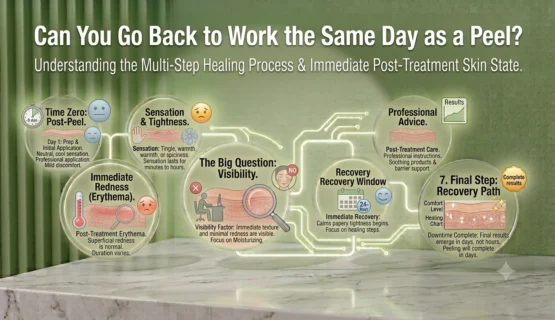
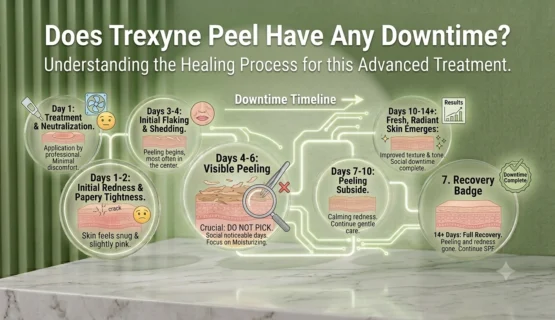
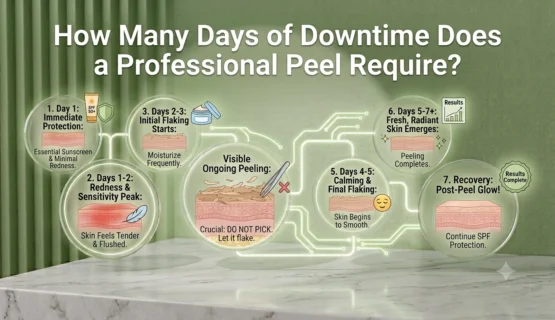
If you are researching resurfacing treatments for your clinic or considering one as a client, downtime is usually the first question that comes up. ...
For most clients receiving a professional resurfacing treatment at a moderate intensity, visible recovery typically takes between five and seven days. The first 48 ...
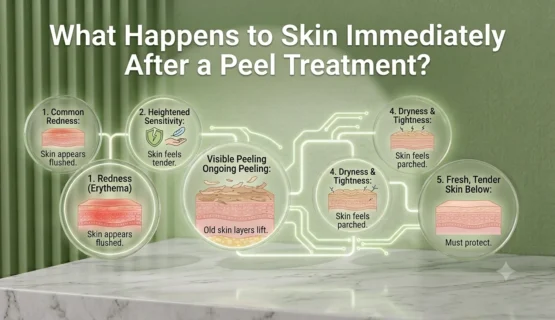
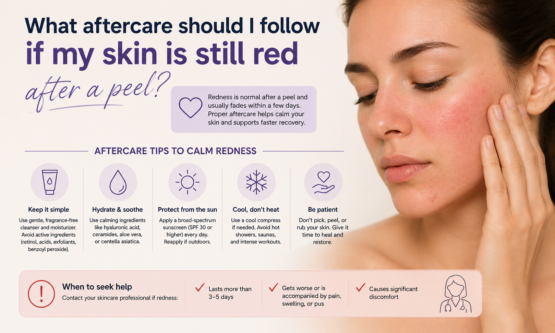
Skin goes through a predictable sequence of changes in the hours and days after a peel treatment. Redness, mild warmth, tightness, and light flaking ...
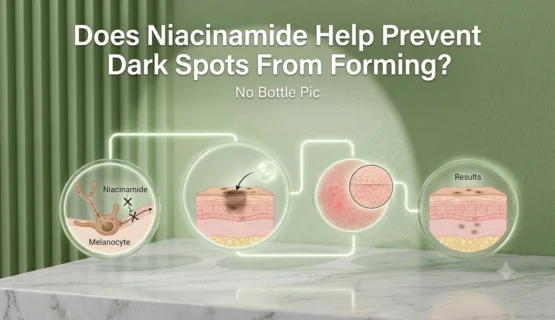
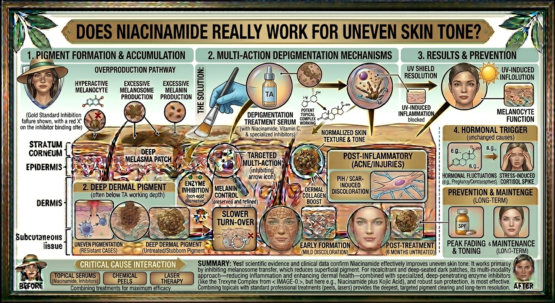
Niacinamide has become one of the most talked-about ingredients in skincare, and for good reason. Many people ask whether it can genuinely help prevent ...
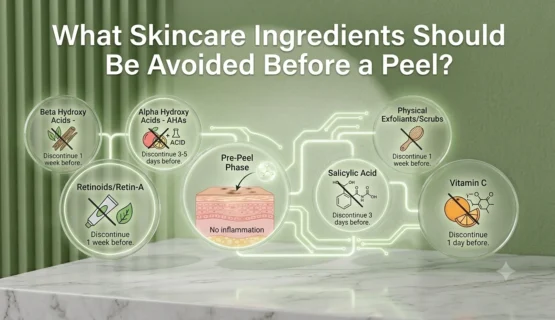
Not immediately, and the timing matters more than most clients realise. Vitamin C serums, particularly those formulated at higher concentrations, can be irritating to ...
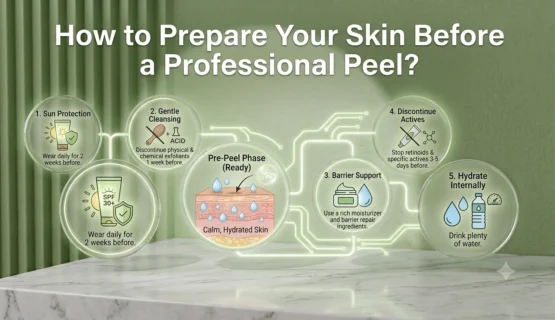
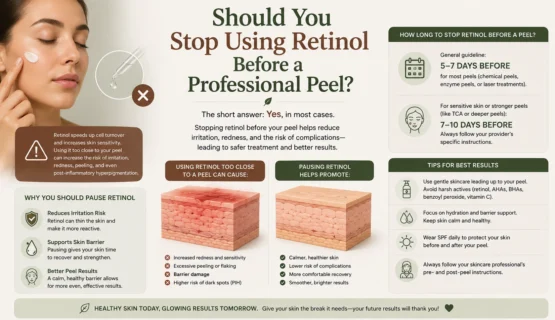
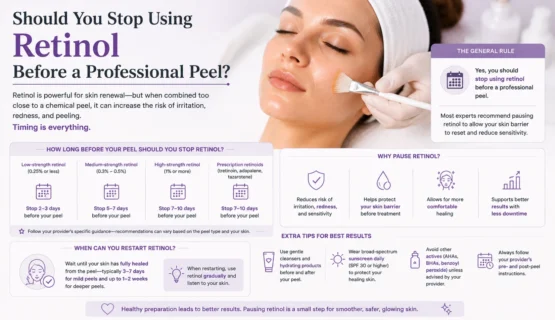
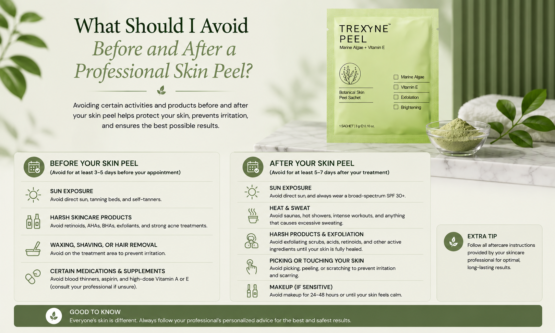
Yes, you should stop using retinol before a professional peel. This is one of the most consistently important pieces of pre-treatment preparation, and it ...
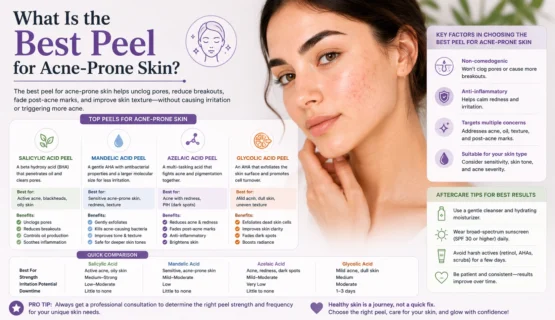
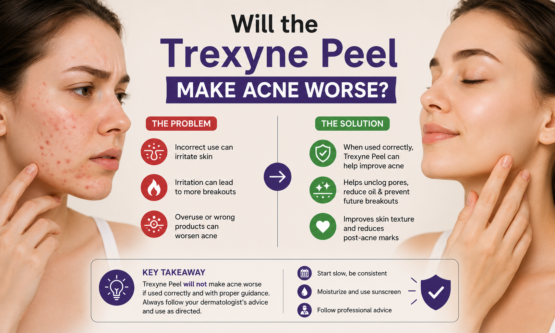
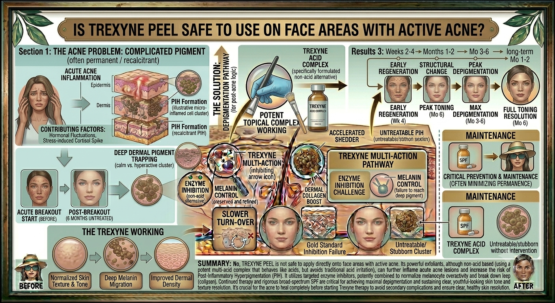
The best peel for acne-prone skin is one that supports meaningful cell turnover and skin renewal without generating the kind of inflammatory response that ...
Yes, oily skin can benefit meaningfully from a professional peel, and in some respects it responds particularly well to resurfacing. The concerns most commonly ...
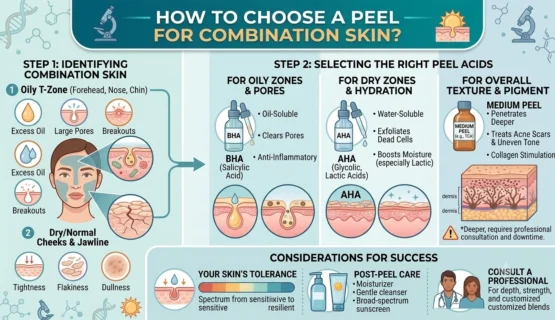
Combination skin brings a specific challenge for both clients and practitioners: an oily T-zone paired with drier cheeks, uneven texture, and skin that can ...
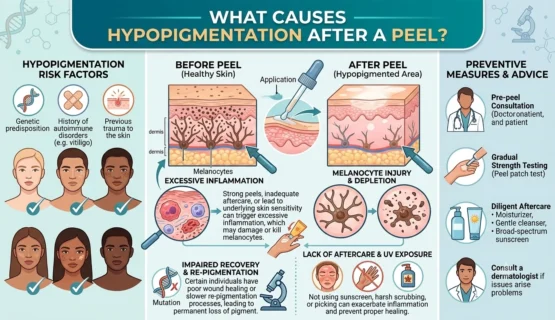
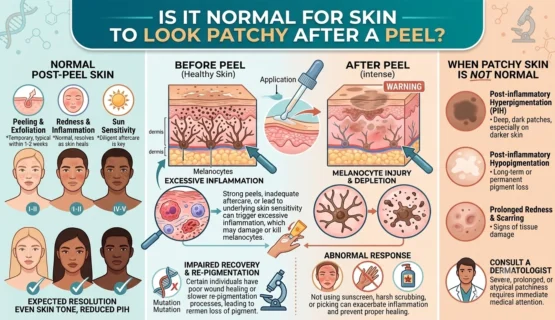
Hypopigmentation after a peel is one of the less commonly discussed post-treatment concerns, but it is an important one for practitioners to understand. While ...
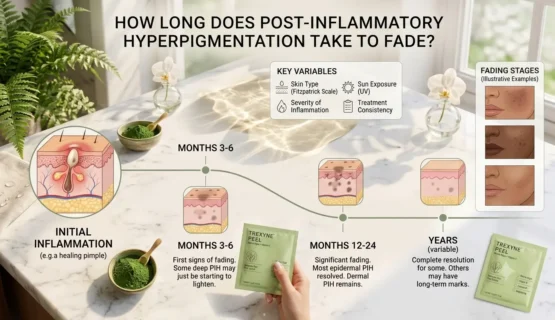
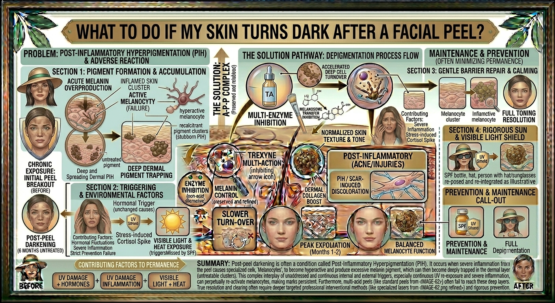
Post-inflammatory hyperpigmentation can take anywhere from a few weeks to several years to fade, depending on a range of factors that vary significantly between ...
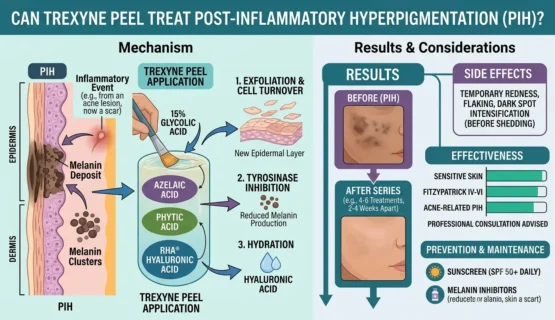
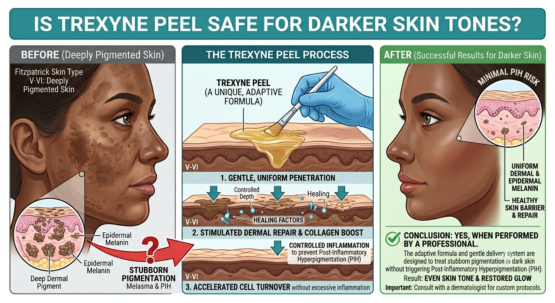
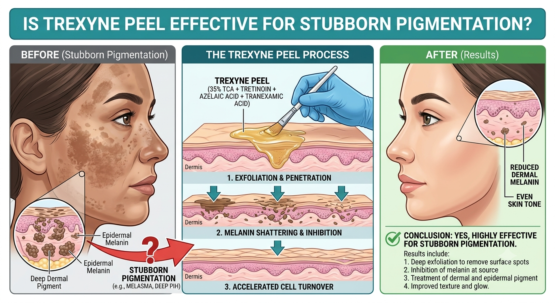
Yes, the Trexyne Peel can form part of a professional treatment plan for post-inflammatory hyperpigmentation. PIH is an epidermal pigmentation concern, meaning the excess ...
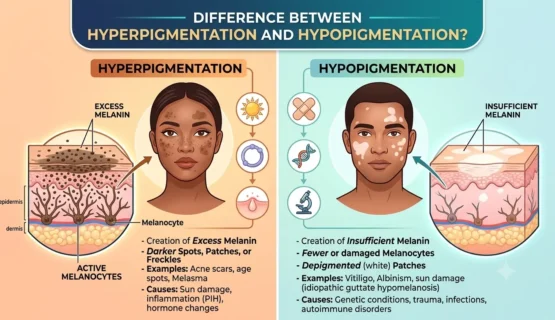
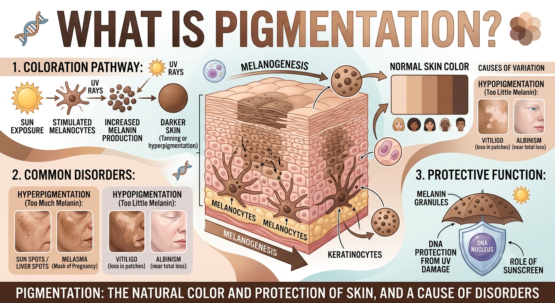
Hyperpigmentation and hypopigmentation are opposite ends of the same spectrum: both involve an abnormality in the skin’s melanin production, but they produce entirely different ...
Post-inflammatory hyperpigmentation, most commonly referred to as PIH, is the flat, discoloured mark that remains on the skin after an inflammatory event has resolved. ...
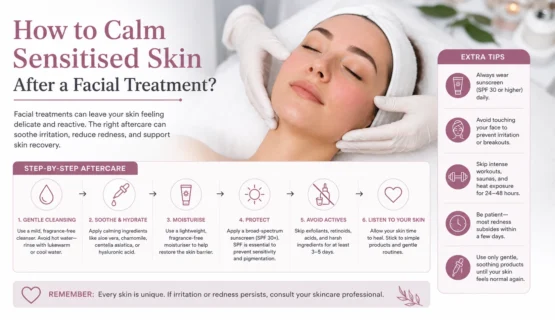
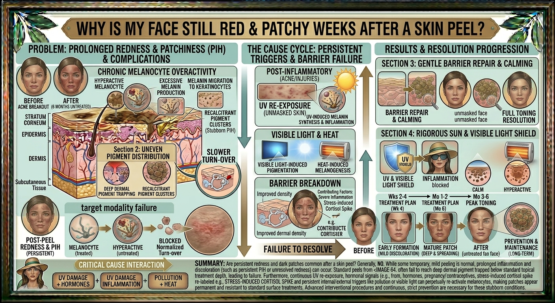
Sensitised skin after a facial treatment is something practitioners encounter regularly. Redness, tightness, and a heightened skin response can all appear in the hours ...
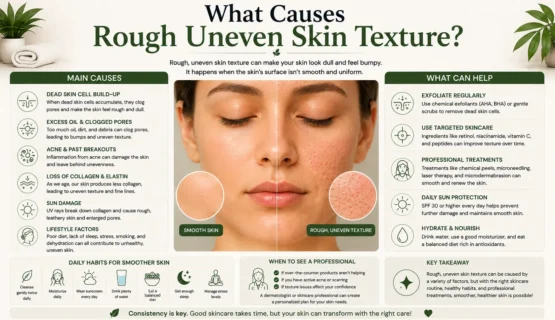
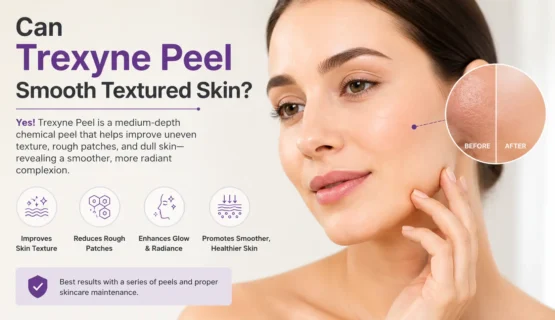
Skin texture irregularities present a persistent challenge in professional aesthetics. Clients frequently seek solutions for roughness, uneven tone, and structural imperfections without wanting the ...
Skin texture irregularities present a persistent challenge in professional aesthetics. Clients frequently seek solutions for roughness, uneven tone, and structural imperfections without wanting the ...
Enlarged pores present a widespread and frustrating aesthetic concern for clinic clients across the UK. Many individuals struggle with a visibly pitted, uneven surface ...
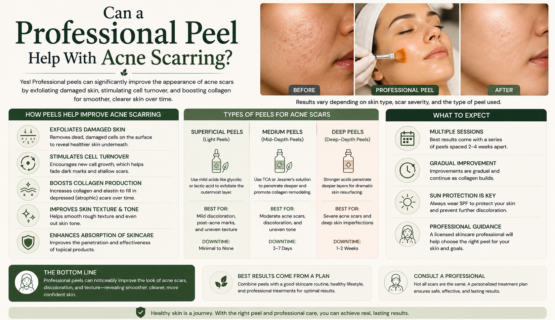
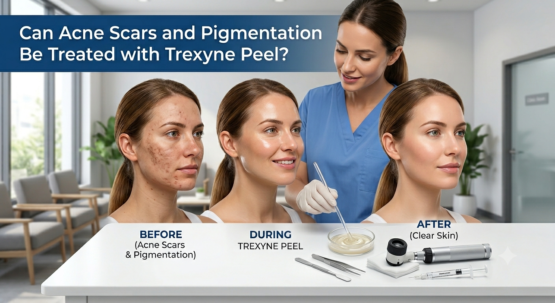
The honest answer is that it depends on what type of acne scarring is being treated. Professional peels, including mechanical resurfacing options, can produce ...
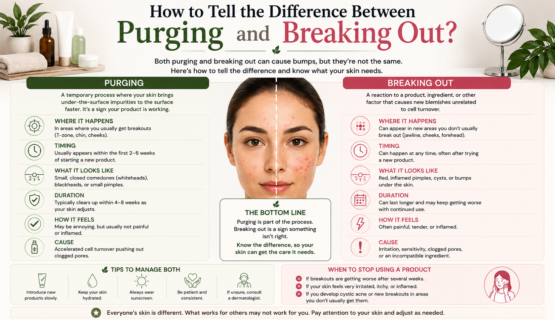
Purging and breaking out look similar on the surface but have different causes and different clinical implications. Understanding which one is happening matters because ...
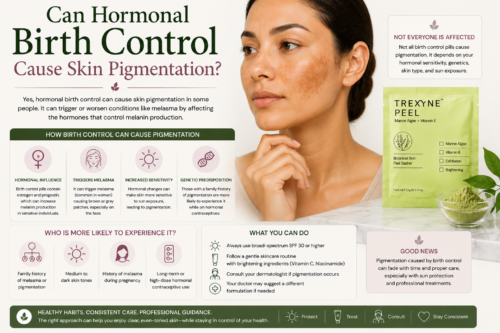
Yes, hormonal contraception can cause skin pigmentation, and it is one of the most common and underrecognised triggers for melasma in women who are ...
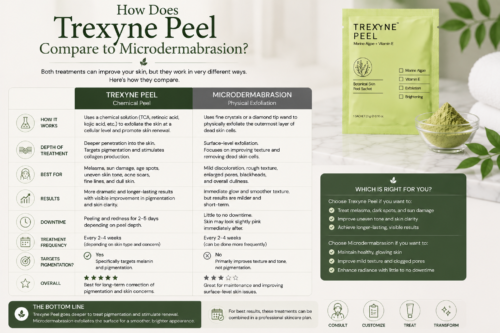
Both the Trexyne Peel and microdermabrasion are professional mechanical resurfacing treatments, and this shared category is worth establishing clearly before examining where they differ. ...
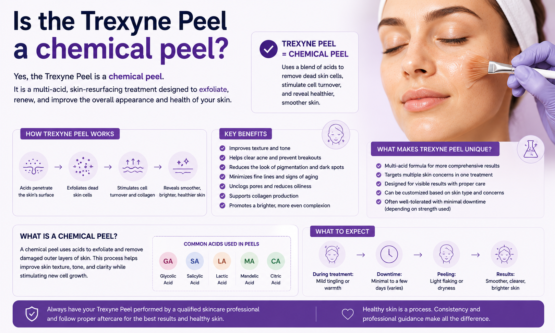
A chemical peel uses active chemical agents to exfoliate the skin, triggering a controlled reaction within the skin’s layers to stimulate renewal. A mechanical ...
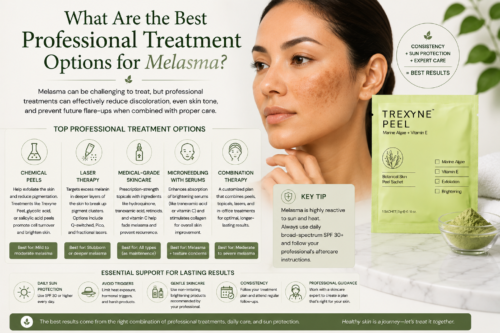
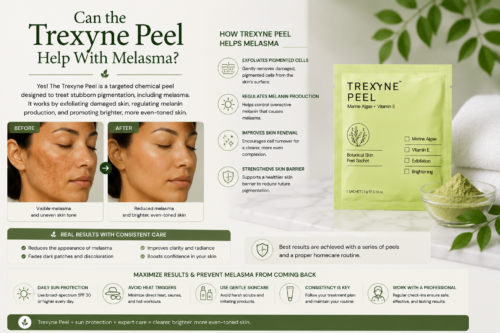
Melasma is one of the most frequently mismanaged pigmentation concerns in aesthetic practice, often because the treatment selected is based on what works for ...
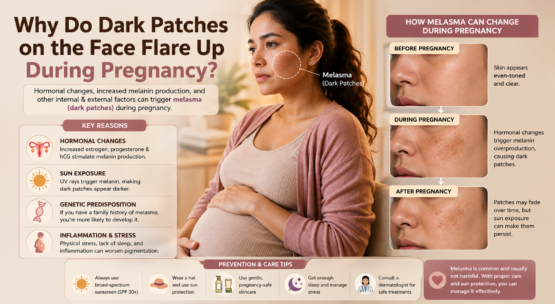
Melasma during pregnancy is driven by a specific hormonal sequence that significantly amplifies how the skin’s melanocytes respond to UV exposure. The condition is ...
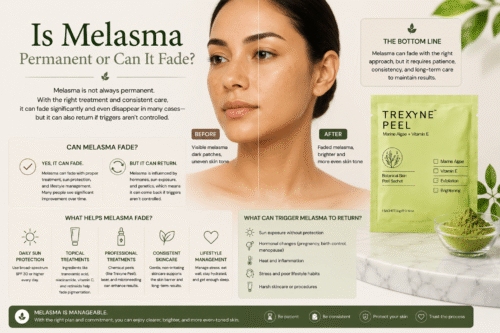
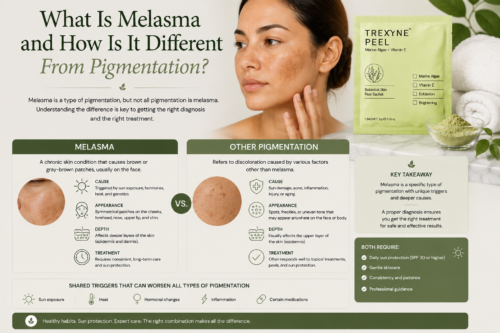
Melasma is a specific type of pigmentation driven primarily by hormonal factors rather than UV damage alone, and understanding this distinction matters enormously when ...
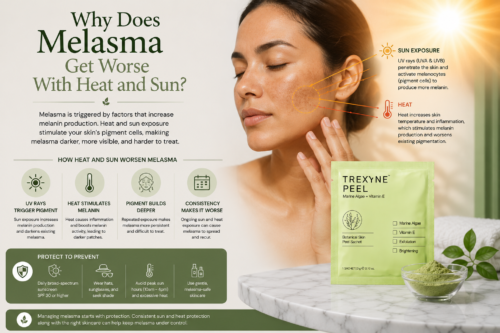
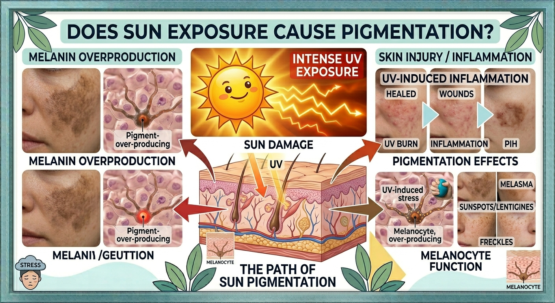
Melasma worsens with heat and sun because both triggers directly stimulate the melanocytes responsible for the condition to produce more pigment. UV radiation is ...
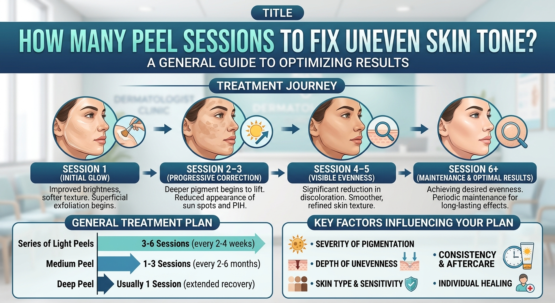
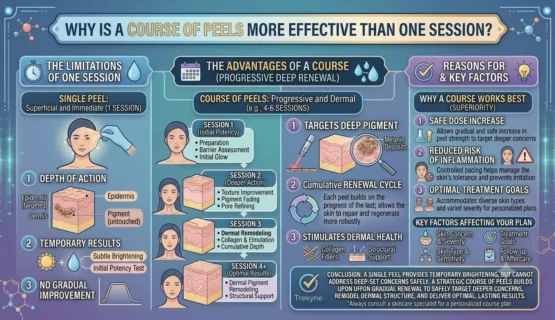
For most clients, professional skin peel sessions are spaced three to four weeks apart during an active treatment course. This interval aligns with the ...
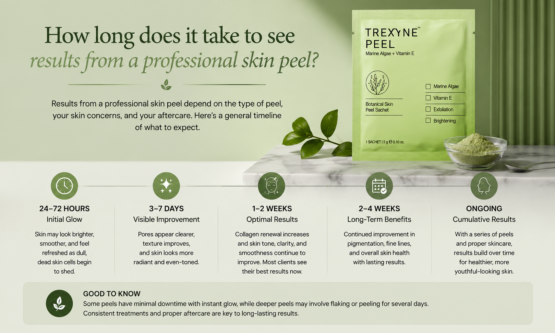
Most clients notice some initial change in their skin within the first week after a professional resurfacing session, but meaningful, lasting results from a ...
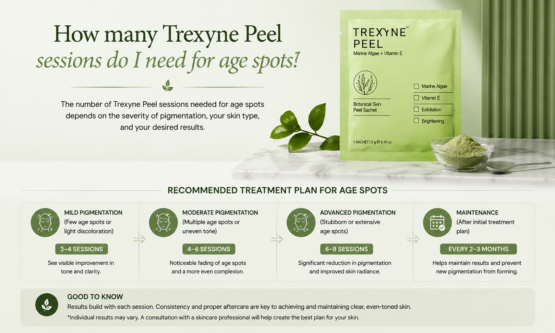
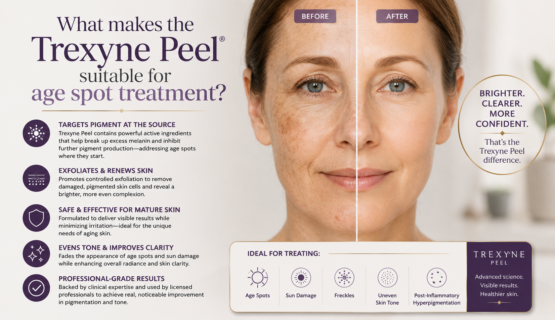
There is no single answer that applies to every client, but most people addressing established age spots with a professional resurfacing course will need ...
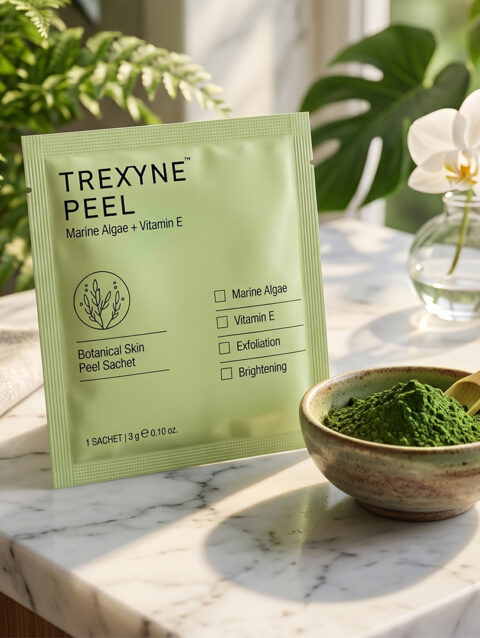
The Trexyne Peel is a professional resurfacing treatment built around marine-algae spicules and stabilised Vitamin E. It resurfaces through a mechanical mechanism, supporting skin ...
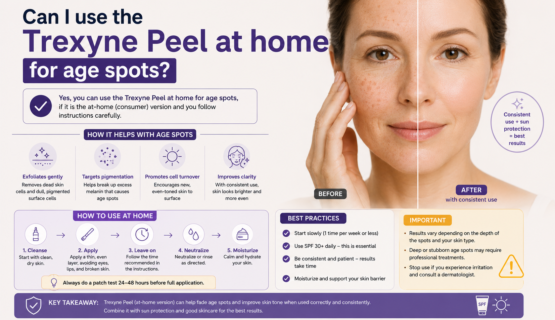
Age spots are one of the most frequently discussed skin concerns in professional aesthetic clinics. They develop over time, are resistant to many topical ...
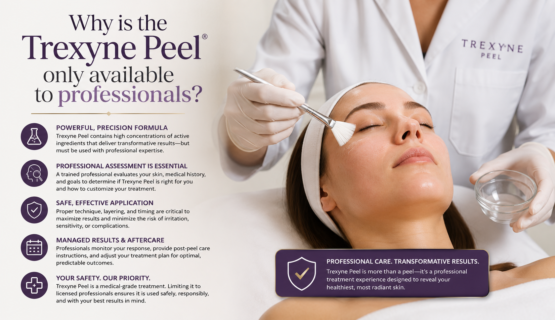
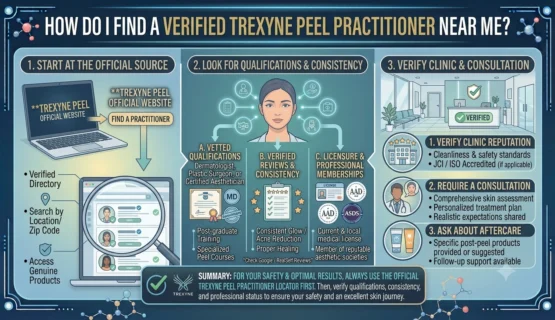
The Trexyne Peel is restricted to trained aesthetic professionals because its application requires proper skin assessment, correct handling technique, and clinical judgement that only ...
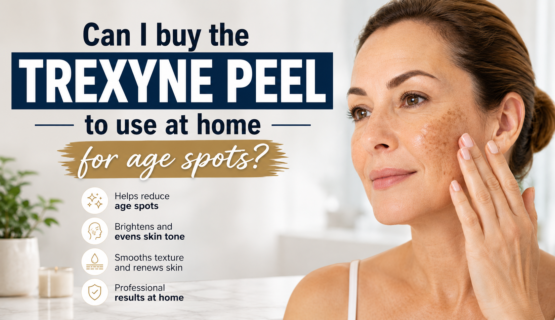
The Trexyne Peel is not available for home purchase or self-administration. It is sold exclusively to verified practitioners and clinics, and this is a ...
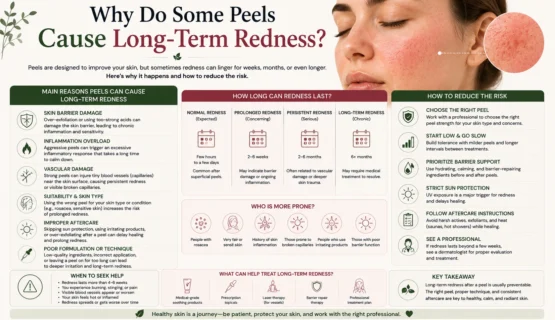
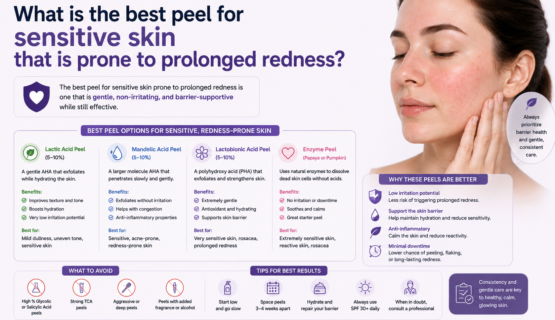
For sensitive skin that is prone to prolonged redness, the best peel is one that resurfaces without generating the kind of inflammatory response that ...
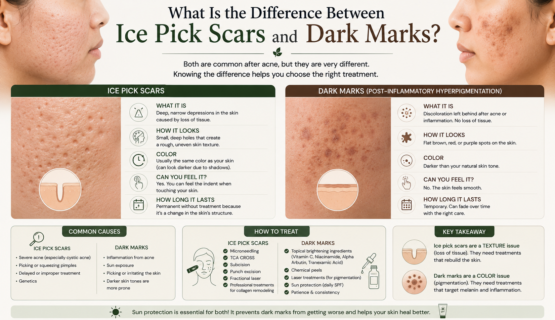
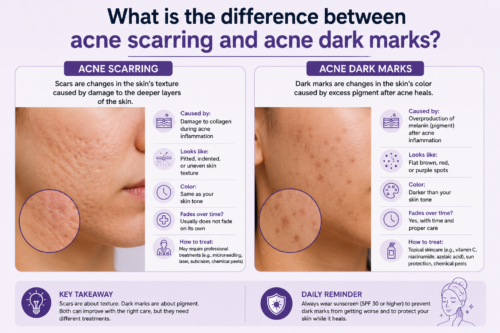
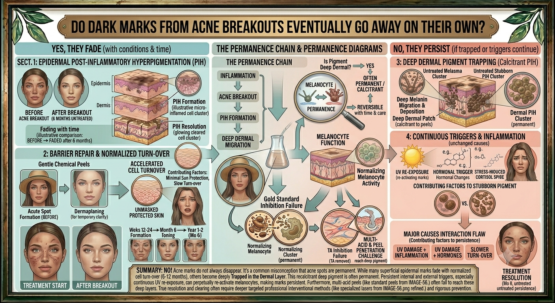
Acne scarring and acne dark marks are two distinct conditions, and the difference between them matters enormously when it comes to treatment. Dark marks, ...
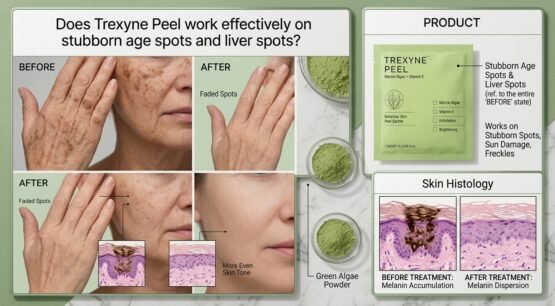
Age spots and liver spots are among the most common pigmentation concerns that practitioners encounter, and they are also among the most persistent. Unlike ...
Dark patches during pregnancy are extremely common, and for most women they appear with little warning and no obvious explanation. The cause is largely ...
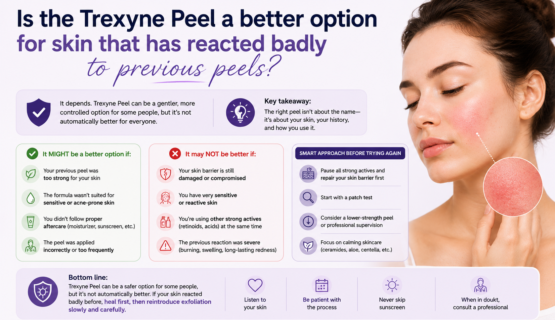
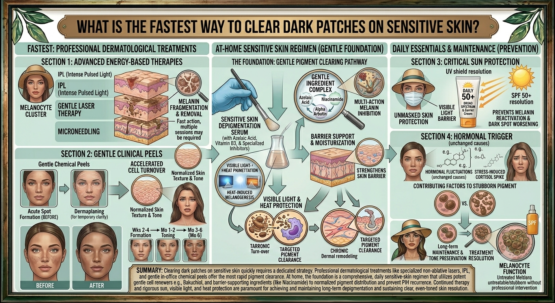
Sensitive skin and resurfacing treatments have a complicated relationship. The skin needs regular cell turnover support to maintain clarity and an even tone, but ...
If your skin has darkened after a facial peel, you are most likely experiencing post-inflammatory hyperpigmentation. This is a well-recognised skin response in which ...
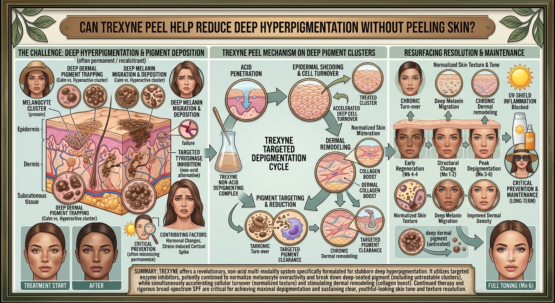
Yes, the Trexyne Peel can support visible improvement in hyperpigmentation without the obvious surface peeling that many clients associate with traditional resurfacing treatments. Because ...
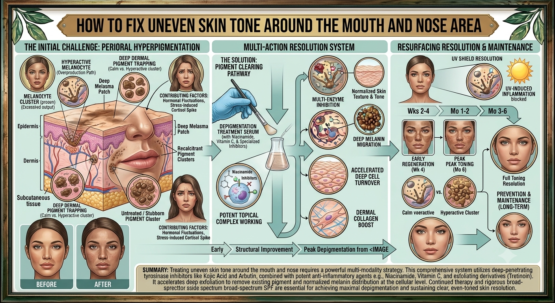
Uneven skin tone around the mouth and nose is usually a sign of one of three things: hormonal pigmentation such as melasma, post-inflammatory marks ...
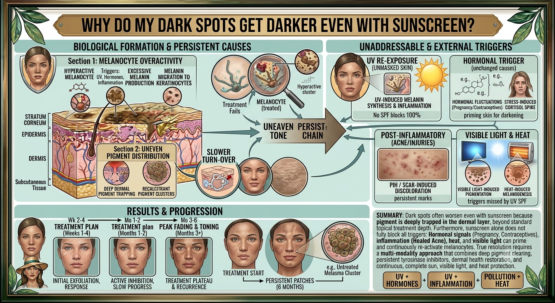
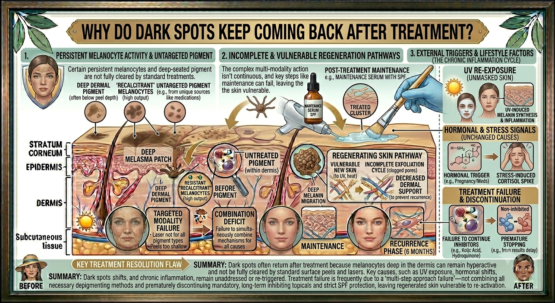
If dark spots are deepening despite consistent sunscreen use, sunscreen is rarely the whole story. UV exposure is one trigger among several, and SPF ...
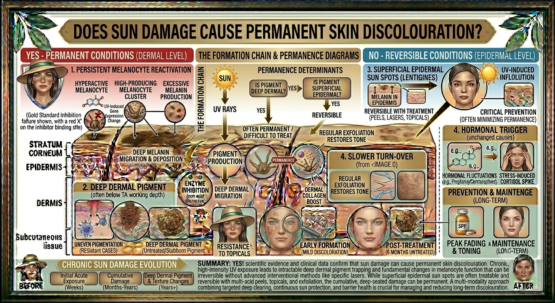
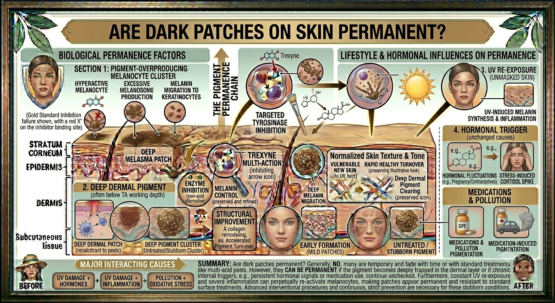
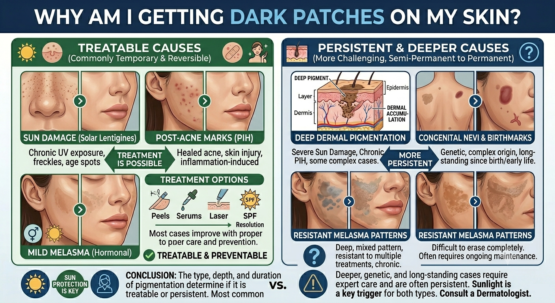
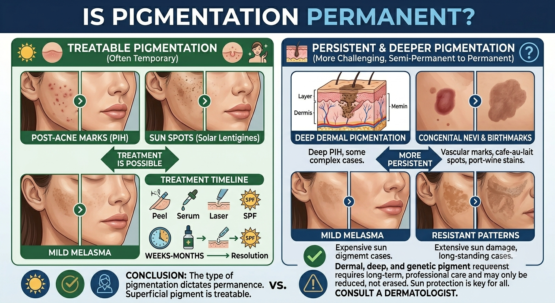
Sun damage can cause skin discolouration that becomes very difficult to reverse, though whether it is truly permanent depends on how much exposure has ...
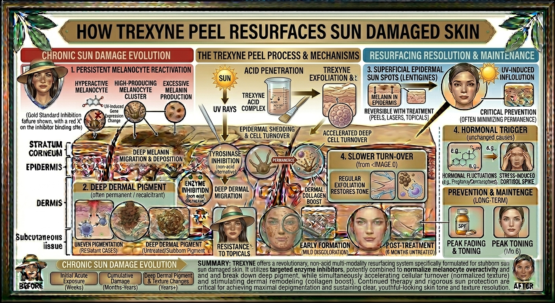
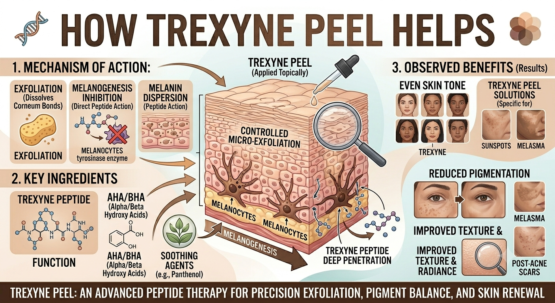
Trexyne Peel resurfaces sun damaged skin by using marine-algae spicules to create controlled micro-channels across the surface, encouraging the skin to renew itself more ...
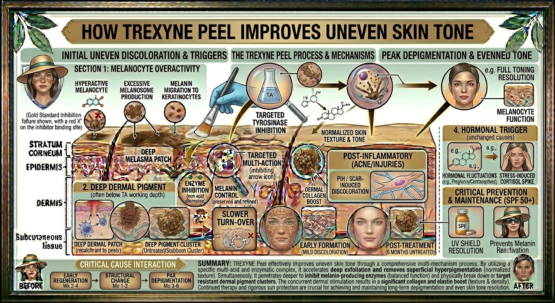
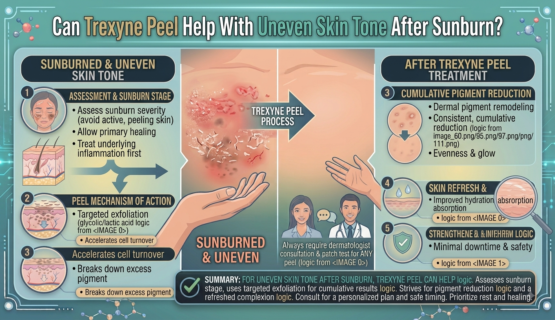
Trexyne Peel improves uneven skin tone by supporting the skin’s natural renewal process through a mechanical resurfacing action, rather than relying on chemical exfoliation. ...
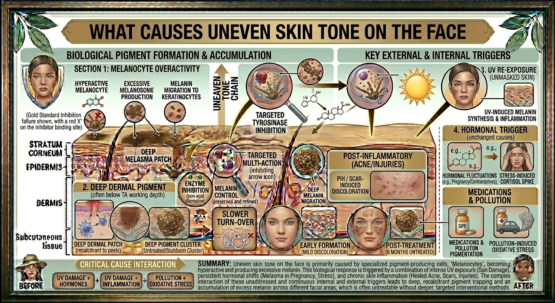
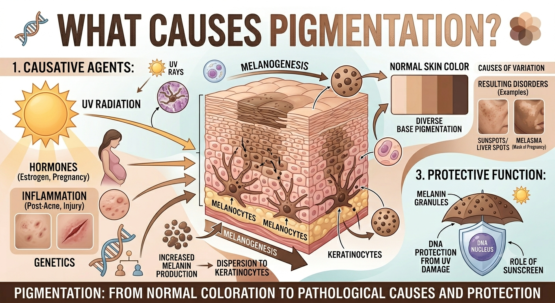
Uneven skin tone is caused by irregular melanin production, slower cell turnover, and surface damage that builds up over time from sun exposure, hormones, ...
Most conversations about professional resurfacing for pigmentation start with acids. But acid-free options exist, and for a significant proportion of clients they are not ...
If dark spots keep returning after treatment, the treatment itself probably is not the problem. The more likely explanation is that the underlying triggers ...
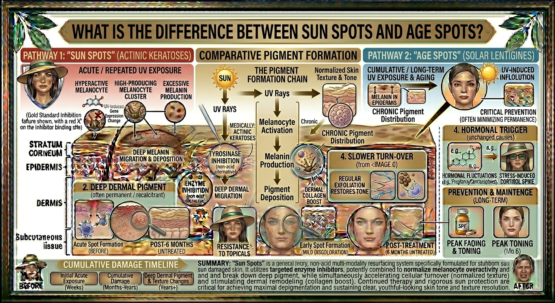
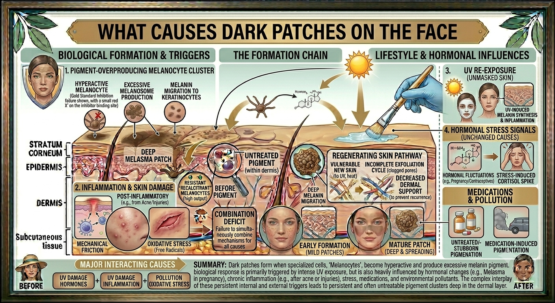
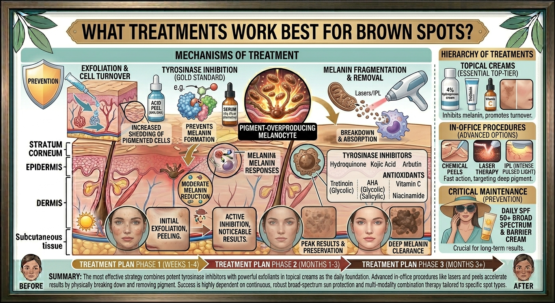
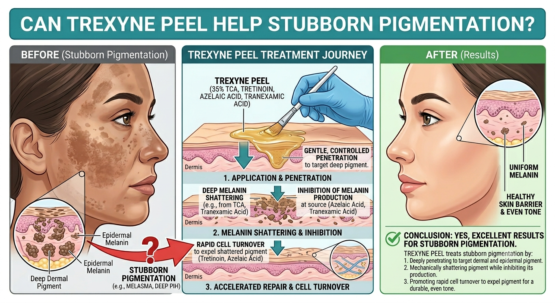
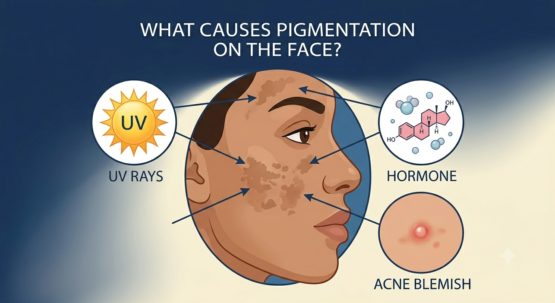
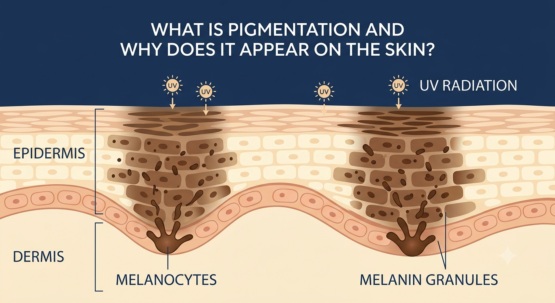
Brown spots, often called sun spots, age spots, or hyperpigmentation, occur when specialized skin cells produce an excess of melanin in localized areas. To ...
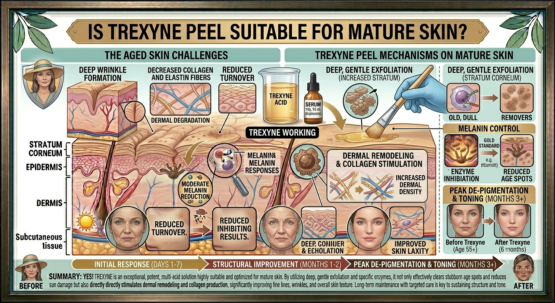
Yes, Trexyne Peel is highly suitable and exceptionally effective for mature skin. As skin ages, cellular turnover slows down dramatically, leading to a dull ...
Summer brings warmer weather, longer days, and outdoor fun. However, for many individuals, the summer sun also triggers a frustrating skincare concern: dark spots ...
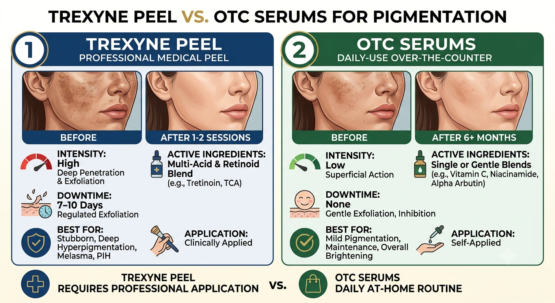
Standing in a pharmacy or scrolling through skincare retailers, the number of brightening serums, dark spot correctors, and pigmentation treatments available can feel overwhelming. ...
Many individuals spend years cycling through over-the-counter brightening serums, vitamin C drops, and target correctors, only to find that their most prominent dark spots, ...
Dealing with active acne breakouts is challenging enough, but the marks left behind long after the blemishes clear can be equally frustrating. Post-acne structural ...
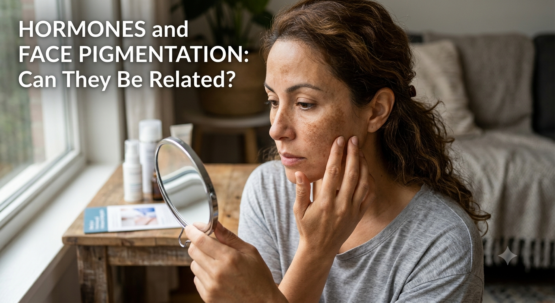
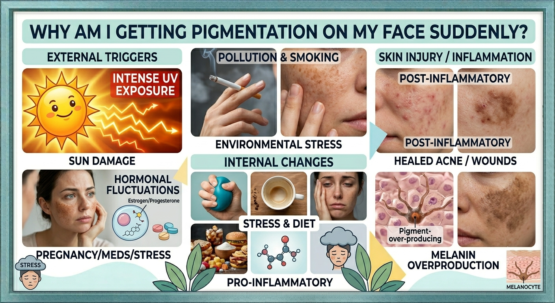
The human skin is incredibly sensitive to internal biological shifts, and few things influence its appearance as profoundly as hormonal fluctuations. If you have ...
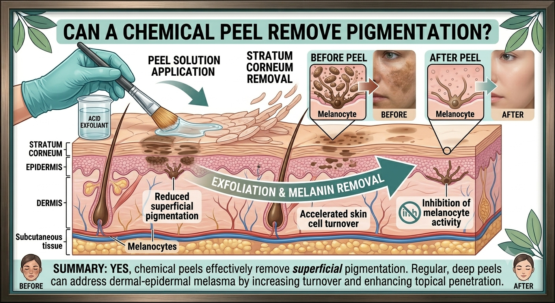
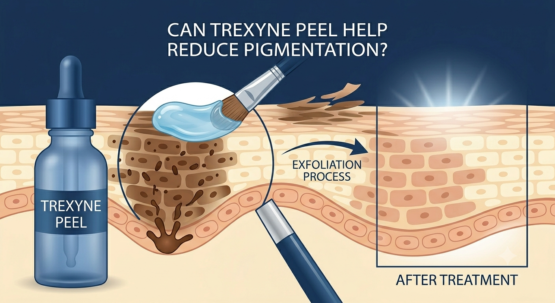
Chemical peels are one of the most widely used professional treatments for pigmentation, and for good reason. They work by removing the outer layers ...
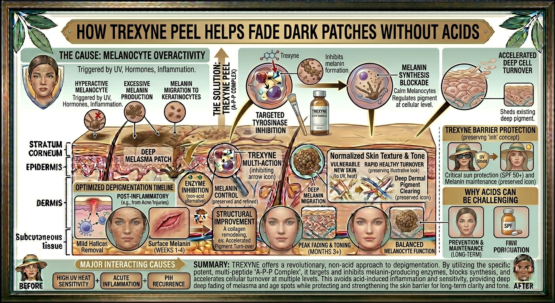
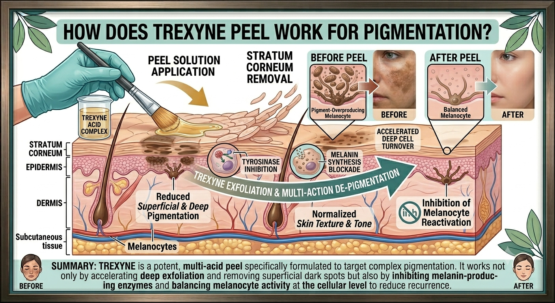
If you have been researching professional treatments for pigmentation, you have likely come across the Trexyne Peel. But understanding exactly how it works, not ...
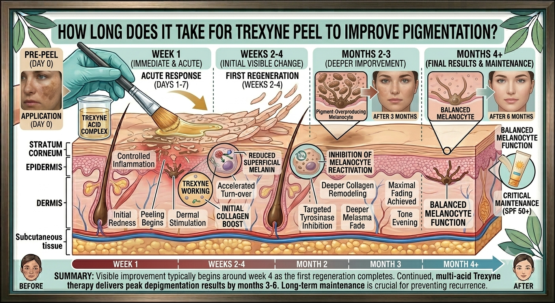
When starting a professional skin treatment for discoloration, one of the most common and practical questions patients ask is about the timeline for results. ...
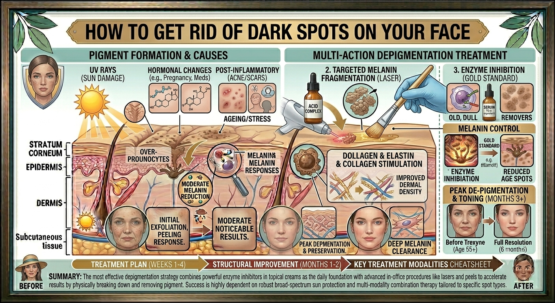
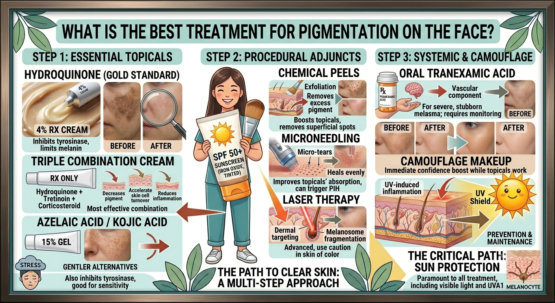
Facial pigmentation is one of the most common reasons people seek professional skincare advice, and it is also one of the most frequently mismanaged. ...
Facial pigmentation is one of the most searched-for skin concerns worldwide, and for good reason. The face is exposed to more environmental triggers than ...
Pigmentation is one of the most persistent and frustrating skin concerns to manage. Dark spots, uneven skin tone, melasma, and post-acne marks can all ...

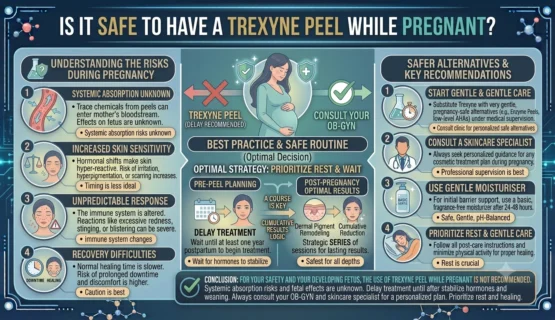
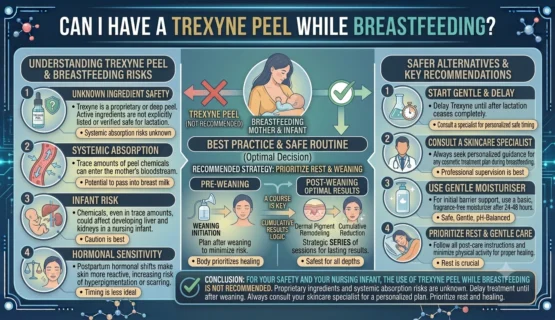
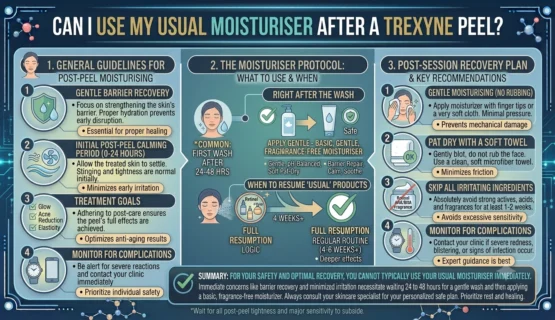
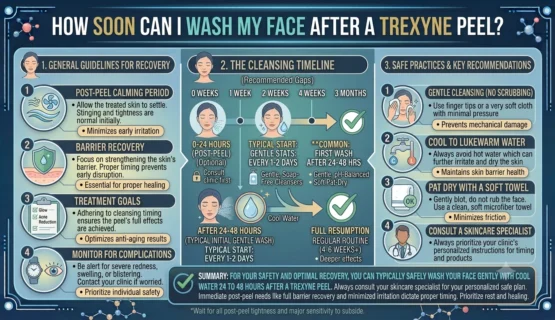



 is a professional resurfacing treatment designed for use exclusively by trained aesthetic professionals, who assess individual suitability at consultation rather than applying age as the primary criterion. Understanding why concern-led rather than age-led thinking produces better outcomes is the most useful starting point for anyone asking this question. ## Why Age Is the Wrong Starting Point The instinct to frame professional peel treatment around age is understandable. Many people think of resurfacing as an anti-ageing intervention, and anti-ageing conversations naturally involve age as a reference point. But this framing leads to both over-treatment and under-treatment in practice. Over-treatment happens when clients in their twenties and thirties pursue aggressive resurfacing courses not because they have a specific skin concern that warrants it, but because they are trying to prevent future ageing. Prevention through sun protection, appropriate home care, and good general skin health habits is genuinely valuable. Repeated professional resurfacing on young skin that has no significant concern to address is not necessarily the right tool for the job, and it carries recovery burdens without proportionate benefit. Under-treatment happens when practitioners or clients dismiss professional resurfacing for younger clients who do have genuine clinical indications, such as significant post-inflammatory hyperpigmentation from acne, on the grounds that they are too young for professional peels. There is no clinical basis for this restriction if the concern is real, the skin is appropriate, and the treatment mechanism is well matched to the individual. The question to ask before any professional resurfacing course is not how old is this person, but what concern are they addressing, is professional resurfacing the right tool for that concern, and is this individual's skin in a suitable condition to receive the treatment? ## When Younger Adults May Be Appropriate Candidates Clients in their late teens and twenties can be appropriate candidates for professional resurfacing when there is a specific, clinically relevant concern that warrants it. The most common scenario is post-inflammatory hyperpigmentation from acne. Acne is highly prevalent in teenagers and young adults, and the dark marks it leaves behind can persist for months or years without professional intervention. For clients in this age group who are managing significant PIH, the concern is real, the impact on confidence and quality of life is real, and professional resurfacing is a directly relevant clinical tool. The key prerequisite is that active acne is at a controlled or manageable level before a resurfacing course begins, since resurfacing over actively inflamed skin carries risks that outweigh the benefit for any age group. Surface texture concerns, including the kind of rough, congested skin quality that often accompanies oily and acne-prone skin types, can also be a legitimate indication for professional resurfacing in younger adults. A 24-year-old with chronically congested, textured skin who has not found satisfactory improvement through home care alone is a different clinical picture from a 24-year-old with generally healthy skin seeking resurfacing as a precautionary measure. For younger clients, the mechanical resurfacing approach of the Trexyne Peel is particularly relevant because it avoids the chemical inflammatory trigger that carries the highest risk of worsening PIH in susceptible, younger skin that is already managing recurring acne-related inflammation. Starting at a conservative intensity within the tiered protocol and building only as the skin demonstrates tolerance is the appropriate approach for any client, and this is especially true for younger skin that may be more reactive and variable in its presentation. ## The Thirties: When Resurfacing Often Becomes Most Relevant For many clients, the thirties represent the point at which professional resurfacing becomes most clearly relevant. This is the decade in which cumulative lifestyle and environmental factors begin to produce visible changes in the skin that home care alone starts to struggle to address. Cell turnover slows progressively from the mid-twenties onwards. By the early to mid-thirties, this slowdown is noticeable in the skin's surface quality. The natural radiance and refinement that came easily in youth requires more active support, and the results from consistent home-use actives begin to plateau. At this stage, professional resurfacing provides the step change in cell turnover stimulation that home care cannot replicate. Solar pigmentation often becomes visible in the thirties for clients who have spent their twenties without consistent sun protection. Age spots, uneven tone, and the beginnings of photodamage-related texture changes are all concerns that professional resurfacing directly addresses. Starting a resurfacing course at this stage, rather than waiting for the pigmentation to deepen further, produces the clearest and most satisfying outcomes because the melanin deposits are not yet as established or as deep as they will become with further years of UV exposure. Hormonal changes in the thirties, particularly for women managing pregnancy, breastfeeding, or hormonal contraception, can produce melasma and post-inflammatory pigmentation that makes professional resurfacing a clinically relevant consideration. The timing of this treatment relative to hormonal events, particularly post-pregnancy and post-breastfeeding, requires thoughtful planning, but the clinical indication is clear and appropriate for this age group. ## The Forties and Beyond: Addressing Accumulated Change Professional resurfacing in the forties and beyond is typically addressing accumulated concerns rather than early or emerging ones. Solar lentigines are more established. Texture irregularities reflect years of slower cell turnover and photodamage. The skin's overall brightness and evenness have diminished in ways that are now clearly visible. For this age group, professional resurfacing remains highly relevant, but the clinical approach needs to account for the skin's changed characteristics. Collagen density is lower, barrier function may be less robust, and cell turnover is slower than in younger skin. These changes mean that conservative starting intensities, slightly longer session spacing, and a more gradual approach to intensity progression are often appropriate for older clients, even if the concern being addressed is significant. The cumulative improvement possible through a sustained, well-managed course of professional resurfacing for a client in their fifties addressing longstanding solar pigmentation is genuinely meaningful. Expectations need to be accurate: established, deep pigmentation takes longer to shift than recent, superficial marks. But the clinical outcome from a well-managed course at this age can still produce a visible, satisfying improvement in skin quality and tone. The [Trexyne Peel](https://trexyne.com/product/trexyne-peel-professional-algae-resurfacing-treatment/)'s tiered protocol is particularly valuable for older skin because it allows intensity to be matched to the skin's actual condition and tolerance at each session rather than applying a fixed approach regardless of how a 55-year-old's skin differs from a 35-year-old's. ### Mature Skin and the Importance of Conservative Progression For clients with more mature skin, the first session of a resurfacing course should always begin at a conservative intensity, even when the presenting concern is significant. Older skin has a reduced capacity for rapid recovery, and an overly intense first session can produce a recovery period that discourages the client from completing the course. Building intensity gradually based on demonstrated tolerance, and spacing sessions at the longer end of the three to four week range if the skin's recovery rate suggests this is appropriate, produces better cumulative results than an aggressive approach that produces difficult recoveries between sessions. ## What Skin Concerns Drive Resurfacing at Different Ages Matching the decision to start resurfacing to a specific skin concern produces better outcomes than framing it purely around age. The following patterns reflect how concern-led thinking plays out across different life stages. In the late teens and twenties, the most common relevant concerns are post-inflammatory hyperpigmentation from acne, surface congestion and texture irregularity from oily and acne-prone skin, and in some cases, early pigmentation concerns in darker skin tones where melanocyte reactivity means pigmentation can develop earlier than in lighter skin types. In the thirties, the most common relevant concerns are emerging solar pigmentation, uneven skin tone from hormonal or lifestyle factors, post-pregnancy melasma once hormonal levels have stabilised and breastfeeding has ended, and the general loss of radiance and refinement that reflects slowing cell turnover. In the forties and fifties, the most common relevant concerns are established solar lentigines, more pronounced photodamage and texture irregularities, generalised uneven tone from years of accumulated UV exposure, and the persistent dullness and surface roughness that reflects significantly slower cell turnover. At any age, a client without a specific concern that warrants professional resurfacing is not necessarily an appropriate candidate simply because they have reached a particular decade. The clinical indication drives the decision, not the calendar. ## When Age Genuinely Does Affect Suitability While age should not be the primary criterion for resurfacing, there are age-related factors that affect clinical suitability and how treatment is approached. Very young clients, typically those under 18, are not generally appropriate candidates for professional aesthetic resurfacing unless there is a specific, significant concern that warrants clinical intervention and parental consent is in place. This is not primarily about the skin's readiness for resurfacing. It is about the context of aesthetic treatment for minors, which requires particular care and appropriate clinical and ethical consideration. At the other end of the age spectrum, very mature skin with significantly reduced collagen density, a compromised barrier, and markedly slower cell turnover may require a particularly cautious approach to resurfacing. The concern being addressed may be entirely legitimate, but the treatment plan needs to reflect the skin's reduced recovery capacity with conservative intensities and appropriate session spacing. Skin condition rather than age per se is the relevant factor in both cases. A 70-year-old with resilient, well-maintained skin may be a more straightforward resurfacing candidate than a 55-year-old with a severely compromised barrier from years of over-treatment. The practitioner's clinical assessment of the individual's skin condition is always the most reliable guide. ## How a Practitioner Assesses Suitability Regardless of Age A thorough consultation with a trained practitioner is the appropriate way to determine whether professional resurfacing is suitable for any individual at any age. The practitioner's assessment covers the specific concern being addressed and whether resurfacing is the right tool for it, the skin's current condition including barrier integrity and sensitivity, any relevant history of previous treatments and how the skin responded, current medications and skincare products, and the client's goals and expectations relative to what the treatment can realistically achieve. This assessment does not start with age. It starts with the skin and the concern. A practitioner who completes this assessment thoroughly can give a genuinely personalised recommendation about whether to proceed, what intensity to start at, and how to structure the course for the best possible outcome. Practitioners looking to incorporate the Trexyne Peel into their resurfacing offering across a range of client ages and concerns can explore the full product range via the [Trexyne shop](https://trexyne.com/shop/), or contact the team directly through the [Trexyne contact page](https://trexyne.com/contact-us/). ## Starting a Course at the Right Time for the Right Reason The most useful reframe for the age question is this: the right time to start professional peel treatment is when there is a specific concern that warrants it, the skin is in a suitable condition to receive it, and the client has realistic expectations about what a course can achieve and over what timeframe. For some people, this moment arrives in their early twenties. For others, it does not become relevant until their forties or fifties. For some, it may never become the most appropriate tool for what their skin needs. All of these are valid clinical outcomes, and they all depend on the individual rather than on an age threshold. More information on the Trexyne approach to professional botanical resurfacing is available on the [Trexyne website](https://trexyne.com/). ## Conclusion The right age to start professional peel treatments is not defined by a number. It is defined by the presence of a specific skin concern that warrants professional resurfacing, a skin condition that is appropriate to receive the treatment, and a realistic understanding of what a course can achieve. Post-inflammatory hyperpigmentation, solar pigmentation, surface texture irregularity, and uneven skin tone can all develop at different points in a person's life and can all be addressed with professional resurfacing when the clinical conditions are right. The [Trexyne Peel](https://trexyne.com/product/trexyne-peel-professional-algae-resurfacing-treatment/) resurfaces through marine-algae spicules with a purely mechanical mechanism, uses a tiered protocol that allows intensity to be matched to the individual's skin at any age, and includes stabilised Vitamin E to support recovery. Whether a client is 25 managing post-acne pigmentation or 55 addressing decades of solar damage, a well-managed course supported by daily SPF and appropriate aftercare may help support a brighter, more even-looking complexion as the cumulative result of professional treatment applied at the right time, at the right intensity, and for the right reason. ## FAQs **Q: What is the right age to start professional peel treatments?** There is no fixed right age. The decision depends on the specific skin concern being addressed, the skin's current condition, and whether professional resurfacing is the most appropriate tool for that individual at that point in their life. A teenager with significant post-inflammatory hyperpigmentation from acne and a 60-year-old with established solar pigmentation can both be appropriate candidates when the clinical conditions are right. **Q: Can younger adults in their twenties have professional peels?** Yes, when there is a specific clinical indication. Post-inflammatory hyperpigmentation from acne, surface congestion, and significant texture irregularity are all legitimate reasons for professional resurfacing in younger adults. The concern and the skin's condition determine suitability, not the client's age. **Q: Is there an age that is too old for professional peel treatments?** Not categorically. More mature skin requires a more conservative approach, with lower starting intensities, appropriate session spacing, and careful progression. But older skin with a genuine clinical concern, such as established solar pigmentation or significant photodamage, can respond meaningfully to a well-managed resurfacing course. The practitioner's assessment of the individual's skin condition determines appropriateness. **Q: When do most people start professional resurfacing?** Many clients first consider professional resurfacing in their thirties, when cumulative factors such as slowing cell turnover, emerging solar pigmentation, and the limits of home-care actives begin to produce visible changes that home care alone cannot adequately address. However, clients in their twenties with PIH from acne and clients in their fifties and sixties with established photodamage are all regularly and appropriately treated with professional resurfacing. **Q: Should I start professional peels early as a prevention strategy?** Preventive habits, including daily broad-spectrum SPF and appropriate home care, are the most effective and appropriate tools for prevention at any age. Professional resurfacing is most valuable when there is a specific concern to address rather than as a precautionary measure for skin that has no particular clinical concern. Starting a resurfacing course without a specific indication carries recovery burdens without proportionate benefit. **Q: How does the Trexyne Peel accommodate different ages and skin types?** The Trexyne Peel's tiered protocol allows the practitioner to select and adjust intensity based on the individual's skin condition and tolerance at each session, rather than applying a fixed approach regardless of age or skin type. This flexibility makes it suitable across a wide range of client ages and presentations, from younger clients with PIH-prone, reactive skin to older clients with more established photodamage and slower recovery capacity. **Q: Where can I find a practitioner to assess whether professional resurfacing is right for me?** The Trexyne Peel is available exclusively through verified practitioners and clinics. Clients can contact the Trexyne team through the contact page to find out about practitioners offering the treatment. A thorough consultation with a trained practitioner is the appropriate way to determine whether professional resurfacing is suitable and what course of treatment would be most appropriate for the individual.](https://trexyne.com/wp-content/uploads/2026/07/What-Is-the-Right-Age-to-Start-Professional-Peel-Treatments-555x320.webp)