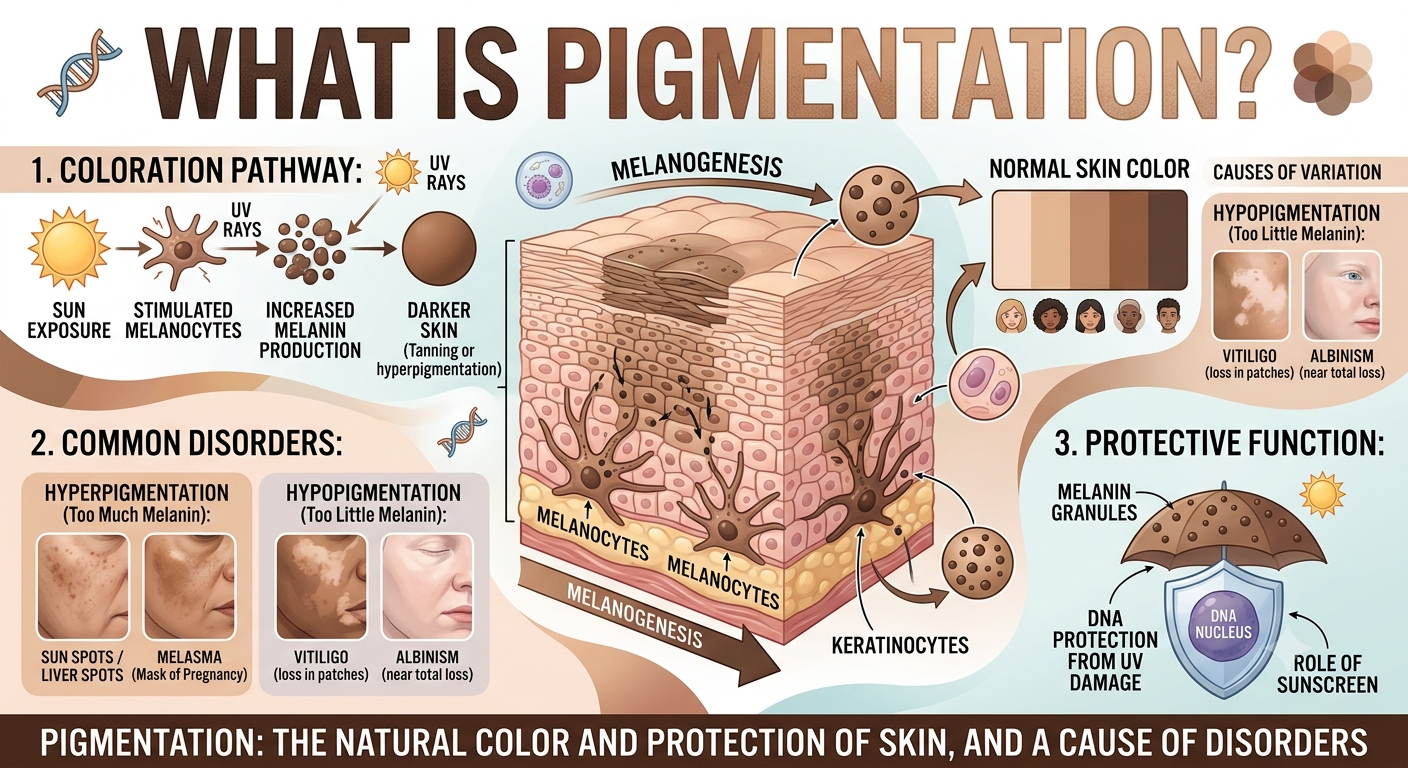
What Is Pigmentation?
Pigmentation is something most people notice on their skin at some point in their lives, yet many do not fully understand what it means or why it happens. In the simplest terms, pigmentation refers to the color of your skin, and it is determined by a naturally occurring substance called melanin. When your skin produces melanin evenly, you have a consistent skin tone. When it produces too much in certain areas, the result is dark spots, patches, and uneven color that can be difficult to reverse. This guide explains exactly what pigmentation is, how it works, what happens when it goes wrong, and why a professional treatment like the Trexyne Peel may help support a more even, balanced complexion.
Understanding Skin Pigmentation: The Basics
Your skin is made up of multiple layers, and the color you see on the surface is a reflection of biological processes happening in those deeper layers. Pigmentation is not simply a cosmetic characteristic. It plays an active protective role in your body.
The outer layer of the skin, called the epidermis, contains cells known as melanocytes. These cells produce melanin, the pigment responsible for the color of your skin, hair, and eyes. Melanin is synthesized through a process called melanogenesis, which is triggered by several factors including UV exposure, hormonal signals, and skin injury.
When melanin is produced, it is transferred to surrounding skin cells called keratinocytes. These cells carry the pigment to the surface as they mature and move upward through the skin layers. In healthy, balanced skin, this process distributes melanin evenly and creates a uniform tone.
The Role of Melanin in Skin Color
Melanin is not one single substance. It comes in two primary forms, each contributing differently to your skin tone.
Eumelanin
Eumelanin is the more abundant type and produces brown and black pigmentation. People with darker skin tones have higher concentrations of eumelanin. This type of melanin is also highly effective at absorbing UV radiation and protecting the skin from sun damage.
Pheomelanin
Pheomelanin produces yellow and red tones and is found in higher concentrations in people with lighter skin and red hair. It offers less UV protection than eumelanin, which is part of why fair-skinned individuals tend to burn more easily in the sun.
Everyone has roughly the same number of melanocytes. The difference in skin tone between individuals comes down to how active those cells are and how much melanin they produce. Genetics largely determines this baseline, but environmental and hormonal factors can shift melanin production significantly over time.
What Happens When Pigmentation Becomes Uneven?
Pigmentation becomes a visible skin concern when the skin produces too much melanin in localized areas. This is called hyperpigmentation. It results in patches or spots that appear darker than the surrounding skin and can vary in size, depth, and color.
Hyperpigmentation is not harmful in a medical sense, but it can affect confidence and is often difficult to treat without the right approach. The darker patches may be flat or slightly textured and can appear anywhere on the body, though the face, neck, hands, and chest are most commonly affected.
The opposite condition, hypopigmentation, occurs when the skin loses melanin in certain areas, resulting in lighter patches. This is less common but can be seen in conditions such as vitiligo or as a side effect of certain skin treatments.
Common Forms of Uneven Pigmentation
Pigmentation issues are not all the same. They develop from different triggers and affect the skin in distinct ways.
Sun-Induced Pigmentation
Prolonged or repeated exposure to ultraviolet radiation stimulates melanocytes to produce extra melanin as a protective response. Over time, this leads to the formation of sunspots and a generally uneven complexion, particularly on areas that receive regular sun exposure.
Hormonal Pigmentation
Estrogen and progesterone can directly stimulate melanocyte activity. This is why many women develop a condition called melasma during pregnancy or while using hormonal contraceptives. The patches tend to be larger and more diffuse than other types of hyperpigmentation.
Post-Inflammatory Pigmentation
When the skin experiences trauma, whether from acne, a cut, a burn, or even aggressive skincare, it often responds by producing excess melanin in the affected area. The result is a dark mark that lingers after the original wound has healed.
Age-Related Pigmentation
As the skin ages, its ability to regulate melanin production diminishes. Decades of cumulative sun exposure, combined with a slower cell turnover rate, allow melanin to accumulate in concentrated spots. These are commonly called age spots or liver spots.
Why Some Skin Types Are More Prone to Pigmentation
Skin type plays a meaningful role in how susceptible a person is to developing visible pigmentation. Individuals with medium to dark skin tones have more active melanocytes, which means their skin produces melanin more readily in response to stimulation. While this provides stronger natural UV protection, it also means that any trigger, from a pimple to a minor graze, has a higher chance of leaving a lasting dark mark.
Lighter skin tones are not immune to pigmentation issues, but the causes and patterns tend to differ. Fair-skinned individuals are more likely to develop freckles and sunspots over time, while post-inflammatory pigmentation may appear pink or red before fading to brown.
Understanding your skin type is an important part of choosing the right treatment approach, particularly for professional interventions.
How Melanin Production Is Triggered
Several biological pathways are involved in activating melanin production. The most well-studied is the role of tyrosinase, an enzyme that acts as the catalyst for melanin synthesis. When skin cells are exposed to UV radiation or certain inflammatory signals, tyrosinase becomes more active, leading to increased melanin output.
This is why many effective treatments for pigmentation, both topical and professional, target the tyrosinase enzyme. Ingredients such as kojic acid, azelaic acid, and vitamin C are known for their ability to interrupt this process and reduce melanin output at the cellular level.
For deeper or more established pigmentation, topical ingredients alone may not be sufficient. Professional treatments that physically remove pigmented cells from the skin’s surface and stimulate fresh cell growth are often needed to produce visible and lasting results.
The Skin Cycle and Its Impact on Pigmentation
Your skin naturally renews itself through a process called the cell cycle, or skin turnover. New cells are constantly being produced in the deeper layers of the epidermis and migrate upward over a period of roughly four to six weeks, eventually shedding from the surface.
This process is relevant to pigmentation because it means that dark spots have the potential to fade on their own over time, as pigmented cells are shed and replaced. However, several factors slow this down. Aging significantly reduces the rate of cell turnover. UV damage can disrupt the cycle. And ongoing triggers, such as continued sun exposure or hormonal activity, can replenish pigmentation faster than the skin can clear it.
Treatments that accelerate skin cell turnover are among the most effective for reducing visible pigmentation, which is one of the key reasons professional chemical peels have become a widely used option for this concern.
When to Seek Professional Help for Pigmentation
Mild pigmentation may respond to a consistent skincare routine that includes SPF, antioxidants, and brightening ingredients. However, there are situations where professional intervention is the more practical and effective route.
You may benefit from a professional assessment if:
- Your dark spots have been present for more than six months without improvement
- Pigmentation covers a large area or is rapidly spreading
- Over-the-counter products have not produced noticeable results
- Your pigmentation is linked to hormonal changes or a medical condition
- You want to address multiple skin concerns at the same time
A professional pigmentation treatment allows a trained practitioner to assess the type and depth of your pigmentation and recommend a targeted approach. The Trexyne Peel is one option that has been used to address a range of pigmentation concerns by exfoliating the outer skin layers and supporting a more balanced tone.
Can Pigmentation Be Fully Reversed?
This is one of the most common questions people have, and the honest answer is that it depends. Surface-level pigmentation, such as recent post-acne marks or mild sunspots, often responds well to treatment and can fade significantly or clear entirely with the right approach.
Deeper pigmentation, such as established melasma or long-standing age spots, is more challenging. These conditions can be managed and visibly improved, but they may not disappear completely and can recur if the underlying triggers are not controlled.
Sun protection is non-negotiable in any pigmentation treatment plan. Without consistent SPF use, UV exposure will continue to stimulate melanin production, undermining the results of any treatment, professional or otherwise.
Conclusion
Pigmentation is a natural function of the skin, governed by the melanin produced in your melanocytes. When this process becomes disrupted by sun exposure, hormonal shifts, inflammation, or aging, the result is uneven skin tone, dark spots, and visible discoloration that many people want to address.
Understanding what pigmentation is and how it develops is the foundation for choosing the right treatment. For those seeking more than topical solutions can offer, advanced skin peel solutions such as the Trexyne Peel provide a professional, targeted approach to supporting clearer, more even-toned skin. A qualified practitioner can assess your specific concerns and help you build a plan that addresses the root causes, not just the surface appearance.
Frequently Asked Questions
1. What is pigmentation on the skin?
Pigmentation refers to the color of the skin, which is determined by a pigment called melanin. When melanin is produced unevenly, it results in dark spots, patches, or areas that are lighter or darker than the surrounding skin. This condition is extremely common and can develop due to sun exposure, hormonal changes, inflammation, or aging.
2. Is pigmentation the same as hyperpigmentation?
Not exactly. Pigmentation is a broad term that describes skin color in general. Hyperpigmentation is a specific condition where areas of the skin become darker than normal due to excess melanin production. It is the most commonly discussed type of pigmentation concern and includes conditions such as melasma, sunspots, and post-inflammatory dark marks.
3. What does pigmentation look like on the skin?
Pigmentation typically appears as flat, discolored patches or spots that are darker than the surrounding skin. They can range from light tan to deep brown or gray, depending on the type and depth of pigmentation. They most commonly appear on the face, hands, and other areas frequently exposed to sunlight.
4. Is skin pigmentation permanent?
Not always. Surface-level pigmentation, such as recent post-acne marks or mild sunspots, can fade over time with consistent treatment and sun protection. Deeper or hormonally driven pigmentation, such as melasma, is more persistent and may require ongoing management rather than a permanent fix. Professional treatments can significantly improve the appearance of both types.
5. How does a chemical peel help with pigmentation?
Chemical peels work by removing the outer layers of the skin where much of the visible pigmentation is concentrated. This accelerates cell turnover and stimulates the growth of fresher, more evenly toned skin cells. Professionally administered peels such as Trexyne Peel are formulated to address pigmentation at a deeper level than over-the-counter products, delivering more visible and lasting results.
6. Can pigmentation affect all skin tones?
Yes. Pigmentation issues can develop across all skin tones and types. People with medium to dark skin tones tend to be more prone to post-inflammatory hyperpigmentation due to the higher activity of their melanocytes. Fair-skinned individuals are more susceptible to sunspots and freckles. Treatment approaches should be tailored to the individual’s skin tone and type.
7. What is the difference between pigmentation and skin discoloration?
Skin discoloration is a general term that covers any change in skin color, including redness, bruising, or yellowing. Pigmentation specifically refers to changes driven by melanin production. While all pigmentation results in discoloration, not all skin discoloration is caused by melanin. A dermatologist or skincare professional can help identify the underlying cause of any visible skin color change.