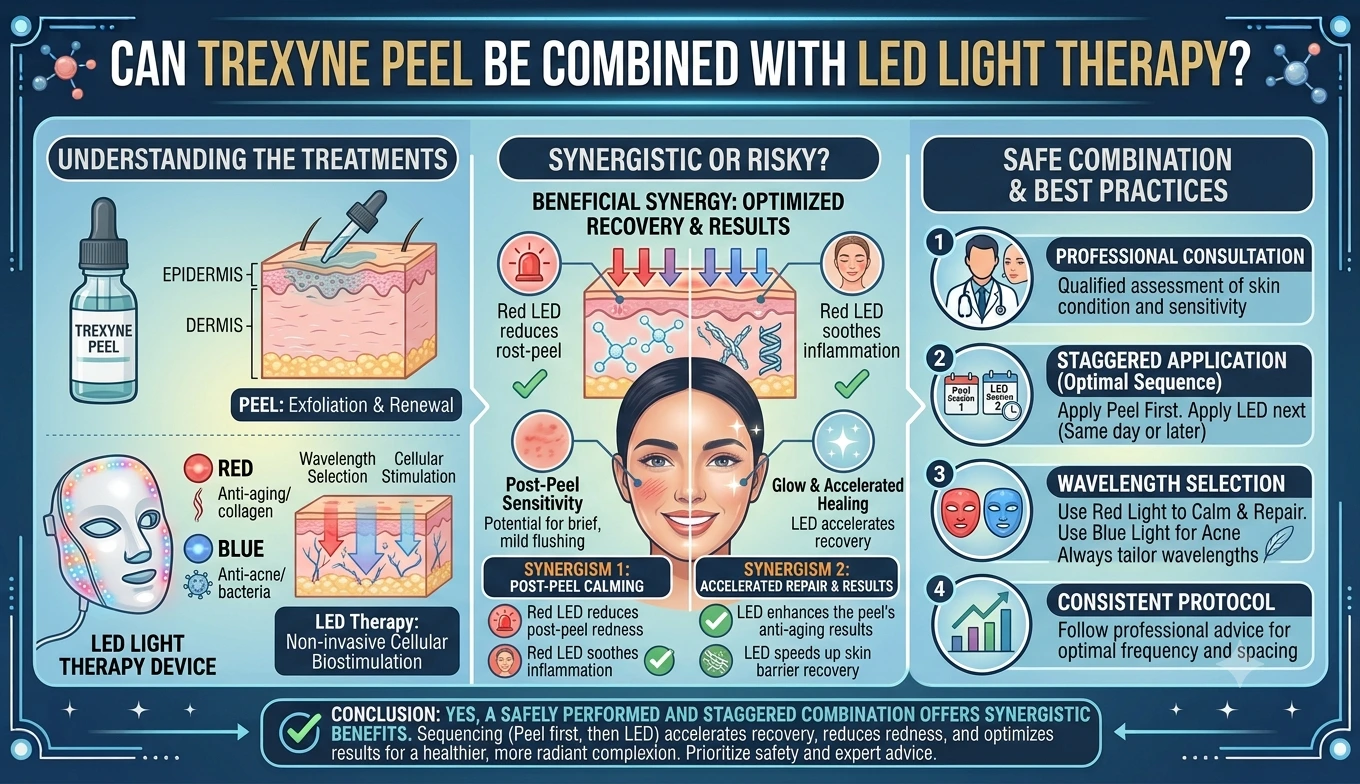
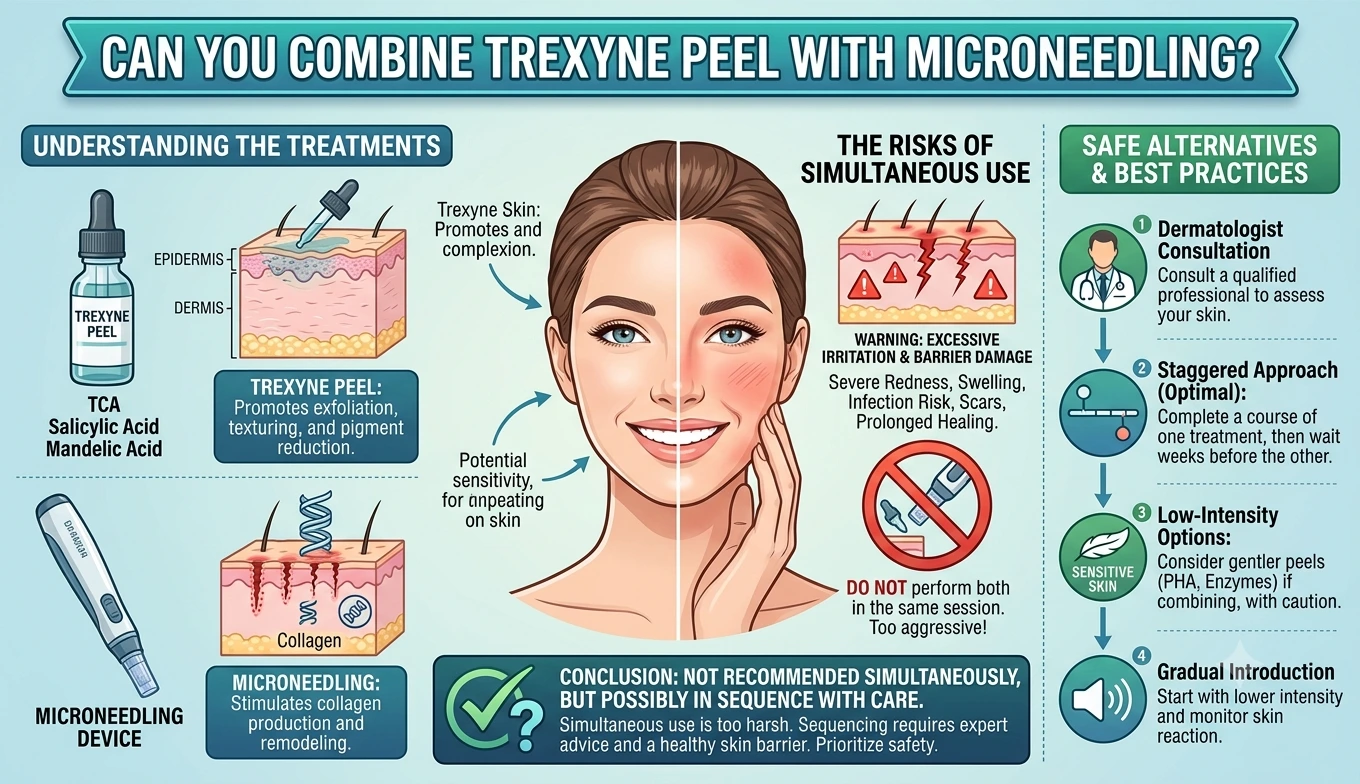
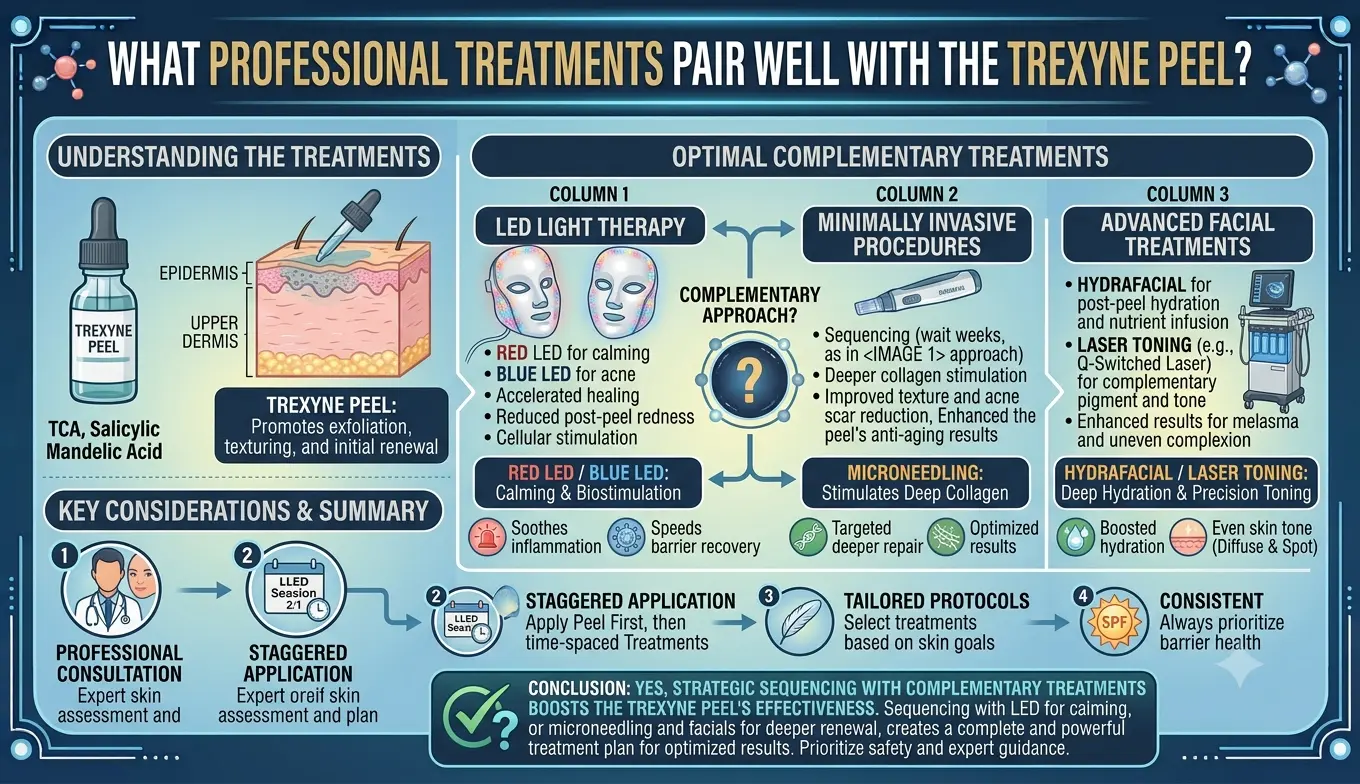
Combining treatments is a question practitioners hear regularly, and it deserves a careful, individualised answer rather than a simple yes or no. The short ...
Treatments that support skin hydration, calm inflammation, and protect the skin barrier tend to pair well with the Trexyne Peel, particularly when they are ...
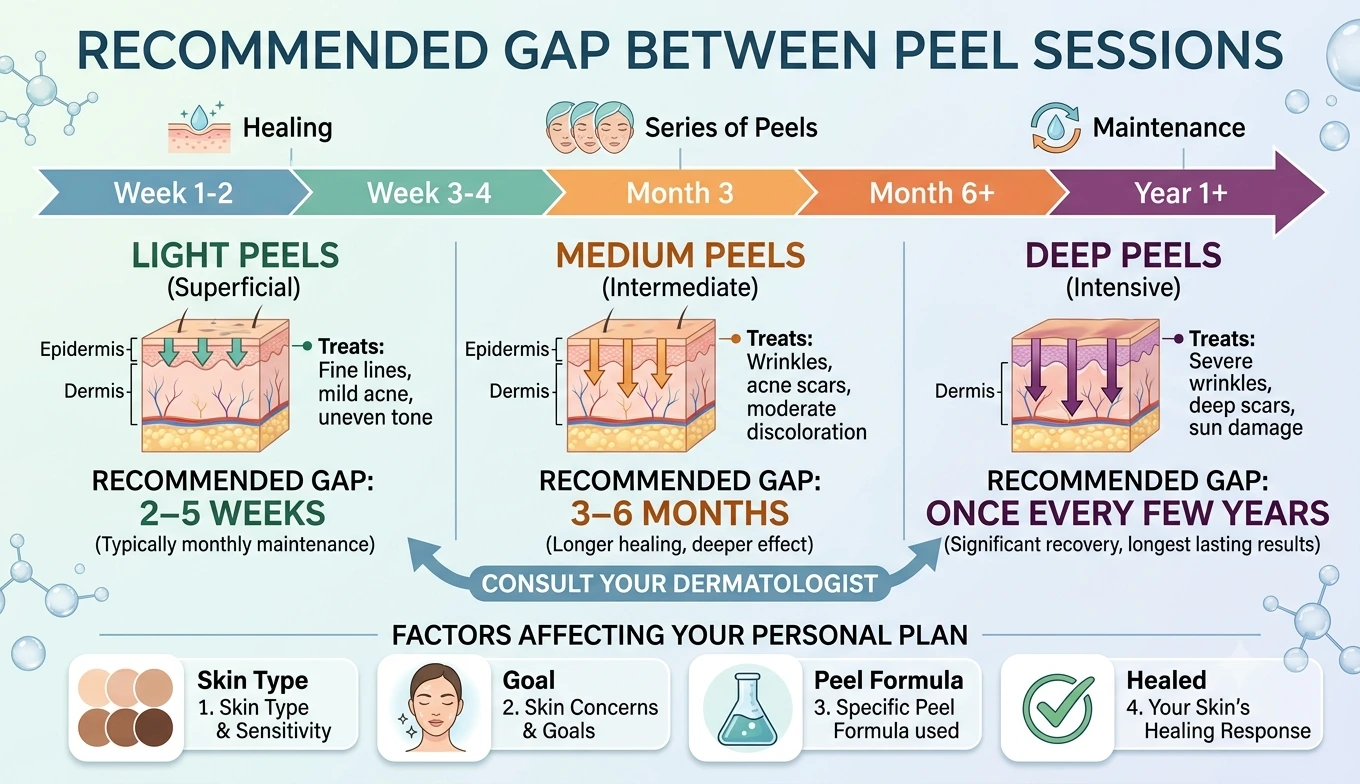
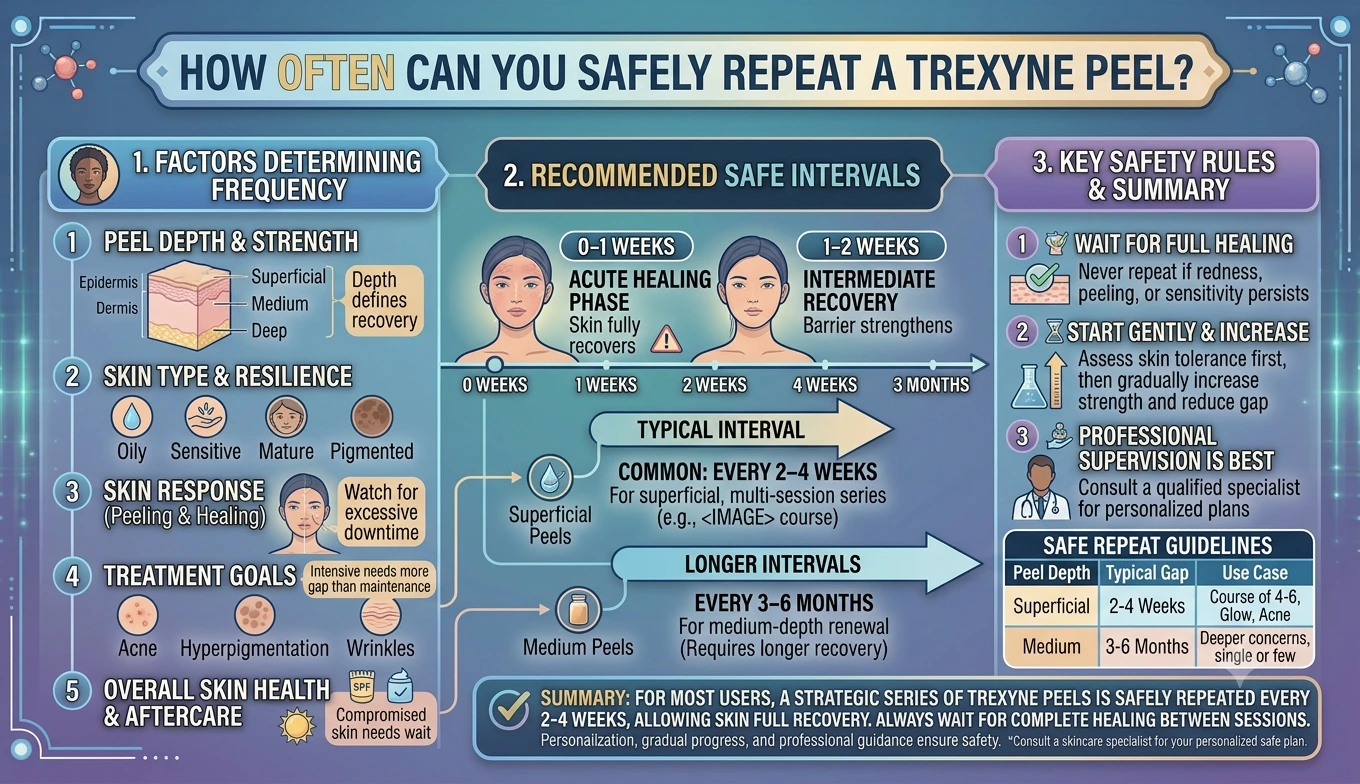
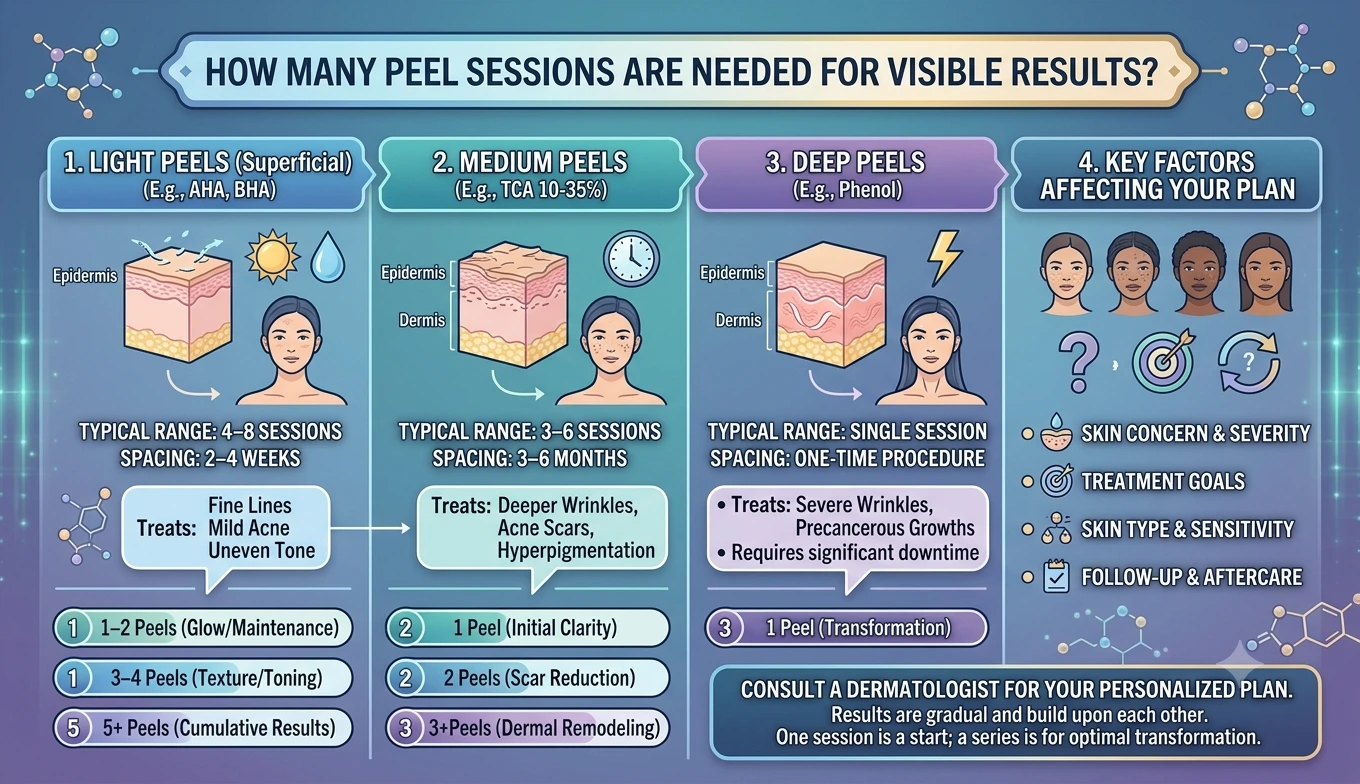
The recommended gap between peel sessions is typically several weeks, allowing the skin enough time to complete its natural renewal cycle before the next ...
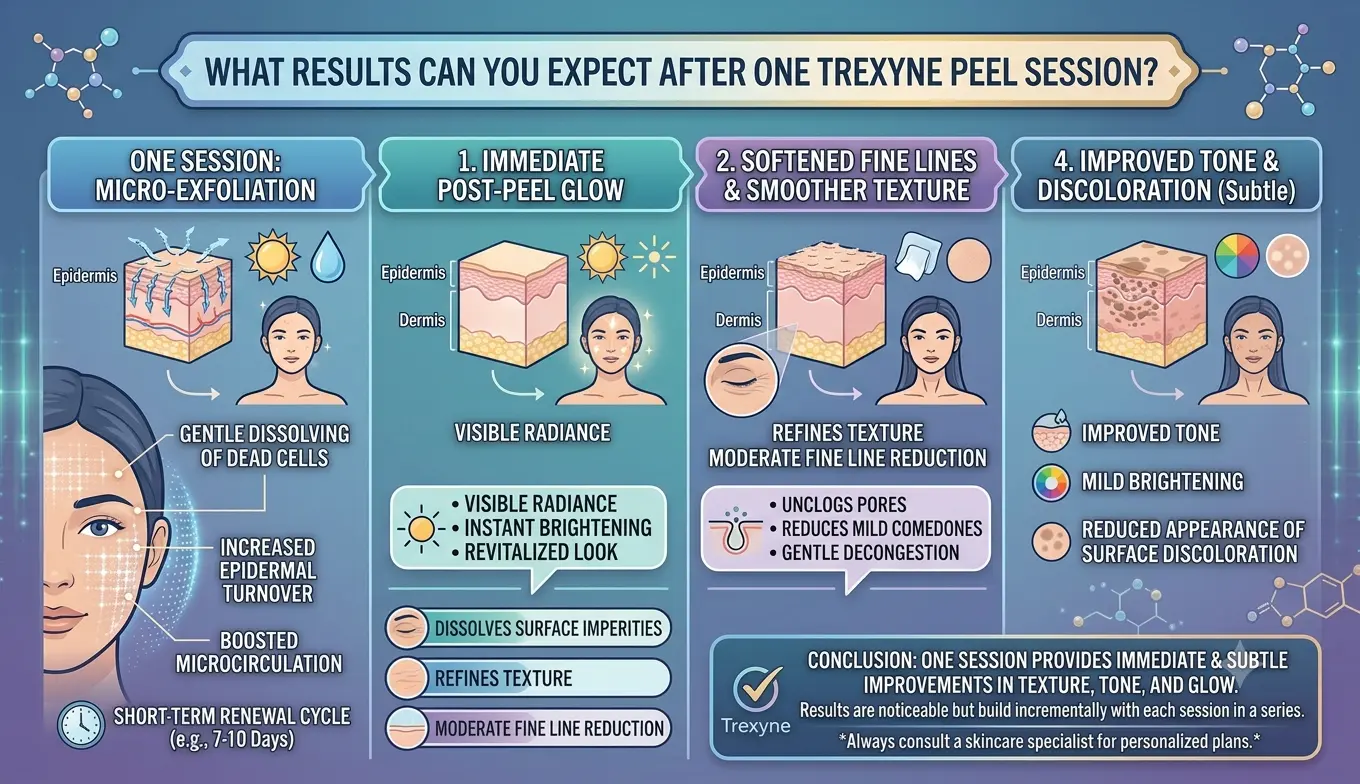
Clients often ask this question before their first appointment, and it deserves a clear answer. After one Trexyne Peel session, most clients notice smoother ...
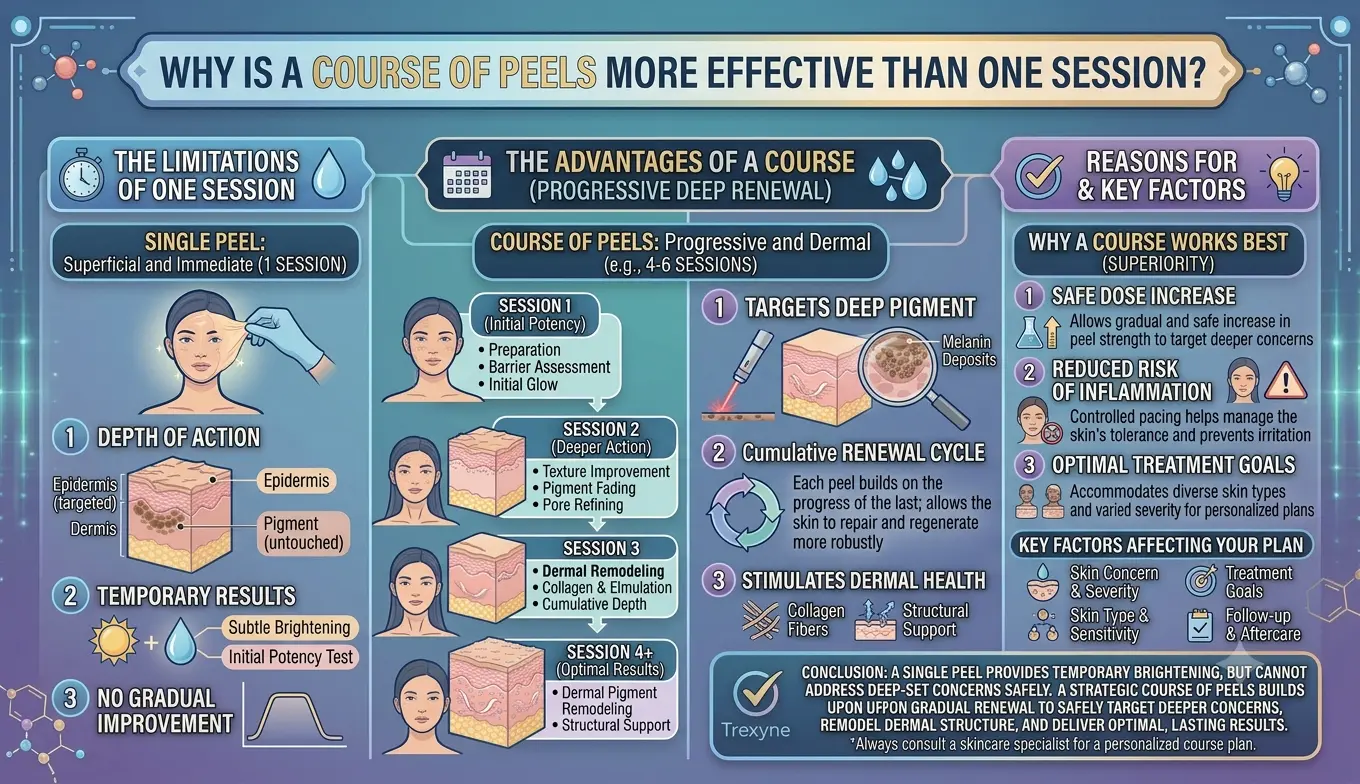
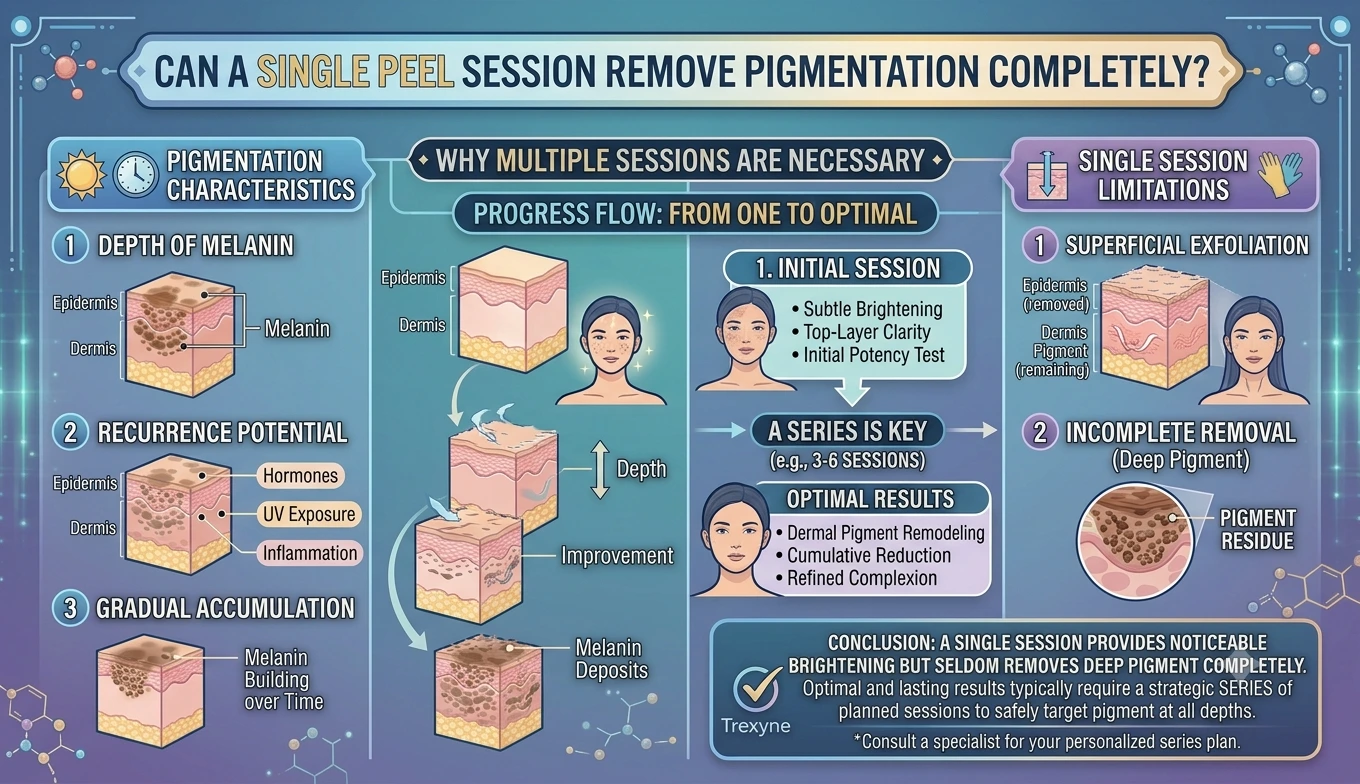
No, a single peel session cannot remove pigmentation completely, and any practitioner who promises this is setting a client up for disappointment. Pigmentation forms ...