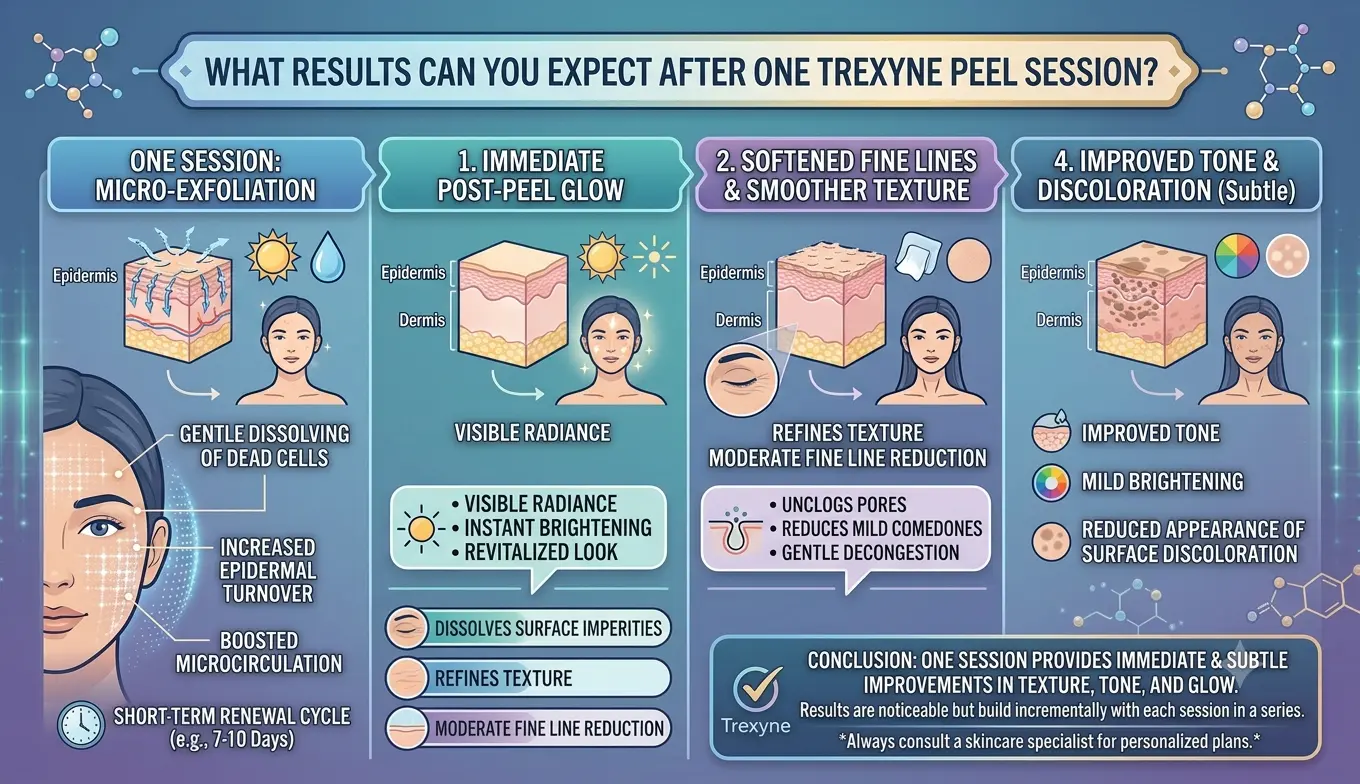
What Results Can You Expect After One Trexyne Peel Session?
Clients often ask this question before their first appointment, and it deserves a clear answer. After one Trexyne Peel session, most clients notice smoother texture, a more even skin tone, and a subtle brightness that builds over the following days. Because Trexyne works through a mechanical resurfacing action using marine-algae spicules rather than chemical exfoliants, the changes tend to feel gradual and controlled rather than dramatic overnight.
This matters for practitioners setting expectations. Clients who understand what a single session can realistically achieve are more likely to stay committed to a treatment plan and less likely to feel disappointed by day two. This post walks through what typically happens after one session, how the timeline unfolds, and what factors influence the outcome, so you can guide your clients with confidence.
How the Trexyne Peel Works During a Single Session
Trexyne Peel is a precision botanical peel built around marine-algae spicules and stabilised Vitamin E. It resurfaces and refines skin through a purely mechanical mechanism, creating controlled micro-channels in the skin’s surface. There are no acids involved and no chemical exfoliation taking place at any stage of the treatment.
During application, the practitioner works the formula across the skin in a controlled pattern. The spicules create fine, even micro-channels that encourage the skin’s natural renewal process. The stabilised tocopherol (Vitamin E) supports the recovery phase from the moment it is applied, which is one reason clients often describe the skin as feeling calm rather than irritated once the session ends.
Why the Mechanical Approach Changes the Timeline
Because the resurfacing happens mechanically rather than through chemical penetration, the skin’s response tends to be more predictable. Practitioners can match the intensity of the session to the client’s skin type and expectations using a tiered protocol, which is part of what makes it possible to plan a realistic single-session outcome rather than guessing.
Immediate Effects Straight After the Session
In the first few hours after treatment, most clients notice mild pinkness across the treated area, a bit like light warmth after time outdoors. This is a normal part of the skin’s response to the micro-channelling process and generally settles quickly.
Skin often feels slightly tighter than usual immediately afterwards. This is a temporary sensation and tends to ease within a few hours as the surface begins to settle. Some clients also notice their skin looks slightly more refined even at this early stage, though this is just the beginning of the process rather than the full result.
What Clients Should Avoid on the Day of Treatment
Clients should be advised to avoid heavy makeup application, excessive heat exposure, and vigorous exercise on the day of their session. Keeping the skin calm in these first hours supports a smoother transition into the days that follow.
The First 24 to 48 Hours
This window is when most of the visible changes begin to take shape. Mild redness may persist into the following morning for some clients, particularly those with more reactive skin types, though it is usually far less noticeable than the day of treatment.
Texture is often the first thing clients comment on. Many describe their skin as feeling smoother to the touch within a day of their session, even before any visible brightening appears. This is consistent with the mechanical resurfacing action working on the surface layer first.
Managing Sensitivity During This Period
Skin may feel more sensitive than usual for a day or two. A gentle, fragrance-free routine is usually recommended during this time, along with daily SPF, since freshly resurfaced skin benefits from extra protection while it settles.
Days Three to Five: The Renewal Phase Begins
By day three, many clients start to notice a change in how their skin looks rather than just how it feels. Tone may start to appear more even, and areas of dullness can begin to lift as the renewal process continues beneath the surface.
Some very light dryness or flaking can occur during this window as part of the skin’s natural turnover. This is generally mild with the Trexyne protocol, since the tiered intensity system is designed to avoid the extended downtime associated with more aggressive treatments. Predictable downtime is one of the defining features of this approach, which gives practitioners the ability to plan sessions around a client’s schedule with more certainty.
Supporting the Skin Through This Stage
Hydration becomes particularly important here. A simple routine with a gentle cleanser, a hydrating moisturiser, and daily sun protection helps the skin move through this phase smoothly and supports the results that are beginning to show.
One Week After Treatment: The Visible Results
At the one-week mark, most clients see the fuller picture of what a single Trexyne Peel session can achieve. Skin often appears brighter, smoother, and more even in tone compared to before the treatment. Fine textural irregularities may look softer, and the overall complexion often has a healthier, more refreshed appearance.
It is worth noting that a single session provides a meaningful but moderate improvement. The full extent of what Trexyne can offer typically becomes clearer across a course of treatments, since renewal is a cumulative process. This is why many practitioners recommend a treatment plan rather than a one-off session for clients working towards specific long-term goals, and it is something worth discussing openly during consultation.
Setting Realistic Expectations With Clients
Being transparent about this timeline helps clients feel informed rather than let down. A single session is a strong starting point, and framing it that way tends to build trust and encourage clients to continue with a structured plan.
Factors That Influence Individual Results
Not every client will see identical results from the same session, and it helps to explain why. Several factors shape how visible the changes are and how quickly they appear.
Skin Type and Condition Before Treatment
Clients starting with dull, congested, or unevenly toned skin often notice more dramatic improvements after a single session simply because there is more visible change to observe. Clients with already well-maintained skin may see more subtle, refined results.
Intensity Level Chosen
Because Trexyne uses a tiered protocol, the practitioner can select a lighter or more targeted intensity depending on the client’s skin type and comfort level. A lighter session will naturally produce a gentler, more subtle result compared to a more targeted approach, and this should factor into the conversation before treatment begins.
Aftercare Compliance
Clients who follow aftercare guidance closely, particularly around sun protection and gentle skincare, tend to see the best possible outcome from their session. Skipping SPF or introducing harsh actives too soon can undermine the renewal process and slow visible results.
Comparing One Session to a Course of Treatments
A single Trexyne Peel session offers a genuine improvement in texture and tone, but a course of treatments allows the cumulative benefits to build. Each session works on the renewal process a little further, which is why many clinics structure their offering around packages of 10 or 20 peels rather than single visits.
Clients interested in longer-term skin goals, such as sustained brightness or ongoing texture refinement, are often better served by a structured course. Practitioners can view the full range of options on the Trexyne shop to plan a package that suits each client’s needs and budget.
Why a Course Tends to Outperform a Single Visit
Renewal is not a single event. Each session builds on the last, supporting the skin’s natural processes more consistently over time. This is part of why the tiered protocol exists, allowing practitioners to adjust intensity across a course as the skin becomes more accustomed to treatment.
How Practitioners Can Maximise Single-Session Results
There are a few practical steps that help clients get the most from one appointment, even if they are not yet ready to commit to a full course.
Thorough Consultation Beforehand
A detailed skin assessment before treatment allows the practitioner to choose the most suitable intensity level and set accurate expectations. This step alone can make the difference between a client who feels satisfied and one who feels underwhelmed.
Clear Aftercare Guidance
Providing clients with simple, written aftercare instructions supports better compliance and, in turn, better results. This is a small addition that pays off in how the skin looks and feels over the following week.
Encouraging a Follow-Up Conversation
Booking a short follow-up check-in, whether in person or by message, gives practitioners the chance to assess progress and discuss whether a course of treatments would suit the client’s goals going forward.
Who Tends to See the Best Results From a Single Session
Clients preparing for a specific event, such as a wedding or photoshoot, often ask about single-session results because they need a defined timeline. For these clients, booking the session around one to two weeks in advance tends to work well, allowing enough time for the renewal process to progress while avoiding the more sensitive first 48 hours falling too close to the event.
Clients with generally healthy skin who want a refresh, rather than a significant transformation, also tend to be well suited to a single session. Those hoping to address more persistent concerns such as long-standing dullness or uneven texture are usually better guided towards a course.
Conclusion
A single Trexyne Peel session can support genuinely visible improvements in texture, tone, and overall radiance, particularly within the first week after treatment. Because the treatment works through a mechanical resurfacing action using marine-algae spicules and stabilised Vitamin E, the process tends to be predictable and manageable, with downtime that practitioners can tailor to each client through the tiered protocol.
While one session offers a strong starting point, the most noticeable and lasting improvements in skin tone and texture tend to build across a course of treatments. Practitioners who set clear expectations, provide thorough aftercare guidance, and discuss long-term goals during consultation help their clients get the most from every session. For clinics looking to bring this treatment into their offering, more information is available on the Trexyne website, and the team can be reached directly via the contact page for any questions on protocols or ordering.
FAQs
Q: How long does it take to see results after one Trexyne Peel session?
Most clients begin noticing smoother texture within 24 to 48 hours, with fuller results, including brighter and more even-looking skin, typically visible around the one-week mark.
Q: Is one Trexyne Peel session enough to see a noticeable difference?
Yes, a single session can produce a visible improvement in texture and tone, though the most significant results tend to build across a course of treatments as the skin’s renewal process continues.
Q: Does the Trexyne Peel cause peeling or flaking after treatment?
Some clients experience mild dryness or light flaking a few days after treatment as part of the skin’s natural renewal process, though this is generally minimal thanks to the tiered protocol.
Q: How much downtime should clients expect after one session?
Downtime is designed to be predictable and manageable, with mild redness or tightness on the day of treatment that typically settles within 24 to 48 hours.
Q: Can Trexyne Peel results vary between clients after just one session?
Yes, results depend on factors such as skin condition before treatment, the intensity level chosen, and how closely aftercare guidance is followed.
Q: Should clients book a single Trexyne Peel session or a course of treatments?
A single session works well for a refresh or before a specific event, while clients targeting long-term concerns such as dullness or uneven texture are generally better suited to a course.
Q: Is the Trexyne Peel suitable for sensitive skin after just one session?
The tiered protocol allows practitioners to select a gentler intensity for sensitive skin types, helping manage sensitivity while still supporting visible renewal.