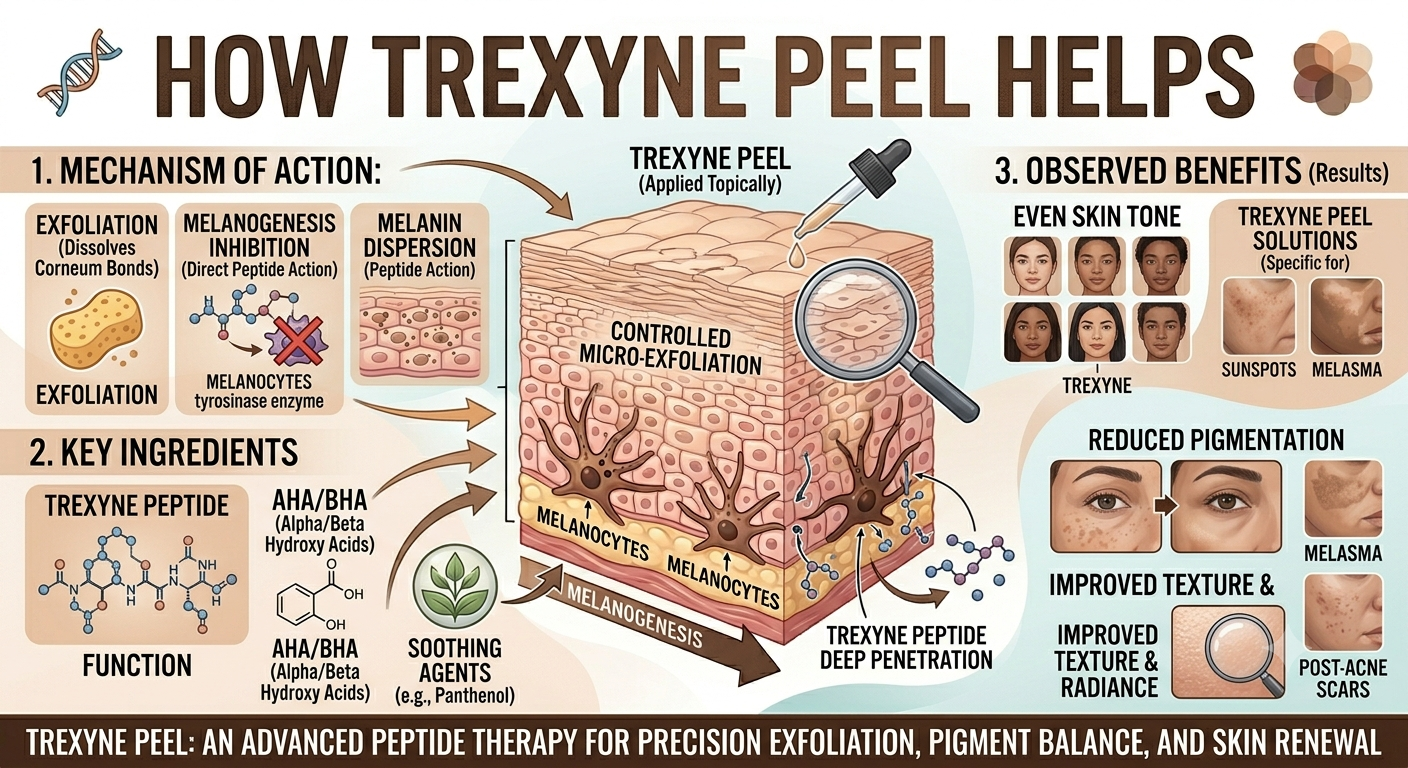
How Trexyne Peel Can Help Improve Pigmentation?
Pigmentation is one of the most persistent and frustrating skin concerns to manage. Dark spots, uneven skin tone, melasma, and post-acne marks can all linger for months or years despite consistent effort with topical products. For many people, the missing piece is a professional treatment that goes beyond the surface. The Trexyne Peel is a professionally applied chemical peel designed to address exactly these concerns. It works by removing pigmented surface cells, accelerating skin renewal, and supporting a visibly clearer and more even complexion. This article explains how it works, who it is suited for, and what kind of results you can realistically expect.
Why Topical Products Often Fall Short for Pigmentation
Walk into any pharmacy or beauty retailer and you will find dozens of products claiming to brighten skin and fade dark spots. Many of these contain legitimate active ingredients such as vitamin C, niacinamide, alpha arbutin, or kojic acid, all of which can reduce melanin production to some degree when used consistently.
The problem is penetration. Pigmentation does not always sit right on the surface. Depending on the type and how long it has been present, the excess melanin can be embedded several layers deep within the epidermis. Most over-the-counter formulations are not concentrated enough to reach these deeper deposits reliably, and results, when they come at all, tend to be slow and modest.
Professional chemical peels like Trexyne Peel use higher-strength formulations applied in controlled conditions. They physically remove layers of skin where the pigment is stored and signal the skin to regenerate at a faster rate. This is a fundamentally different mechanism from topical products, and it is what makes professional treatments more effective for moderate to significant pigmentation.
What Is Trexyne Peel?
The Trexyne Peel is a professional-grade chemical exfoliation treatment formulated for use by trained skincare practitioners in a clinical or aesthetic setting. It belongs to the family of chemical peels, which use carefully chosen acids and active compounds to dissolve the bonds between dead and damaged skin cells, allowing the outermost layers to shed and reveal fresher skin beneath.
What distinguishes Trexyne Peel from basic peeling products is the precision of its formulation and the expertise required to administer it properly. The strength, layering, and timing of the application are all calibrated to the individual’s skin type, tone, and the specific nature of their pigmentation. This level of customization is simply not possible with at-home products.
The treatment is typically carried out in a series of sessions, with the practitioner assessing the skin’s response after each one and adjusting the approach as needed. This iterative process allows for progressive improvement while minimizing the risk of irritation or adverse reactions.
How Trexyne Peel Works to Improve Pigmentation
The mechanism behind Trexyne Peel’s effectiveness against pigmentation involves several connected processes that work together over the course of treatment.
Controlled Exfoliation of Pigmented Cells
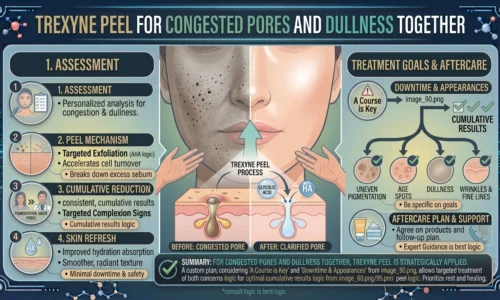
The active ingredients in the peel loosen the structural connections between skin cells in the outermost layers of the epidermis. This causes the surface layer to shed in a controlled way, taking with it the discolored, melanin-rich cells that create the appearance of dark spots and uneven tone. The result, once the skin has healed, is a cleaner, more uniformly toned surface.
Accelerated Skin Cell Turnover
Chemical peels effectively speed up the skin’s natural renewal cycle. Your skin normally replaces itself every four to six weeks, but this process slows with age and can be interrupted by UV damage or inflammation. By stimulating the production of new cells and clearing the old ones faster, Trexyne Peel shortens the time it takes for fresh, evenly pigmented skin to reach the surface.
Reduction in Melanin Concentration
With repeated treatments, the overall concentration of melanin in the treated areas decreases as pigmented cells are continually removed before new discoloration can accumulate to the same degree. This is why results become more pronounced over a series of sessions rather than after a single treatment.
Improvement in Overall Skin Texture and Tone
Beyond targeting specific dark spots, Trexyne Peel improves the skin’s general texture by smoothing rough patches and reducing dullness. The combination of a clearer surface and healthier underlying skin contributes to the overall brightening effect that many patients notice after completing their treatment plan.
Types of Pigmentation Trexyne Peel Can Help Address
Trexyne Peel is suited to a range of pigmentation concerns, though the degree of improvement will vary depending on the type, depth, and duration of the discoloration.
Post-Inflammatory Hyperpigmentation
Dark marks left behind by acne, minor skin injuries, or inflammation often respond very well to chemical peeling. Because this type of pigmentation tends to sit in the upper layers of the skin, the exfoliation process can remove it efficiently, particularly when treatment begins before the marks become deeply established.
Sunspots and Solar Lentigines
Sunspots are among the most treatable forms of pigmentation. Chemical peels are particularly effective here because UV-induced pigmentation is concentrated in the epidermis. Trexyne Peel clears these surface deposits while encouraging the skin to regenerate without the same level of melanin accumulation.
Melasma
Melasma is more complex due to its hormonal drivers and tendency to affect deeper layers of the skin. Chemical peeling can reduce its visible appearance, but it often requires a combination approach that includes topical brightening ingredients, sun protection, and possibly hormonal management. Trexyne Peel can form an important part of this plan, though the practitioner should be experienced with melasma specifically.
Age Spots and General Skin Discoloration
Accumulated discoloration from aging and years of sun exposure also responds to professional peeling. Older spots may take more sessions to address than fresher marks, but consistent treatment and diligent sun protection make meaningful improvement achievable.
The Treatment Process: What Happens During a Session
Understanding what to expect during a Trexyne Peel session can help you prepare and feel confident going into the appointment.
Step 1: Consultation and skin assessment. Before any treatment begins, your practitioner will evaluate your skin type, pigmentation type, and overall skin health. This assessment determines the appropriate peel strength and any customizations required for your skin.
Step 2: Skin preparation. The skin is thoroughly cleansed to remove makeup, oils, and any product residue. Some practitioners also apply a pre-peel solution to help the active ingredients penetrate more evenly.
Step 3: Peel application. The Trexyne Peel solution is applied to the skin in a controlled manner, starting with less sensitive areas and working systematically. The practitioner monitors the skin’s response closely during this phase.
Step 4: Neutralization or removal. Depending on the specific formulation, the peel may be neutralized with a specific solution or timed to self-neutralize. Your practitioner will determine which approach is appropriate.
Step 5: Post-treatment care. A calming serum, moisturizer, and SPF are applied after the peel to soothe the skin and protect it during the initial healing period. You will also receive aftercare instructions to follow at home.
Who Is a Good Candidate for Trexyne Peel?
Trexyne Peel is appropriate for a wide range of skin types and concerns, but a professional assessment is essential to confirm suitability. Generally, good candidates include:
- People with sunspots, age spots, or general solar damage on the face or body
- Those dealing with post-acne dark marks that have not responded to topical products
- Individuals with mild to moderate melasma seeking to reduce visible patches
- People with dull, uneven skin tone looking for a more refreshed and consistent complexion
- Adults across a wide age range who want to address the effects of cumulative sun damage
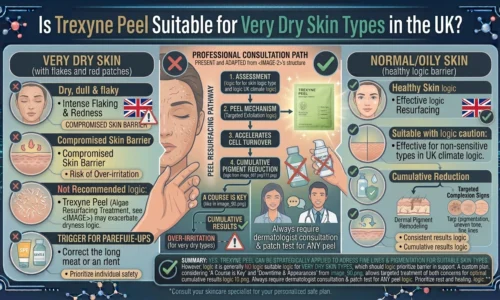
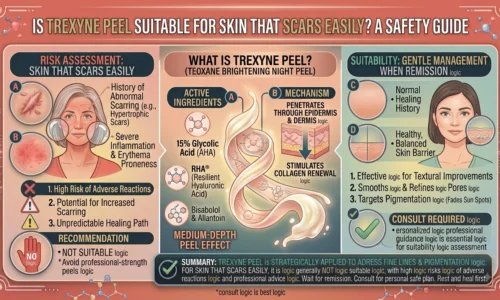
Certain conditions may require the practitioner to delay or modify treatment. Active breakouts, open wounds, recent sun exposure, use of certain medications such as isotretinoin, and very sensitive or reactive skin may all be factors that affect timing or approach. A thorough consultation will identify these considerations before any treatment proceeds.
Aftercare: What to Do Between Sessions
What you do between treatment sessions is just as important as the treatment itself. Following the right aftercare protocol protects your results and helps your skin recover properly.
Sun Protection
This is the most critical part of post-peel care. Chemical peels increase the skin’s sensitivity to UV radiation. Without daily SPF of at least 30, UV exposure will not only slow your recovery but also trigger new melanin production that works directly against the results you are trying to achieve. Broad-spectrum protection, applied every morning and reapplied through the day, is non-negotiable.
Gentle Skincare Routine
In the days following treatment, your skin needs simplicity. Avoid exfoliating acids, retinoids, or any product with a high alcohol content. Stick to a gentle cleanser, a hydrating moisturizer, and your SPF. Your practitioner will advise you on when it is safe to reintroduce more active products.
Avoid Picking or Pulling
Peeling skin should be allowed to shed on its own. Picking at flaking skin can disrupt the healing process and actually increase the risk of post-inflammatory hyperpigmentation, which is the opposite of what you are trying to achieve.
What Results Can You Realistically Expect?
Results from Trexyne Peel are progressive rather than immediate. Understanding the realistic timeline helps you approach the process with the right expectations.
After your first session, you may notice some initial brightness once the peeling phase is complete, typically within seven to fourteen days. The skin may appear slightly red or sensitive immediately after treatment, which is a normal part of the process.
With each subsequent session, the improvement in pigmentation becomes more noticeable. Sunspots and post-acne marks tend to show the most visible response, while deeper or hormonally driven pigmentation may require more sessions and a longer timeline.
Most practitioners recommend a series of treatments spaced several weeks apart. After completing the initial series, periodic maintenance sessions help preserve the results and prevent significant pigmentation from reaccumulating.
The patients who see the best outcomes are those who combine their professional pigmentation treatment with consistent sun protection, a targeted home routine, and realistic expectations about the pace of improvement.
Conclusion
Pigmentation is a persistent concern that topical products alone often cannot adequately address. Trexyne Peel offers a professionally guided route to reducing the appearance of dark spots, uneven skin tone, and discoloration by exfoliating pigmented surface cells, accelerating skin renewal, and progressively improving the skin’s overall clarity and texture.
With the right candidate assessment, a properly structured treatment series, and a committed approach to sun protection and aftercare, the results can be genuinely meaningful. If you are ready to move beyond products that promise and underdeliver, exploring advanced skin peel solutions like Trexyne Peel with a qualified skincare professional may be the most effective step you can take toward a clearer, more even complexion.
Frequently Asked Questions
1. How does Trexyne Peel help with pigmentation?
Trexyne Peel works by applying a professionally formulated chemical solution to the skin that loosens and removes the outer layers where pigmentation is concentrated. This reveals fresher, more evenly toned skin and stimulates the production of new cells. Over a series of sessions, the visible appearance of dark spots, uneven tone, and skin discoloration is progressively reduced.
2. How many Trexyne Peel sessions are needed to see improvement in pigmentation?
Most patients begin to notice visible improvement after one to two sessions, with more significant results becoming apparent after three to five treatments. The exact number depends on the type and severity of the pigmentation, the individual’s skin response, and how consistently aftercare guidelines, particularly sun protection, are followed.
3. Is Trexyne Peel safe for post-inflammatory hyperpigmentation from acne?
Yes, Trexyne Peel is well-suited to addressing post-inflammatory hyperpigmentation. This type of dark mark tends to respond effectively to chemical exfoliation because the pigment typically sits in the upper layers of the skin. Early treatment, before marks become deeply established, generally produces the fastest and most complete results.
4. Can Trexyne Peel be used on the body as well as the face?
Chemical peels can be applied to body areas as well as the face, making them useful for sun spots on the hands, chest, and shoulders. Whether Trexyne Peel is recommended for body areas depends on the practitioner’s assessment and the specific formulation used. Your treatment provider can advise on the best approach for your particular concerns.
5. How long do the results of Trexyne Peel last?
Results are long-lasting when combined with consistent sun protection and appropriate maintenance. Without ongoing SPF use and periodic follow-up sessions, pigmentation can return, particularly if the original triggers such as sun exposure or hormonal activity are still present. Maintenance treatments spaced a few months apart help sustain the improvements achieved during the initial series.
6. What is the downtime after a Trexyne Peel?
Downtime varies depending on the strength of the peel. Lighter peels may cause minimal visible shedding and only a day or two of mild sensitivity. Deeper treatments may involve more pronounced peeling over the course of five to ten days. Your practitioner will give you a realistic expectation of what to anticipate based on the specific protocol used for your treatment.
7. Can Trexyne Peel be combined with other pigmentation treatments?
In many cases, yes. A comprehensive approach to pigmentation often includes a combination of professional peels, topical brightening ingredients, and sun protection. Some practitioners also recommend pairing peels with other in-clinic treatments. Your practitioner will design a plan based on your pigmentation type, skin goals, and any previous treatments you have had.