What Causes Pigmentation?
Pigmentation is one of those skin concerns that can appear seemingly out of nowhere. One day your skin looks even and clear, and the next you notice a dark patch forming on your cheek, a cluster of spots on your hands, or a stubborn mark left behind by a pimple that healed weeks ago. The truth is that pigmentation rarely develops without a cause. Something triggers the skin’s melanin-producing cells to go into overdrive, and understanding what that trigger is makes all the difference when it comes to treatment. This article breaks down the main causes of pigmentation, explains what happens in the skin during each, and explores how professional options like the Trexyne Peel can help reduce the visible effects.
How Pigmentation Develops: A Brief Overview
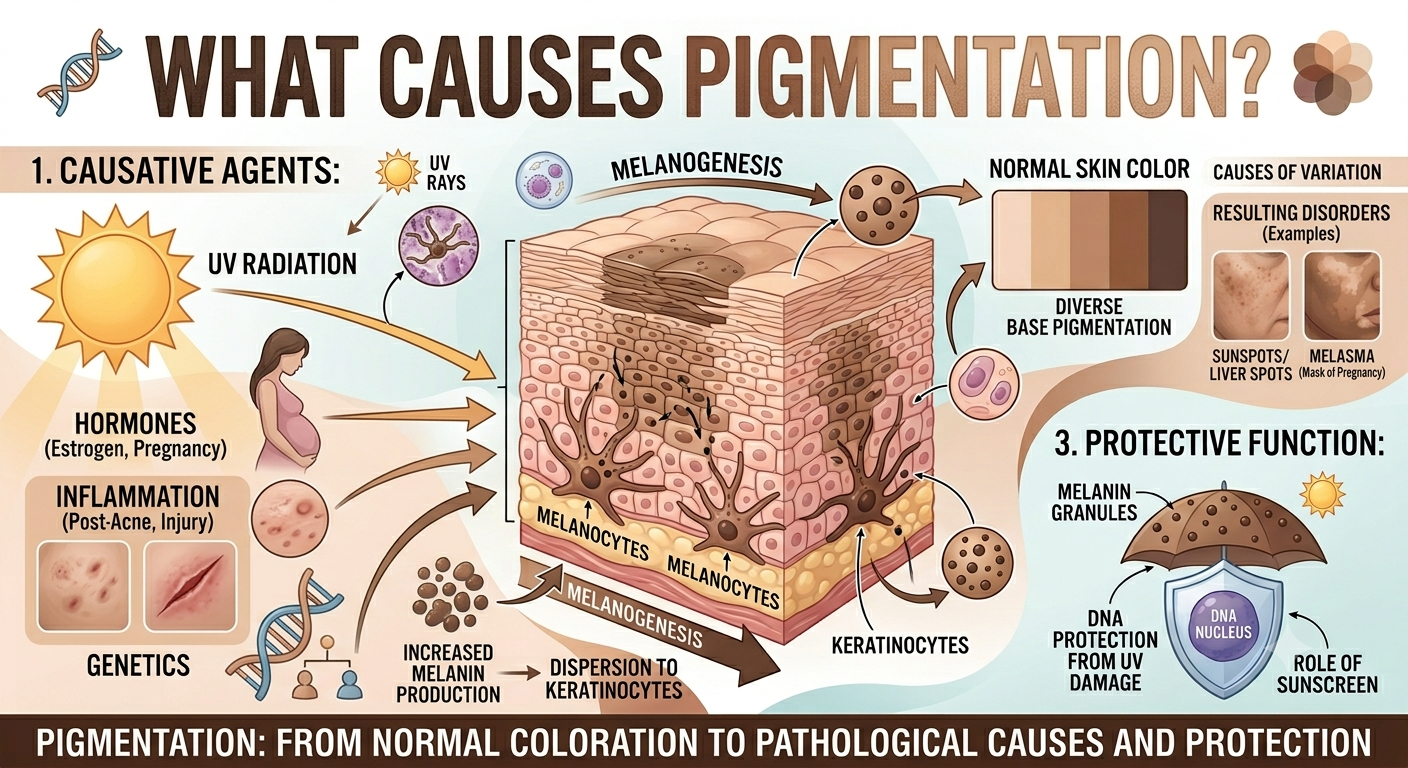
Before exploring the individual causes, it helps to understand the basic mechanism behind pigmentation. Your skin contains cells called melanocytes, which produce a pigment called melanin. This pigment determines your skin tone and plays a protective role against ultraviolet radiation.
Under normal conditions, melanocytes produce a steady and balanced amount of melanin. When they receive signals that the skin is under stress, whether from UV rays, inflammation, or hormonal shifts, they ramp up production. The excess melanin gets deposited in surrounding skin cells and eventually rises to the surface, creating the dark spots and uneven patches we recognize as pigmentation.
Different triggers stimulate this process through different pathways, which is why the type and pattern of pigmentation can vary so much from person to person.
1. Sun Exposure
UV radiation from the sun is the single most common cause of pigmentation. When your skin is exposed to sunlight, ultraviolet rays penetrate the epidermis and activate an enzyme called tyrosinase, which drives melanin production. This is the skin’s natural defense mechanism against DNA damage caused by UV radiation.
In the short term, this produces a tan. Over years of cumulative exposure, it leads to the formation of sunspots, also called solar lentigines. These appear as flat, well-defined patches of darker skin on sun-exposed areas including the face, hands, chest, and shoulders.
Even brief, repeated sun exposure without protection adds up over time. This is why sunscreen with a broad-spectrum SPF is the most fundamental step in any pigmentation prevention or treatment routine.
2. Hormonal Changes
Hormones directly influence melanocyte activity. Estrogen and progesterone can stimulate the cells that produce melanin, which is why significant hormonal shifts often lead to visible changes in skin tone.
The most well-known hormonal pigmentation condition is melasma. It appears as large, symmetrical brown or grayish patches, typically on the forehead, cheeks, upper lip, and nose. Pregnancy is a common trigger, which is why melasma is sometimes called the mask of pregnancy. Oral contraceptives and hormone replacement therapy can also cause or worsen it.
Hormonal pigmentation is particularly challenging to treat because the underlying driver, the hormonal fluctuation, may be ongoing. Even after successful treatment, it can return if the hormonal trigger remains active and sun protection is not maintained consistently.
3. Acne and Skin Inflammation
Every time the skin experiences significant inflammation, whether from a breakout, an allergic reaction, or physical trauma, it is at risk of developing post-inflammatory hyperpigmentation. This occurs because inflammation activates melanocytes as part of the healing response. When the inflammation resolves, the excess melanin is left behind as a dark mark.
Post-inflammatory hyperpigmentation is especially common in people with medium to dark skin tones, whose melanocytes are naturally more reactive. It can also follow eczema flares, psoriasis, insect bites, minor burns, and even aggressive skincare treatments that irritate the skin.
The frustrating part is that the original cause, the pimple or the rash, may heal quickly, but the pigmentation it leaves behind can last for months or even years without targeted treatment.
4. Aging
As the skin ages, its ability to regulate melanin production becomes less precise. Decades of UV exposure accumulate in the melanocytes, and the skin’s natural repair processes slow down significantly. The combination leads to the clustering of melanin in certain areas rather than its even distribution.
Age spots, sometimes called liver spots, are one of the most visible results of this process. They appear most frequently on areas that have had the most sun exposure over a lifetime. While they are completely harmless, they are a reliable sign of cumulative UV damage and are among the most common reasons people seek skin brightening treatments after the age of 40.
Slower cell turnover in aging skin also means that pigmented cells stay on the surface longer, making dark spots look more pronounced and taking longer to fade even with treatment.
5. Genetics
Your genetic makeup has a significant influence on how your melanocytes behave and how prone you are to developing pigmentation issues. Some people are simply born with more reactive melanocytes, meaning their skin is more likely to respond to triggers like inflammation or UV exposure with excess melanin production.
Freckles are a clear example of genetically driven pigmentation. They are more common in people with lighter skin and red or blond hair and are directly linked to inherited traits that affect how melanin is distributed.
A family history of melasma or post-inflammatory hyperpigmentation also increases your likelihood of developing these conditions. While genetics cannot be changed, understanding your predisposition helps you make more informed decisions about prevention and treatment.
6. Certain Medications
A number of prescription and over-the-counter medications can trigger or worsen pigmentation as a side effect. Some do this by increasing the skin’s sensitivity to UV radiation, a property called photosensitivity, while others directly affect melanin metabolism.
Common medications linked to pigmentation changes include:
- Tetracycline and other antibiotics
- Non-steroidal anti-inflammatory drugs (NSAIDs)
- Antifungal medications
- Anti-seizure drugs such as phenytoin
- Antimalarial medications
- Some chemotherapy agents
If you notice new pigmentation appearing after starting a medication, it is worth speaking with your prescribing doctor. In some cases, the medication can be adjusted, but even where it cannot, this knowledge helps guide your skincare strategy and reinforces the importance of sun protection.
7. Skin Injuries and Physical Trauma
Any physical damage to the skin, from a cut or abrasion to a surgical incision or a burn, can trigger post-inflammatory hyperpigmentation in the healing area. The injury sets off an inflammatory cascade in the skin, which in turn activates melanocytes.
This is also why aggressive skincare treatments, including chemical peels administered incorrectly or laser procedures used at the wrong settings for a given skin type, can sometimes worsen pigmentation rather than improve it. In the hands of a properly trained practitioner, these same treatments can be transformative. The key is correct technique, appropriate patient selection, and skilled post-treatment care.
8. Underlying Health Conditions
In some cases, pigmentation changes are a signal that something is happening internally. Addison’s disease, a disorder of the adrenal glands, can cause widespread darkening of the skin. Thyroid imbalances have also been linked to changes in skin tone. Certain liver conditions can produce areas of discoloration as well.
This is not to suggest that every dark spot is a medical concern. The vast majority of pigmentation issues are cosmetic in nature and driven by the external factors discussed above. However, if pigmentation develops suddenly, spreads rapidly, or is accompanied by other symptoms, it is always worth ruling out an underlying health cause with a doctor before pursuing cosmetic treatment.
Why Addressing the Root Cause Matters
Treating pigmentation without addressing its underlying cause is a bit like mopping water off the floor without fixing the leaking pipe. You may see temporary improvement, but the issue will keep returning.
This is especially true for hormonally driven pigmentation like melasma and for pigmentation caused by ongoing sun damage. Without controlling the trigger, even highly effective professional treatments will only offer temporary relief.
A professional pigmentation treatment such as the Trexyne Peel can significantly reduce the visibility of existing pigmentation by removing pigmented surface cells and stimulating fresh skin growth. But it works best as part of a broader strategy that includes identifying and managing the specific causes relevant to your skin.
Conclusion
Pigmentation develops when the skin’s melanin-producing cells are disrupted by one or more triggers. Sun exposure is the most universal cause, but hormonal changes, inflammation from acne, aging, genetics, certain medications, physical injury, and health conditions all play a role.
Knowing what causes pigmentation in your specific case puts you in a much stronger position to treat it effectively. For those looking to reduce existing dark spots and uneven skin tone, advanced skin peel solutions like the Trexyne Peel offer a professionally guided path to a clearer, more consistent complexion, particularly when combined with targeted sun protection and a skincare routine designed around your skin’s needs.
Frequently Asked Questions
1. What is the most common cause of pigmentation on the face?
Sun exposure is the leading cause of facial pigmentation. UV radiation from the sun triggers melanocytes to produce excess melanin, which accumulates in the skin over time and leads to sunspots, uneven tone, and general discoloration. Hormonal changes, particularly during pregnancy or from contraceptive use, are the second most common driver and are specifically linked to melasma.
2. Why does acne cause dark spots on the skin?
When a pimple becomes inflamed, the skin responds by activating melanocytes in the affected area as part of the healing process. These cells produce extra melanin, which gets deposited in the skin and remains as a dark mark after the pimple heals. This is called post-inflammatory hyperpigmentation and is more common and more pronounced in darker skin tones.
3. Can stress cause pigmentation?
Stress can contribute indirectly to pigmentation. Chronic stress triggers hormonal fluctuations, including elevated cortisol, that can affect melanin production. It also compromises the skin’s barrier function and can worsen inflammatory skin conditions like acne, which in turn may lead to post-inflammatory hyperpigmentation. Managing stress is part of an overall approach to skin health.
4. Does diet affect skin pigmentation?
Diet can play a supporting role. Antioxidant-rich foods, particularly those high in vitamin C, help protect the skin from oxidative stress caused by UV exposure and may support a more even skin tone over time. Conversely, a diet high in processed foods and low in nutrients can contribute to inflammation, which increases the risk of post-inflammatory pigmentation.
5. Can hormonal pigmentation be treated effectively?
Hormonal pigmentation, particularly melasma, can be treated and visibly improved, though it tends to be more stubborn than other types. Professional options such as the Trexyne Peel help reduce the appearance of existing pigmentation by accelerating cell turnover and removing discolored surface cells. However, melasma often requires ongoing management and consistent sun protection to prevent recurrence, especially if hormonal triggers remain active.
6. Why does my skin get darker in the summer?
Increased sun exposure during summer months stimulates your melanocytes to produce more melanin as a protective response to UV radiation. This is what creates a tan. For some people, especially those prone to pigmentation, summer can also intensify existing dark spots or bring out new ones. Year-round SPF use is the most effective way to minimize this seasonal pattern.
7. Are dark spots from sun damage permanent?
Sun damage spots can fade with treatment, particularly when caught early and addressed with professional options such as chemical peels. Older or deeper sunspots may take longer to respond and could require multiple sessions. Without ongoing sun protection, they are likely to return or worsen, which is why SPF is considered an essential part of any pigmentation treatment plan.