Should You Stop Using Retinol Before a Professional Peel?
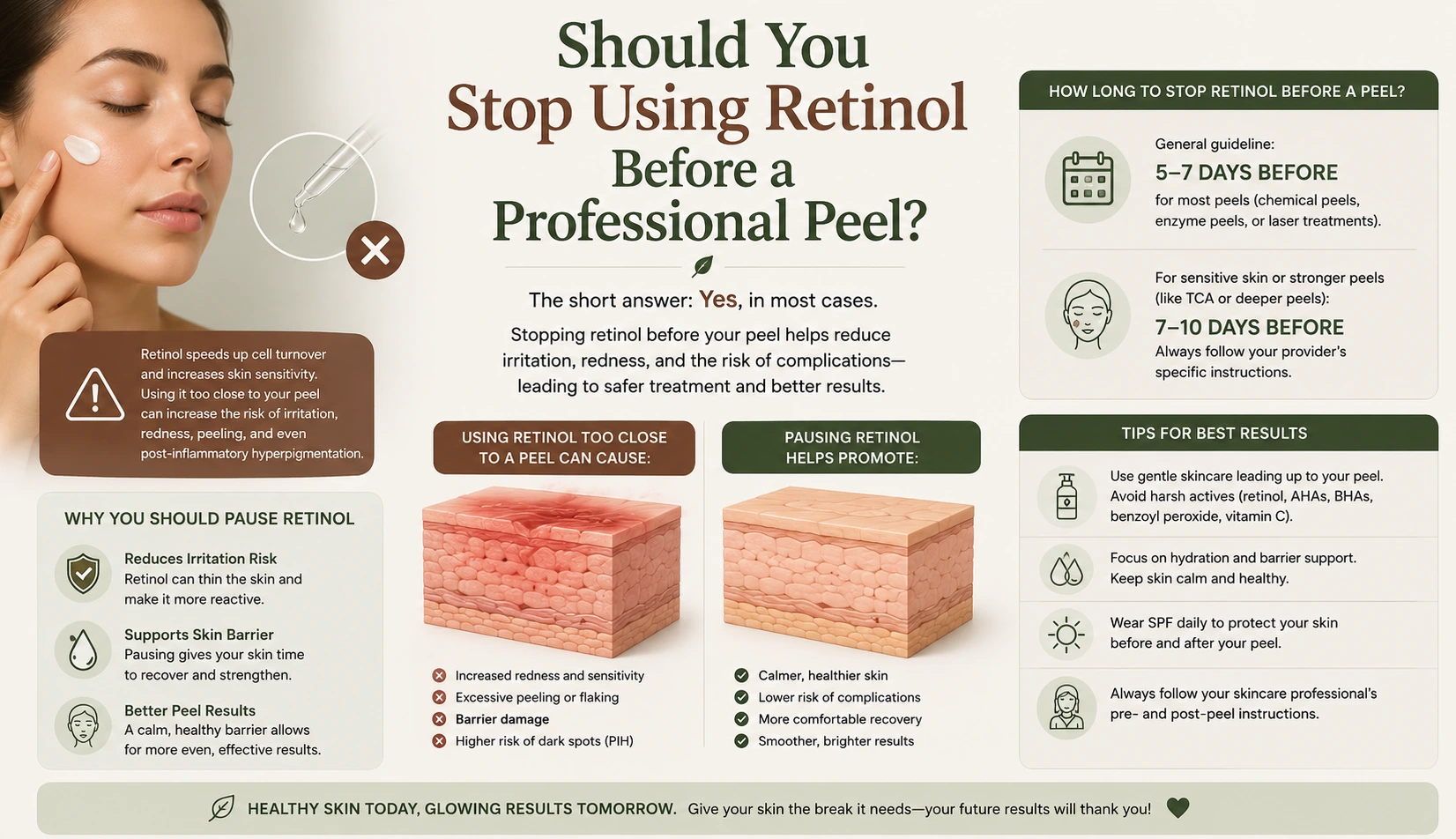
Yes, you should stop using retinol before a professional peel. This is one of the most consistently important pieces of pre-treatment preparation, and it is one of the most commonly overlooked. The reason is straightforward: retinol thins the outermost layer of the skin and increases its sensitivity to resurfacing stimuli. Applying a professional resurfacing treatment to skin that is still actively influenced by retinol can produce a stronger and more difficult recovery than the same treatment would on skin that has been given time to return to its normal baseline. This is not a minor precaution. It is a clinical necessity that directly affects how the skin responds and recovers. For clients booking a session of the Trexyne Peel or any other professional resurfacing treatment, pausing retinol at the right time before the appointment is one of the simplest and most impactful things they can do to support a smooth experience and a clean recovery.
What Retinol Does to the Skin Before a Peel
Retinol is a form of vitamin A that accelerates cell turnover and, over time, thins the stratum corneum, the outermost layer of dead skin cells that forms the skin’s first line of barrier defence. This thinning is one of the reasons retinol produces visible improvements in skin texture and radiance with consistent use. But it also means that skin actively using retinol has less of this protective outer layer than it would otherwise have.
When a professional resurfacing treatment is applied to skin with a thinned stratum corneum, the resurfacing mechanism has less protective buffering between it and the more sensitive living skin layers beneath. For a mechanical resurfacing treatment like the Trexyne Peel, this means the micro-channels created by the marine-algae spicules interact with skin that is already in a sensitised, partially disrupted state, which can produce a response that is more intense than the treatment intensity selected would typically generate.
For chemical resurfacing treatments, the issue is compounded further because the chemical agents can penetrate more deeply than intended when the barrier is thinned, producing a depth of effect beyond what the concentration applied would normally reach.
How Long to Stop Before Treatment
The appropriate pause period before a professional peel depends on the type and strength of the retinoid being used.
For over-the-counter retinol products, which are converted in the skin through a multi-step process before reaching their active form, a pause of five to seven days before a professional resurfacing session is generally appropriate. This gives the stratum corneum time to recover towards its normal thickness and the skin’s sensitivity to return to its baseline level.
For prescription-strength retinoids, including tretinoin and higher-strength adapalene, the required pause is longer, typically at least seven to ten days. Prescription retinoids are considerably more potent than over-the-counter retinol and produce a greater degree of stratum corneum thinning and skin sensitisation. The longer pause reflects this more significant influence on the skin’s barrier state.
Clients who are unsure about the strength of the retinoid they are using should mention it to their practitioner at the pre-treatment consultation. The practitioner is best placed to advise on the appropriate pause period based on the specific formulation and the individual’s skin condition.
What Happens if You Do Not Stop in Time
Failing to pause retinol before a professional peel does not guarantee a problem, but it significantly increases the risk of one. The most common outcomes of resurfacing retinol-sensitised skin are a more intense and longer recovery period than expected, including more pronounced redness and a more significant shedding phase, and in susceptible skin types, a higher risk of post-inflammatory hyperpigmentation from the more intense inflammatory response that the combination produces.
Some clients discover this the hard way, attending a professional session without pausing retinol and finding that what the practitioner described as a gentle or moderate treatment produces a week or more of difficult recovery. This experience is not caused by anything going wrong with the treatment itself. It is a predictable outcome of the skin arriving at the session in a sensitised state that was not accounted for in the intensity selection.
The practical takeaway is that disclosing retinol use to the practitioner before every session, not just the first one, allows the practitioner to adjust intensity appropriately or to advise a brief delay to allow the pause period to be completed. This small adjustment protects the client from an unnecessarily difficult recovery.
Why Practitioners Need to Know About Your Retinol Use
Practitioners assess skin and select treatment intensity based on what they can observe at the appointment. They can assess redness, sensitivity, barrier condition, and texture, but they cannot see whether a client has been using retinol without being told. A client who attends a session after five days of retinol use, having paused only two days before the appointment, may look perfectly calm and suitable for the planned treatment intensity. The practitioner has no way of knowing the stratum corneum is thinner than it appears.
This is why proactive disclosure at every appointment matters. It should become part of the standard pre-session check that practitioners conduct, but clients can also advocate for their own safety by mentioning it without being asked. For clients undergoing a sustained course of the Trexyne Peel across several months, each appointment is a fresh opportunity for the skin to present in a different condition from the last, and retinol use is one of the most clinically significant variables within that.
The Tiered Protocol and How Retinol Disclosure Affects Intensity Selection
The Trexyne Peel’s tiered protocol gives practitioners the flexibility to adjust treatment intensity based on the skin’s condition at each appointment. If a client discloses that they have been using retinol and the pause period is not yet complete, the practitioner has two options: advise delaying the session by a few days to allow the pause to finish, or adjust intensity downward to account for the sensitised skin state.
Neither option requires cancelling the course or losing significant momentum. A brief delay of a few days or a slight reduction in intensity for one session protects the skin and sets the course up for a better outcome than proceeding at standard intensity on sensitised skin would produce.
This is one of the practical clinical advantages of a tiered, flexible protocol over a fixed-intensity treatment where the only options are proceeding as planned or cancelling entirely.
What to Do in the Days Before Your Session
The pre-treatment period of approximately one week before a professional resurfacing session is a time to simplify the skincare routine significantly. Pausing retinol is the most important step, but it is worth considering the broader routine at the same time.
Other active ingredients that increase skin sensitivity should also be paused or reduced during this window. These include vitamin C serums at high concentrations, exfoliating acids including AHAs and BHAs used at home, and any other actives that are specifically designed to increase skin turnover or disrupt the skin surface. The principle is the same as with retinol: these products increase skin sensitivity and alter the skin’s baseline state in ways that affect how it responds to professional resurfacing.
Keeping the routine stripped back to a gentle cleanser, a simple moisturiser, and daily SPF in the days before treatment gives the skin the calmest possible baseline for the professional session and the most predictable recovery afterwards. This is not a complicated instruction, but it requires clients to receive it clearly and specifically enough to act on it, which is why written pre-treatment guidance sent before the appointment is consistently more effective than verbal instructions given on the day.
Practitioners who use the Trexyne Peel can find product information and stocking options via the Trexyne shop, or contact the team through the Trexyne contact page.
When You Can Restart Retinol After a Peel
The post-treatment window is as important as the pre-treatment pause when it comes to retinol management around a professional session. Reintroducing retinol too soon after a resurfacing treatment places an additional cell turnover stimulus on skin that is already in an active repair phase, which can extend the recovery period and, in susceptible skin, increase the risk of PIH.
As a general guideline, retinol should not be reintroduced until the skin has fully settled after the treatment, which typically means waiting until visible redness and superficial shedding have resolved, usually seven to ten days after a session depending on the intensity used. When reintroduction begins, starting at a lower frequency than before, for example every second or third evening rather than nightly, and building back gradually as the skin demonstrates it is fully recovered, is safer than an immediate return to full use.
Clients who follow this approach consistently across a treatment course will find that both the professional resurfacing and the retinol contribute to their skin renewal without the timing of one creating unnecessary risk for the other.
More information on the Trexyne approach to professional botanical resurfacing is available on the Trexyne website.
Conclusion
Stopping retinol before a professional peel is not optional advice. It is a clinical necessity that directly protects the skin from a more difficult recovery than the selected treatment intensity should produce. The appropriate pause is five to seven days for over-the-counter retinol and at least seven to ten days for prescription-strength retinoids. Disclosing retinol use to the practitioner at every appointment allows treatment intensity to be calibrated accurately to the skin’s actual condition rather than its apparent condition. The Trexyne Peel is administered by trained practitioners who can adjust intensity and timing based on this information, using the tiered protocol to ensure each session is appropriate for the skin as it presents that day. With the right preparation, professional resurfacing and retinol can complement each other effectively across a treatment course, both contributing to a brighter, more even-looking complexion over time.
FAQs
Q: Should you stop using retinol before a professional skin peel?
Yes. Retinol thins the stratum corneum and increases skin sensitivity, which can cause a professional resurfacing treatment to produce a more intense response and a more difficult recovery than expected. Pausing retinol for five to seven days before a session, or longer for prescription-strength retinoids, gives the skin time to return to its normal baseline before treatment.
Q: How many days before a peel should I stop retinol?
Five to seven days before a session is appropriate for over-the-counter retinol products. Prescription-strength retinoids including tretinoin require a longer pause of at least seven to ten days. The exact period depends on the strength and formulation being used, and a practitioner can advise based on the specific product.
Q: What happens if I use retinol too close to a professional peel?
Applying a professional resurfacing treatment to skin sensitised by recent retinol use can produce a more pronounced inflammatory response and a longer, more difficult recovery than the selected treatment intensity would normally create. In susceptible skin types, this can also increase the risk of post-inflammatory hyperpigmentation. Disclosing retinol use to the practitioner allows them to adjust accordingly.
Q: Should I tell my practitioner if I use retinol?
Yes, at every appointment. The practitioner assesses skin condition at each session, but cannot determine whether the stratum corneum is thinner than usual from retinol use without being told. Disclosing retinol use before each session allows the practitioner to adjust intensity appropriately or advise a brief delay if the pause period has not been completed.
Q: Can I use retinol between Trexyne Peel sessions?
Yes. Between sessions, retinol can be used at an appropriate frequency during the inter-session period, contributing to ongoing cell turnover alongside the professional treatment. The key is pausing retinol five to seven days before each appointment and reintroducing it gradually after the recovery window has passed, typically seven to ten days post-session.
Q: What other skincare should I stop before a professional peel?
Alongside retinol, other active ingredients that increase skin sensitivity should be paused or reduced in the days before treatment. These include high-concentration vitamin C serums, home-use exfoliating acids, and other actives designed to increase cell turnover or disrupt the skin surface. A simple routine of cleanser, moisturiser, and SPF in the days before treatment gives the skin the calmest possible baseline.
Q: When can I restart retinol after a Trexyne Peel?
Wait until the skin has fully settled, typically seven to ten days after a session. When reintroducing retinol, start at a lower frequency than before and build back gradually as the skin demonstrates full recovery. Returning to full use too soon can extend the recovery period and increase the risk of sensitivity or post-inflammatory pigmentation in susceptible skin.