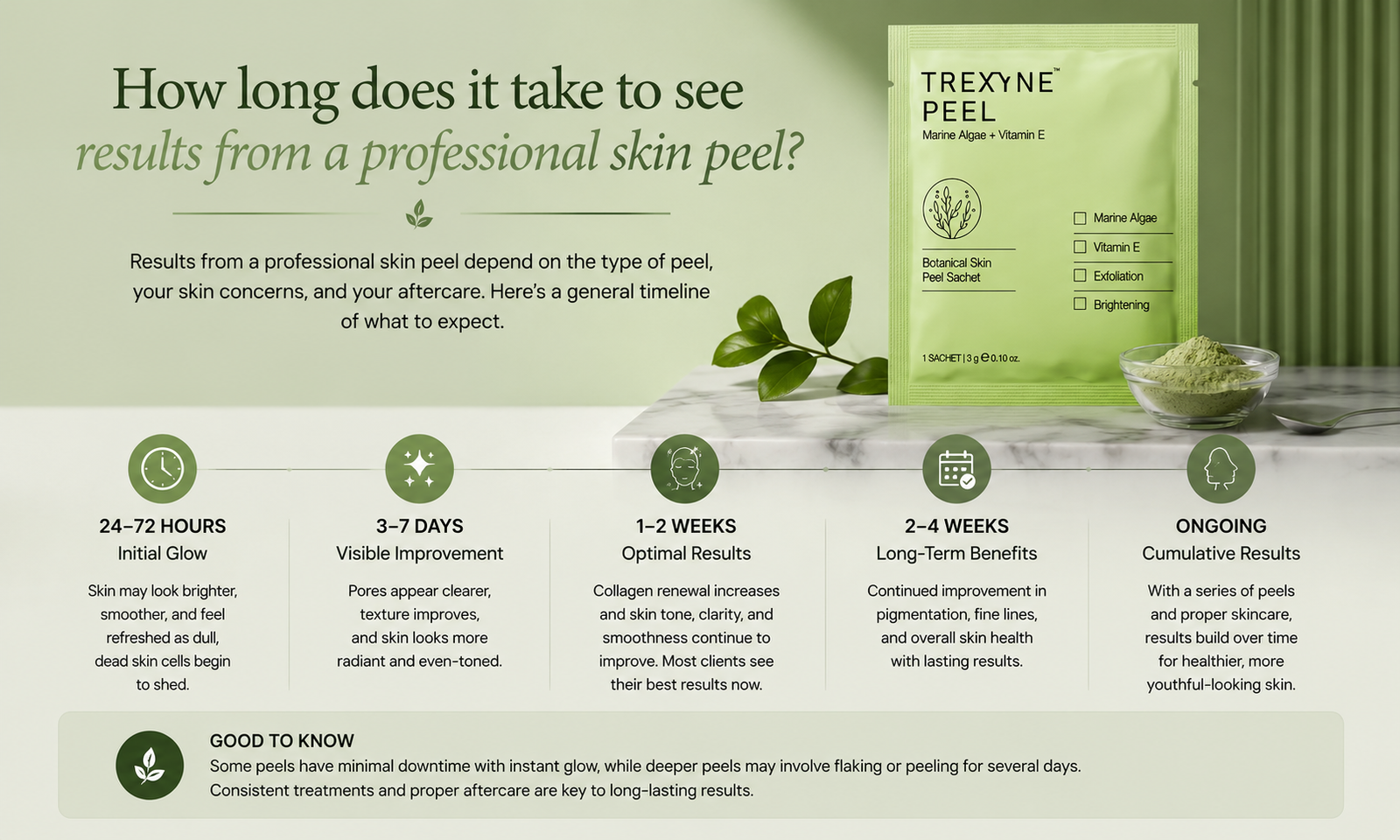
How Long Does It Take to See Results From a Professional Skin Peel?
Most clients notice some initial change in their skin within the first week after a professional resurfacing session, but meaningful, lasting results from a skin peel typically build over a course of treatments rather than appearing dramatically after one appointment. The honest timeline depends on what concern is being treated, how deep the pigmentation or texture change sits within the skin, and how consistently aftercare including daily SPF is followed between sessions. Superficial improvements in brightness and surface refinement can appear relatively quickly. Established pigmentation concerns such as age spots, melasma, or post-inflammatory hyperpigmentation respond more gradually and require sustained professional treatment over several weeks or months. For practitioners and clients working with a mechanical resurfacing option such as the Trexyne Peel, understanding what a realistic timeline looks like at each stage of a course helps set the right expectations from the start.
Why Results Do Not Appear Overnight
The skin renews itself through a natural cycle in which older cells at the surface are gradually replaced by newer ones generated in the deeper layers of the epidermis. This cycle takes approximately 28 days in younger skin and lengthens with age, which is one of the reasons skin appears duller and less even as we get older. Professional resurfacing accelerates this cycle by disrupting the surface layers in a controlled way, encouraging the skin to prioritise renewal and bring fresher cells to the surface more quickly.
This process takes time because it is working with the skin’s biology rather than bypassing it. Resurfacing does not remove pigmentation instantly or resurface the skin in a single pass. It stimulates the mechanisms that allow the skin to renew itself more efficiently, and the visible outcome of that renewal accumulates over multiple cycles rather than appearing in a single session.
Clients who arrive expecting dramatic transformation after one appointment often leave disappointed, not because the treatment failed, but because the expectation was mismatched with how the biology of skin renewal actually works. Setting this context at the initial consultation is one of the most important things a practitioner can do.
What to Expect in the Days Immediately After a Session
In the 24 to 48 hours following a professional resurfacing session, the skin typically looks flushed and may feel tight or slightly sensitive. This is a normal part of the recovery process and reflects the skin’s initial response to the controlled disruption created by the treatment. It is not an indication that something has gone wrong, and it resolves as the skin moves through the early stages of repair.
By around day three to five, many clients notice the skin beginning to shed superficially. This shedding is the outer layers of disrupted cells making way for the newer cells beneath. It can present as light flaking or a feeling of tightness that resolves as the flaking settles. This is the visible sign that the renewal process is underway and is generally a positive indicator that the treatment is doing what it should.
By the end of the first week, most clients find that the redness and sensitivity have settled and the skin looks cleaner, slightly brighter, and more even than before treatment. This early improvement is real but it represents only the beginning of the result rather than its full expression.
The Difference Between Initial Brightness and Lasting Improvement
The brightness many clients notice after their first session is largely the result of surface renewal, the removal of the outermost, most damaged and sluggish cell layers and their replacement with fresher ones. This produces a visible improvement in skin clarity and radiance that can feel impressive after a single session.
However, for clients with concerns that sit deeper in the skin, such as established age spots, post-inflammatory hyperpigmentation, or photodamage that has accumulated over years, this initial surface improvement is only the first layer of a multi-layered result. The pigmentation that gives age spots and dark patches their appearance is distributed across multiple depths of the epidermis rather than sitting at the very surface. Reaching and progressively displacing this deeper pigment requires cell turnover to be stimulated consistently across a sustained course of sessions.
This distinction between surface brightness, which appears quickly, and deeper pigmentation improvement, which builds over time, is worth explaining carefully to clients so they understand why the early result is encouraging but not the final picture.
How Results Build Across a Course of Sessions
The cumulative effect of a professional resurfacing course is where the most significant and lasting results are achieved. Each session builds on the renewal work of the previous one, progressively displacing older, pigmented cells with newer unpigmented ones and supporting consistently improved cell turnover across the treatment area.
For most pigmentation concerns, clients begin to notice more substantial visible improvement somewhere between the third and fifth session of a course, though this varies depending on the depth of the original pigmentation and the individual’s skin response. The improvement continues to build as the course progresses, and many clients find that the most noticeable changes become apparent when they compare early and later photographs rather than when they observe their skin day to day.
The Trexyne Peel is built around a tiered protocol that allows practitioners to match treatment intensity to the skin’s condition at each appointment and build progressively across a course. This session-by-session calibration is what allows a sustained course to produce results that go meaningfully deeper than any single session could achieve.
How Different Concerns Affect the Timeline
The nature of the skin concern being treated is one of the most significant factors in how quickly visible results appear. It is worth being specific about this with clients rather than giving a single timeline that may not reflect their individual situation.
Surface-level concerns such as generalised dullness, uneven texture, and mild skin refinement tend to show visible improvement relatively quickly, often within two to four sessions. The pigment and texture changes that produce these concerns sit close to the skin’s surface and respond readily to the accelerated cell turnover that resurfacing stimulates.
Post-inflammatory hyperpigmentation from recent breakouts or mild skin trauma can also begin to show visible improvement within a few sessions, though deeper or older PIH takes longer to shift. The darker and more established the patches, the more sessions are typically needed before the improvement becomes clearly visible.
Established solar lentigines, commonly known as age spots or liver spots, tend to require the most patience. These have been building for years and the melanin is distributed across multiple epidermal layers. Clients with significant age spot concerns should expect a longer course and a more gradual timeline than clients addressing more recent or superficial pigmentation.
Hormonal pigmentation such as melasma can be among the most challenging to treat because the melanin can sit deeply and the concern can be restimulated by UV exposure or hormonal fluctuation during the treatment course. Progress tends to be slower and more variable than with other pigmentation types, and consistent daily SPF between sessions is particularly critical.
The Role of Aftercare in How Quickly Results Appear
Aftercare has a direct and measurable influence on how quickly results become visible and how well they are maintained between sessions. This is not a secondary consideration. It is as important as the treatment itself.
Daily broad-spectrum SPF use between sessions is the single most significant aftercare step for any client undergoing resurfacing for pigmentation concerns. UV exposure between sessions stimulates the melanocytes in treated areas, which can slow progress or partially undo the improvement the treatment is supporting. Clients who apply SPF consistently and without gaps will see faster and more visible results than those who do not.
Avoiding active skincare products, excessive heat, and UV exposure in the days immediately following each session also protects the recovery process and supports the smooth, efficient skin renewal that produces the most visible results. A practitioner who provides specific written aftercare guidance rather than vague verbal instructions sets their clients up for the best possible outcomes.
What the Trexyne Peel’s Recovery Profile Means for Results
The recovery profile of a resurfacing treatment affects not just comfort during recovery but also the speed at which the skin returns to a state in which results are visible. A treatment that produces a prolonged or difficult recovery period means the skin spends longer in a reactive, inflamed state before the improvement from the session becomes apparent.
The Trexyne Peel is designed around the principle of no extended downtime. The mechanical resurfacing mechanism and the stabilised Vitamin E in the formulation work together to support a recovery process that is predictable and manageable rather than unpredictable or prolonged. For clients, this means the visible improvement from each session becomes apparent more quickly than it might following a treatment with a longer or more variable recovery period.
For practitioners, this predictable recovery profile makes it easier to space sessions at appropriate intervals without the treatment course being disrupted by unexpectedly long recovery periods.
Practitioners interested in stocking the Trexyne Peel can explore the full range via the Trexyne shop or speak with the team directly through the Trexyne contact page.
Maintaining Results After a Course Is Complete
The results achieved through a professional resurfacing course are not automatically permanent. The skin continues to age and to respond to environmental factors including UV exposure after the course is complete. How well results are maintained depends largely on ongoing sun protection and, for clients who want to sustain their improvement, periodic maintenance sessions.
For age spot and pigmentation clients, maintenance sessions at intervals of several months help sustain the improvement achieved during the main course. The frequency of maintenance will depend on the individual’s lifestyle, skin behaviour, and exposure to UV between sessions. Clients who spend significant time outdoors or who have skin that repigments readily may benefit from more frequent maintenance than those whose results prove more stable.
The combination of a completed professional course, consistent daily SPF, and appropriate maintenance is what produces the kind of long-term, consistently even skin that clients are aiming for when they invest in professional resurfacing.
Further information on the Trexyne approach to professional botanical resurfacing is available on the Trexyne website.
Conclusion
Results from a professional skin peel build progressively over a course of sessions rather than appearing in a single appointment. Initial surface brightness can be visible within the first week after a session, while deeper pigmentation concerns such as age spots, post-inflammatory hyperpigmentation, and photodamage respond over a more sustained timeline that typically spans several weeks to months of consistent professional treatment. The speed of visible improvement is influenced by the depth of the original concern, the intensity of the resurfacing, and crucially, how consistently aftercare including daily SPF is maintained between sessions. The Trexyne Peel supports progressive skin renewal through a mechanical mechanism with no acids involved, stabilised Vitamin E to support recovery, and a tiered protocol that builds intensity appropriately across a course. Used consistently and supported by good aftercare, it may help clients achieve a brighter, more even-looking complexion that reflects the cumulative benefit of well-managed professional treatment over time.
FAQs
Q: How long does it take to see results from a professional skin peel?
Most clients notice some initial improvement in skin brightness and clarity within the first week after a session. More substantial results from deeper concerns such as age spots or post-inflammatory hyperpigmentation build over a course of sessions, with the most noticeable improvement typically becoming apparent from the third to fifth session onwards. The full benefit of a course accumulates over several weeks to months depending on the concern being treated.
Q: Will I see results after just one professional peel?
Initial surface brightness and a more refined skin texture can be visible after a single session. For established pigmentation concerns, a single session begins the renewal process but is unlikely to produce the kind of sustained, visible improvement that a planned course achieves. The deeper the pigmentation, the more sessions are needed before the improvement becomes clearly visible.
Q: How long does it take for age spots to fade after professional resurfacing?
Age spots respond more slowly than surface-level concerns because the accumulated melanin sits across multiple layers of the epidermis rather than close to the surface. Consistent resurfacing across a sustained course of sessions gradually displaces pigmented cells over time. Clients should expect visible improvement to build over several months of regular professional treatment supported by daily SPF use between sessions.
Q: Does aftercare affect how quickly you see results from a skin peel? Yes, significantly. Daily broad-spectrum SPF use between sessions is the most important aftercare step for pigmentation concerns, since UV exposure can restimulate melanocytes in treated areas and slow visible progress. Avoiding active skincare products and heat sources in the days immediately after each session also supports a smoother recovery and more efficient skin renewal.
Q: How many sessions of the Trexyne Peel are needed to see results?
The number of sessions depends on the specific concern being treated. Surface-level improvements in texture and brightness can begin to show within two to four sessions. Deeper pigmentation concerns such as established age spots or post-inflammatory hyperpigmentation typically require a longer course, with meaningful improvement building progressively over multiple sessions. A practitioner assessment at consultation will provide a realistic recommendation.
Q: How long does recovery take after a Trexyne Peel session?
The Trexyne Peel is designed around predictable, manageable downtime. Most clients experience some initial redness and tightness in the first 48 hours, followed by light superficial shedding over the following days. By the end of the first week, the skin has typically settled and early improvement is visible. The specific recovery experience varies by individual and by the intensity level selected within the tiered protocol.
Q: How do I maintain results after finishing a Trexyne Peel course?
Consistent daily broad-spectrum SPF use is the foundation of maintaining results after a resurfacing course. Periodic maintenance sessions at intervals of several months help sustain the skin renewal and pigmentation improvement achieved during the main course. The frequency of maintenance depends on the individual’s skin behaviour and lifestyle, and a practitioner can advise on an appropriate schedule after the initial course is complete.