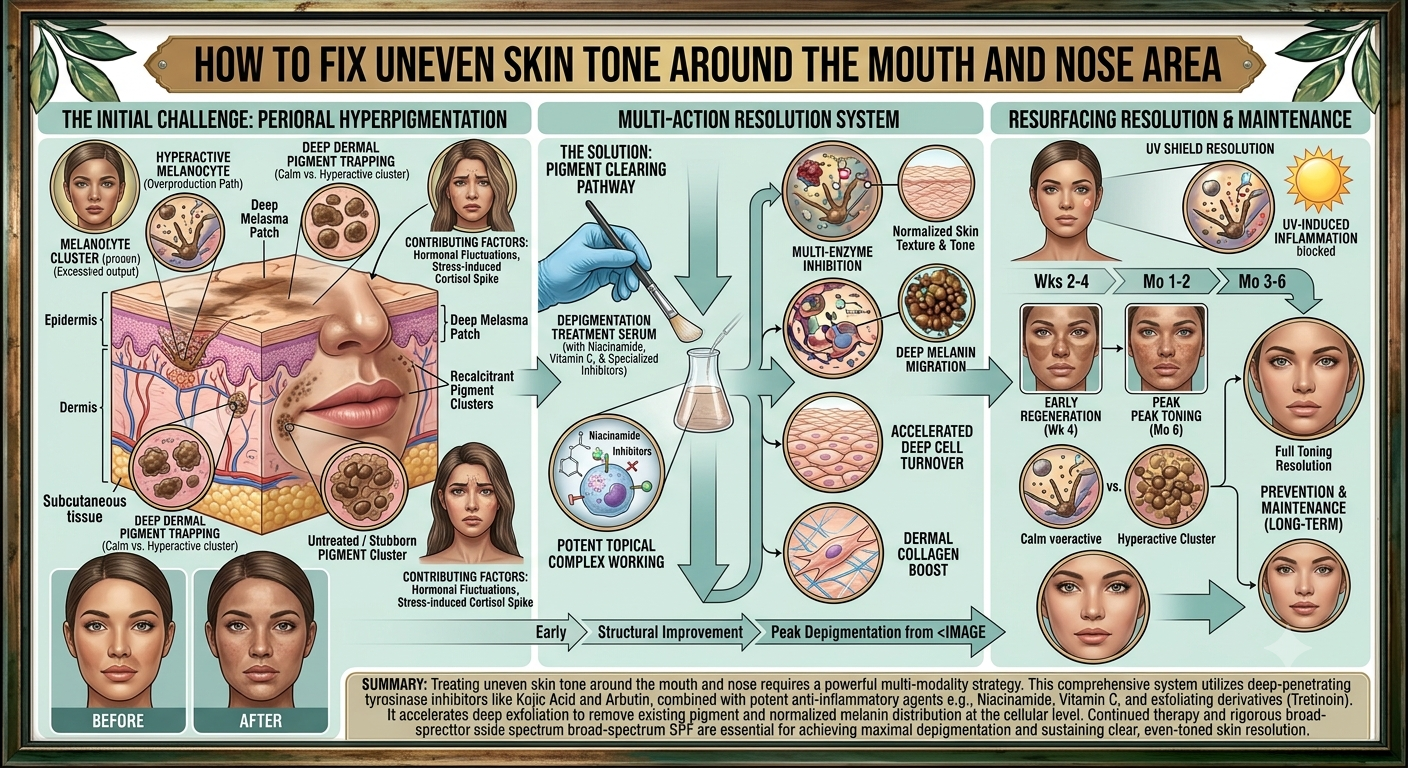
How Can I Fix Uneven Skin Tone Around My Mouth and Nose Area
Uneven skin tone around the mouth and nose is usually a sign of one of three things: hormonal pigmentation such as melasma, post-inflammatory marks left behind by breakouts or irritation in that area, or a build-up of dull, slow-shedding surface cells that catches the light differently to the surrounding skin. The perioral and perinasal zones are particularly prone to this because they experience more movement, more product contact, and in many cases more hormonal sensitivity than other areas of the face. Identifying which of these is driving the unevenness shapes the right treatment approach. For practitioners addressing this concern, the Trexyne Peel — Professional Algae Resurfacing Treatment offers a botanical, mechanical resurfacing option that may support skin renewal and help even out tone in these specific zones.
Why the Mouth and Nose Area Is Prone to Uneven Tone
This part of the face behaves differently to the cheeks or forehead, and understanding why helps explain why uneven tone develops here so consistently.
The skin around the mouth and nose moves constantly through talking, eating, and facial expression. This repeated mechanical movement can contribute to localised irritation over time, particularly where products or environmental factors compound the effect. The area also tends to be more exposed to topical product residue, lip balm, toothpaste, and saliva, all of which can trigger mild irritant reactions in sensitive individuals.
The upper lip and nose bridge are also classic sites for melasma, which has a strong tendency to present symmetrically across this central facial zone. This combination of mechanical, chemical, and hormonal factors makes the perioral and perinasal area one of the more complex zones to manage when addressing uneven pigmentation.
Melasma Around the Mouth and Nose
Melasma is one of the most common causes of uneven tone specifically in this location. It typically presents as symmetrical, diffuse patches across the upper lip, sometimes described as a moustache-like pattern, and across the nose bridge and adjacent cheek areas.
Why This Pattern Occurs
Melasma is primarily hormonally driven, with elevated oestrogen levels being the main trigger. The reason it clusters so reliably in this central facial zone is not fully understood, but the density of melanocyte activity in these areas combined with hormonal sensitivity appears to play a role. UV exposure compounds the hormonal trigger significantly, which is why melasma in this location often worsens during summer months or after sun exposure.
Managing Expectations
Melasma in the perioral and perinasal area can be improved with the right combination of resurfacing treatment, strict sun protection, and awareness of hormonal triggers. However, it tends to be more resistant to complete resolution than other forms of pigmentation, and ongoing maintenance is usually part of a realistic management plan rather than a single course of treatment.
Post-Inflammatory Pigmentation From Breakouts and Irritation
The area around the mouth and nose is a common site for breakouts, particularly along the jawline extension up to the corners of the mouth and across the nose where pores tend to be more visible and active.
Acne-Related Pigmentation
Hormonal acne frequently affects the lower face, chin, and perioral zone. Each breakout in this area carries the risk of leaving post-inflammatory hyperpigmentation behind once it heals. For clients with recurring breakouts in this zone, new pigmentation can continue to develop even as older marks fade, creating a pattern of persistent unevenness that feels difficult to resolve.
Irritant Reactions
Lip care products, toothpaste residue, and saliva can all cause mild irritant contact dermatitis around the mouth in sensitive individuals. This repeated low-level irritation can trigger localised post-inflammatory pigmentation over time, even without an obvious single triggering event. Clients are not always aware that their lip balm or toothpaste could be contributing to uneven tone in this area, which makes it worth raising during consultation.
Perioral Dermatitis Considerations
Some clients in this zone present with a pattern that resembles perioral dermatitis rather than straightforward pigmentation. This involves small bumps and redness around the mouth that can leave post-inflammatory marks once resolved. Identifying whether active dermatitis is present is important before beginning any resurfacing treatment, as the underlying condition needs to be addressed or at least stable first.
Surface Texture and Dullness Around the Nose
Uneven tone is not always about pigmentation in the strict sense. The nose and surrounding area often has a different pore density and oil profile compared to the rest of the face, which can lead to a build-up of dead skin cells, surface dullness, and a textural unevenness that reads visually as tonal inconsistency, particularly in certain lighting.
This kind of unevenness tends to respond well to resurfacing because it relates more directly to surface cell turnover rather than deep pigment deposits. Encouraging more efficient shedding of surface cells in this area can produce a visibly more even, refined appearance.
How the Trexyne Peel Approaches Uneven Tone in This Area
The Trexyne Peel is well suited to addressing uneven tone around the mouth and nose because of how its mechanism interacts with this particularly reactive zone of the face.
A Mechanical Mechanism Suited to Sensitive Areas
The treatment uses marine algae spicules to create controlled micro-channels across the skin surface, stimulating renewal without chemical exfoliants. Because the perioral and perinasal area is prone to irritation from products and mechanical movement, avoiding additional chemical inflammatory stimulus is a meaningful clinical consideration. The mechanical approach allows practitioners to resurface this zone without compounding existing sensitivity.
Stabilised Vitamin E for a Reactive Zone
The formulation’s stabilised tocopherol may support the skin’s recovery phase from the first application. For an area that experiences more movement and more environmental contact than other parts of the face, supporting recovery between sessions is particularly relevant to maintaining consistent progress across a treatment course.
Tiered Protocol for Precise, Localised Control
The tiered protocol allows practitioners to adjust intensity specifically for this delicate zone. The skin around the mouth and nose can behave differently to the cheeks or forehead even within the same client, and the ability to calibrate treatment intensity according to what each area needs supports a more considered, individualised approach.
Building a Treatment Plan for This Specific Zone
A successful approach to uneven tone around the mouth and nose starts with identifying the underlying cause, since pigmentation, inflammation, and surface texture each respond somewhat differently to treatment.
Assessment First
Before beginning treatment, a thorough consultation should establish whether melasma, post-inflammatory pigmentation, irritant reactions, or surface texture is the primary driver. The pattern, distribution, and history of the unevenness all provide useful clues. Symmetrical patches suggest melasma. Patchy, irregular marks following breakouts suggest PIH. General dullness without distinct patches suggests a surface texture issue.
Addressing Contributing Factors Alongside Treatment
If irritant products are contributing, identifying and adjusting these is an important parallel step. If active acne or dermatitis is present, this should be stabilised before or alongside resurfacing treatment. If hormonal triggers are suspected, setting realistic expectations about ongoing management is essential.
Structuring the Course
Practitioners can review pack sizes and pricing for the Trexyne Peel via the Trexyne shop, with options from a single vial through to course packs of 10 or 20 treatments. A course allows for cumulative improvement and gives the practitioner the opportunity to adjust intensity as the skin in this zone responds across sessions.
SPF and Daily Care for the Perioral and Perinasal Zone
Sun protection is just as important around the mouth and nose as anywhere else on the face, and arguably more so given the prevalence of melasma in this zone. UV exposure is a significant aggravating factor for hormonally driven pigmentation, and consistent daily SPF use is essential to maintaining any improvement achieved through treatment.
Clients should be reminded that SPF needs to be applied right up to and around the lip line and across the nose, areas that are sometimes missed during application, particularly if a client is also wearing lip balm or makeup in that zone. A broad-spectrum SPF 30 minimum, rising to SPF 50 in higher exposure conditions, with proper reapplication, supports the results of any resurfacing programme targeting this area.
For clients with sensitivity to products in the perioral zone, choosing a fragrance-free, simply formulated SPF can help avoid compounding irritation while still maintaining adequate protection.
Lifestyle Factors Specific to This Facial Zone
A few additional considerations are worth raising with clients presenting with uneven tone in this specific location, beyond the general triggers relevant to facial pigmentation overall.
Licking the lips or allowing saliva to sit on the surrounding skin can contribute to irritation and uneven tone over time. This is a common habit that clients may not connect to their skin concern. Toothpaste residue left on the skin around the mouth, particularly with whitening or strongly flavoured formulations, can also be an irritant for sensitive individuals. Reviewing oral care habits alongside skincare is a useful, often overlooked step.
Heat exposure, as with melasma elsewhere on the face, can aggravate pigmentation in this zone too. Saunas, steam rooms, and hot drinks held close to the face repeatedly may be worth discussing with clients who have hormonally driven pigmentation in this area.
For practitioners who want to discuss specific cases involving uneven tone around the mouth and nose, the Trexyne team is available via the contact page.
Why Professional Assessment Matters for This Area
The mouth and nose area sits at the intersection of several different possible causes, which makes professional assessment particularly valuable here compared to more straightforward presentations elsewhere on the face. Treating surface dullness as though it were melasma, or treating melasma as though it were simple PIH, can lead to a mismatched approach and disappointing results.
A trained practitioner can differentiate between these presentations through careful examination, patient history, and observation of how the skin responds to initial treatment. This is part of why the Trexyne Peel is designed for use exclusively by trained aesthetic professionals. The treatment’s effectiveness depends on it being matched correctly to the underlying cause and applied with appropriate clinical judgement.
More information on the Trexyne Peel and its suitability for different facial zones is available at Trexyne.com.
Conclusion
Uneven skin tone around the mouth and nose typically stems from one of a few overlapping causes: hormonally driven melasma, post-inflammatory pigmentation following breakouts or irritation, or surface texture and dullness from slower cell turnover in this particular zone. Each of these requires a slightly different emphasis within a treatment plan, which makes accurate assessment an essential first step.
The Trexyne Peel offers a botanical, mechanically driven resurfacing approach that may support skin renewal in this sensitive area without the additional inflammatory stimulus associated with chemical exfoliants. Its stabilised Vitamin E may support recovery in a zone that experiences more movement and product contact than other parts of the face, and its tiered protocol allows treatment intensity to be calibrated precisely for this delicate area. Combined with consistent SPF use, attention to irritant triggers like oral care products, and a properly structured treatment course, the Trexyne Peel may help clients achieve a more even, refined-looking complexion around the mouth and nose over time.
Frequently Asked Questions
Q: What causes uneven skin tone specifically around the mouth and nose?
The most common causes are melasma, which tends to present symmetrically across the upper lip and nose bridge due to hormonal triggers, post-inflammatory hyperpigmentation following breakouts or irritation in this area, and surface texture or dullness related to slower cell turnover. Irritant reactions from lip products, toothpaste, or saliva can also contribute. A professional assessment helps determine which factor or combination of factors is driving the unevenness in each individual case.
Q: Can the Trexyne Peel be used safely on the delicate skin around the mouth and nose?
The Trexyne Peel’s tiered protocol allows practitioners to adjust treatment intensity specifically for more sensitive areas like the perioral and perinasal zone. Because the mechanism is mechanical rather than chemical, it avoids introducing additional chemical inflammatory stimulus to skin that may already be prone to irritation in this area. A thorough consultation and a conservative starting approach are recommended for this delicate zone.
Q: Why does melasma often appear around the upper lip and nose?
Melasma is driven primarily by hormonal activity, particularly elevated oestrogen levels, and has a strong tendency to present symmetrically across the central face, including the upper lip and nose bridge. The exact reason this distribution pattern occurs is not fully understood, but melanocyte density and hormonal sensitivity in this zone appear to play a role. UV exposure significantly compounds the hormonal trigger, which is why sun protection is essential for managing melasma in this location.
Q: How long does it take to see improvement in uneven tone around the mouth and nose?
The timeframe depends on the underlying cause. Surface texture and dullness related to cell turnover may show improvement relatively quickly with consistent resurfacing treatment. Post-inflammatory pigmentation typically requires a structured course over several sessions. Melasma in this zone tends to require the longest and most sustained approach, often combined with ongoing maintenance rather than a fixed treatment endpoint.
Q: Could my toothpaste or lip balm be causing uneven skin tone around my mouth?
Yes, this is a more common contributing factor than many people realise. Toothpaste residue, particularly from whitening or strongly flavoured formulations, and certain lip balm ingredients can cause mild irritant reactions in sensitive individuals. Repeated low-level irritation in this area can trigger post-inflammatory pigmentation over time. Reviewing oral care and lip product habits is a useful step alongside any professional treatment for uneven tone in this zone.
Q: Is uneven tone around the nose linked to pigmentation or just texture?
It can be either, or a combination of both. Pigmentation in this area is often linked to melasma or post-inflammatory marks from breakouts, particularly in clients prone to congestion around the nose. Surface texture and dullness from a build-up of dead skin cells can also create the appearance of uneven tone without true pigment deposits. A professional assessment can help distinguish between the two, as the treatment emphasis differs slightly depending on the cause.
Q: Where can practitioners purchase the Trexyne Peel for treating localised uneven tone?
The Trexyne Peel is available exclusively to verified practitioners and clinics through the Trexyne shop. A single 30ml vial is priced at £175.00 and provides approximately 6 to 8 full-face treatments, with course packs of 10 and 20 peels also available. For clinical questions about treating specific facial zones such as the perioral or perinasal area, the team can be reached via the contact page.