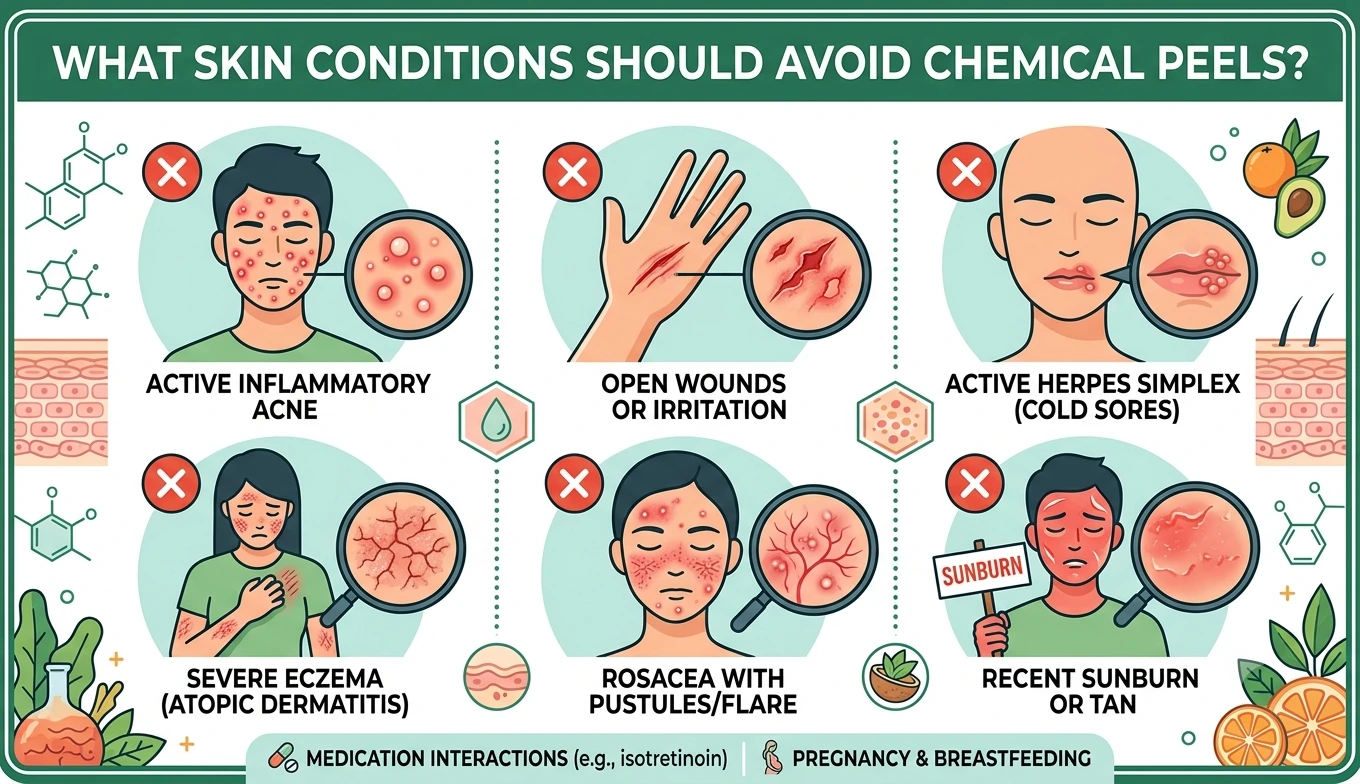
What Skin Conditions Should Avoid Chemical Peels?
Chemical peels are not the right treatment for every client. Skin conditions such as active acne, rosacea, eczema and highly reactive or sensitised skin can all be made worse by peel acids rather than improved by them, and this is one of the most important things a practitioner needs to assess before recommending any resurfacing treatment. Getting this wrong can lead to prolonged redness, stinging, flaking or a compromised skin barrier that takes weeks to settle. Because of this, many UK clinics are now turning to mechanical alternatives such as the Trexyne Peel, which resurfaces the skin using marine-algae spicules rather than chemical exfoliants. In this guide, we explain which skin conditions and circumstances are typically unsuitable for a chemical peel, and how a mechanical resurfacing approach may offer another option for clients who need to be treated more carefully.
Why Peel Suitability Assessment Matters
Every professional peel consultation should start with a proper skin assessment, not just a conversation about the client’s goals. Chemical peels work by using acids to break down the bonds between skin cells, which encourages faster cell turnover and can improve tone and texture over several sessions. This process relies on the skin’s ability to tolerate a controlled chemical injury and recover from it in a predictable way.
Some skin types and conditions do not respond well to this process. Instead of a smooth, even recovery, the skin can become inflamed, sensitised or damaged. This is why a detailed consultation, including questions about medical history, current skincare routine, recent treatments and any known sensitivities, is essential before any peel is booked in. A practitioner who skips this step is taking an unnecessary risk with a client’s skin.
A thorough consultation should also cover lifestyle factors that are easy to overlook, such as upcoming holidays, occupational sun exposure and how consistent the client is likely to be with aftercare. A peel that is technically appropriate on paper can still cause problems if the client cannot commit to the aftercare routine it requires. Building this picture properly takes time, but it is time well spent, because it reduces the chance of an unhappy client and an avoidable complication.
For clients who are flagged as unsuitable for a chemical peel, this does not mean resurfacing is off the table altogether. It simply means a different mechanism, one that does not rely on chemical exfoliation, may be worth considering instead.
Active Acne and Inflamed Breakouts
Active, inflamed acne is one of the most common reasons a chemical peel should be postponed or avoided. Acids can penetrate broken or compromised skin more unpredictably than intact skin, which increases the risk of irritation, stinging and uneven results.
It is also worth remembering that acne-prone skin is often already using active ingredients at home, such as retinoids or exfoliating cleansers. Layering a chemical peel on top of a routine that is already working the skin hard can tip the balance from beneficial exfoliation into irritation. Reviewing the client’s current home routine in detail, not just asking whether they use ‘anything strong’, helps avoid this overlap.
Pustular and Cystic Acne
Pustules, papules and cystic breakouts involve inflammation that sits deeper in the skin. Applying a chemical peel over active cysts or pustules can spread irritation across the treatment area and worsen inflammation rather than calm it. Most practitioners will wait until the acute breakout has settled before considering any resurfacing treatment.
Acne With Broken or Weeping Skin
Where acne has led to broken skin, weeping spots or open lesions, any exfoliating treatment should be avoided until the skin has healed. This applies to chemical peels and mechanical resurfacing alike, since neither is appropriate for use on open skin.
Once the acute phase has passed and the skin is intact again, some clients may be reassessed for a mechanical resurfacing option such as the Trexyne Peel, which works through controlled micro-channels created by marine-algae spicules rather than chemical exfoliants. As with any treatment, a full consultation is still required to confirm suitability.
Rosacea and Reactive Skin Types
Rosacea is a common reason clients are turned away from chemical peels. The acids used in traditional peels can trigger flushing, burning and prolonged redness in rosacea-prone skin, which may set back weeks of careful management with soothing skincare.
Reactive skin more generally, meaning skin that flushes easily, stings with new products or reacts to temperature changes, tends to respond in a similarly unpredictable way to chemical exfoliation. For these clients, practitioners often look for treatments that offer more predictable, controllable intensity.
This is one of the areas where a tiered mechanical protocol can be useful. Because the Trexyne Peel is designed around a tiered protocol, the intensity of the treatment can be matched to the client’s skin type and expectations, which may make it easier to manage reactive skin than a standard chemical peel. This does not mean the treatment is guaranteed to suit every rosacea client, and a patch test and full consultation remain important steps.
Clients with rosacea often arrive at a consultation having already been disappointed by a previous treatment that left their skin worse rather than better. Taking time to explain the difference between a chemical mechanism and a mechanical one, in plain terms, can help rebuild confidence and set realistic expectations before any treatment is booked.
Eczema, Dermatitis and Barrier Impairment
Any skin condition involving a compromised barrier, including eczema, dermatitis and psoriasis, needs particular care. When the skin barrier is already impaired, it struggles to buffer and neutralise acids properly, which can lead to a much stronger reaction than expected.
Chemical peels should generally be avoided on active flare-ups, and many practitioners will also avoid peeling skin that has recently settled from a flare, since the barrier can remain fragile for some time afterwards.
Assessing Barrier Health Before Any Resurfacing Treatment
A simple way to check barrier health is to ask how the skin has been behaving over the past few weeks. Tightness, flaking, sensitivity to usual products and visible redness are all signs that the barrier needs time to recover before any resurfacing treatment, mechanical or chemical, should be considered.
Clients managing eczema or dermatitis often have a good sense of their own flare patterns, so asking directly about their history is usually more reliable than relying on how the skin looks on the day. A client who mentions they are between flares, rather than currently clear, may still need a longer waiting period than their skin suggests at first glance.
Very Thin, Fragile or Over-Exfoliated Skin
Skin that has become thin or fragile, whether through ageing, long-term steroid use, certain medications or simply over-exfoliation from an aggressive home routine, is another group that should generally avoid chemical peels.
Thin skin has less of a buffer against acid penetration, so what would be a mild peel for average skin can feel far stronger and take much longer to recover from. Clients who have been using strong retinoids, frequent at-home exfoliating acids or have very visible capillaries often fall into this category.
For clients like this, a mechanical mechanism that does not rely on chemical penetration can be gentler to introduce, since the intensity can be adjusted through the tiered protocol rather than through acid strength and contact time. As always, this should be confirmed with a proper skin assessment rather than assumed.
Visible capillaries, in particular, are a useful marker during a visual assessment. If a client’s skin flushes easily under light pressure or gentle warmth, this is often a sign that the barrier is already working harder than average, and any resurfacing plan should start conservatively regardless of the method chosen.
Pregnancy and Breastfeeding
Many chemical peel ingredients are not recommended during pregnancy or breastfeeding, and most reputable clinics will decline to perform a chemical peel on a pregnant or breastfeeding client as standard practice.
This is an area where clients often ask whether any resurfacing treatment is possible at all. While any professional treatment should still be discussed with a GP or midwife first, and a clinic’s own policy will always take priority, some practitioners consider mechanical resurfacing methods on a case by case basis, given that they do not introduce chemical exfoliants into the skin. This decision should never be made without proper medical guidance and a full consultation.
It helps to document this conversation clearly in the client’s record, including confirmation that medical advice has been sought, so there is a clear paper trail behind any decision made during pregnancy or while breastfeeding.
Recent Sun Exposure and Photosensitive Skin
Chemical peels increase the skin’s sensitivity to UV light, both during the healing process and for some time afterwards. Performing a peel on skin that has recently been sunburnt, or on a client who has had significant sun exposure in the days before treatment, increases the risk of hyperpigmentation and prolonged redness.
Photosensitising medications, including certain antibiotics and acne treatments, can also increase this risk further. Practitioners should always ask about recent sun exposure, planned holidays and any photosensitising medication as part of the pre-treatment consultation, regardless of which resurfacing method is being considered.
A useful habit is to ask clients directly about any holidays booked in the weeks either side of a proposed treatment date, rather than assuming they will mention it unprompted. Rescheduling around a holiday is a small inconvenience compared with treating skin that is not ready for it.
Skin of Colour and Post-Inflammatory Hyperpigmentation Risk
Melanin-rich skin is more prone to post-inflammatory hyperpigmentation, meaning dark marks that can appear after any inflammatory event in the skin, including a chemical peel that has been too strong or poorly matched to the client’s skin type.
This does not mean clients with skin of colour cannot have resurfacing treatments. It means the treatment needs to be selected and calibrated carefully, with a cautious, stepped approach rather than a one size fits all protocol. A tiered system, where intensity can be increased gradually over a course of treatments, gives practitioners more control over this risk. Full consultation, patch testing and a clear aftercare plan remain essential regardless of the method chosen.
Setting expectations early matters here too. Clients should understand that a cautious, gradual approach may mean visible results build up over a course of sessions rather than after a single treatment. This is usually a fair trade against the risk of a more aggressive protocol leaving pigmentation that takes months to fade.
Open Wounds, Active Infections and Recent Cosmetic Procedures
Any area with open wounds, cold sores, active infections such as impetigo, or recently broken skin should not be treated with a chemical peel until fully healed. The same applies to skin that has recently had other invasive treatments, including certain laser treatments, microneedling or recent surgery, where the skin needs time to recover fully before any further resurfacing is introduced.
Clients should always be asked about any recent treatments, whether performed in clinic or elsewhere, as part of a thorough consultation. If a practitioner is ever unsure whether a client’s skin is ready for a resurfacing treatment, getting in touch with the Trexyne team for product-specific guidance can help clarify suitability before booking a client in.
A Mechanical Alternative for Clients Who Cannot Have a Chemical Peel
For many of the skin types and conditions covered above, the underlying issue is the same: the skin cannot reliably tolerate chemical exfoliation. This is where the Trexyne Peel offers a genuinely different mechanism rather than simply a milder version of a chemical peel.
The Trexyne Peel is a professional resurfacing treatment built around marine-algae spicules and stabilised Vitamin E. Rather than working through acids, it creates controlled micro-channels mechanically, which supports resurfacing without introducing chemical exfoliants into the skin. The stabilised Vitamin E is included to support the skin’s recovery phase from the very first application.
A Tiered Protocol for Different Skin Types
Because the treatment follows a tiered protocol, practitioners can match the intensity of each session to the client’s skin type and expectations. This level of control can be particularly useful for clients who have previously been turned away from chemical peels, since the treatment plan can be built around what their skin can comfortably manage rather than a fixed acid concentration.
Professional Use Only
The Trexyne Peel is sold strictly to verified practitioners and clinics, and every treatment should still be preceded by a full consultation and patch test. It is not suitable for home use and should only be carried out by a trained aesthetic professional. Clinics interested in adding it to their treatment menu can view the full range at the Trexyne shop, and can find out more about the brand on the Trexyne homepage.
It is worth being clear that a mechanical mechanism does not automatically mean a treatment is risk-free or suitable for every client. Conditions such as active infections, open wounds or very acute flare-ups still require the skin to settle first. What it does offer is another route for clients whose skin reacts poorly to chemical exfoliation specifically, widening the options available within a clinic’s resurfacing menu.
Building a Treatment Plan Once a Chemical Peel Has Been Ruled Out
Once a chemical peel has been ruled out for a client, the next step is to build a treatment plan around what their skin can actually tolerate, rather than trying to find a workaround. This usually starts with calming and strengthening the skin barrier through a supportive homecare routine, before introducing any form of resurfacing.
A staged approach tends to work best. The first few sessions can focus on gentler settings within the tiered protocol, giving the practitioner a clear picture of how the client’s skin responds before increasing intensity. Photographs at each visit, alongside notes on redness, sensitivity and recovery time, help build an accurate record to guide future sessions.
Clear aftercare guidance is just as important as the treatment itself. Clients should understand what to expect in the days following a session, how to care for their skin during that time, and when to get in touch if anything feels different from what was discussed. A well-informed client is far more likely to stick to the plan and get the results they are hoping for.
Conclusion
Chemical peels can be an excellent option for many clients, but they are not right for everyone. Active acne, rosacea, eczema, fragile or thinned skin, pregnancy, recent sun exposure, deeper skin tones prone to pigmentation, and any open wounds or infections are all situations where a chemical peel should be paused, adjusted or avoided altogether. A thorough consultation is always the starting point for working out what any individual client’s skin can safely tolerate.
For clients who fall into these categories, a mechanical resurfacing option gives practitioners another route to consider. The Trexyne Peel works through marine-algae spicules and stabilised Vitamin E rather than chemical exfoliants, with a tiered protocol that allows the intensity to be matched to the client’s skin rather than relying on acid strength alone. Used appropriately, and following a full consultation, it may support a brighter, more even-looking complexion for clients who would otherwise not be considered good candidates for a traditional peel.
Frequently Asked Questions
Q: Can rosacea-prone skin have any type of resurfacing treatment?
Rosacea-prone skin generally reacts poorly to chemical peels because acids can trigger flushing and prolonged redness. Some practitioners consider mechanical resurfacing options, such as the Trexyne Peel, on a case by case basis, since the tiered protocol allows intensity to be adjusted. A full consultation and patch test are still required.
Q: Is it safe to have a chemical peel while pregnant?
Most clinics avoid chemical peels during pregnancy and breastfeeding as standard practice, and any treatment decision should be discussed with a GP or midwife first. This is a decision that always sits with medical guidance rather than a general rule.
Q: Why can chemical peels cause dark marks on darker skin tones?
Melanin-rich skin is more prone to post-inflammatory hyperpigmentation, which can occur after any inflammatory event in the skin, including a peel that is too strong for that client’s skin type. A cautious, stepped approach with careful calibration can help reduce this risk.
Q: How long after a breakout should I wait before booking a resurfacing treatment?
Most practitioners recommend waiting until active pustules, cysts or broken skin have fully settled before any resurfacing treatment, mechanical or chemical. A consultation will help confirm when the skin is ready.
Q: What makes the Trexyne Peel different from a chemical peel?
The Trexyne Peel works through a mechanical mechanism using marine-algae spicules to create controlled micro-channels, rather than using acids to chemically exfoliate the skin. It is infused with stabilised Vitamin E to support the skin’s recovery phase.
Q: Can I use the Trexyne Peel at home?
No. The Trexyne Peel is sold strictly to verified practitioners and clinics and is designed for use exclusively by trained aesthetic professionals.
Q: Does thin or sensitised skin need a different treatment plan?
Yes. Thin, fragile or over-exfoliated skin typically needs a more gradual approach. The tiered protocol used with the Trexyne Peel allows practitioners to match intensity to the client’s current skin condition rather than applying a fixed strength treatment.