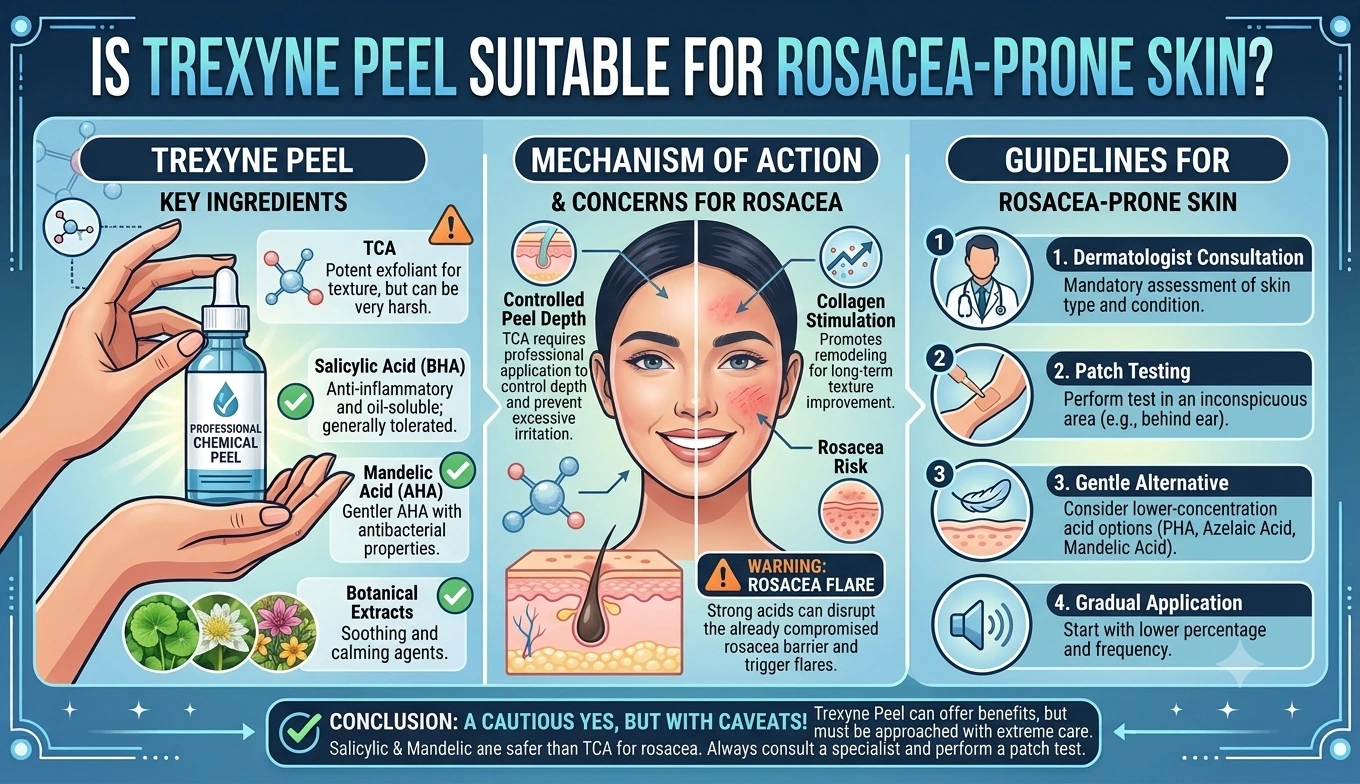
Is Trexyne Peel Suitable for Rosacea-Prone Skin?
Rosacea-prone skin needs careful handling, and many practitioners ask whether a resurfacing treatment can be used safely on clients with this condition. The short answer is that Trexyne Peel may be considered for some rosacea-prone clients because it works through a mechanical mechanism rather than chemical exfoliation, but every case depends on the individual’s current flare status and skin sensitivity. As a botanical peel built around marine-algae spicules and stabilised Vitamin E, Trexyne Peel offers practitioners a tiered protocol that can be matched to skin type and tolerance level. This article explains what rosacea-prone skin needs from a resurfacing treatment, how Trexyne’s mechanical approach differs from chemical alternatives, and how to assess suitability before booking a client in for treatment.
Understanding Rosacea-Prone Skin
Rosacea-prone skin tends to show persistent redness, visible blood vessels, and a heightened reaction to triggers such as heat, certain skincare ingredients, and physical friction. Many clients describe their skin as reactive, easily flushed, and prone to stinging or burning when new products are introduced.
For practitioners, this means the skin barrier is often already compromised or working harder than average to stay balanced. Any treatment introduced to rosacea-prone skin needs to respect that baseline sensitivity rather than add further stress to it.
Common Triggers to Be Aware Of
Heat, alcohol-based products, harsh mechanical scrubbing, and certain active ingredients are widely reported as triggers for flare-ups. Understanding a client’s specific trigger pattern during consultation helps a practitioner judge whether a resurfacing session is appropriate at that particular time, rather than relying on a blanket rule for all rosacea cases.
Why Chemical Peels Are Often a Concern for This Skin Type
Many practitioners are cautious about chemical peels on rosacea-prone skin because chemical exfoliation can penetrate the skin in ways that may aggravate an already sensitised barrier. This is one of the main reasons rosacea-prone clients often ask for alternatives that avoid this pathway altogether.
Trexyne Peel is not a chemical peel. It contains no acids and does not rely on chemical exfoliation of any kind. Instead, it uses marine-algae spicules to create controlled micro-channels through a purely mechanical mechanism. This distinction matters when discussing suitability for reactive skin types, because the treatment approach is fundamentally different from acid-based resurfacing.
How Trexyne Peel’s Mechanical Mechanism Works
Trexyne Peel is built around marine-algae spicules that work mechanically on the skin’s surface, rather than through any chemical reaction. This creates controlled micro-channels that support the skin’s natural renewal process without introducing chemical exfoliants into the equation.
Alongside this mechanical action, the formula includes stabilised Vitamin E, which is included specifically to support the skin’s recovery phase from the very first application. For a practitioner assessing rosacea-prone skin, this recovery-focused formulation is a relevant factor, since supporting the skin through its post-treatment phase is just as important as the resurfacing step itself.
Why a Mechanical Approach Can Be a Different Conversation
Because the mechanism does not depend on chemical penetration, some practitioners find it easier to discuss with rosacea-prone clients who have previously reacted poorly to acid-based treatments. It gives the consultation a different starting point, focused on controlled, physical micro-channelling rather than chemical exfoliation strength.
The Role of a Tiered Protocol in Rosacea Cases
One of the most useful features for reactive skin types is Trexyne’s tiered protocol. This allows a practitioner to match treatment intensity to the client’s skin type and expectations, rather than applying a single fixed intensity across every client.
For rosacea-prone skin, this tiered structure means a practitioner can begin at a lower intensity level and observe how the skin responds before considering any increase in future sessions. Predictable downtime is part of this same tiered approach, which supports a more considered, step-by-step treatment plan rather than a one-size-fits-all session.
Building a Session Plan Around Tolerance
A sensible approach for rosacea-prone clients is to treat the first session as an assessment in itself. Recording how the skin looks and feels in the days following treatment gives the practitioner real information to work from before deciding on the next steps in the client’s plan.
Consultation Steps Before Treating Rosacea-Prone Skin
A thorough consultation is essential before offering any resurfacing treatment to a client with rosacea-prone skin. This should include a detailed history of flare-ups, current trigger patterns, and how the skin has previously responded to other professional treatments.
Practitioners should also ask whether the client is currently in an active flare or in a calmer period, as this can significantly influence whether a session is appropriate on that day. Skin that is visibly inflamed or unusually reactive at the time of consultation may be better managed by rescheduling rather than proceeding immediately.
Questions Worth Asking During Consultation
Asking about medication use, recent sun exposure, and any recent changes to the client’s skincare routine helps build a fuller picture. This information supports a more informed decision about whether Trexyne Peel is appropriate at that stage, and at what intensity level within the tiered protocol.
Patch Testing and Starting Conservatively
Patch testing is a sensible precaution for any client with a history of reactive or rosacea-prone skin. A small test area allows the practitioner to observe the skin’s response to the mechanical micro-channelling before committing to a full-face session.
Starting at the lower end of the tiered protocol is generally the more cautious route for this skin type. This allows the practitioner to build confidence in how an individual client’s skin responds, rather than assuming a standard intensity will suit every rosacea-prone case in the same way.
Setting Realistic Expectations With Rosacea-Prone Clients
Clients with rosacea-prone skin often arrive with specific concerns about redness, uneven texture, or a complexion that looks tired and dull. It helps to be clear from the outset that Trexyne Peel is designed to resurface and refine the skin through its mechanical mechanism, and that results will vary between individuals.
Rosacea itself is a separate consideration from general skin texture and tone, and a practitioner should be careful not to frame any resurfacing treatment as a solution to rosacea as a condition. Instead, the conversation should focus on how the mechanical resurfacing and Vitamin E support may help the skin’s overall appearance and renewal process over a course of sessions.
Explaining the Renewal Process Clearly
Clients benefit from understanding that skin renewal takes time and that a tiered protocol is designed to work with the skin gradually. Explaining this upfront reduces the likelihood of unrealistic expectations after a single session.
Aftercare Considerations for Reactive Skin
Aftercare guidance is especially important for rosacea-prone clients following a resurfacing session. Since the treatment includes stabilised Vitamin E to support the skin’s recovery phase, practitioners can reinforce this by advising clients on gentle, barrier-supportive routines in the days that follow.
Avoiding known personal triggers during the recovery window, such as excessive heat or harsh products, is a reasonable recommendation for most rosacea-prone clients. Predictable downtime built into the tiered protocol also means practitioners can set clear expectations about what the skin may look like in the short term after treatment.
Monitoring Between Sessions
Encouraging clients to note how their skin behaves in the days after treatment gives useful information for planning any future sessions. This ongoing monitoring is particularly valuable for rosacea-prone skin, where individual variation tends to be more pronounced than in less reactive skin types.
When Trexyne Peel May Not Be the Right Choice
There will be cases where proceeding with any resurfacing treatment, including Trexyne Peel, is not the right decision for a rosacea-prone client at that time. Active flares, broken skin, or a lack of clarity around the client’s trigger history are all reasons to pause and reassess before treatment.
In these situations, it is appropriate for a practitioner to recommend the client seeks advice from their GP or dermatologist regarding their rosacea before any professional resurfacing treatment is considered. Practitioners can also reach out via Trexyne’s contact page for professional guidance on protocol selection for more complex or reactive skin presentations.
Sourcing Trexyne Peel as a Registered Practitioner
Trexyne Peel is sold strictly to verified practitioners and clinics, which supports consistent, professional-led use across the treatments offered. Practitioners can view full product details on the Trexyne Peel product page or browse the wider range on the Trexyne shop.
For practitioners new to the brand, the Trexyne homepage provides an overview of the full product range and the professional verification process required before ordering.
Conclusion
Rosacea-prone skin requires a thoughtful, individualised approach to any resurfacing treatment. Persistent redness, heightened reactivity, and specific personal triggers all need to be understood before deciding whether a session is appropriate. Trexyne Peel’s mechanical mechanism, built around marine-algae spicules rather than chemical exfoliation, gives practitioners a different starting point for this conversation compared with acid-based alternatives. The tiered protocol allows intensity to be matched carefully to each client’s tolerance, while the stabilised Vitamin E supports the skin’s recovery phase from the first application. With proper consultation, patch testing, and realistic expectations, Trexyne Peel may support a brighter, more even-looking complexion for suitable rosacea-prone clients as part of a considered, professionally managed treatment plan.
FAQs
Q: Can rosacea-prone skin have a chemical peel safely?
Many practitioners are cautious about chemical peels for rosacea-prone skin because chemical exfoliation can be aggravating for an already sensitised barrier. This is one reason some practitioners look toward mechanical alternatives such as Trexyne Peel instead.
Q: Is Trexyne Peel a chemical peel?
No. Trexyne Peel is not a chemical peel. It works through a purely mechanical mechanism using marine-algae spicules to create controlled micro-channels, without any acids or chemical exfoliants involved.
Q: How do I know if a client’s rosacea is too active for a resurfacing session?
Visible inflammation, active flushing, or a recent flare-up are all signs that a session should be postponed. A thorough consultation before every treatment helps practitioners judge whether the skin is in a suitable state that day.
Q: What intensity level should be used for rosacea-prone skin?
Starting at the lower end of Trexyne’s tiered protocol is generally the more cautious approach for reactive skin. This allows the practitioner to observe the individual client’s response before considering any increase in intensity.
Q: Does Trexyne Peel help with rosacea redness directly?
Trexyne Peel is designed to resurface and refine the skin through its mechanical mechanism and to support the skin’s recovery phase with stabilised Vitamin E. It is not positioned as a treatment for rosacea as a medical condition, and clients with concerns about their rosacea should speak to their GP or dermatologist.
Q: How can a practitioner source Trexyne Peel for their clinic?
Trexyne Peel is sold exclusively to verified practitioners and clinics. Full details are available on the product page, with the wider range viewable on the Trexyne shop.
Q: What aftercare is recommended for rosacea-prone skin after a resurfacing session?
Gentle, barrier-supportive skincare and avoidance of known personal triggers such as excessive heat are sensible recommendations during the recovery window. Predictable downtime within the tiered protocol helps practitioners set clear expectations with clients beforehand.