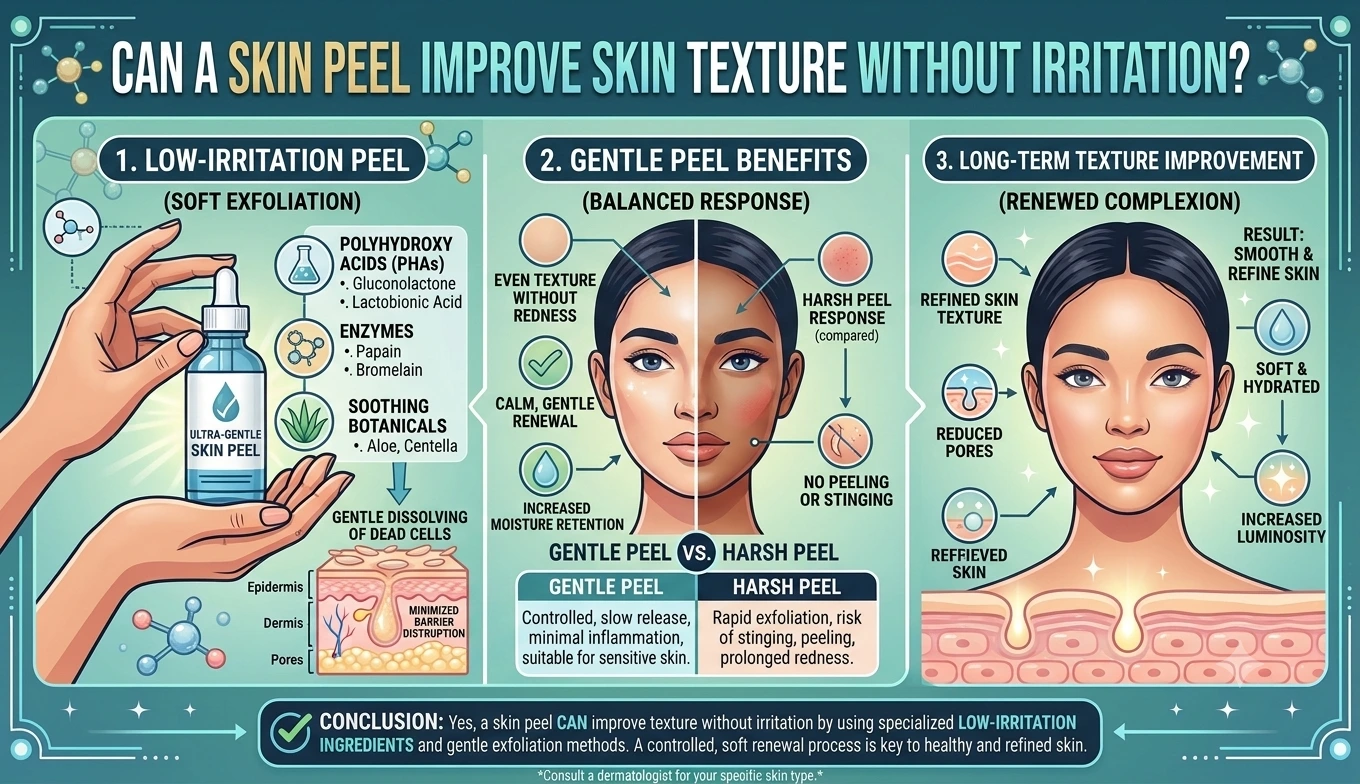
Can a Skin Peel Improve Skin Texture Without Irritation?
Yes, a well-designed skin peel can refine texture without triggering the redness, stinging, or extended downtime that many clients associate with resurfacing treatments. The key lies in the mechanism. Peels that rely on chemical exfoliants often penetrate the skin in ways that can provoke irritation, particularly in reactive or sensitised skin types. Mechanical resurfacing treatments work differently, addressing the skin’s surface without chemical penetration. The Trexyne Peel is one such option, using marine-algae spicules to create controlled micro-channels while stabilised Vitamin E supports the skin’s recovery phase. For practitioners looking to offer texture-focused treatments with a more predictable client experience, understanding this distinction matters more than ever.
What Does “Skin Texture” Actually Mean?
When clients say they want smoother skin, they are usually describing one or more of the following: visible roughness, enlarged pores, uneven light reflection, or a generally dull surface. Texture concerns are often the result of a build-up of dead skin cells that have not shed properly, combined with slower cell turnover as skin matures.
Unlike pigmentation, which is about colour, texture is about surface quality. It is the difference between skin that looks flat and matte under makeup versus skin that looks slightly cakey or catches light unevenly. Practitioners assessing texture concerns typically look at pore visibility, fine surface irregularities, and how the skin responds to touch.
Understanding this distinction is important before recommending any resurfacing protocol, because not every texture concern responds the same way to every method.
Why Traditional Resurfacing Can Irritate Sensitive Skin
Many resurfacing methods work by altering the skin’s surface chemistry. This can be effective for some clients, but it also introduces a level of unpredictability, especially for those with compromised barrier function, rosacea-prone skin, or a history of reactivity.
Common irritation triggers during resurfacing include:
Overly Aggressive Exfoliation Schedules
Clients sometimes push for faster results and request more frequent sessions than their skin can tolerate. Without a structured protocol, this can compromise the skin barrier before it has had a chance to recover.
Skin Barrier Disruption
A weakened barrier struggles to retain moisture and defend against environmental stressors. Once compromised, skin tends to look redder, feel tighter, and take longer to settle between treatments.
Lack of Post-Treatment Support
Resurfacing is only one half of the equation. Skin that is not properly supported afterwards, particularly with ingredients that aid recovery, is more likely to show visible irritation in the days following treatment.
This is where a mechanical, non-chemical approach can offer a different experience for clients who have struggled with sensitivity in the past.
The Mechanical Approach to Texture Improvement
Rather than relying on chemical exfoliants, some professional treatments use physical, precision-based methods to encourage renewal. The Trexyne Peel is built around this principle. It uses marine-algae spicules to create controlled micro-channels across the skin’s surface, without the use of acids or chemical exfoliants.
This mechanical mechanism means the treatment does not rely on altering the skin’s pH or triggering chemical penetration into deeper layers. Instead, the spicules work at a surface level, which is part of why the protocol can be tiered to match different skin types and sensitivity thresholds.
Why Mechanism Matters for Client Comfort
Clients with a history of chemical peel irritation often approach any resurfacing conversation with hesitation. Being able to explain that a treatment works mechanically, rather than chemically, gives practitioners a clear and honest way to set expectations. It also allows for a more tailored conversation about intensity, since the tiered protocol lets you match the treatment level to what the client’s skin can reasonably handle.
The Role of Vitamin E in Supporting Recovery
Texture-focused treatments are not just about the resurfacing step itself. What happens immediately afterwards plays a significant role in how comfortable the client feels and how the skin looks in the days following treatment.
The Trexyne Peel is infused with stabilised tocopherol, a form of Vitamin E, which is designed to support the skin’s recovery phase from the very first application. This is a meaningful detail for clients who are anxious about redness or prolonged sensitivity after resurfacing.
Supporting recovery from the outset may help skin settle more comfortably, which is particularly relevant for clients balancing a resurfacing treatment with a busy personal or professional schedule where visible downtime is a concern.
How a Tiered Protocol Reduces Unpredictability
One of the more practical benefits of a mechanical peel system is the ability to adjust intensity without changing the underlying mechanism. Because the Trexyne Peel uses a tiered protocol, practitioners can match the treatment level to the client’s skin type, sensitivity history, and expectations for downtime.
This is a different approach to escalating chemical concentrations, which can sometimes create a steeper jump between mild and more intensive treatments. A tiered mechanical protocol allows for smaller, more considered adjustments, which can be reassuring for clients who are new to resurfacing or who have been cautious after a previous negative experience elsewhere.
Setting Client Expectations Before Treatment
Part of reducing irritation risk comes down to the consultation itself. Taking time to understand a client’s skin history, current products, and any reactivity concerns allows practitioners to select an appropriate tier and explain what a realistic recovery window might look like.
Texture Concerns Across Different Skin Types
Not all texture concerns are identical, and mechanical resurfacing tends to be versatile across a range of presentations.
Congested or Textured Oily Skin
Clients with oilier skin types often present with visible pore congestion and a rougher surface texture caused by a build-up of dead skin cells mixing with sebum. A mechanical approach can help address this surface build-up without adding further chemical exfoliation to skin that may already be using active ingredients at home.
Dry or Dehydrated Skin with Rough Patches
Dry skin can develop a flaky, uneven texture that catches light poorly and feels rough to the touch. Because the Trexyne Peel is paired with Vitamin E support, it may be a more comfortable option for skin that is already prone to dryness and could react poorly to a harsher chemical exfoliation process.
Mature Skin with Slower Cell Turnover
As skin matures, natural cell turnover slows down, which can lead to a duller, less refined surface texture. A tiered mechanical protocol allows practitioners to introduce resurfacing gradually, which is often more appropriate for mature skin that may also be more prone to sensitivity.
Combining Resurfacing with a Broader Skincare Routine
A single treatment rarely works in isolation. Clients who see the best texture improvements tend to be those who pair professional treatments with a supportive home routine, including appropriate SPF use, gentle cleansing, and barrier-supportive products between sessions.
Practitioners offering the Trexyne Peel as part of a broader treatment plan can guide clients on how to space out sessions and what to expect in terms of gradual, cumulative improvement rather than an overnight transformation.
What Clients Can Realistically Expect
Setting honest expectations is one of the most valuable things a practitioner can do. Texture improvements from mechanical resurfacing tend to build over a series of sessions rather than appearing after a single treatment. Because the protocol is tiered, some clients may notice a smoother surface texture and a more even-looking complexion relatively early, while others with more significant concerns may need a longer course of treatments.
Predictable downtime is one of the more reassuring aspects of this approach. Clients can be given a realistic sense of what their skin may look and feel like in the days following treatment, which supports better adherence to a recommended treatment plan.
Why Practitioners Are Moving Towards Mechanical Resurfacing Options
Across the professional skincare sector, there has been a noticeable shift towards treatments that offer a more predictable client experience. Clients are increasingly asking questions about what is actually in a treatment and how it works, and practitioners benefit from being able to answer clearly and confidently.
Offering a mechanical, botanical-based option such as the Trexyne Peel allows clinics to serve clients who may have previously avoided resurfacing due to concerns about chemical exfoliation or unpredictable irritation. It also gives practitioners another tool to tailor treatment plans around individual sensitivity levels, rather than offering a one-size-fits-all chemical protocol.
Clinics interested in adding this treatment to their offering can view full details and ordering information via the Trexyne shop, or get in touch through the Trexyne contact page for further guidance on tiered protocols and training requirements.
Conclusion
Texture concerns, whether caused by congestion, dryness, or slower natural cell turnover, are among the most common reasons clients seek professional resurfacing treatments. The challenge for many practitioners has been finding an option that delivers visible improvement without the irritation risk that often comes with chemical exfoliation. A mechanical, botanical-based approach offers a different route. The Trexyne Peel uses marine-algae spicules to create controlled micro-channels, paired with stabilised Vitamin E to support the skin’s recovery from the first application. With a tiered protocol that allows intensity to be matched to individual skin types, it gives practitioners a flexible way to support clients towards a smoother, more even-looking complexion, with more predictable downtime along the way. Visit Trexyne to learn more about the full range of professional treatments available.
Frequently Asked Questions
Q: Can a skin peel improve texture without causing redness or irritation?
A mechanical peel that avoids chemical exfoliants, such as the Trexyne Peel, is designed to work through controlled micro-channels rather than chemical penetration. This approach, paired with Vitamin E support, may help reduce the likelihood of prolonged redness for many clients, though individual skin response can vary.
Q: What is the difference between a chemical peel and a mechanical peel for skin texture?
A chemical peel relies on chemical exfoliants to affect the skin’s surface, while a mechanical peel like Trexyne uses marine-algae spicules to create controlled micro-channels without any chemical exfoliation. This distinction can matter for clients with sensitive or reactive skin types.
Q: Is the Trexyne Peel suitable for sensitive skin types with texture concerns?
The tiered protocol allows practitioners to select an intensity level appropriate to the client’s skin type and sensitivity history. This flexibility can make it a suitable option for clients who have found chemical peels too harsh in the past, though a proper in-clinic consultation is always recommended.
Q: How many sessions are needed to see an improvement in skin texture?
Texture improvements typically build gradually across a series of sessions rather than appearing after one treatment. A practitioner can advise on a suitable treatment plan based on the client’s specific concerns and skin type.
Q: Does a mechanical peel like Trexyne require downtime?
The tiered protocol is designed to allow practitioners to match treatment intensity to the client’s expectations around downtime. Recovery experiences can vary depending on the tier selected and individual skin response.
Q: Can the Trexyne Peel be used at home for texture improvement?
No. The Trexyne Peel is formulated for use exclusively by trained aesthetic professionals and is sold strictly to verified practitioners and clinics, not for home use.
Q: What ingredients help support skin during a resurfacing treatment for texture?
Stabilised Vitamin E, in the form of tocopherol, is included in the Trexyne Peel formulation to support the skin’s recovery phase from the first application, which may help the skin feel more comfortable following treatment.