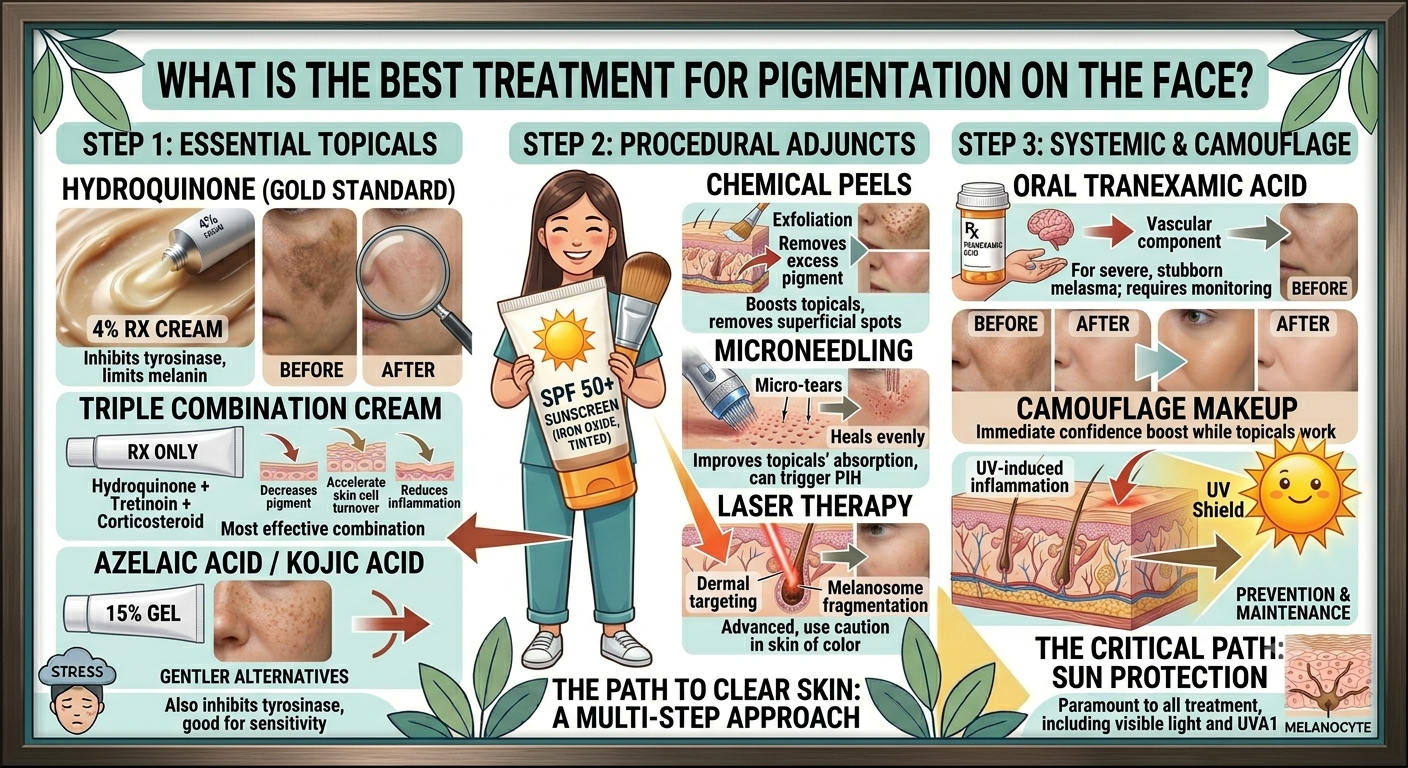
What Is the Best Treatment for Pigmentation on the Face?
Facial pigmentation is one of the most common reasons people seek professional skincare advice, and it is also one of the most frequently mismanaged. With so many products and treatments claiming to fade dark spots and even out skin tone, it can be genuinely difficult to know what actually works. The honest answer is that the best treatment for pigmentation on the face depends on the type of pigmentation, its depth, how long it has been present, and the individual’s skin type. However, for most people dealing with sunspots, post-acne marks, melasma, or general uneven tone, professionally applied chemical peels like the Trexyne Peel consistently deliver results that topical products alone cannot match. This article walks through the main treatment options, explains how they compare, and outlines why a structured professional approach is usually the most effective path forward.
Why Pigmentation Is Difficult to Treat
Before comparing treatment options, it helps to understand why facial pigmentation is so resistant to casual treatment. The core challenge is that melanin, the pigment responsible for dark spots, is not always sitting right on the skin’s surface. Depending on the type of pigmentation and how long it has been present, the excess melanin can be embedded at varying depths within the epidermis or even into the dermis below.
Surface-level pigmentation from recent post-acne marks or mild sun exposure is more accessible and responds faster to treatment. Deeper pigmentation, such as established melasma or long-standing sunspots, requires interventions that penetrate further into the skin. This is the primary reason topical brightening products often produce underwhelming results for moderate to significant pigmentation.
Recurrence is the other major challenge. Many forms of facial pigmentation are driven by ongoing triggers, whether UV exposure, hormonal activity, or recurring inflammation. Without managing these triggers alongside treatment, even the best professional intervention will only deliver temporary improvement.
Topical Treatments: What They Can and Cannot Do
Topical products are the first line of management for mild pigmentation and an important supporting tool in any broader treatment plan. Several active ingredients have genuine evidence behind them.
Vitamin C
Vitamin C is an antioxidant that inhibits tyrosinase, the enzyme responsible for melanin synthesis. It helps slow new melanin production and provides some degree of surface brightening. It also protects the skin against free radical damage from UV exposure. At effective concentrations, typically 10 to 20 percent, it can make a meaningful contribution to a brightening routine. Its limitations are that it works slowly and requires very consistent use to maintain results.
Niacinamide
Niacinamide works differently from vitamin C. Rather than blocking melanin production at the synthesis stage, it interferes with the transfer of melanin from melanocytes to the surrounding skin cells. At concentrations of five percent or higher, it can visibly reduce the appearance of dark spots over several months of consistent use. It is also well-tolerated by most skin types, including sensitive skin.
Azelaic Acid
Azelaic acid both inhibits tyrosinase and has anti-inflammatory properties, making it particularly useful for post-inflammatory hyperpigmentation. It is effective on acne-related marks and is generally safe for use during pregnancy, which makes it a common recommendation for pregnancy-related melasma where other options are off the table.
Alpha Arbutin and Kojic Acid
Both of these ingredients work by inhibiting tyrosinase and reducing melanin production. They are found in many professional-grade brightening serums and can contribute to a reduction in dark spots when used consistently over several months.
The limitation of all topical treatments is their concentration ceiling. Over-the-counter products are formulated for safety at levels that are effective for mild pigmentation but insufficient for established or moderate to severe discoloration. They work best as long-term maintenance tools rather than the primary treatment for visible pigmentation.
Sun Protection: The Non-Negotiable Foundation
No treatment for facial pigmentation is complete without daily broad-spectrum sun protection. This is not simply an add-on recommendation. It is the foundation on which every other intervention depends.
UV radiation drives melanin production and will continue to deepen existing spots and create new ones regardless of what other treatments are being used. Patients who invest in professional treatments without consistent SPF use tend to find that their results fade or reverse within weeks of completing a course.
A broad-spectrum sunscreen with SPF 30 or higher, applied every morning as the last step of the morning skincare routine, is the minimum. Physical sunscreens containing zinc oxide or titanium dioxide offer reliable broad-spectrum protection and are suitable for most skin types including sensitive and acne-prone complexions.
Professional Chemical Peels: A Targeted Approach
For moderate to significant facial pigmentation, professional chemical peels are among the most effective treatments available. They address discoloration in a way that topical products simply cannot by physically removing the layers of skin where excess melanin is stored and stimulating the skin’s natural renewal process at a faster rate.
Chemical peels use acidic solutions to loosen the structural bonds between skin cells in the outermost epidermal layers. This triggers controlled shedding of the surface, revealing the fresher, more evenly toned skin beneath. At the same time, the exfoliation process signals the deeper layers to produce new cells more quickly, shortening the time it takes for cleaner skin to reach the surface.
The Trexyne Peel is a professionally formulated chemical peel designed specifically for this purpose. Applied by a trained skincare practitioner in a clinical or aesthetic setting, it is customized to the individual’s skin type, tone, and specific pigmentation concern. This precision is what allows it to produce consistent, measurable results across a range of pigmentation types.
Why Trexyne Peel Stands Out as a Pigmentation Treatment
Among the range of professional treatment options available for facial pigmentation, Trexyne Peel offers several specific advantages that make it a well-suited choice for many patients.
Customizable Depth and Formulation
The peel can be calibrated by the practitioner to match the depth and type of the individual’s pigmentation. Lighter passes address fresh surface pigmentation more gently, while the treatment can be structured more progressively for deeper or more established discoloration. This adaptability means it is appropriate for a range of skin types and concerns rather than a narrow subset.
Addresses Multiple Pigmentation Types
Trexyne Peel is effective against post-inflammatory hyperpigmentation from acne, UV-induced sunspots, age spots, and the surface component of melasma. Patients dealing with more than one type of discoloration benefit from a treatment that addresses them simultaneously rather than requiring separate interventions.
Improves Overall Skin Quality
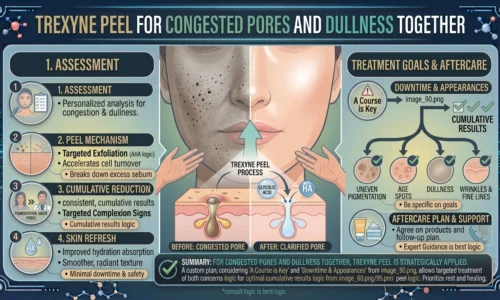
Beyond targeting specific dark spots, Trexyne Peel improves general skin texture, reduces dullness, and gives the complexion a more refreshed and even-toned appearance. Patients often report improvements in skin clarity and radiance beyond what they expected from pigmentation treatment alone.
Progressive Results With Each Session
Results build cumulatively across a treatment series rather than being concentrated in a single session. This progressive approach allows the skin to respond and recover appropriately between appointments, producing more sustainable outcomes than aggressive single treatments.
How Trexyne Peel Compares to Other Professional Options
The professional treatment landscape for facial pigmentation includes several options, and it is worth understanding where Trexyne Peel sits within that range.
Laser Treatments
Laser therapies such as Q-switched lasers and fractional resurfacing can be highly effective for certain types of pigmentation, particularly discrete sunspots. However, they carry a higher risk of post-inflammatory hyperpigmentation in darker skin tones and generally come with greater downtime and higher cost per session. They also require precise calibration for each skin type and are not universally suitable for all pigmentation concerns, particularly melasma.
Microdermabrasion
Microdermabrasion uses physical abrasion to remove the outermost skin layer. It is a gentler option that requires minimal downtime but also produces less significant results for established pigmentation. It works best as a maintenance tool or for very mild surface discoloration rather than as a primary treatment for moderate pigmentation.
IPL Intense Pulsed Light
IPL delivers broad-spectrum light energy to the skin to target pigmented cells. It can be effective for sunspots and general photo-aging but requires careful selection of settings for different skin tones and carries a meaningful risk of worsening pigmentation in darker complexions when not used by an experienced practitioner.
Chemical Peels Including Trexyne Peel
Chemical peels offer a well-established, cost-effective, and broadly applicable approach to pigmentation treatment. They can be safely adapted for a wide range of skin tones with appropriate expertise and produce measurable results across the most common types of facial pigmentation. Trexyne Peel’s professional formulation and customizable application make it a strong option within this category.
Who Is the Best Candidate for Trexyne Peel?
Trexyne Peel is appropriate for a wide range of patients, including:
- Those with visible sunspots, age spots, or general UV-related discoloration on the face
- People with post-acne dark marks that have not improved with topical treatment
- Individuals with mild to moderate melasma who want professional support in managing the condition
- Those with generally uneven skin tone and dullness caused by aging or cumulative sun exposure
- Patients who want faster, more measurable results than topical products can deliver
A thorough consultation with a qualified practitioner is always the starting point. Contraindications such as active inflammatory conditions, recent isotretinoin use, or very recent sun exposure will be assessed and addressed before any treatment begins.
Building an Effective Treatment Plan for Facial Pigmentation
The best results for facial pigmentation come from combining professional treatment with the right supporting habits. An effective plan typically includes:
Daily SPF: Broad-spectrum SPF 30 or higher every morning, every day, without exception.
A targeted home routine: Vitamin C in the morning for antioxidant protection, niacinamide or azelaic acid to support melanin regulation, and a gentle hydrating moisturizer to maintain barrier health.
A professional treatment series: Trexyne Peel sessions structured in a series with appropriate spacing, designed by the practitioner based on your pigmentation type and skin response.
Trigger management: Addressing the underlying cause of the pigmentation, whether that is hormonal activity, recurring breakouts, or habitual unprotected sun exposure, is essential for sustaining results.
Maintenance: Periodic professional sessions after the initial series to prevent significant new pigmentation from accumulating.
A professional pigmentation treatment plan designed around your specific skin is far more effective than any single product or single session intervention. The practitioner-patient relationship built through a structured treatment series allows for ongoing adjustment and optimization as your skin responds.
What Results Can You Expect?
Patients treating facial pigmentation with Trexyne Peel in a structured series typically begin to see visible improvement in tone and clarity within one to two weeks of their first session. The improvement builds progressively with each subsequent treatment.
Post-acne marks and sunspots often show the most visible and rapid response. Melasma and deeper discoloration respond more gradually and may require additional sessions or a combined approach. In all cases, consistent sun protection between sessions is the most important factor in protecting the results achieved.
After completing the initial series, most patients maintain results with periodic sessions spaced a few months apart alongside a daily SPF and brightening routine. With this approach, the improvements achieved during treatment are sustained rather than being a temporary change.
Conclusion
The best treatment for pigmentation on the face is one that matches the type and depth of the discoloration, is delivered by a skilled practitioner, and is supported by the right daily habits. For most people dealing with visible facial pigmentation, professionally administered chemical peels provide the most direct, reliable, and broadly accessible route to meaningful improvement.
The advanced skin peel solutions offered through Trexyne Peel combine clinical-grade formulation with practitioner customization to deliver progressive, lasting results across the most common types of facial pigmentation. Combined with consistent sun protection and a targeted home routine, this approach represents one of the most effective and well-rounded treatment strategies available for achieving a clearer, more even, and more confident complexion.
Frequently Asked Questions
1. What is the best treatment for pigmentation on the face?
The best treatment depends on the type and severity of the pigmentation. For mild surface discoloration, a consistent topical routine with vitamin C, niacinamide, and daily SPF can produce gradual improvement. For moderate to significant pigmentation such as sunspots, post-acne marks, or melasma, a professionally administered chemical peel like Trexyne Peel offers a more direct and faster path to visible results. A qualified skincare practitioner can assess your specific situation and recommend the most appropriate plan.
2. Is Trexyne Peel better than a brightening serum for facial pigmentation?
For established or visible pigmentation, yes. Brightening serums work gradually at low concentrations and are effective for mild discoloration or as maintenance tools. Trexyne Peel physically removes the skin layers where melanin is stored and accelerates cell renewal in a way that topical ingredients cannot replicate. Patients who have used brightening products without meaningful improvement typically see more noticeable results within a structured peel series.
3. How many sessions of Trexyne Peel does it take to see results?
Most patients begin to notice visible improvement after one to two sessions, with the skin appearing clearer and more even once the initial peeling phase is complete. More significant and lasting results develop across three to five or more sessions, depending on the type and severity of the pigmentation. Your practitioner will design the treatment series based on your individual skin assessment.
4. Can Trexyne Peel treat all types of facial pigmentation?
Trexyne Peel is effective for the most common types of facial pigmentation including post-inflammatory hyperpigmentation from acne, sunspots, age spots, and the surface component of melasma. Very deep dermal pigmentation or certain rare pigmentation conditions may require additional or alternative approaches. Your practitioner will assess your specific pigmentation type and advise on whether Trexyne Peel alone or in combination with other treatments is most appropriate.
5. How do I maintain the results of Trexyne Peel for facial pigmentation?
Maintaining results requires consistent daily broad-spectrum sunscreen use, a targeted home skincare routine that supports melanin regulation, and periodic maintenance peel sessions scheduled a few months apart. Managing any ongoing triggers such as hormonal activity or recurring acne is also important. Patients who commit to these habits consistently find that their results are sustained and continue to improve over time.
6. Is pigmentation treatment with a chemical peel safe for darker skin tones?
Chemical peels can be safely performed on darker skin tones when carried out by a practitioner with specific experience and expertise in treating diverse complexions. The main concern is the risk of post-inflammatory hyperpigmentation from the treatment itself, which can be minimized with proper patient selection, appropriate peel strength, and careful aftercare. Choosing an experienced provider is essential for patients with medium to dark skin tones.
7. Should I stop using my skincare products before starting Trexyne Peel?
Your practitioner will give you specific guidance on this during your consultation. In general, certain active ingredients such as retinoids and high-concentration exfoliating acids may need to be paused for a period before treatment to reduce the risk of skin sensitivity or adverse reactions. Your practitioner will review your current routine and advise on which products to continue or pause in the lead-up to your first session.