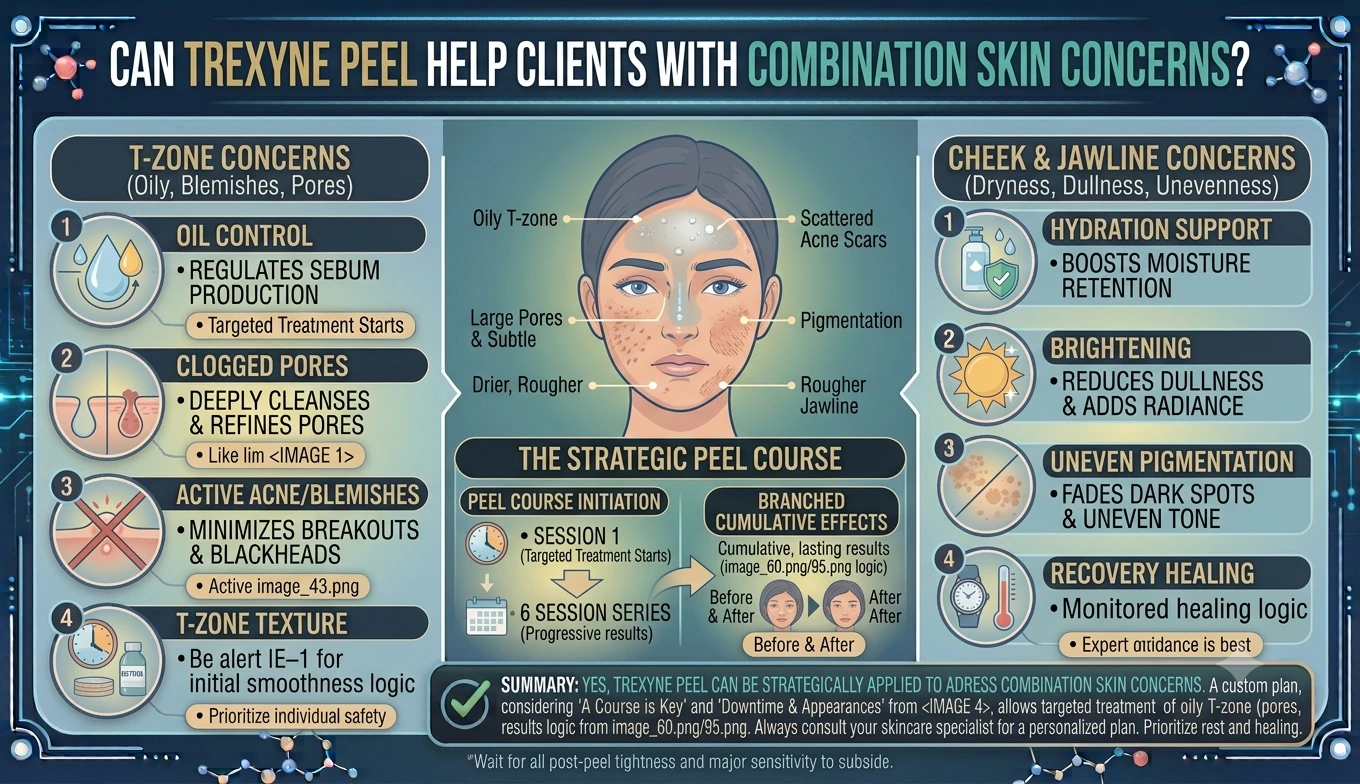
Can Trexyne Peel Help Clients With Combination Skin Concerns ?
Yes, the Trexyne Peel can significantly help clients dealing with combination skin concerns by delivering targeted, uniform mechanical resurfacing across varying facial zones. Combination skin presents a unique clinical challenge, featuring an oily T-zone alongside dry or normal cheeks. Incorporating the Trexyne Peel Professional Algae Resurfacing Treatment
allows trained aesthetic professionals to address these contrasting areas simultaneously. Driven by microscopic marine spicules and supported by stabilised Vitamin E, this botanical treatment works purely through a mechanical mechanism to clear congested pores while supporting fragile, drier tissue without causing undue irritation or localized barrier disruption.
Understanding the Clinical Mechanics of Combination Skin
Managing combination skin requires an understanding of how distinct facial zones behave differently under varying physiological conditions. Treating this dual-natured skin type demands an adaptable approach that balances sebum production without stripping essential moisture.
Sebum Heterogeneity Across Facial Zones
The defining characteristic of combination skin is the uneven distribution of sebaceous glands across the face. The central region, commonly known as the T-zone, contains a high density of active sebaceous units that continuously produce excess lipid secretions. This elevated sebum flow frequently leads to expanded pore architecture, surface shine, and dead cell entrapment. In contrast, the lateral cheek areas possess fewer oil glands, leaving them prone to transepidermal water loss and surface dryness.
The Challenge of Uniform Exfoliation
Achieving balanced exfoliation across contrasting skin zones is inherently difficult. Traditional resurfacing methods can over-process drier areas while under-treating dense, oily zones. When skin receives mismatched care, dry patches become inflamed or flaky, while congested pores remain unrefined. Aesthetic professionals require a adaptable method that respects lipid-deprived tissue while providing thorough physical refinement where congestion builds up.
The Advantages of Botanical Mechanical Resurfacing
Botanical mechanical resurfacing provides a controlled, uniform approach to skin refinement that adapts naturally to the varied demands of combination skin types.
Controlled Surface Micro-Channeling
Unlike conventional methods that rely on active solution absorption, mechanical resurfacing operates through physical contact and controlled pressure. Using micronized marine-algae spicules, the treatment creates thousands of microscopic channels within the upper epidermal layers. These spicules physically dislodge trapped cellular debris and loosen stubborn surface impactions. Because this action relies on mechanical movement, practitioners can control the intensity over different facial regions.
Avoiding Chemical Irritation Across Sensitive Zones
A major benefit of mechanical botanical resurfacing is the elimination of aggressive active agents that might destabilize sensitive, lipid-deprived cheeks. The physical mechanism operates without disrupting the delicate pH balance of the stratum corneum. Drier lateral areas receive gentle, controlled mechanical stimulation that encourages natural cell movement without triggering stinging, burning, or prolonged localized erythema.
Tailoring Application Protocols for Combination Complexions
Professional application techniques allow aesthetic practitioners to customize every treatment to suit the exact topography of a client’s combination skin.
Zone-Specific Pressure Modulation
The primary advantage of a professional resurfacing system lies in practitioner-controlled physical movement. During application, a practitioner can apply firm, focused pressure over the congested T-zone to ensure deep spicule engagement within enlarged pores. When moving to the delicate, drier cheek regions, the practitioner reduces physical pressure, allowing the spicules to lightly condition the surface without over-stimulating fragile capillaries.
Utilizing Tiered Protocols for Dual Skin Needs
A structured, tiered protocol framework enables aesthetic clinics to match treatment intensity directly to client expectations and barrier resilience. Practitioners can select a mild Level 1 application for clients experiencing pronounced lateral dryness, ensuring safe, gentle renewal. For clients with extremely congested central zones, practitioners can utilize a higher protocol tier with localized focus, providing predictable downtime and uniform skin refinement.
Restoring Pore Clarity in the Oily T-Zone
The T-zone requires direct, effective surface management to eliminate stubborn shine, prevent congestion, and refine visible pore structure.
Physical Extraction of Micro-Impactions
Excess oil in the forehead, nose, and chin attracts airborne dust and holds dead corneocytes within the pore lining. The microscopic marine spicules in the Trexyne Peel
act as natural physical exfoliants during application. As the practitioner massages the formulation into congested areas, these botanical spicules physically dislodge compacted debris, clearing the pore opening and allowing sebum to flow naturally across the skin surface.
Softening Rough Surface Topography
Persistent T-zone congestion often results in a rough, uneven skin texture that reflects light poorly. By physically removing accumulated surface layers, mechanical algae spicules instantly smooth out textural micro-irregularities. The physical shedding phase that follows over three to six days reveals a matte, refined surface with visibly diminished pore boundaries, helping restore balance to oil-prone areas.
Protecting and Comforting Drier Lateral Cheek Areas
While the T-zone requires thorough clearing, drier cheek areas require gentle support, hydration preservation, and immediate lipid comfort.
Preventing Transepidermal Water Loss
Dry cheek tissue lacks the robust lipid barrier found in oilier regions, making it susceptible to moisture evaporation during resurfacing. Mechanical spicule action stimulates natural epidermal renewal without stripping away natural surface lipids. As fresh keratinocytes migrate toward the surface, the skin naturally improves its capacity to bind ambient moisture, preventing the uncomfortable tightness often associated with intensive facial treatments.
Stabilised Vitamin E Barrier Conditioning
To safeguard delicate tissue throughout the resurfacing process, the Trexyne formulation includes stabilised Vitamin E, or tocopherol. Tocopherol is a lipid-soluble antioxidant that integrates smoothly into the stratum corneum. Applied during the mechanical phase, stabilised Vitamin E soothes initial warmth, conditions dry patches, and fortifies intercellular lipids. This antioxidant support ensures that drier cheek regions remain comfortable, supple, and resilient throughout the shedding cycle.
The Role of Marine Spicules in Accelerated Cell Movement
Understanding how marine-algae spicules function biologically explains why this treatment delivers consistent results across complex, multi-zone skin types.
Natural Elimination of Microscopic Spicules
Marine spicules are natural, needle-like structures harvested from ocean algae. Once massaged into the skin, these microscopic structures remain embedded in the upper stratum corneum for forty-eight to seventy-two hours. The body naturally recognizes these spicules and initiates a mild, controlled repair response, steadily pushing the spicules outward alongside old, dull surface cells.
Driving Uniform Desquamation
As the skin naturally expels the marine spicules, it undergoes a predictable, uniform shedding phase. This mechanical process accelerates natural cell turnover without causing unpredictable deep tissue reactions. Whether applied to oil-heavy or moisture-deficient areas, the skin sheds at a controlled, physical rate, leaving behind a refreshed, smooth, and evenly balanced surface topology.
Post-Treatment Home Care for Combination Skin Types
Guiding clients through appropriate home aftercare ensures that both oily and dry zones recover safely and maintain their refined appearance.
Balancing Hydration Without Heaviness
Following a resurfacing session, combination skin requires a balanced approach to moisture replenishment. Clients should apply a lightweight, non-comedogenic barrier cream that provides essential lipid support to dry cheeks without clogging freshly cleared T-zone pores. Practitioners can guide clients toward suitable aftercare products and professional supplies by visiting our official Trexyne shop page
.
Strict Photoprotection Across All Zones
Newly revealed surface cells across both oily and dry regions are inherently sensitive to ultraviolet light. Clients must apply a generous layer of broad-spectrum sun protection every morning throughout the recovery window. Consistent photoprotection prevents UV-induced oxidative stress and safeguards fresh tissue from tone irregularities, ensuring the complexion matures evenly across the entire face.
Practitioner Protocol Adjustments and Clinical Consultation
Proper client assessment and clear communication lay the foundation for successful treatment outcomes when managing combination complexions.
Conducting a Thorough Zone Analysis
Before initiating a resurfacing session, the aesthetic professional must perform a detailed visual and tactile skin analysis. Identifying exact boundaries between oily and dry areas allows the practitioner to plan their massage pressure and time allocation effectively. Assessing baseline barrier health ensures that fragile cheek areas are not over-stimulated during the treatment.
Direct Practitioner Support and Resources
Aesthetic professionals looking to integrate botanical mechanical resurfacing into their clinic offerings can access extensive technical guidance and training resources. Our team provides detailed protocol instructions to help clinics optimize client care. To connect with our clinical team or inquire about verified purchasing accounts, visit the official Trexyne contact page
.
Achieving Multi-Session Balance and Complexion Harmony
Sustained improvement in combination skin texture and tone requires a strategic, multi-session treatment plan supported by consistent professional care.
Structuring a Multi-Treatment Series
While a single session provides visible smoothing, a planned series of three to six treatments achieves deep, lasting refinement. Spacing appointments three to four weeks apart allows the epidermal barrier to rebuild completely between sessions. Over time, progressive mechanical renewal helps harmonize surface texture, reduce persistent T-zone congestion, and support long-term moisture retention in drier regions.
Educating Clients on Long-Term Skin Maintenance
Educating clients about their unique skin biology helps them maintain their clinical results between clinic visits. Encouraging gentle daily cleansing, smart moisture balance, and regular professional resurfacing sessions empowers clients to enjoy a stable, healthy complexion. Practitioners can explore our full product range and brand ethos on the main Trexyne homepage
.
Conclusion
Trexyne Peel offers an exceptional, adaptable solution for clients presenting with combination skin concerns by delivering uniform mechanical resurfacing tailored to contrasting facial zones. By utilizing the physical action of marine-algae spicules, aesthetic professionals can target T-zone congestion and dislodge trapped debris while adjusting pressure to protect drier, delicate cheek tissue. Supported by the comforting, lipid-compatible benefits of stabilised Vitamin E, the Trexyne Peel Professional Algae Resurfacing Treatment encourages natural cell movement without causing chemical irritation or barrier instability. When combined with customized practitioner protocols and diligent home care, this botanical mechanical treatment supports a smoother, brighter, and more balanced complexion for every area of the face.
Frequently Asked Questions
Q: Can Trexyne Peel be applied if my client has extremely dry cheeks alongside an oily T-zone?
Yes, Trexyne Peel is suitable for dual-natured skin because the practitioner can customize physical pressure during application. Lighter pressure over dry cheeks gentle conditions the skin, while focused pressure over the T-zone clears stubborn congestion.
Q: Will the marine algae spicules clog pores in the oilier areas of the face?
No, marine algae spicules do not clog pores. These microscopic spicules physically dislodge trapped oil and dead cell debris within the pore opening, and the skin naturally expels them within forty-eight to seventy-two hours during the shedding phase.
Q: How does stabilised Vitamin E assist combination skin during the recovery phase?
Stabilised Vitamin E provides immediate lipid support and antioxidant conditioning to the stratum corneum. It soothes initial warmth and helps drier facial zones retain vital moisture, ensuring comfortable recovery across all skin areas.
Q: Is a mechanical algae resurfacing treatment safer for combination skin than chemical alternatives?
A mechanical algae treatment works purely through physical spicule engagement without altering skin pH or using aggressive chemical exfoliants. This physical mechanism allows practitioners to control treatment intensity precisely across sensitive and oily zones alike.
Q: Can clients purchase Trexyne Peel for at-home application on their T-zone?
No, Trexyne Peel is strictly a professional-only product available exclusively to trained aesthetic practitioners and verified clinics. Safe application requires professional skin analysis and specialized physical massage techniques.
Q: How many resurfacing sessions are typically recommended for combination skin concerns?
Practitioners generally recommend a series of three to six sessions spaced three to four weeks apart. This multi-session protocol allows for progressive texture refinement, sustained pore clarity, and long-term complexion balance.