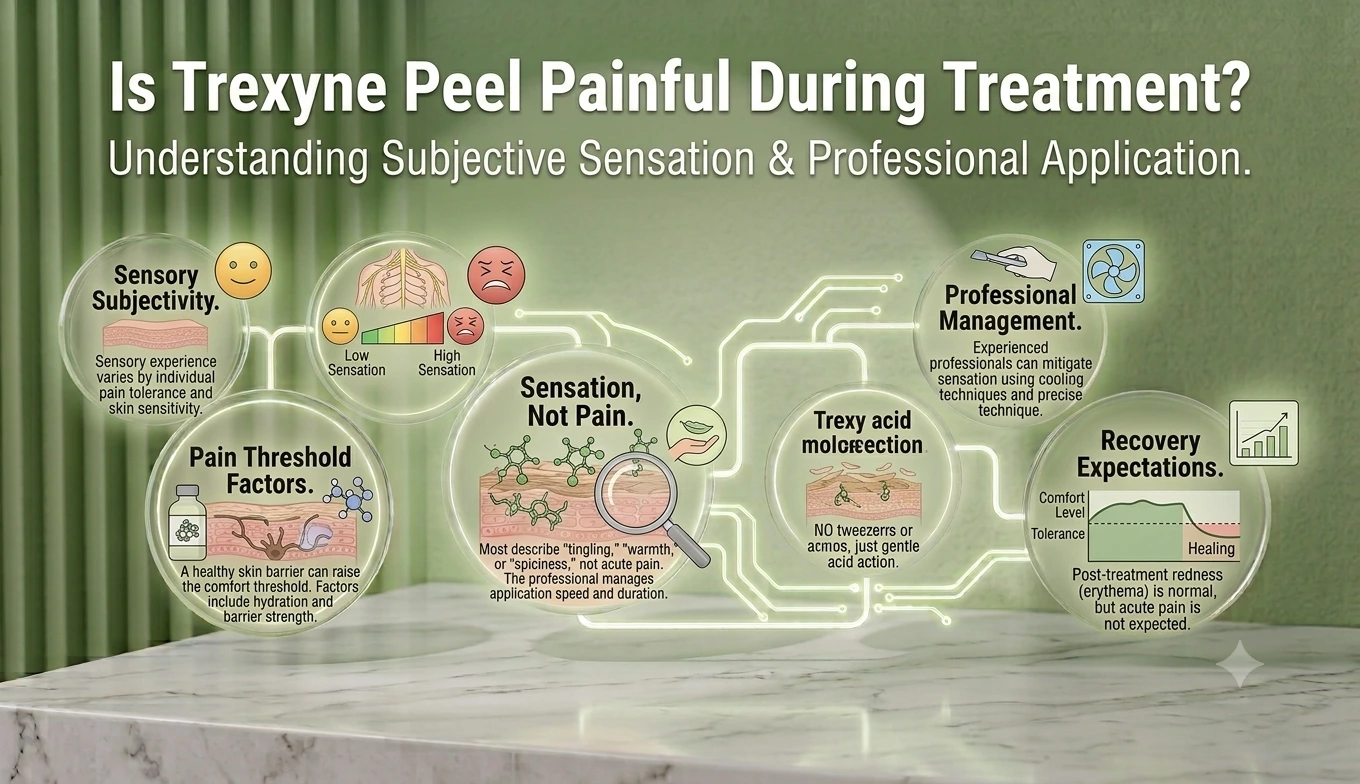
Is Trexyne Peel Painful During Treatment?
Clients considering skin resurfacing often ask the same question first: will it hurt? With Trexyne Peel, the honest answer is that most clients describe the sensation as mild warmth or light grittiness rather than pain. Because the Trexyne Peel works through a mechanical mechanism using marine-algae spicules, there is no chemical burning sensation to manage. Practitioners can adjust intensity to suit each client’s skin type and comfort threshold, which makes the treatment far more predictable than clients often expect. This article explains what actually happens during treatment, why the sensation differs from other resurfacing approaches, and how practitioners can prepare clients for a comfortable, well-managed session.
Understanding How Trexyne Peel Works
Trexyne Peel is not a chemical peel. It contains no acids and does not rely on chemical exfoliation to resurface the skin. Instead, it uses marine-algae spicules to create controlled micro-channels across the skin’s surface. This is a purely mechanical mechanism, which means the treatment interacts with the skin physically rather than through a chemical reaction.
This distinction matters enormously when discussing comfort. Chemical exfoliation methods work by breaking down bonds between skin cells, which can trigger a stinging or burning sensation as the product penetrates. Because Trexyne Peel does not penetrate the skin chemically, that particular type of discomfort simply is not part of the experience. Instead, clients feel the physical action of the spicules moving across the skin, which most describe as textured or gritty rather than painful.
Why the Absence of Acids Changes the Experience
Many clients who have tried other resurfacing treatments arrive with certain assumptions about pain based on chemical exfoliation experiences. Because Trexyne Peel avoids that mechanism entirely, practitioners often find it useful to explain this difference upfront. Setting accurate expectations early tends to reduce anxiety and helps clients relax into the treatment.
How Practitioners Can Frame This for New Clients
When a new client mentions a previous uncomfortable experience with resurfacing, it helps to walk through exactly why Trexyne Peel behaves differently. Explaining that the treatment relies on marine-algae spicules rather than a chemical solution gives clients a concrete reason to feel reassured, rather than a vague promise that “it won’t hurt as much.” Specific, honest explanations tend to build far more trust than general reassurance alone.
What Sensations Can Clients Expect During Treatment
During a typical session, clients commonly report a few consistent sensations. There is often a light scratching or gritty feeling as the spicules pass over the skin, similar in texture to a fine physical exfoliant but more controlled and even. Some clients notice mild warmth developing across the treated area, particularly toward the end of the session. A small number describe slight tightness once the treatment concludes.
None of these sensations are typically described as sharp or burning. Most practitioners find that clients tolerate the treatment well, especially once they understand what to expect before the appointment begins.
Managing Sensitivity in Real Time
Because the mechanism is mechanical, practitioners retain a high degree of control throughout the session. Pressure and pacing can be adjusted in real time based on how the client responds, which is one of the practical advantages of working with a manually controlled resurfacing tool rather than a chemical formulation that continues to act once applied.
Communicating During the Session
Many practitioners find it helpful to check in verbally with clients as the treatment progresses, particularly during a first session. Simple prompts, asking whether the sensation feels manageable or whether the client would prefer a lighter pass in a particular area, allow adjustments to happen immediately. This ongoing dialogue is only possible because the mechanism responds to technique in real time, rather than continuing to act independently once applied to the skin.
Why the Mechanical Mechanism Changes the Comfort Conversation
Comfort during any resurfacing treatment is closely tied to how the product interacts with the skin. With chemical formulations, the intensity of sensation is largely determined by the strength of the solution and how long it remains in contact with the skin. This can make the experience less predictable, particularly for clients with reactive or sensitised skin.
Trexyne Peel takes a different approach. Because the resurfacing action comes from the physical movement of marine-algae spicules, the practitioner can directly influence how intense the treatment feels simply by adjusting technique and pressure. This gives practitioners a more hands-on way to manage each client’s comfort, rather than relying on timing a chemical reaction.
A More Controlled Client Experience
This level of control is particularly valuable for clients who are anxious about discomfort or who have had a difficult experience with a resurfacing treatment previously. Practitioners can talk clients through each stage of the session, adjusting as they go, which tends to build trust and confidence in the process.
The Role of the Tiered Protocol in Managing Intensity
One of the defining features of Trexyne Peel is its tiered protocol, which allows practitioners to match treatment intensity to a client’s skin type and expectations. Rather than offering a single fixed strength, the tiered approach means a first-time client with sensitive skin can be treated more conservatively, while an experienced client seeking more visible resurfacing can receive a stronger protocol.
This flexibility directly affects how a treatment feels. A lighter tier tends to produce minimal sensation beyond gentle warmth, while a more intensive tier may create a slightly stronger, though still generally well-tolerated, level of grittiness and warmth. Because downtime is predictable across the tiers, practitioners can select a protocol that balances visible results with the comfort level appropriate for that individual client.
Matching Tiers to Client Goals
A useful approach is to discuss client goals before selecting a tier. Clients focused on gradual improvement over several sessions may prefer a gentler protocol, while those preparing for a specific event with more time to recover may be suited to a stronger tier. This conversation also helps set accurate expectations about both sensation and downtime.
How Vitamin E Supports Comfort During Recovery
Trexyne Peel is infused with stabilised Vitamin E, which supports the skin’s recovery phase from the very first application. While the treatment itself is mechanical, the inclusion of Vitamin E plays an important role in how the skin feels once the micro-channelling process is complete.
Supporting the skin’s natural recovery process can help reduce the sense of tightness or dryness that clients sometimes notice in the hours following resurfacing. This is not a numbing or anaesthetic effect, but rather a supportive one, helping the skin settle more comfortably after treatment.
Why This Matters for the Overall Comfort Picture
Comfort during a resurfacing treatment is not limited to the moments the tool is in contact with the skin. How the skin feels in the following hours and days is just as relevant to a client’s overall impression of the experience. Because Vitamin E is part of the Trexyne Peel formulation, this recovery support begins immediately rather than needing to be introduced as a separate step.
What Happens Immediately After Treatment
Once a Trexyne Peel session is complete, most clients notice mild redness and warmth across the treated area, similar to a light flush. This typically settles within a short period after the appointment. Because the treatment avoids chemical exfoliation, there is no extended downtime associated with deep chemical penetration, and clients are generally able to return to their normal routine shortly after their session.
Some clients describe a sensation of tautness in the skin for the remainder of the day, which tends to ease as the skin settles. This is a normal part of the skin’s response to the mechanical resurfacing process and is not typically described as painful.
Setting Realistic Aftercare Expectations
Practitioners should always provide clear aftercare guidance specific to the tier of treatment performed, since predictable downtime is one of the defining features of the tiered protocol. Explaining this clearly helps clients understand that any mild redness or tautness is expected and temporary.
Factors That Influence How a Client Experiences the Peel
While Trexyne Peel is designed to be predictable, individual experience can still vary. Several factors influence how a client perceives sensation during and after treatment.
Skin Type and Sensitivity
Clients with naturally sensitive or reactive skin may notice sensations more acutely than clients with more resilient skin. This is one of the reasons the tiered protocol exists, allowing practitioners to select an appropriate starting point rather than applying a uniform intensity to every client.
Practitioner Technique
Because the mechanism is mechanical, technique plays a meaningful role in comfort. An experienced practitioner who understands pressure, pacing, and coverage can help ensure the treatment feels controlled and even throughout.
Client Expectations Going In
Clients who arrive with accurate expectations, having been told what sensations to expect, tend to report a more comfortable experience overall. Anxiety about the unknown can heighten how sensations are perceived, so clear communication beforehand plays a genuine role in comfort.
Treatment History and Skin Condition on the Day
A client’s current skin condition on the day of treatment also plays a part. Skin that is already compromised, irritated, or unusually dry may respond differently to the spicules than well-hydrated, settled skin. This is why a brief skin check before each session is a useful habit, allowing practitioners to confirm the planned tier is still appropriate or to adjust it if the skin’s current state calls for a gentler approach.
Preparing Clients Before Their Appointment
Good preparation makes a noticeable difference to how a client experiences their session. Practitioners should walk clients through the mechanical nature of the treatment, explain that no acids are involved, and describe the general sensations they may notice. This transparency helps reduce first-appointment nerves considerably.
It is also worth discussing any previous resurfacing experiences the client has had, as this can inform which tier of the protocol may be most appropriate. Clients who are uncertain about what to expect, or who have specific questions about suitability, are welcome to reach out through the Trexyne contact page before booking, particularly if they have concerns about sensitivity or skin conditions.
A Simple Pre-Treatment Conversation Framework
A short, structured conversation covering skin history, sensitivity concerns, and treatment goals allows practitioners to select the right tier and set accurate expectations. This conversation is often just as important to overall comfort as the treatment technique itself.
It also helps to explain, in plain terms, what the client will feel at each stage: a brief period of mild grittiness during the treatment, some warmth as the session continues, and light tautness or redness afterwards that generally settles quickly. Clients who understand this sequence in advance rarely find any part of it surprising, which in turn tends to make the whole experience feel calmer and more comfortable from start to finish.
Aftercare and Managing Any Post-Treatment Sensitivity
Following the session, straightforward aftercare supports both comfort and results. Clients should be guided on gentle skincare in the days following treatment, avoiding harsh actives or excessive sun exposure while the skin settles. Because Vitamin E is already part of the treatment itself, the skin has some built-in support for this recovery window.
Any mild warmth, tautness, or light redness generally resolves without intervention. Practitioners should reassure clients that these are typical, temporary responses to a mechanical resurfacing treatment rather than signs of an adverse reaction. Clients can always browse the full range of available protocols and treatment options via the Trexyne shop to understand pricing and packages before their next visit.
Who Should Discuss Suitability Before Booking
While Trexyne Peel is generally well tolerated, a short consultation before the first appointment is always worthwhile. This is especially true for clients with a history of sensitive or reactive skin, those currently using strong topical treatments elsewhere in their routine, or anyone who is simply unsure what to expect from a resurfacing treatment for the first time.
Why a Consultation Improves the Comfort Outcome
A consultation gives the practitioner a chance to review the client’s skin history, discuss goals, and select the most appropriate tier of the protocol before any treatment begins. It also gives the client an opportunity to ask questions and voice any concerns about sensation or downtime. Clients who feel informed and involved in this decision tend to approach the treatment with far less apprehension, which itself can influence how comfortable the session feels.
Ongoing Communication Between Sessions
For clients having a course of treatments, it is worth revisiting comfort and tolerance after each session. If a client found a particular tier more intense than expected, this feedback can be used to adjust the following appointment. This kind of ongoing dialogue is part of what makes a tiered protocol genuinely useful in practice, rather than simply a fixed menu of options.
Why Professional-Only Access Matters for Comfort and Safety
Trexyne Peel is sold strictly to verified practitioners and clinics, and this restriction plays a direct role in client comfort. Because the treatment is only performed by trained professionals, technique, pressure, and tier selection are always guided by clinical judgement rather than guesswork.
This professional-only approach also means clients receive a properly tailored consultation before treatment, rather than a generic, one-size-fits-all application. For clinics looking to introduce Trexyne Peel to their treatment menu, more information is available on the Trexyne homepage, including how to become a verified practitioner.
Conclusion
Discomfort is a common concern for anyone considering a resurfacing treatment, but Trexyne Peel is designed with predictability and control in mind. Because it works through a mechanical mechanism using marine-algae spicules rather than acids, clients avoid the chemical burning sensation associated with other exfoliation methods. The tiered protocol allows practitioners to match intensity to each client’s skin type and expectations, while the stabilised Vitamin E supports comfortable recovery from the very first application. With clear communication before treatment and straightforward aftercare afterwards, most clients find the experience mild and manageable rather than painful. For clinics and practitioners aiming to offer a resurfacing option that supports a brighter, more even-looking complexion without unpredictable discomfort, Trexyne Peel offers a controlled, professional approach built around client comfort at every stage.
FAQs
Q: Does Trexyne Peel hurt more than a chemical peel?
Most clients describe Trexyne Peel as producing mild warmth and light grittiness rather than the stinging or burning sensation sometimes associated with chemical exfoliation. Because it works mechanically rather than through acids, the sensation profile tends to feel more controlled and predictable.
Q: How long does discomfort last after a Trexyne Peel treatment?
Mild redness, warmth, or tautness typically settles within a short period after the session. Because there is no extended downtime associated with deep chemical penetration, most clients find any sensitivity resolves quickly.
Q: Can Trexyne Peel be adjusted for sensitive skin?
Yes. The tiered protocol allows practitioners to select a gentler intensity for clients with sensitive or reactive skin, helping to manage comfort while still supporting visible resurfacing over time.
Q: Is there any numbing or anaesthetic used during Trexyne Peel treatment?
Trexyne Peel does not involve numbing agents. Comfort is instead managed through practitioner technique, pressure control, and selection of an appropriate protocol tier for the client’s skin type.
Q: Will I feel the marine-algae spicules during treatment?
Clients commonly notice a light, gritty texture as the spicules move across the skin. This physical sensation is generally described as mild and is a normal part of the mechanical resurfacing process.
Q: Why does Trexyne Peel avoid using acids?
Trexyne Peel is built around a botanical, mechanical mechanism rather than chemical exfoliation. Avoiding acids means clients do not experience chemical penetration or the associated burning sensation, and downtime remains predictable across each tier of the protocol.
Q: Can practitioners control how intense the treatment feels during the session?
Yes. Because the resurfacing action comes from physical movement rather than a chemical reaction, practitioners can adjust pressure and pacing in real time, giving them direct influence over how intense the treatment feels for each client.