Can Hormones Cause Pigmentation on the Face?
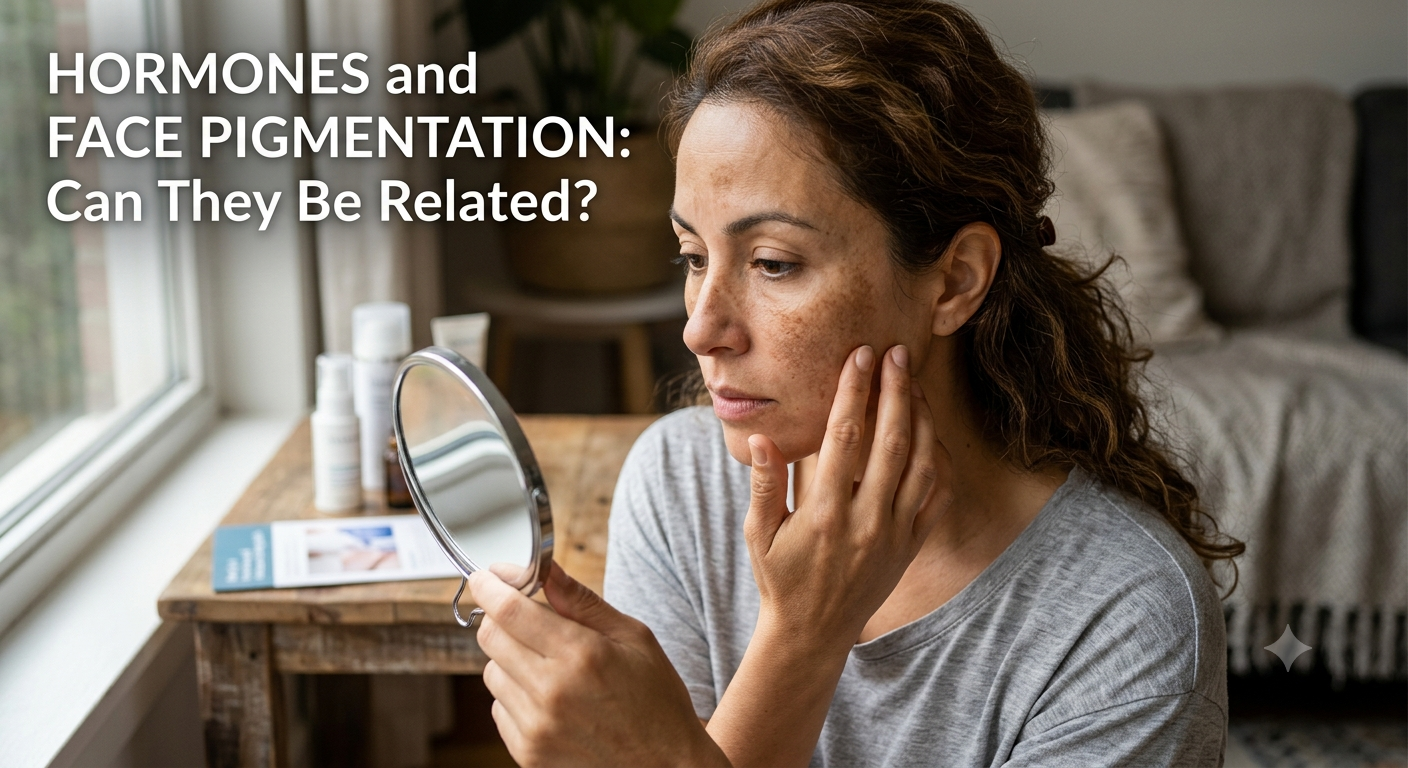
The human skin is incredibly sensitive to internal biological shifts, and few things influence its appearance as profoundly as hormonal fluctuations. If you have noticed symmetrical, dark brown or grayish patches developing across your cheeks, forehead, upper lip, or bridge of your nose, the root cause is very likely hormonal activity. This specific type of discoloration is known as melasma, or hormonal hyperpigmentation. Understanding how internal chemical messages influence melanin production is the key to managing and treating this deeply frustrating skin condition.
How Hormones Stimulate Melanin Production
To understand why hormones alter facial appearance, it helps to examine melanocytes—the specialized cells located in the base layer of the epidermis that produce pigment (melanin). Under normal conditions, melanocytes distribute pigment evenly to protect the skin from UV radiation.
However, certain hormones, specifically estrogen and progesterone, act as strong stimulators of these pigment-producing cells. When levels of these hormones rise significantly, they interact with receptors on melanocytes, triggering an overproduction of melanin. This excess pigment is not distributed evenly; instead, it clusters in specific areas of the face, creating the characteristic patches of dark discoloration.
Common Triggers of Hormonal Pigmentation
Hormonal fluctuations happen at distinct stages of life, making certain individuals highly susceptible to developing facial discoloration.
- Pregnancy (“The Mask of Pregnancy”): The massive surge in estrogen and progesterone during pregnancy is one of the most common causes of melasma. It often appears during the second or third trimester and can fade gradually after childbirth, though it frequently persists without targeted intervention.
- Oral Contraceptives and Hormone Replacement Therapy (HRT): Birth control pills, patches, and hormonal therapies introduce external synthetic hormones into the system. For genetically predisposed individuals, even low-dose options can switch on the pigment-production mechanism.
- Thyroid Dysfunction: The endocrine system is interconnected. Studies indicate that individuals with an underactive or overactive thyroid may experience higher rates of melasma, suggesting thyroid-stimulating hormones play a supporting role in skin discoloration.
- Chronic Stress: High stress levels prompt the adrenal glands to release cortisol. Elevated cortisol can disrupt the balance of other systemic hormones and increase melanocyte-stimulating hormone (MSH) activity, worsening existing dark patches.
Why Hormonal Pigmentation Is Unique and Stubborn
Unlike simple sunspots or minor post-inflammatory marks, hormonal pigmentation is inherently dynamic and reactive. Because the primary trigger originates inside the body, simply treating the surface layer of the skin is rarely enough for a permanent resolution.
Furthermore, hormonal melanocytes are hyper-sensitized. Even after systemic hormone levels stabilize, the affected cells remain in a state of high alert. This is why individuals struggling with this issue find that minor triggers—like a few minutes of unprotected sun exposure or exposure to heat from cooking—can cause dark patches to return rapidly. For meaningful improvement, individuals often turn to advanced clinical tools like the Trexyne Peel to clear the accumulated surface pigment while addressing structural skin health.
Managing and Treating Hormonal Pigmentation
Because hormonal hyperpigmentation is deeply rooted, successful management requires a comprehensive, multi-layered approach.
Absolute UV Protection
UV light acts as a catalyst for hormonal pigmentation. Even if your hormones are completely balanced, a short window of unprotected UV exposure will activate sensitized melanocytes. A broad-spectrum SPF 30 or higher must be worn every single day, and physical blocks containing zinc oxide or titanium dioxide are highly recommended because they reflect both light and heat away from the skin barrier.
Professional Pigmentation Treatments
Topical creams often struggle to reach the depth required to break up established patches. Utilizing a dedicated professional pigmentation treatment administered by a qualified professional provides a controlled way to exfoliate the heavily pigmented layers safely. Clinical peels help lift the existing discoloration, accelerate cellular turnover, and help regulate pigment distribution across the facial canvas.
Tyrosinase Inhibitors
Incorporating topical ingredients that actively block the chemical pathway of pigment creation helps stop new spots from forming. Ingredients such as alpha arbutin, kojic acid, and vitamin C help suppress the enzyme responsible for melanin production, keeping the pigment cells quiet while surface treatments clear existing marks.
Conclusion
Hormones can absolutely cause significant, stubborn pigmentation on the face by over-stimulating melanocytes and altering how pigment is deposited across the skin layers. While conditions like melasma are complex and prone to recurrence, they are entirely manageable with the right combination of daily protection, targeted topical actives, and clinical support. Working alongside a skincare professional to combine daily SPF discipline with advanced solutions like the Trexyne Peel allows you to progressively clear hormonal dark patches and restore a balanced, clear, and uniform complexion.
Frequently Asked Questions
1. Does hormonal pigmentation ever go away completely on its own?
In some specific cases, such as pigmentation triggered strictly by pregnancy or a specific birth control pill, the dark patches may fade gradually several months after childbirth or after discontinuing the medication. However, for many individuals, the melanocytes remain hyper-sensitized, meaning the pigmentation persists long term and requires targeted professional treatment to clear.
2. How can I tell if my facial pigmentation is caused by hormones or sun damage?
Hormonal pigmentation (melasma) typically presents as large, flat, symmetrical patches with irregular borders, most commonly appearing on both cheeks, the forehead, upper lip, or chin. Sun damage (sunspots or age spots), on the other hand, usually shows up as smaller, isolated, distinct spots scattered across areas with high sun exposure, without a symmetrical pattern.
3. Can stress cause hormonal pigmentation on the face?
Yes, indirect links exist. Chronic stress triggers the release of cortisol and triggers melanocyte-stimulating hormone (MSH). This internal biological shift can destabilize your endocrine system and hyper-sensitize pigment cells, causing existing pigmentation to darken or making the skin more vulnerable to new discoloration.
4. Why does heat make my hormonal pigmentation worse even if I wear sunscreen?
Hormonal pigmentation is highly sensitive to heat (infrared radiation). Heat dilates blood vessels and triggers an inflammatory cascade in the skin that can activate melanocytes, even if you are wearing a standard chemical sunscreen that blocks UV rays. Using physical sunscreens with zinc oxide helps protect against this by physically reflecting heat away.
5. Can men develop hormonal pigmentation on the face?
Yes, though it is significantly less common. While women make up the vast majority of melasma cases due to the dramatic shifts of pregnancy and birth control, men can develop hormonal pigmentation due to genetic predisposition, sun exposure, or subtle imbalances in their personal hormone levels.