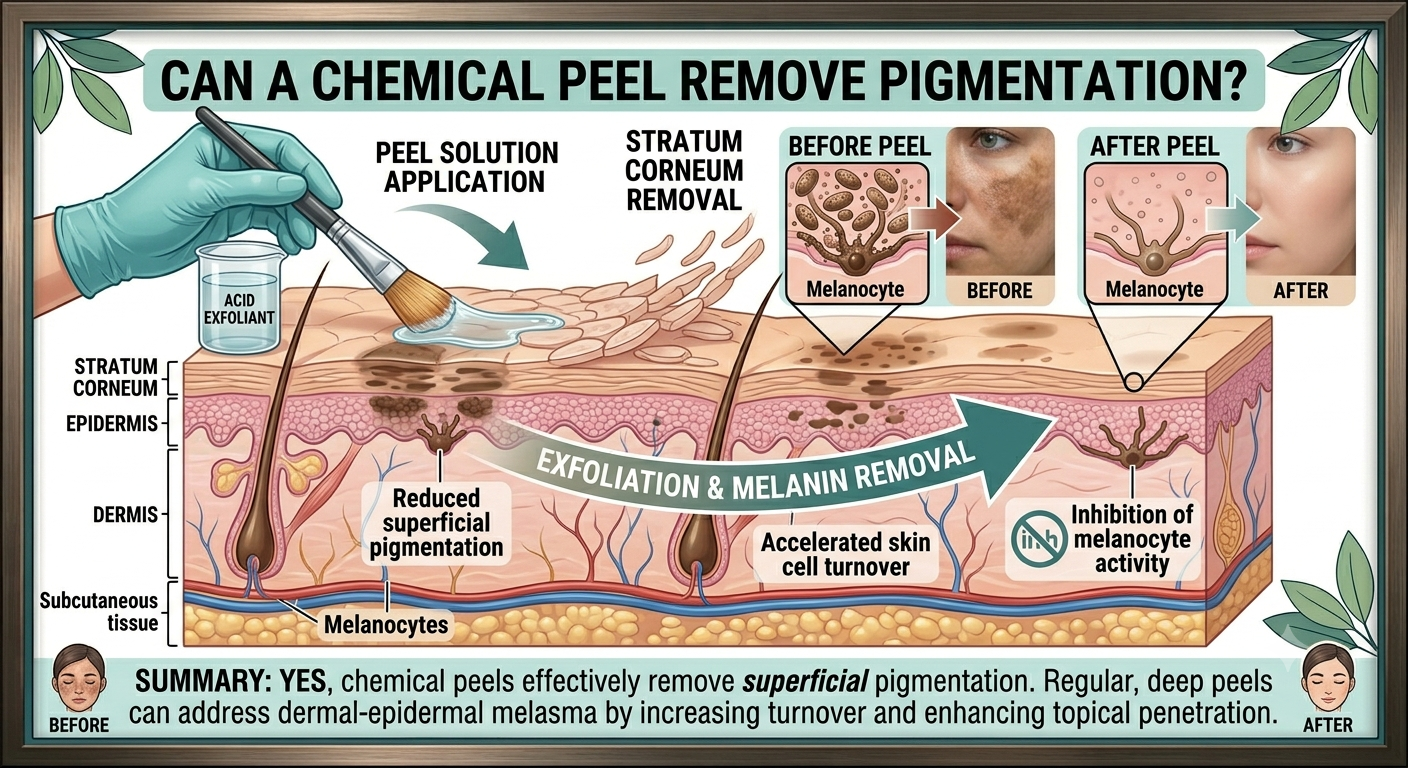
Can a Chemical Peel Remove Pigmentation? What to Expect
Chemical peels are one of the most widely used professional treatments for pigmentation, and for good reason. They work by removing the outer layers of the skin where excess melanin is stored, revealing fresher, more evenly toned skin beneath. The short answer to whether a chemical peel can remove pigmentation is yes, to a meaningful and often significant degree. However, the level of improvement depends on the type of pigmentation, its depth, the peel used, and how consistently aftercare guidelines are followed. For those seeking a professionally administered option, the Trexyne Peel is a clinical-grade chemical peel designed specifically to address the range of pigmentation concerns that people most commonly want to treat.
What Is a Chemical Peel and How Does It Work?
A chemical peel is a treatment that applies an acidic solution to the skin to break down the structural bonds between cells in the outermost skin layers. This triggers controlled shedding of the surface, a process known as exfoliation, which removes damaged, pigmented cells and allows the healthier skin beneath to emerge.
The depth of the peel determines how many layers of skin are removed and how significantly the treatment affects the underlying cellular processes. Peels are generally classified into three depth categories.
Superficial Peels
Superficial peels target only the very outermost layer of the epidermis. They are the mildest option and require little to no downtime. They are suitable for mild surface pigmentation, general dullness, and routine skin maintenance. Common agents include low-concentration glycolic acid and lactic acid. Results are subtle and typically require multiple sessions to build.
Medium-Depth Peels
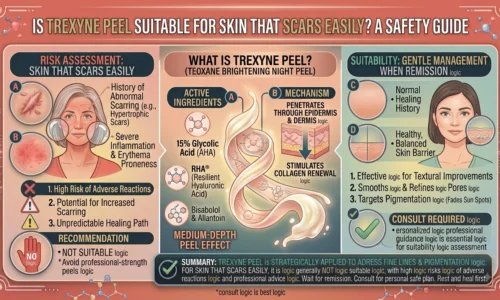
Medium-depth peels penetrate through the full epidermis to the upper dermis. They are more effective for moderate pigmentation, including sunspots, post-inflammatory marks, and superficial melasma. They require several days of visible peeling and more careful aftercare, but they produce noticeably greater improvement than superficial options. Trichloroacetic acid at certain concentrations is a common agent at this depth.
Deep Peels
Deep peels reach well into the dermis and are the most powerful option for severe pigmentation and significant skin damage. They require more preparation, longer recovery, and carry greater risk. They are less commonly used today as medium-depth treatments combined in a series often achieve comparable results with a safer profile.
Which Types of Pigmentation Can a Chemical Peel Address?
Not all pigmentation responds equally to chemical peeling. Understanding which types are most likely to improve helps set realistic expectations.
Post-Inflammatory Hyperpigmentation
Dark marks left by acne, minor injuries, or inflammatory skin conditions are among the most responsive to chemical peels. This type of pigmentation typically sits in the upper epidermis, making it directly accessible to the exfoliation process. Fresh marks respond especially well, and early treatment tends to produce the fastest and most complete results.
Sunspots and Solar Lentigines
UV-induced sunspots are concentrated in the epidermis and clear effectively with professional chemical exfoliation. As the outer layers are removed and new cells form, the surface becomes visibly clearer and more consistent in tone. Ongoing sun protection is essential to prevent new spots from forming in treated areas.
Melasma
Melasma responds to chemical peels, but it requires more careful management than other pigmentation types. Because it is driven by hormonal activity and UV exposure, it has a strong tendency to recur. Peels are most effective for melasma when used as part of a broader treatment plan that includes hormonal management, rigorous sun protection, and supporting topical ingredients. A practitioner experienced with melasma will structure the treatment series conservatively to avoid aggravating the condition.
Age Spots and Diffuse Discoloration
The general uneven tone and age-related spotting that accumulates over decades of UV exposure also responds to chemical peeling. Longer-established pigmentation may require more sessions than fresher marks, but progressive improvement is achievable with a structured treatment series.
What A Chemical Peel Cannot Do
Deep dermal pigmentation: Pigmentation that has settled into the dermis, the deeper layer below the epidermis, is difficult to address with most chemical peels. This type of pigmentation may require additional or alternative treatments, and improvement is likely to be more modest.
Permanent removal in all cases: Chemical peels significantly reduce the appearance of pigmentation, but they do not always eliminate it entirely, particularly for deeply established or hormonally driven discoloration. Maintenance treatments and consistent sun protection are needed to sustain results.
Pigmentation that continues to be triggered: If the cause of the pigmentation is still active, such as ongoing sun exposure, continued hormonal activity, or recurring acne, new discoloration will form even as the peel clears existing marks. Managing the trigger is as important as the treatment itself.
Why Professional Peels Outperform At-Home Options
At-home chemical exfoliants, including over-the-counter AHA and BHA products, work on a similar principle to professional peels but at significantly lower concentrations. This is a deliberate safety measure for unsupervised use, but it also limits their effectiveness for moderate to significant pigmentation.
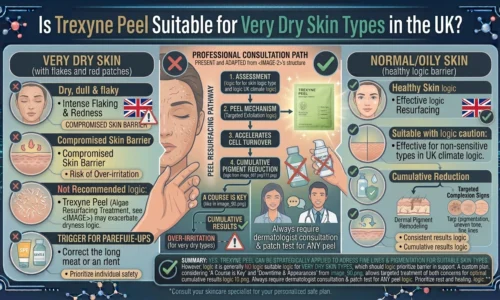
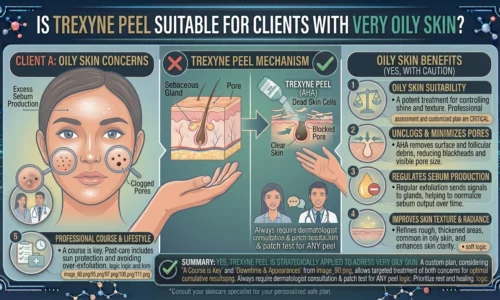
Professional peels like Trexyne Peel use higher-concentration formulations that are calibrated by a trained practitioner to the individual’s skin type, tone, and pigmentation concern. This precision allows the treatment to reach the melanin deposits more effectively and produce measurable improvement in a shorter timeframe than home-use products can achieve.
The clinical environment also allows for careful monitoring of the skin’s response during application, which further reduces the risk of adverse effects and ensures the treatment is working at the optimal level for each patient. This is why choosing a professional pigmentation treatment administered by a qualified practitioner consistently produces better outcomes than self-managed exfoliation routines.
How Trexyne Peel Removes Pigmentation
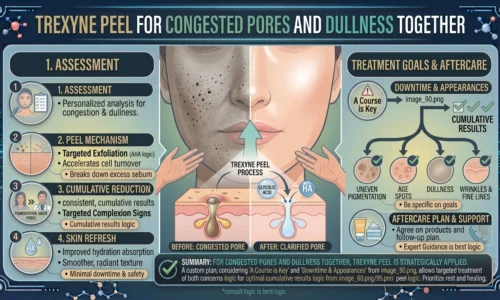
The Trexyne Peel addresses pigmentation through a precisely controlled exfoliation process that works across several layers of skin. When the peel solution is applied to the skin by the practitioner, it dissolves the bonds holding together the cells in the outermost epidermis. The skin then sheds these pigmented cells over the following days, revealing the fresher layer beneath.
At the same time, the exfoliation triggers the deeper layers of the epidermis to accelerate new cell production. This shortens the skin’s natural renewal cycle and brings unpigmented cells to the surface faster than they would arrive through the skin’s standard timeline. Over a series of sessions, this cumulative clearing of pigmented cells and replacement with fresher ones progressively reduces the concentration of melanin in the treated areas.
The result is a visible reduction in dark spots, a more even overall skin tone, and improved skin texture and radiance. The degree of improvement builds with each session, which is why a structured series rather than a single treatment is almost always recommended for meaningful pigmentation reduction.
What Happens to the Skin After a Chemical Peel?
Understanding the skin’s response after a chemical peel helps patients manage the process and protect their results.
Immediately After Treatment
The skin typically appears flushed or pink immediately following the peel. Some patients feel mild tightness or a sensation of warmth. This is a normal response and usually settles within a few hours to a day.
Days Two to Five
The peeling phase begins. The outer skin layer starts to flake and shed, revealing the newer skin beneath. The degree of visible peeling depends on the depth of the peel used. Patients should resist the urge to pick at peeling skin. Allowing it to shed naturally protects the new cells forming below and reduces the risk of irritation or post-treatment marks.
Days Seven to Fourteen
The skin has largely completed its shedding phase and the results begin to become visible. The complexion appears clearer, brighter, and more even. Any redness has typically resolved, and the skin feels smoother in texture.
After the Full Series
With each completed session, the cumulative improvement in pigmentation becomes more pronounced. Patients who follow the full recommended series and maintain consistent sun protection see the most significant and lasting results.
Who Is a Good Candidate for a Chemical Peel for Pigmentation?
Chemical peels for pigmentation are suitable for a wide range of patients. Good candidates include:
· People with visible sunspots, age spots, or UV-related discoloration on the face or body
· Those with post-acne dark marks that have not cleared with topical treatment
· Individuals with mild to moderate melasma who want professional support in reducing its appearance
· People with generally uneven or dull skin tone related to aging or cumulative sun exposure
· Those who want faster, more measurable improvement than topical products can provide
A consultation with a qualified practitioner before treatment is essential. Factors including active inflammatory skin conditions, recent use of sensitizing medications, skin type, and the specific nature of the pigmentation will all be assessed to ensure the treatment is appropriate and the protocol is correctly matched to the individual.
Protecting Results After a Chemical Peel
Daily SPF: Broad-spectrum sunscreen of SPF 30 or higher every morning is the single most important protective measure. UV exposure stimulates new melanin production and will undo the progress made during treatment if sun protection is inconsistent.
Gentle skincare during recovery: In the days following a peel, the skin needs simple, non-irritating products. A gentle cleanser, hydrating moisturizer, and SPF are all that is needed until the skin has fully recovered.
Avoiding additional triggers: Recurring acne, hormonal fluctuations, and habitual sun exposure all create new pigmentation. Managing these factors alongside professional treatment is what turns a short-term improvement into a lasting result.
Maintenance sessions: After the initial treatment series, periodic maintenance peels spaced a few months apart keep the skin in its clearest state and prevent significant new discoloration from building up.
Conclusion
A chemical peel can significantly reduce and in many cases come very close to removing pigmentation, particularly when the discoloration is in the epidermis and the treatment series is properly structured. Post-inflammatory hyperpigmentation, sunspots, and UV-related uneven tone all respond well to professional chemical exfoliation. Melasma and deeper pigmentation require more careful management but still show meaningful improvement with the right approach.
For those ready to move beyond topical products and achieve real, visible results, advanced skin peel solutions like the Trexyne Peel, administered by a qualified skincare professional, represent one of the most effective and well-established routes to a clearer, more even, and more confident complexion.
Frequently Asked Questions
1. Can a chemical peel completely remove pigmentation?
A chemical peel can significantly reduce pigmentation and in many cases produce results that appear very close to complete clearance, particularly for surface-level discoloration such as post-acne marks and sunspots. However, complete removal is not guaranteed for all pigmentation types. Deeper or hormonally driven pigmentation like melasma typically improves substantially but may require ongoing management rather than a single course of treatment. Consistent sun protection is essential to maintain and protect the improvement achieved.
2. How many chemical peel sessions are needed to remove pigmentation?
The number of sessions depends on the type, depth, and severity of the pigmentation. Mild post-inflammatory marks or fresh sunspots may show significant improvement in two to three sessions. More established discoloration or melasma typically requires a series of four to six or more sessions for meaningful results. Your practitioner will assess your skin and design a treatment plan with a realistic session schedule.
3. Is a chemical peel safe for treating pigmentation on darker skin tones?
Chemical peels can be safely performed on darker skin tones when administered by a practitioner with specific expertise in treating diverse complexions. The main risk is triggering additional post-inflammatory hyperpigmentation from the peel itself, which is why the treatment must be carefully calibrated in terms of depth and formulation. Choosing an experienced provider and following aftercare guidelines diligently minimizes this risk significantly.
4. What is the difference between a chemical peel and a brightening serum for pigmentation?
A brightening serum delivers low concentrations of active ingredients to the skin surface to gradually slow melanin production. It is useful for mild pigmentation and as a maintenance tool. A chemical peel physically removes the layers of skin where melanin is stored and accelerates the renewal of fresh cells. This is a fundamentally more direct intervention and produces more significant results for established pigmentation, usually in a much shorter timeframe.
5. Will pigmentation come back after a chemical peel?
Pigmentation can return if the underlying triggers are not managed. UV exposure, hormonal activity, and recurring inflammation will continue to stimulate melanin production regardless of how well the peel cleared existing discoloration. Consistent daily SPF, management of recurring acne or hormonal changes, and periodic maintenance peels are the combination that keeps results sustainable long term.
6. How is Trexyne Peel different from other chemical peels?
Trexyne Peel is a professionally formulated peel designed to address pigmentation with precision and customization. Unlike generic peeling products, it is applied by a trained practitioner who calibrates the treatment to the individual’s skin type, pigmentation type, and degree of discoloration. This level of customization is what allows it to produce consistent results across a range of patients and conditions rather than delivering a standardized experience regardless of the skin’s specific needs.
7. Can a chemical peel be used on the body for pigmentation?
Yes. Chemical peels can be applied to body areas beyond the face, including the neck, chest, and hands, where sun-induced pigmentation and age spots commonly develop. Body skin is generally thicker than facial skin, which may affect the protocol used. A practitioner will assess the area to be treated and recommend the most appropriate approach for safe and effective results in that specific location.