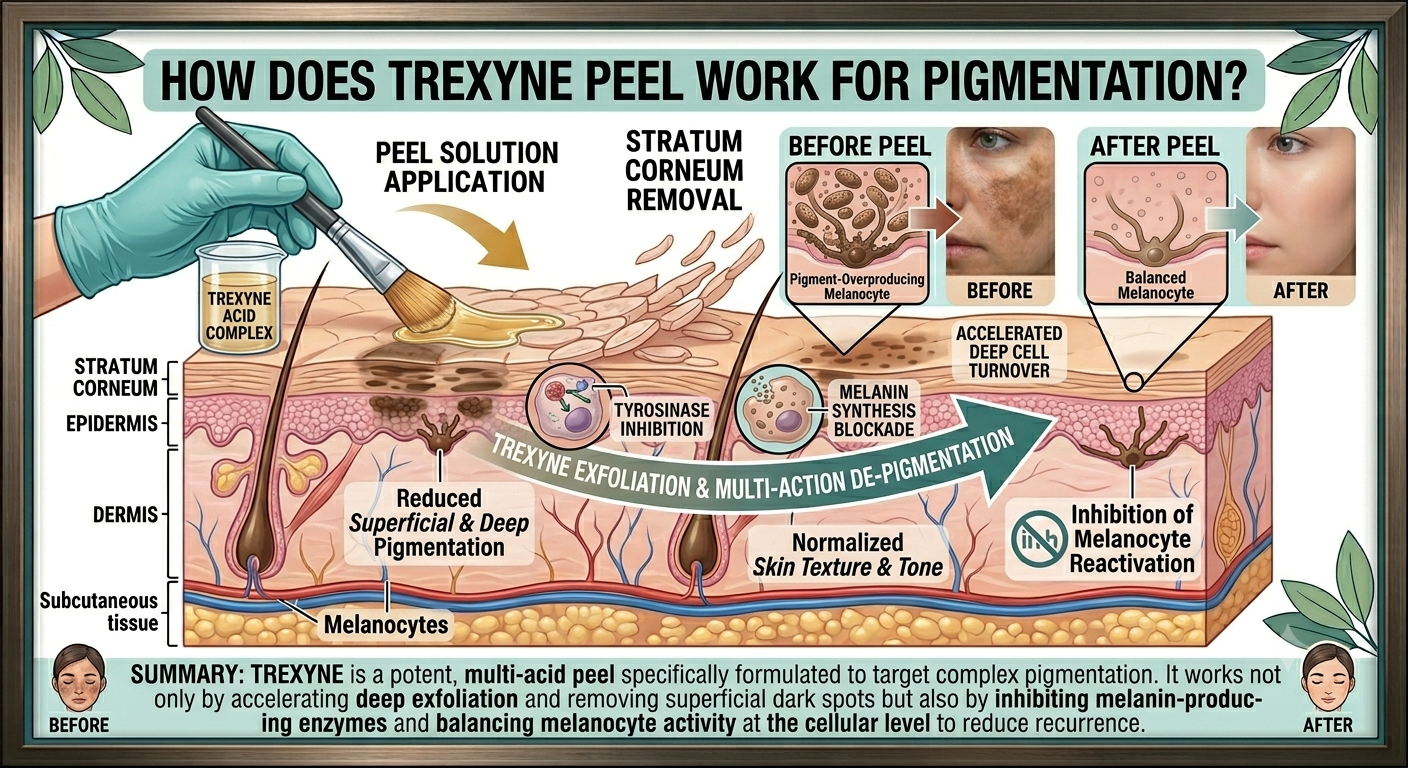
How Does Trexyne Peel Work for Pigmentation?
If you have been researching professional treatments for pigmentation, you have likely come across the Trexyne Peel. But understanding exactly how it works, not just that it does work, helps you make an informed decision and set realistic expectations before you begin. The Trexyne Peel is a professionally applied chemical peel that targets pigmentation through controlled exfoliation of the skin’s outer layers, accelerated cell renewal, and the progressive reduction of melanin concentration in treated areas. This article walks through the full mechanism of how it works, what happens during a session, and why the process is effective for the most common types of facial and skin pigmentation.
Understanding Pigmentation Before Understanding the Treatment
To understand how Trexyne Peel works, it helps to first understand what pigmentation is and where it sits in the skin. Pigmentation develops when melanocytes, the specialized pigment-producing cells in the epidermis, overproduce melanin in response to triggers such as UV radiation, inflammation, hormonal shifts, or aging.
This excess melanin gets transferred to surrounding skin cells called keratinocytes. As these cells mature and migrate toward the skin surface through the natural cell renewal cycle, they carry the melanin with them. When they reach the outermost layer, the melanin becomes visible as dark spots, patches, or a generally uneven tone.
The key point is that much of the visible pigmentation that people want to address sits in the epidermis, particularly in its upper layers. This is why treatments that target the epidermis through controlled exfoliation, like chemical peels, are among the most effective approaches available.
What Is Trexyne Peel?
The Trexyne Peel is a clinical-grade chemical peel formulated for professional use. It is applied by a trained skincare practitioner in a clinic or aesthetic setting and is designed to address a range of pigmentation concerns, including sunspots, post-inflammatory marks, melasma, and general uneven skin tone.
Unlike over-the-counter exfoliating products, which use low concentrations of active ingredients for safe unsupervised use, Trexyne Peel uses professionally formulated concentrations that are calibrated specifically to the individual’s skin. The practitioner assesses the patient’s skin type, tone, pigmentation type, and sensitivity before treatment, then applies the peel in a way that is precisely matched to those factors.
This level of customization is what separates a professional peel from home-use alternatives and is central to why it consistently produces more significant results.
The Core Mechanism: How Trexyne Peel Targets Pigmentation
Step 1: Dissolution of Cell Bonds in the Epidermis
When the peel solution is applied to the skin, the active acidic compounds penetrate the epidermis and begin dissolving the structural proteins that hold cells together in the outermost layer. This process is called desquamation, and it is a controlled, precise version of what the skin does naturally on a slower timeline.
As these intercellular bonds are broken down, the surface layer of the epidermis loses its structural integrity and begins to shed. This is the peeling that patients see in the days following treatment, and it represents the removal of the discolored, melanin-rich cells that create the appearance of dark spots and uneven tone.
Step 2: Accelerated Cell Renewal
The removal of the outer skin layer sends a signal to the basal layer of the epidermis, where new skin cells are produced. The skin responds to the loss of its surface by accelerating the production of new keratinocytes. These cells mature and migrate upward to replace the shed surface, but they do so at a faster rate than the skin’s standard renewal cycle allows.
This acceleration is one of the key therapeutic mechanisms of chemical peeling. In normal skin, the surface layer renews itself over a cycle of four to six weeks, a timeline that extends further with age. By compressing this cycle, the peel brings fresh, unpigmented cells to the surface more quickly, shortening the overall treatment timeline and making the improvement visible sooner.
Step 3: Reduction in Melanin Concentration
Each session removes a layer of melanin-rich cells and replaces them with newer cells that have not been subjected to the same level of pigmentation stimulation. Over a series of treatments, the cumulative effect is a measurable reduction in the concentration of melanin in the treated areas. Dark spots become progressively lighter with each session, and the overall tone of the skin becomes more consistent.
Step 4: Stimulation of Dermal Processes
Depending on the depth of the peel, the exfoliation process can also stimulate activity in the upper dermis, the layer below the epidermis. This includes increased collagen production and improved hydration-related proteins in the skin matrix. The result contributes to an improvement in skin texture, elasticity, and radiance alongside the reduction in pigmentation.
The Role of Tyrosinase in Pigmentation and How Peels Address It
The enzyme tyrosinase is the key driver of melanin synthesis. When the skin receives a trigger, whether from UV radiation, inflammation, or hormonal signals, tyrosinase becomes activated and catalyzes the production of melanin in the melanocytes.
Chemical peels do not directly inhibit tyrosinase the way some topical brightening ingredients do. Instead, they work downstream of the production process by removing the cells that already contain the accumulated melanin. This is a more direct approach for established pigmentation, where the melanin has already been produced and deposited into the skin. By clearing those cells and replacing them with fresh ones, the peel achieves a visible reduction without needing to suppress the enzyme itself.
When a targeted topical ingredient such as vitamin C or niacinamide is used alongside a professional peel series, it can help slow new melanin production while the peel addresses existing discoloration. This combination approach addresses both sides of the pigmentation equation simultaneously.
How Trexyne Peel Is Applied: The Treatment Process
Consultation and Skin Assessment
Before any treatment session, the practitioner conducts a thorough assessment of the patient’s skin. This includes evaluating the skin type using the Fitzpatrick scale, identifying the type and depth of pigmentation, reviewing medical history and current medications, and noting any factors that might affect the treatment protocol or outcome. This step is what allows the peel to be customized rather than applied in a one-size-fits-all manner.
Skin Preparation
On the day of treatment, the skin is thoroughly cleansed to remove makeup, oil, sunscreen, and any product residue. A clean surface allows the peel solution to penetrate evenly and ensures consistent results across the treated area. Some practitioners also apply a pre-peel solution that primes the skin and helps achieve even penetration.
Peel Application
The peel solution is applied to the skin methodically, usually starting from the less sensitive areas and working inward. The practitioner monitors the skin’s response continuously throughout the application, watching for the visual cues that indicate the peel is working at the correct level. Timing is carefully controlled, and the practitioner may apply multiple passes in specific areas where pigmentation is more concentrated.
Neutralization and Post-Peel Care
Depending on the specific formulation, the peel is either neutralized with a specific solution or allowed to self-neutralize over a set time period. Once the active phase is complete, the practitioner applies a calming, hydrating serum and a broad-spectrum SPF to the skin. Patients leave the appointment with specific aftercare instructions to follow at home during the recovery period.
What the Skin Goes Through After Trexyne Peel
Days 1 to 2: The skin may appear slightly flushed or feel tight. This is the normal initial response to the peel solution.
Days 3 to 5: Visible peeling begins. The skin starts to flake and shed, particularly around the mouth, nose, and areas of concentrated pigmentation. The degree of visible shedding depends on the depth of the treatment.
Days 6 to 10: The peeling phase resolves and the new skin surface becomes fully visible. The skin appears cleaner, brighter, and more even in tone. Patients at this stage typically see the first clear signs of improvement in their pigmentation.
After multiple sessions: The improvement in pigmentation becomes progressively more noticeable with each completed session. Sunspots appear lighter, post-acne marks fade more fully, and the overall evenness of the complexion continues to improve.
Why A Series of Sessions Produces Better Results Than One Treatment
A single Trexyne Peel session removes one layer of the skin’s surface and stimulates one cycle of accelerated renewal. For very mild or recent pigmentation, this may produce visible improvement on its own. For moderate to established discoloration, a single session addresses only a portion of the accumulated melanin.
A structured series of sessions, typically spaced three to four weeks apart to allow full recovery between appointments, progressively clears more of the discoloration with each treatment. Each session builds on the results of the previous one, and the cumulative effect over the full series is significantly greater than any single session can achieve alone.
This is why a professional pigmentation treatment plan rather than a single appointment is the standard recommendation for meaningful and lasting pigmentation reduction.
Pigmentation Types Trexyne Peel Treats Most Effectively
· Post-inflammatory hyperpigmentation from acne or skin injury tends to be in the upper epidermis and responds quickly to controlled exfoliation
· UV-induced sunspots and solar lentigines are accessible surface deposits that clear progressively across a peel series
· Age-related skin discoloration and general uneven tone from cumulative sun exposure respond well to the combined exfoliation and renewal effect
· The visible surface component of melasma can be reduced, though this condition requires careful management and ongoing sun protection to prevent recurrence
The Importance of Aftercare in How Trexyne Peel Works
The treatment itself creates the conditions for pigmentation reduction, but aftercare determines how fully those results are realized and how long they last.
Sun protection is the most critical aftercare component. Chemical peels increase the skin’s sensitivity to UV radiation during and after the recovery period, and UV exposure will trigger new melanin production in the freshly treated skin. Without daily broad-spectrum SPF 30 or higher, the improvement from the peel will be undermined and new discoloration will form in the same areas that have just been cleared.
A simple, hydrating skincare routine that avoids harsh actives during recovery also supports the skin in renewing itself cleanly and without additional irritation. Once the skin has fully recovered, supporting ingredients such as vitamin C and niacinamide can be reintroduced to complement the effects of the peel series.
Conclusion
Trexyne Peel works for pigmentation by dissolving the bonds between pigmented surface skin cells, triggering their controlled shedding, and stimulating the skin to produce fresh cells at an accelerated rate. This process reduces the concentration of melanin in treated areas progressively across a series of sessions, producing a visibly clearer, more even, and more radiant complexion.
The combination of a precise professional formulation, practitioner-led customization, and the skin’s natural renewal biology makes the advanced skin peel solutions offered through Trexyne Peel one of the most effective and well-understood approaches to addressing pigmentation in a clinical setting.
Frequently Asked Questions
1. How does Trexyne Peel work for pigmentation?
Trexyne Peel applies a professionally formulated acidic solution to the skin that dissolves the bonds between cells in the outermost epidermis. This causes controlled shedding of the surface layer, removing the melanin-rich cells responsible for dark spots and uneven tone. At the same time, it signals the skin to produce new cells at a faster rate, bringing fresh, more evenly pigmented skin to the surface. Over a series of sessions, this process progressively reduces the visible pigmentation.
2. How is Trexyne Peel different from an at-home chemical exfoliant?
At-home exfoliants contain low concentrations of active ingredients formulated for safe use without supervision. They work on the skin’s very outermost surface and produce gradual, modest results. Trexyne Peel uses professionally calibrated concentrations applied by a trained practitioner who monitors the skin throughout the process. This allows for deeper penetration, greater precision, and significantly more noticeable results, particularly for moderate to established pigmentation.
3. Does Trexyne Peel hurt during the treatment?
Most patients experience mild tingling, warmth, or a slight stinging sensation during application, which is a normal response to the acidic solution. The sensation is generally well-tolerated and resolves once the peel is neutralized or removed. The practitioner monitors the skin throughout and can adjust the treatment if any discomfort becomes significant. Compared to more invasive procedures, a professionally applied chemical peel is considered a manageable and well-tolerated experience.
4. Why does my skin peel after a Trexyne Peel session?
The visible peeling is the physical result of the acidic solution dissolving the structural bonds in the outermost skin layer. As those bonds break down, the surface cells detach and shed over the days following treatment. This shedding is the mechanism by which the pigmented cells are removed and is a normal, expected part of the process. Allowing the skin to peel naturally, rather than picking or pulling at it, is important for protecting the new skin forming underneath.
5. Can Trexyne Peel make pigmentation worse?
When applied correctly by an experienced practitioner and followed by proper aftercare, Trexyne Peel is designed to reduce pigmentation, not worsen it. The main risk of worsening is post-inflammatory hyperpigmentation, which can occur if the skin is over-treated, not adequately protected from sun exposure after the session, or treated without appropriate consideration of skin type. This is why professional assessment, correct protocol selection, and consistent aftercare are all essential components of the treatment.
6. How long do the effects of Trexyne Peel on pigmentation last?
The results of a completed Trexyne Peel series can be sustained long term with the right maintenance approach. Consistent daily sun protection is the most important factor. Without it, UV exposure will stimulate new melanin production and the pigmentation will return over time. Periodic maintenance sessions, typically every few months after the initial series, help preserve the improvement and prevent significant new discoloration from accumulating.
7. Is Trexyne Peel suitable for sensitive skin?
Trexyne Peel can be adapted for sensitive skin through careful protocol selection and peel depth calibration. Patients with sensitive skin may benefit from beginning with lighter passes and progressing more gradually across a longer series. The practitioner’s assessment before treatment is what allows the approach to be safely tailored to each individual’s skin tolerance. A thorough consultation is particularly important for those with a history of skin sensitivity or reactive conditions.