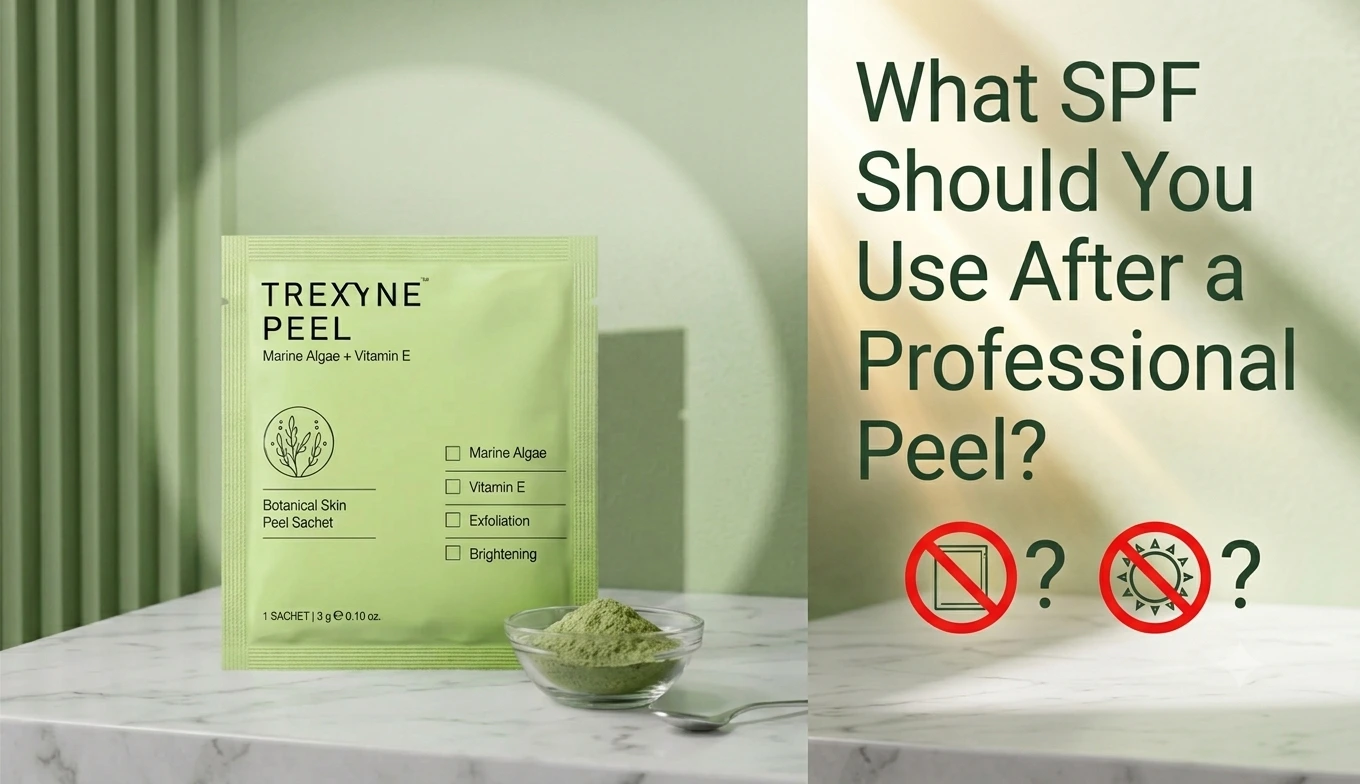
What SPF Should You Use After a Professional Peel?
After a professional peel, the skin needs a broad-spectrum SPF of at least 30, ideally 50, applied daily and reapplied through the day if the client is outdoors. Freshly treated skin is more reactive to UV light while it moves through its renewal phase, so sun protection is not optional at this stage. It is one of the most important things a practitioner can reinforce at aftercare. For treatments such as the Trexyne Peel, which works through a mechanical resurfacing action rather than chemical exfoliation, sensible SPF use still protects the results and helps the skin settle into a smoother, more even tone.
This guide walks through why SPF matters so much after a peel, what to look for in a sunscreen, and how to build this step into a client’s aftercare routine with confidence.
Why Skin Becomes More Sun-Sensitive After a Peel
Any resurfacing treatment disturbs the outer layers of the skin, even when the mechanism is mechanical rather than chemical. This disturbance triggers a renewal response, and skin in this state has a thinner, less settled surface layer than usual. That surface is what normally helps buffer against UV exposure.
While the skin rebuilds itself over the days following treatment, it has less natural defence against ultraviolet light. This means sunburn can happen faster, redness can linger longer, and any post-treatment sensitivity can be made worse by unprotected sun exposure. This is true after most professional resurfacing treatments, including those built around a botanical mechanism like marine-algae spicules.
The Renewal Window Matters
The days immediately after a peel are often called the renewal window. This is when the skin is actively shedding and replacing surface cells. Practitioners commonly see this window last anywhere from a few days to around a week, depending on the intensity of the treatment and the client’s own skin behaviour.
During this window, consistent SPF use supports the work the treatment has already done. Skipping it, even for a day at the beach or a long walk without reapplying, can undo some of the visible benefit a client was hoping to see.
How UV Exposure Can Affect Peel Results
Unprotected sun exposure after a peel can lead to a few unwanted outcomes. Practitioners should be upfront with clients about these so they understand why SPF is not just a nice-to-have step.
- Prolonged redness. UV exposure can extend the period of visible redness or warmth in the skin.
- Uneven pigmentation. Skin that is actively renewing is more prone to reacting unevenly to UV, which can show up as patchy pigmentation later.
- Reduced treatment benefit. Some of the brightening and refining effect a client is expecting may be less visible if the skin is repeatedly exposed to sun without protection.
None of these outcomes are guaranteed, but they are common enough that SPF should always be part of the aftercare conversation, not an afterthought mentioned in passing.
What Kind of SPF Works Best Post-Peel
Not every sunscreen is equally suited to freshly treated skin. Practitioners should guide clients toward formulas that protect well without adding unnecessary irritation.
Broad-Spectrum Coverage Is Non-Negotiable
A broad-spectrum SPF protects against both UVA and UVB rays. UVB causes the burning most people associate with sun damage, while UVA penetrates more deeply and plays a bigger role in longer-term skin changes. After a peel, both matter, so a sunscreen labelled broad-spectrum should always be the baseline recommendation.
SPF 30 to 50 Is a Sensible Range
SPF 30 offers strong daily protection for most indoor-outdoor routines. SPF 50 gives more of a buffer for clients who know they will be outside for longer stretches, or who have particularly reactive skin in the days after treatment. Either is reasonable; what matters most is consistent daily use and proper reapplication.
Mineral Formulas Tend to Suit Sensitised Skin
Mineral sunscreens, built around ingredients like zinc oxide or titanium dioxide, sit on top of the skin and reflect UV rays rather than absorbing them. Many clients find these gentler on skin that is still settling after a resurfacing treatment. Chemical sunscreens can work well too, but some formulas may feel less comfortable on skin that is temporarily more reactive.
Fragrance-Free and Fuss-Free
Fragranced products, whether skincare or sunscreen, are best avoided in the days directly after a peel. A simple, fragrance-free SPF reduces the chance of unnecessary irritation while the skin is doing its renewal work.
Building SPF Into a Client’s Aftercare Plan
Advice given verbally at the end of an appointment is often forgotten by the time a client gets home. A written aftercare plan, even a short one, makes a real difference to how well clients follow through.
Morning Application, Every Day
SPF should be the last step of the morning skincare routine, applied generously and evenly across the face, neck, and any other exposed area that was treated. This applies even on cloudy days, since UV rays pass through cloud cover.
Reapplication for Anyone Outdoors
Clients who spend meaningful time outside, whether walking the dog, gardening, or commuting on foot, should reapply SPF every two hours or so. A compact SPF stick or powder can make this easier to manage over a full day without disturbing makeup.
Pairing SPF With the Rest of the Routine
SPF works best as part of a simple, considered routine. In the days after a treatment such as the Trexyne Peel, clients should be steered toward gentle cleansing, a supportive moisturiser, and SPF, with more active products reintroduced once the practitioner is confident the skin has settled.
How Trexyne Peel Fits Into a Sun-Safe Aftercare Approach
The Trexyne Peel is a precision botanical peel built around marine-algae spicules and stabilised Vitamin E. It resurfaces and refines the skin through a purely mechanical mechanism, creating controlled micro-channels without any chemical exfoliants. There are no acids involved and no extended downtime to plan around.
Because the treatment is designed with a tiered protocol, practitioners can match the intensity of each session to a client’s skin type and expectations. This predictability makes it easier to give clear, realistic aftercare guidance, including exactly how many days of extra sun caution a client should expect.
The stabilised Vitamin E in the formulation is there to support the skin’s recovery phase from the very first application. Alongside sensible SPF use, this gives the skin a supportive environment in which to renew itself and can help the complexion look brighter and more even over time.
Why Professional-Only Access Matters Here
The Trexyne Peel is sold strictly to verified practitioners and clinics. This means every client receiving the treatment is also receiving guidance from a trained professional, including the SPF advice that protects their results. This professional oversight is part of what makes the aftercare conversation, including sun protection, consistent and reliable.
Common Client Questions Practitioners Should Be Ready For
Clients often ask similar questions after their appointment. Being ready with clear, honest answers builds trust and improves compliance with aftercare.
“Can I Just Wear Makeup With SPF In It Instead?”
Most makeup with SPF built in does not provide enough coverage on its own, since people typically apply far less than the amount used in SPF testing. A dedicated sunscreen underneath makeup is a more reliable approach.
“Do I Need SPF If I’m Mostly Indoors?”
UV exposure through windows, particularly UVA, is a real consideration for anyone near a window during the day. Daily SPF is still worth recommending even for clients with mostly indoor routines.
“How Long Do I Need to Be Extra Careful With the Sun?”
This depends on the individual and the treatment protocol used, but many practitioners recommend heightened sun caution for at least a week after a resurfacing session, with daily SPF becoming a permanent habit afterward regardless of treatment history.
Educating Clients Without Overwhelming Them
Aftercare instructions work best when they are short, specific, and easy to remember. Rather than listing every possible risk, focus on the two or three points that matter most: daily SPF, gentle products, and avoiding direct, prolonged sun exposure in the days after treatment.
Clients who understand why SPF matters, not just that it is a rule to follow, tend to be more consistent about it. Framing it around protecting their investment and their results, rather than as a warning, tends to land better.
Encouraging Long-Term SPF Habits Beyond the Peel
A peel appointment is a natural opportunity to introduce or reinforce a long-term SPF habit, not just a short-term precaution. Many clients only start using SPF consistently once a practitioner explains its role clearly and links it to something they can see, like the results of their treatment.
Practitioners can use this moment to talk about SPF as a year-round habit rather than a summer-only step. UV exposure is present throughout the year in the UK, even on overcast days, so consistent use supports skin health well beyond the days immediately following a peel.
Where Practitioners Can Learn More
Clinics offering resurfacing treatments benefit from having a clear, consistent aftercare protocol that every practitioner on the team follows. For more detail on the Trexyne Peel and how it fits into a professional treatment plan, visit the Trexyne Peel product page, browse the full range in the Trexyne shop, or get in touch with any questions about incorporating it into a clinic’s existing offering. The Trexyne homepage has further information on the brand and its approach to professional skincare.
Conclusion
Sun-sensitive skin is a normal part of the renewal process after any professional resurfacing treatment, and clear SPF guidance is one of the simplest ways to protect a client’s results. A broad-spectrum SPF of 30 to 50, applied daily and reapplied when outdoors, gives the skin the protection it needs while it renews itself. The Trexyne Peel supports this process through its mechanical, botanical mechanism and stabilised Vitamin E, working alongside sensible sun protection to help the complexion look brighter and more even over time.
FAQ
Q: What SPF should I use after a professional peel like the Trexyne Peel?
A broad-spectrum SPF of 30 to 50 is generally recommended, applied every morning and reapplied if spending time outdoors. Mineral formulas are often better tolerated on freshly treated skin.
Q: How soon after a peel should I start using SPF?
SPF should be applied the very next morning after treatment, and ideally every day going forward, since UV exposure can affect the renewal process from the start.
Q: Can I skip SPF if my peel result already looks fine?
Skipping SPF, even when skin looks settled, can affect how evenly the complexion continues to develop over the following days and weeks. Daily use is worth maintaining throughout the renewal period.
Q: Is mineral or chemical sunscreen better after a resurfacing treatment? Mineral sunscreens tend to suit sensitised, recently treated skin well, though a gentle chemical formula can also work depending on individual skin tolerance.
Q: How often should I reapply SPF during the day after a peel?
Reapplication roughly every two hours is a sensible guide for anyone spending meaningful time outdoors, with a stick or powder SPF making this easier over makeup.
Q: Does the Trexyne Peel require more sun caution than other treatments?
The Trexyne Peel uses a tiered, mechanical protocol, so sun caution can be matched to the intensity of each individual session, with your practitioner best placed to advise on timing.
Q: Can I wear makeup with SPF instead of a separate sunscreen after a peel?
Makeup with SPF alone rarely provides enough protection, since it is typically applied more thinly than a dedicated sunscreen. A proper SPF product underneath makeup gives more reliable coverage.