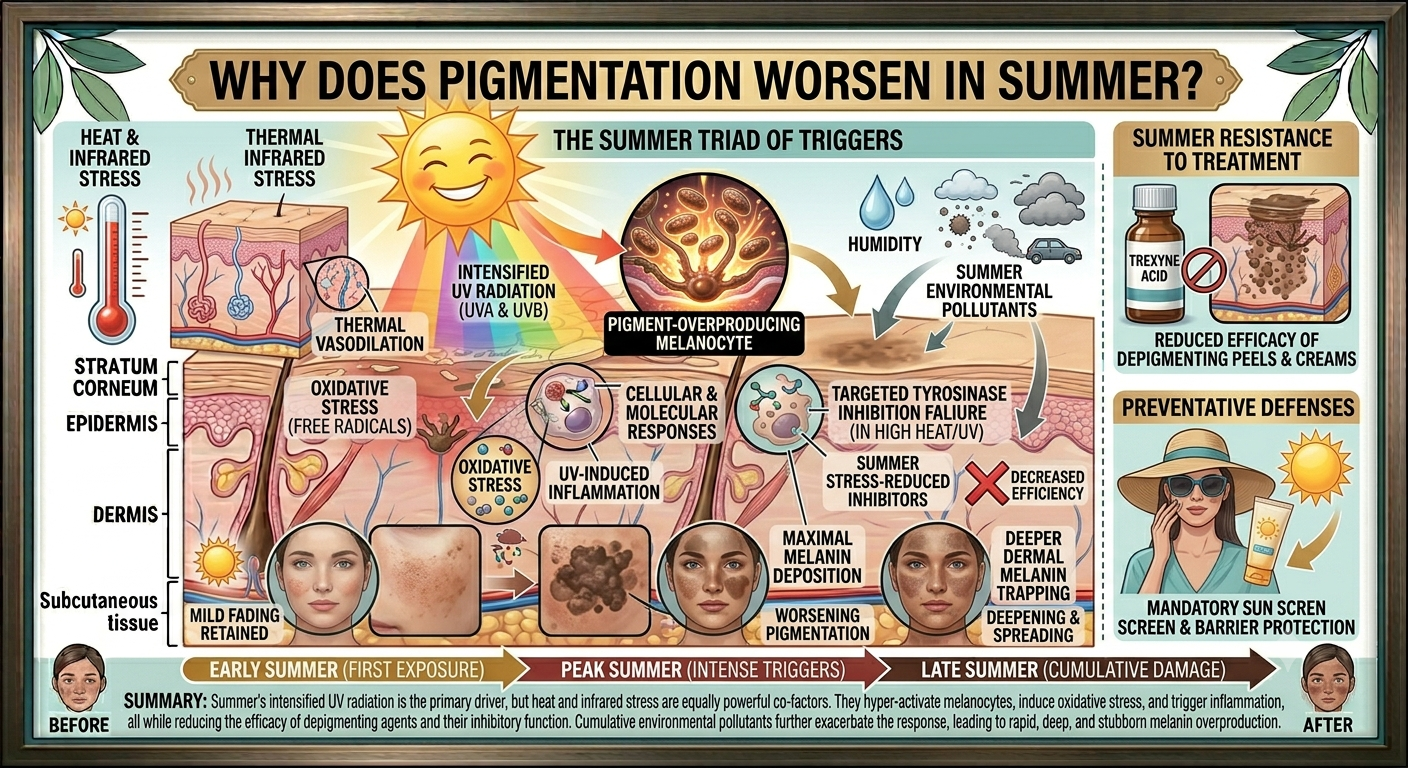
Why Does Pigmentation Worsen in Summer?
Summer brings warmer weather, longer days, and outdoor fun. However, for many individuals, the summer sun also triggers a frustrating skincare concern: dark spots and skin discoloration. If you notice that your skin tone becomes uneven as the temperature rises, you are not alone. Pigmentation frequently worsens during the summer months due to increased ultraviolet (UV) radiation and heat, which stimulate the overproduction of melanin.
Understanding what causes pigmentation and how to manage it can help you maintain a radiant, even complexion all year long. While standard sunscreens protect your skin from burning, correcting existing sun damage requires a specialized pigmentation treatment.
Understanding Pigmentation and Your Skin
To address uneven skin tone effectively, you must understand how your skin creates color. Skin discoloration occurs when specialized cells called melanocytes produce too much melanin. Melanin is the natural pigment responsible for the color of your hair, eyes, and skin.
When your skin functions normally, melanocytes distribute pigment evenly. However, various internal and external triggers can cause these cells to go into overdrive. This localized overproduction creates concentrated patches of darker skin, commonly referred to as dark spots, age spots, or melasma.
While multiple factors contribute to this condition, the summer environment creates the perfect storm for hyperpigmentation to flare up.
What Causes Pigmentation to Worsen in Summer?
Many people believe that sunburns are the only summer skin threat. In reality, your skin reacts to the summer environment in several distinct ways that worsen pigmentation.
1. Increased UV Radiation
Ultraviolet radiation from the sun is the primary cause of skin discoloration. UV rays penetrate the deeper layers of the skin and directly damage cellular DNA. As a defense mechanism, your body instructs melanocytes to produce more melanin to shield the cells from further harm. This protective response is what creates a tan, but it also darkens existing dark spots and creates new areas of uneven skin tone.
2. High Ambient Heat and Infrared Light
Recent dermatological research indicates that UV rays are not the only culprits. High temperatures and infrared radiation from the sun also stimulate pigment production. Heat causes blood vessels to dilate, leading to localized inflammation. This inflammatory response triggers melanocytes to produce excess pigment, even if you sit in the shade or wear a hat. This is why individuals with heat-sensitive conditions like melasma find their pigmentation worsening on hot summer days.
3. Inflammation and Seasonal Acne
Summer heat leads to increased sweat and sebum production. When oil and sweat mix with dead skin cells, pores clog easily, causing breakouts. The inflammation from summer acne frequently leaves behind dark marks known as post-inflammatory hyperpigmentation. When the sun hits these healing blemishes, the dark spots become deeper and more difficult to fade.
Choosing the Right Pigmentation Treatment
When dealing with summer-induced skin discoloration, generic skincare routines often fall short. Fading stubborn pigment requires targeted treatments that accelerate cellular turnover and inhibit melanin production.
Many traditional treatments use harsh chemicals that can strip the skin barrier, making your skin even more vulnerable to summer sun damage. Therefore, you need a smart, advanced solution that delivers powerful corrective results without compromising your skin’s health.
Introducing Trexyne Peel: The Ultimate Solution
If you want to correct an uneven skin tone and eliminate stubborn dark spots, Trexyne Peel offers an advanced, professional-grade solution. This specialized chemical peel targets hyperpigmentation at its source, offering a safe and highly effective method to restore skin clarity.
Unlike standard exfoliating acids that only scrub the surface of the skin, Trexyne Peel utilizes a sophisticated blend of active ingredients designed to disrupt the pigmentation pathway. It works dynamically to dismantle existing pigment clusters while preventing new discoloration from forming.
How Trexyne Peel Can Help Pigmentation
Trexyne Peel addresses skin discoloration through a multi-faceted approach, making it an ideal choice for stubborn summer damage.
Accelerates Cellular Turnover
The active components in Trexyne Peel gently dissolve the cellular glue that holds damaged, pigmented cells to the surface of your skin. By shedding these top layers rapidly, the peel brings fresh, evenly pigmented skin cells to the surface. This process visibly reduces the appearance of dark spots and smooths out your overall skin texture.
Inhibits Melanin Production
Trexyne Peel does not just treat the surface symptoms. It penetrates deeper into the epidermis to interact with melanocytes. The formulation helps inhibit tyrosinase, which is the essential enzyme responsible for producing melanin. By slowing down this enzyme, the peel stops the overproduction of pigment at the root level.
Reduces Inflammation
Many traditional chemical peels cause significant redness and inflammation, which can accidentally trigger more pigmentation. Trexyne Peel features a balanced formulation that calms the skin while it exfoliates. By controlling inflammation, it safely treats hyperpigmentation without inducing post-inflammatory dark spots.
Boosts Overall Skin Radiance
In addition to targeting specific dark spots, Trexyne Peel improves the overall quality of your skin. It stimulates collagen production and enhances hydration, leaving your skin looking bright, plump, and thoroughly revitalized.
What to Expect During and After a Trexyne Peel Treatment
Choosing a professional treatment can feel intimidating if you do not know what to expect. Trexyne Peel provides a comfortable, predictable experience for patients seeking to correct an uneven skin tone.
The Application Process
A trained skincare professional will first cleanse your skin thoroughly to remove excess oils. They will then apply the Trexyne Peel solution evenly across the targeted areas. You may feel a mild, temporary tingling sensation as the active ingredients penetrate the skin. The professional will monitor your skin closely before neutralizing the peel safely.
The Recovery Phase
In the days following your treatment, your skin will begin its natural rejuvenation process. You may experience light, flaking skin for a few days as the old, pigmented cells slough away. It is crucial to let this skin flake off naturally without scrubbing or picking at it. Within a week, you will begin to notice a brighter, more uniform complexion.
Essential Summer Post-Peel Care
- Apply Broad-Spectrum Sunscreen Every Day: Use a sunscreen with an SPF of 30 or higher every single day. Reapply it every two hours if you spend time outdoors.
- Wear Protective Clothing: Broad-brimmed hats and UV-blocking sunglasses provide a physical barrier that shields your face from direct heat and light.
- Keep Your Skin Cool: Avoid hot showers, saunas, and intense workouts immediately after your peel. Minimizing heat exposure prevents thermal activation of melanocytes.
- Hydrate Consistently: Use a gentle, barrier-repairing moisturizer to support your skin as it heals. Hydrated skin repairs itself much faster than dry skin.
Prevent Future Skin Discoloration
Treating existing pigmentation is only half the battle. To keep your skin clear throughout the summer, you must adopt preventative habits.
Consistency remains the secret to flawless skin. Pair your professional Trexyne Peel sessions with a daily skincare routine rich in antioxidants like Vitamin C. Antioxidants neutralize free radicals generated by UV light, adding an extra layer of defense against uneven skin tone.
Listen to your skin and pay attention to how it reacts to the heat. If you notice dark spots starting to surface, schedule a professional consultation promptly to address the issue before the pigment settles deep into your skin layers.
Restore Your Glow
Summer should be a time of confidence, not a season spent hiding behind heavy makeup to conceal skin discoloration. By understanding what causes pigmentation and utilizing advanced solutions like Trexyne Peel, you can successfully manage and reverse sun damage.
Professional Advice: Do not let summer heat dictate the appearance of your skin. Invest in treatments that target the cellular roots of hyperpigmentation to enjoy a clear, luminous complexion all year long.
Are you ready to target your dark spots and achieve a perfectly even skin tone? Consult with a skincare professional today to discover how Trexyne Peel can transform your summer skin.
Frequently Asked Questions
1. Does hyperpigmentation from the sun ever go away?
Yes, sun-induced hyperpigmentation can fade, but the timeline depends on how deeply the pigment sits in your skin. Superficial dark spots may gradually lighten over several months with strict sun protection and proper skincare. Deeper pigment clusters often require professional interventions like Trexyne Peel to break down the melanin and clear the discoloration completely.
2. Why is my face getting darker all of a sudden in summer?
Sudden darkening typically happens because seasonal UV radiation and rising temperatures trigger an immediate defense mechanism in your skin. Your melanocyte cells rapidly produce melanin to absorb radiation and protect your skin cells. If you already have a predisposition to melasma or inflammation, this sudden surge creates visible patches of skin discoloration.
3. How do you stop pigmentation from getting worse in the sun?
The most effective way to protect your skin tone is to combine physical barriers with chemical defense. Wear a broad-spectrum sunscreen with high SPF, and reapply it diligently. Additionally, incorporate topical antioxidants into your morning routine and seek shade during peak UV hours to shield your skin from both light and heat.
4. Can heat cause hyperpigmentation without sun exposure?
Yes, high thermal energy can trigger dark spots independently. Heat stimulates blood vessels and causes localized skin inflammation, which signals your melanocytes to generate excess melanin. This means spending time cooking over a hot stove, sitting in a sauna, or relaxing in a hot car can worsen an uneven skin tone even if you wear sunscreen.
5. Is a chemical peel safe to use for pigmentation during the summer?
Many traditional, aggressive peels are unsafe for summer because they leave the skin barrier highly vulnerable to sun damage. However, advanced formulas like Trexyne Peel focus on controlled exfoliation and anti-inflammatory support. When paired with strict daily sun protection, it safely and effectively treats dark spots during the warmer months.
6. How long does it take to see results from a pigmentation treatment?
Surface improvements in skin texture and brightness often appear within a week after your first Trexyne Peel. Fading deep, stubborn dark spots typically requires a series of treatments spaced a few weeks apart. Because melanin takes time to rise to the surface and shed, your most significant improvements will develop over two to three months.
7. Why do dark spots seem darker after a chemical peel?
It is completely normal for your pigmentation to look darker immediately after a professional treatment. This phenomenon occurs because the peel draws hidden, deeply rooted melanin up to the surface layers of your skin as it accelerates cellular turnover. These dark spots will flake off naturally within a few days, revealing a much clearer and more even skin tone beneath.