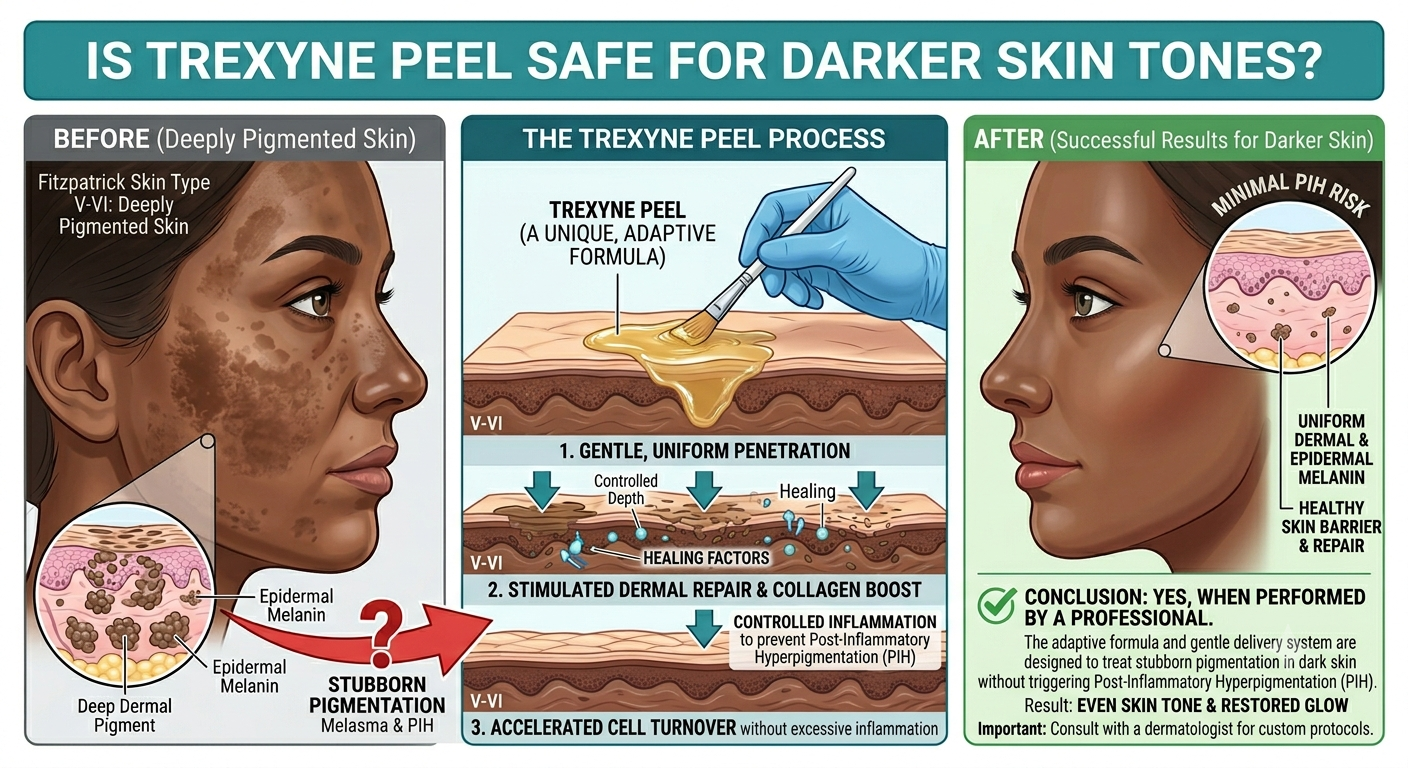
Is Trexyne Peel Safe for Darker Skin Tones?
One of the most common concerns among people with medium to dark skin tones considering a professional chemical peel is safety. The worry is understandable. Chemical peels have historically been studied and applied most extensively on lighter skin types, and there is a genuine risk of worsening pigmentation in darker complexions when peels are used incorrectly. But when Trexyne Peel is administered by a practitioner with the right expertise and calibrated appropriately for the individual’s skin, it can be safely and effectively used across a wide range of skin tones, including darker complexions. The Trexyne Peel is a professional-grade chemical peel designed to address pigmentation, and with the right approach it is a realistic option for people of all backgrounds seeking clearer, more even skin.
Why Skin Tone Matters in Chemical Peel Treatment
Skin tone matters in chemical peel treatment because of the way melanocytes, the cells that produce pigment, behave differently across the Fitzpatrick skin type scale. This scale classifies skin into six types based on how it responds to UV exposure, ranging from Type I, which burns easily and never tans, to Type VI, which is deeply pigmented and rarely burns.
People with Fitzpatrick skin types IV through VI have melanocytes that are inherently more reactive. These cells respond more readily to stimulation, whether from UV radiation, inflammation, or physical trauma, producing more melanin in response to a given trigger than lighter skin types would. This is a biological advantage in terms of UV protection, but it also means that any treatment that causes inflammation or irritation carries a higher risk of triggering post-inflammatory hyperpigmentation.
A chemical peel, by its nature, causes controlled inflammation. It is this controlled inflammatory response that drives the exfoliation and renewal processes that make peels effective. The challenge with darker skin tones is ensuring that this inflammation remains within the therapeutic range rather than tipping into the territory that triggers new melanin production.
What Is Post-Inflammatory Hyperpigmentation and Why Does It Matter?
Post-inflammatory hyperpigmentation is the darkening of the skin that occurs as a response to inflammation or trauma. When the skin is irritated, injured, or subjected to a process that causes controlled damage, such as a chemical peel, melanocytes in and around the affected area produce excess melanin as part of the healing response.
In lighter skin tones, this response is less pronounced and the resulting marks, if they appear at all, tend to be mild and fade relatively quickly. In medium to dark skin tones, the same inflammatory trigger can produce more significant and persistent dark marks, sometimes worse than the original pigmentation that was being treated.
This is the specific risk that makes practitioners cautious when applying chemical peels to darker complexions, and it is the reason that peel depth, formulation, and aftercare must all be carefully managed for these patients.
How Trexyne Peel Can Be Safely Used on Darker Skin
The good news is that with the right practitioner and the right protocol, chemical peels including Trexyne Peel can be used safely and effectively on darker skin tones. Safety in this context comes from several key factors.
Appropriate Peel Depth
Deeper peels carry a higher risk of triggering post-inflammatory hyperpigmentation in darker skin tones because they cause more significant inflammation. For patients with types IV to VI skin, practitioners typically begin with lighter passes and progress more gradually across a series of sessions. This conservative approach allows the skin to respond and recover at each stage without being pushed into the inflammatory range that triggers new pigmentation.
Customized Formulation
Not all peel formulations carry equal risk for darker skin. Certain acids are better tolerated than others by higher Fitzpatrick skin types. A practitioner with specific experience in treating diverse skin tones will select the most appropriate formulation for the patient and may combine or sequence different ingredients to achieve effective exfoliation with minimal inflammation.
Pre-Treatment Preparation
Many practitioners prescribe a pre-treatment preparation phase for patients with darker skin tones. This typically involves using a topical regimen including ingredients such as vitamin C, niacinamide, or azelaic acid for several weeks before the peel begins. This primes the skin, normalizes melanocyte activity, and helps reduce the risk of post-inflammatory hyperpigmentation from the peel itself.
Careful Application Technique
The way the peel is applied matters as much as the formulation. Even coverage, careful monitoring of the skin’s response during application, and precise timing all reduce the risk of uneven or excessive penetration that could irritate the skin beyond the intended therapeutic level. An experienced practitioner manages all of these variables throughout the session.
Common Pigmentation Concerns in Darker Skin Tones
People with darker skin tones often present with specific pigmentation patterns that benefit from professional treatment. Understanding these helps explain why a carefully administered peel can be particularly valuable for this group.
Post-Inflammatory Hyperpigmentation From Acne
Darker skin types are significantly more prone to developing post-inflammatory marks after acne breakouts. A single inflamed pimple can leave behind a dark mark that persists for months or years. This is one of the most common reasons people with types IV to VI skin seek professional pigmentation treatment, and it is one of the conditions where Trexyne Peel, used conservatively and skillfully, can make a meaningful difference.
Melasma
Melasma is more prevalent in people with medium to dark skin tones and tends to appear as larger, more diffuse patches of pigmentation. It requires careful management because the same melanocyte reactivity that makes darker skin prone to melasma also makes it more susceptible to additional pigmentation from over-aggressive treatment. A conservative approach to peeling, combined with strict sun protection and supporting topicals, is the standard recommendation.
Uneven Skin Tone
General unevenness in skin tone, where the complexion looks patchy or inconsistent without specific defined spots, is particularly common in darker skin types. It can result from a combination of past acne, sun exposure, and hormonal influences, and it often affects self-confidence significantly. Professional peeling helps normalize cell turnover and progressively improves the evenness of the skin’s surface.
Signs That a Practitioner Is Experienced With Darker Skin
Choosing the right practitioner is the most important decision a patient with a darker skin tone makes when considering a chemical peel. Not all practitioners have equal experience with all skin types, and the difference in outcomes between a skilled and an inexperienced provider can be significant.
When assessing a practitioner’s suitability, look for:
- Demonstrated experience treating patients with Fitzpatrick skin types IV through VI
- Willingness to conduct a thorough pre-treatment consultation that includes skin type assessment
- A conservative approach that starts with lighter passes and progresses gradually
- Familiarity with the signs of over-treatment in darker skin and ability to adjust in real time
- A clear aftercare protocol that prioritizes sun protection and anti-inflammatory support
- Before and after examples from patients with similar skin tones, where available
A professional pigmentation treatment administered by someone with genuine expertise in diverse skin tones is a fundamentally different experience from the same treatment in less experienced hands. The safety of the outcome depends far more on the practitioner’s skill and judgment than on the treatment itself.
What to Expect During and After Trexyne Peel on Darker Skin
Patients with darker skin tones should expect a slightly different treatment experience compared to lighter skin types, reflecting the more conservative approach that safety requires.
Sessions may be shorter or involve lighter passes initially. The practitioner may monitor the skin’s response for longer after application before proceeding with additional passes. The overall series may involve more sessions than a lighter skin type patient would require for the same level of pigmentation, because each individual session works more conservatively.
Post-treatment, the skin should be treated gently. A simple routine of gentle cleanser, hydrating moisturizer, and daily SPF is appropriate during recovery. Any active ingredients that could cause irritation should be avoided until the skin has fully recovered. Sun protection is non-negotiable, as even brief UV exposure in the days following a peel can trigger significant new pigmentation in reactive skin.
Patients should monitor their skin during recovery and contact their practitioner if they notice excessive redness, darkening, or other unexpected responses. Prompt communication allows the practitioner to adjust the approach for subsequent sessions.
The Role of Sun Protection for Darker Skin Tones
A common misconception is that darker skin tones do not need sunscreen because their higher melanin content provides natural protection. While it is true that darker skin has a higher natural SPF equivalent than lighter skin, this protection is not sufficient to prevent the UV-driven melanin production that causes and worsens pigmentation.
For patients of all skin tones undergoing pigmentation treatment, daily broad-spectrum SPF 30 or higher is essential. For darker skin types, where melanocytes are more reactive, this is even more critical. UV exposure during or after a peel series can trigger new pigmentation that directly undermines the treatment results.
Physical sunscreens containing zinc oxide or titanium dioxide are often recommended for darker skin tones because they provide reliable broad-spectrum protection and are less likely to cause the irritation that could trigger post-inflammatory pigmentation. Modern formulations are available that do not leave a visible white cast, making them suitable for daily wear across all complexions.
Realistic Results for Darker Skin Tones
With a correctly structured treatment plan administered by an experienced practitioner, patients with darker skin tones can achieve meaningful and visible improvement in their pigmentation using the Trexyne Peel. Post-inflammatory marks from acne can fade significantly. Areas of uneven tone can become more consistent. The skin takes on a clearer, more refreshed appearance.
The timeline may be longer than for lighter skin types because the approach is necessarily more gradual, but the results are achievable. Patients who follow the full recommended series, maintain consistent sun protection, and work with a practitioner they trust consistently see outcomes that make the process worthwhile.
Conclusion
Trexyne Peel can be safely used on darker skin tones when administered by a practitioner with the right expertise and a protocol that is carefully matched to the individual’s skin. The key factors are conservative peel depth, appropriate formulation, thorough pre-treatment preparation, skilled application technique, and rigorous post-treatment sun protection.
Pigmentation is a particularly common and often deeply frustrating concern for people with medium to dark complexions. With the right professional guidance and access to advanced skin peel solutions like Trexyne Peel, achieving a clearer, more even, and more confident complexion is a realistic and attainable goal regardless of skin tone.
Frequently Asked Questions
1. Is Trexyne Peel safe for darker skin tones?
Yes, when administered by a practitioner with specific experience treating diverse complexions and calibrated to the individual’s skin type. Darker skin tones require a more conservative approach, including lighter peel depths and careful protocol selection, to minimize the risk of post-inflammatory hyperpigmentation. With the right expertise and aftercare, Trexyne Peel can be used safely and effectively on Fitzpatrick skin types IV through VI.
2. Why are darker skin tones more at risk from chemical peels?
People with darker skin tones have more reactive melanocytes, meaning their skin produces melanin more readily in response to inflammation or irritation. A chemical peel that is too aggressive for a given skin type can trigger post-inflammatory hyperpigmentation, creating new dark marks in the treated area. This risk is managed by selecting appropriate peel depths, using suitable formulations, and following a conservative progression across the treatment series.
3. What type of pigmentation does Trexyne Peel treat in darker skin?
Trexyne Peel can address the most common pigmentation concerns in darker complexions, including post-inflammatory hyperpigmentation from acne, melasma, and general uneven skin tone. These conditions are particularly prevalent in people with types IV to VI skin and can be significantly improved with a carefully structured professional peel series combined with strict sun protection and supporting topical care.
4. How many Trexyne Peel sessions are needed for darker skin tones?
Patients with darker skin tones may require more sessions than lighter skin type patients because the conservative approach used to ensure safety involves working more gradually. Rather than using aggressive single passes, the practitioner builds progress across a longer series of lighter treatments. This approach takes more sessions to achieve the same level of improvement but is significantly safer and produces better long-term results.
5. Do I need to prepare my skin before Trexyne Peel if I have a darker complexion?
Pre-treatment preparation is strongly recommended for patients with darker skin tones. A preparatory phase typically involves using topical brightening and anti-inflammatory ingredients for several weeks before the peel begins. This normalizes melanocyte activity, reduces baseline inflammation, and primes the skin to respond more predictably to the peel. Your practitioner will advise on the specific preparation protocol appropriate for your skin.
6. Can Trexyne Peel make dark spots worse on darker skin?
When administered incorrectly or without appropriate skin type consideration, any chemical peel can worsen pigmentation through post-inflammatory hyperpigmentation. When Trexyne Peel is applied by an experienced practitioner using the correct protocol for darker skin tones, this risk is minimized. Following all aftercare instructions, particularly around sun protection, is equally important in preventing adverse reactions.
7. Is sunscreen really necessary after Trexyne Peel for darker skin tones?
Absolutely. The misconception that darker skin does not need sunscreen because of its natural melanin protection is a significant one. While darker skin does have a higher natural UV resistance, this does not prevent UV-triggered melanin overproduction, particularly in skin that has just been exfoliated. Daily broad-spectrum SPF 30 or higher is essential for all patients after a chemical peel and is especially critical for darker skin tones, where UV exposure can rapidly trigger new pigmentation in sensitized skin.