How Many Peel Sessions to Fix Uneven Skin Tone?
If you are considering a professional chemical peel to address uneven skin tone, one of the first questions you are likely to ask is how many sessions you actually need. It is a practical question, and the honest answer is that it depends. The number of sessions required varies based on the type and severity of the pigmentation, your skin type, how well you follow aftercare guidelines, and how your skin responds to treatment. For most people, a structured series of sessions with the Trexyne Peel produces meaningful and visible improvement, but the exact number is something your practitioner determines after assessing your individual skin. This article explains what drives the treatment timeline, what to expect at each stage, and how to get the most from every session.
What Causes Uneven Skin Tone?
Before answering how many sessions are needed, it is worth understanding what creates uneven skin tone in the first place. The skin’s color is produced by melanin, a pigment made by cells called melanocytes. When these cells produce melanin at an uneven rate across different areas of the skin, the result is the patchiness, dark spots, and inconsistent tone that many people describe as their main skin concern.
Several factors drive this uneven melanin distribution. UV exposure from the sun is the most common, causing the gradual development of sunspots and general photo-related discoloration. Post-inflammatory hyperpigmentation from acne or skin trauma leaves behind flat dark marks. Hormonal fluctuations, particularly estrogen and progesterone changes, can produce larger diffuse patches through a condition called melasma. And aging slows the skin’s cell renewal cycle, allowing pigmented cells to linger on the surface longer than they otherwise would.
The type and depth of the pigmentation directly determines how many sessions will be needed to produce a noticeable change.
Why One Session Is Rarely Enough
A single chemical peel session removes the outermost layer of the epidermis, which contains the most recently formed, surface-level pigmented cells. This produces an immediate improvement in texture and a degree of brightening once the skin has healed.
However, uneven skin tone is rarely confined to one cell layer. Melanin accumulates across multiple layers of the epidermis, and some types of pigmentation, particularly established sunspots and melasma, involve deeper deposits that a single exfoliation cannot fully reach. Lasting, significant improvement requires progressive treatment across multiple sessions, each one clearing more of the accumulated discoloration and stimulating a further cycle of fresh cell production.
Think of it as a cumulative process. Each session builds on the last, and the visible improvement after session three or four is significantly greater than what a single treatment can achieve.
General Session Guidelines by Pigmentation Type
While every patient’s skin is individual, some general patterns describe how different types of uneven skin tone respond to a peel series.
Mild Surface Discoloration and General Dullness
For skin that looks dull, tired, and somewhat uneven without defined dark spots or patches, three to four sessions of Trexyne Peel typically produce a clear and satisfying improvement. This type of discoloration sits primarily in the upper epidermis and responds well to controlled exfoliation. Patients in this category often see their skin looking noticeably fresher and more even after the first two sessions.
Post-Inflammatory Hyperpigmentation From Acne
Dark marks left by acne breakouts vary in how long they have been present and how deeply the melanin has settled. Recent marks from the past few months typically clear with three to five sessions. Older, more established marks that have been present for a year or more may require five to seven sessions or more for significant improvement. Starting treatment earlier after marks form generally shortens the total number of sessions needed.
Sun Damage and Sunspots
UV-induced sunspots respond well to professional chemical peeling, but longer-standing spots that have accumulated over years take more sessions to address. A typical series for moderate sun damage involves four to six sessions. Patients with extensive or long-established sun damage may benefit from a longer initial series followed by scheduled maintenance treatments.
Melasma
Melasma is the most complex and variable type of uneven skin tone to treat. Because it is driven by hormonal activity and UV exposure and tends to affect deeper layers of the skin, it responds more slowly than other pigmentation types and is more prone to recurrence. Treatment typically involves a more conservative and extended series of sessions, often six or more, combined with strict sun protection and supporting topicals. Results are meaningful but managing expectations realistically is important for this condition.
Factors That Influence How Many Sessions You Need
Several variables determine where within the general ranges above your specific treatment falls.
Skin Type and Tone
Patients with medium to dark skin tones, which have more reactive melanocytes, typically require a more gradual, conservative approach to peeling. This means more sessions at lighter depths to achieve the same cumulative improvement that a lighter skin type might see more quickly. The extra sessions are a safety measure, not an indication that the treatment is less effective.
Age of the Pigmentation
Fresh pigmentation that has developed recently responds faster than older discoloration that has had time to settle and accumulate across multiple skin layers. If you are treating marks that have been present for several years, your treatment series will likely need to be longer than someone addressing newer discoloration.
Consistency of Sun Protection
This is one of the most significant variables practitioners observe. Patients who are rigorous about daily broad-spectrum sunscreen between sessions see more noticeable improvement with each successive peel because they are not re-stimulating melanin production between appointments. Patients who are inconsistent with sun protection slow their own progress, as new UV-triggered pigmentation partially offsets the clearing achieved by each session.
Overall Skin Health
Skin that is well-hydrated, has a healthy barrier function, and is not dealing with active breakouts or irritation responds more consistently to treatment. Compromised or reactive skin may require the practitioner to work more conservatively, extending the treatment timeline.
Adherence to Aftercare
Post-peel aftercare, including using gentle products during recovery, avoiding UV exposure, and allowing the skin to peel naturally, directly affects how well the skin renews itself between sessions. Patients who follow their aftercare protocol carefully tend to see better results at each stage of the series.
What to Expect Session by Session
Understanding what typically happens across a Trexyne Peel series helps patients track their progress and stay committed to the full course.
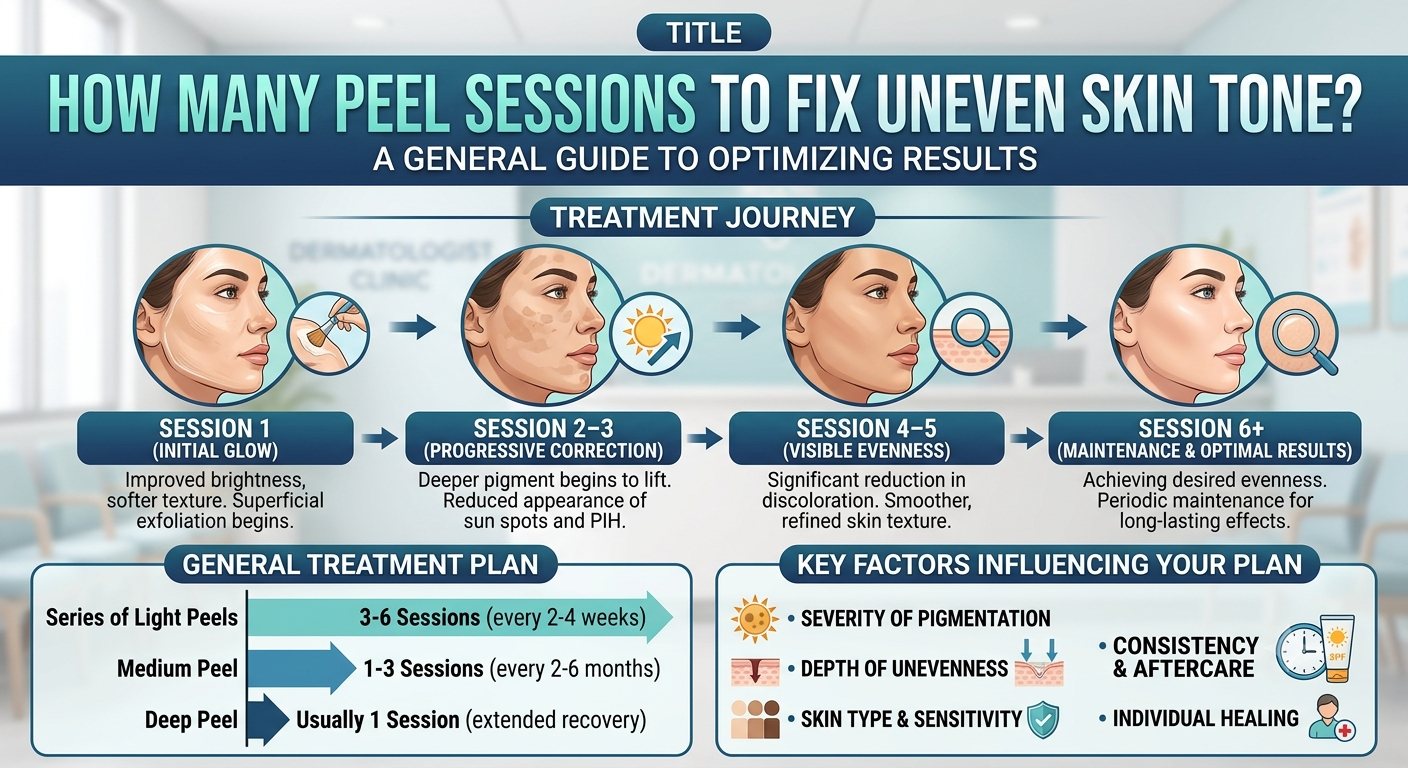
Session 1: The skin is exfoliated and the renewal process begins. After the peeling phase resolves, patients typically notice improved texture, a degree of brightness, and a slightly more even tone. For significant discoloration, the improvement at this stage is the beginning of a longer progression.
Sessions 2 to 3: The cumulative effect begins to show more clearly. Sunspots appear lighter, post-acne marks are less defined, and the overall tone looks more consistent. The skin’s texture continues to improve alongside the pigmentation changes.
Sessions 4 to 5: For patients with moderate to significant pigmentation, this stage typically produces the most noticeable shift. The skin looks measurably clearer, spots have faded substantially, and the overall complexion has a more even and refreshed quality.
Sessions 6 and beyond: For deeper or more complex pigmentation, additional sessions continue the progressive improvement. At this stage, patients and practitioners assess how much improvement has been achieved and what level of maintenance will sustain it.
The Spacing Between Sessions
Sessions are typically spaced three to four weeks apart. This interval allows the skin to complete its post-peel recovery fully before the next treatment is applied. Treating before the skin has fully healed increases the risk of irritation and can compromise results. Your practitioner will confirm the right spacing for your specific skin during the professional pigmentation treatment planning phase.
Some patients want to accelerate the process by shortening the time between sessions. This is generally not advisable. Rushing the spacing does not speed up improvement and can increase the risk of over-treatment. Consistency within the recommended timeline produces the best outcomes.
Maintenance Sessions After the Initial Series
Completing the initial treatment series is not the end of the process for most patients. Uneven skin tone has ongoing triggers, particularly UV exposure and in some cases hormonal activity, that will continue to stimulate new melanin production even after the existing discoloration has been cleared.
Periodic maintenance sessions, typically every two to four months depending on the individual’s skin and lifestyle, help prevent significant new pigmentation from accumulating. Patients who maintain their results proactively with scheduled appointments and consistent sun protection find that their skin stays in its clearest state far more successfully than those who wait until pigmentation has visibly returned before seeking treatment.
How to Get the Most From Every Session
A few key habits significantly affect how much benefit each Trexyne Peel session delivers.
- Apply broad-spectrum SPF 30 or higher every morning, even on cloudy days or when staying mostly indoors
- Follow the post-peel skincare protocol your practitioner provides, keeping the routine simple and gentle during recovery
- Allow peeling skin to shed naturally and avoid picking, rubbing, or using exfoliating products during recovery
- Attend sessions at the recommended intervals rather than extending gaps unnecessarily
- Communicate with your practitioner about how your skin is responding between sessions
Access to advanced skin peel solutions like Trexyne Peel is most valuable when patients are active participants in their own treatment, following through on the habits that protect and extend the results of each session.
Conclusion
There is no single answer to how many peel sessions are needed to fix uneven skin tone, because the right number depends on the specific type and severity of the pigmentation, the individual’s skin type, and how consistently supportive habits like sun protection are maintained. As a general guide, mild discoloration may respond in three to four sessions, moderate pigmentation in four to six, and complex conditions like melasma or long-standing sun damage in six or more sessions followed by ongoing maintenance.
What is consistent across all patients is that results build progressively with each session, and that the combination of professional treatment, daily sun protection, and a targeted home routine produces better and more lasting results than any single factor alone.
Frequently Asked Questions
1. How many Trexyne Peel sessions does it take to fix uneven skin tone?
The number of sessions depends on the type and depth of the pigmentation causing the uneven tone. Mild surface discoloration typically shows significant improvement in three to four sessions. Post-acne marks, sunspots, and moderate pigmentation generally require four to six sessions. Melasma and longer-established discoloration may need six or more sessions in the initial series, followed by maintenance. Your practitioner will design a plan specific to your skin after an initial assessment.
2. Will I see results after just one peel session?
Most patients notice some improvement in texture and brightness after their first session, once the peeling phase is complete. However, significant improvement in pigmentation and uneven tone is a cumulative process that becomes progressively more pronounced across a series of sessions. One session is a meaningful start, but it is not the full picture of what a complete treatment series can achieve.
3. How long should I wait between Trexyne Peel sessions?
Sessions are typically spaced three to four weeks apart to allow the skin to fully recover between appointments. This interval is not simply a practical guideline; it is the minimum time the skin needs to complete its post-peel renewal cycle before being treated again. Your practitioner will confirm the appropriate spacing for your specific skin and pigmentation type during the treatment planning process.
4. Does sun protection really affect how many sessions I need?
Yes, significantly. Patients who apply broad-spectrum sunscreen consistently between sessions prevent ongoing UV stimulation of melanin production, which means the improvements from each peel session are not partially offset by new pigmentation forming in the interim. Patients who are inconsistent with sun protection effectively slow their own progress and may find they need more sessions to achieve the same result.
5. Can I combine Trexyne Peel with other treatments to reduce the number of sessions needed?
In some cases, yes. Combining professional peels with targeted topical ingredients such as vitamin C, niacinamide, or azelaic acid can support the results between sessions by slowing new melanin production and supporting the skin’s barrier. For certain conditions like melasma, a combined approach is often recommended. Your practitioner will advise on whether additional treatments are appropriate for your specific pigmentation and skin type.
6. How do I maintain my skin tone after completing the full series?
After completing the initial treatment series, maintaining results involves three main habits: daily broad-spectrum sun protection, a targeted home skincare routine that supports melanin regulation, and periodic maintenance peel sessions every two to four months. Patients who commit to these habits consistently find that their improved skin tone is sustained over the long term rather than gradually reverting.
7. Is there a maximum number of Trexyne Peel sessions that is safe?
There is no fixed maximum, but the practitioner monitors the skin’s response at each stage and adjusts the series accordingly. The treatment is designed to be progressive and sustainable rather than aggressive. Once the initial treatment goals have been achieved, the focus shifts to maintenance sessions at longer intervals rather than continued intensive treatment. Your practitioner will guide you through this transition based on how your skin has responded throughout the series.