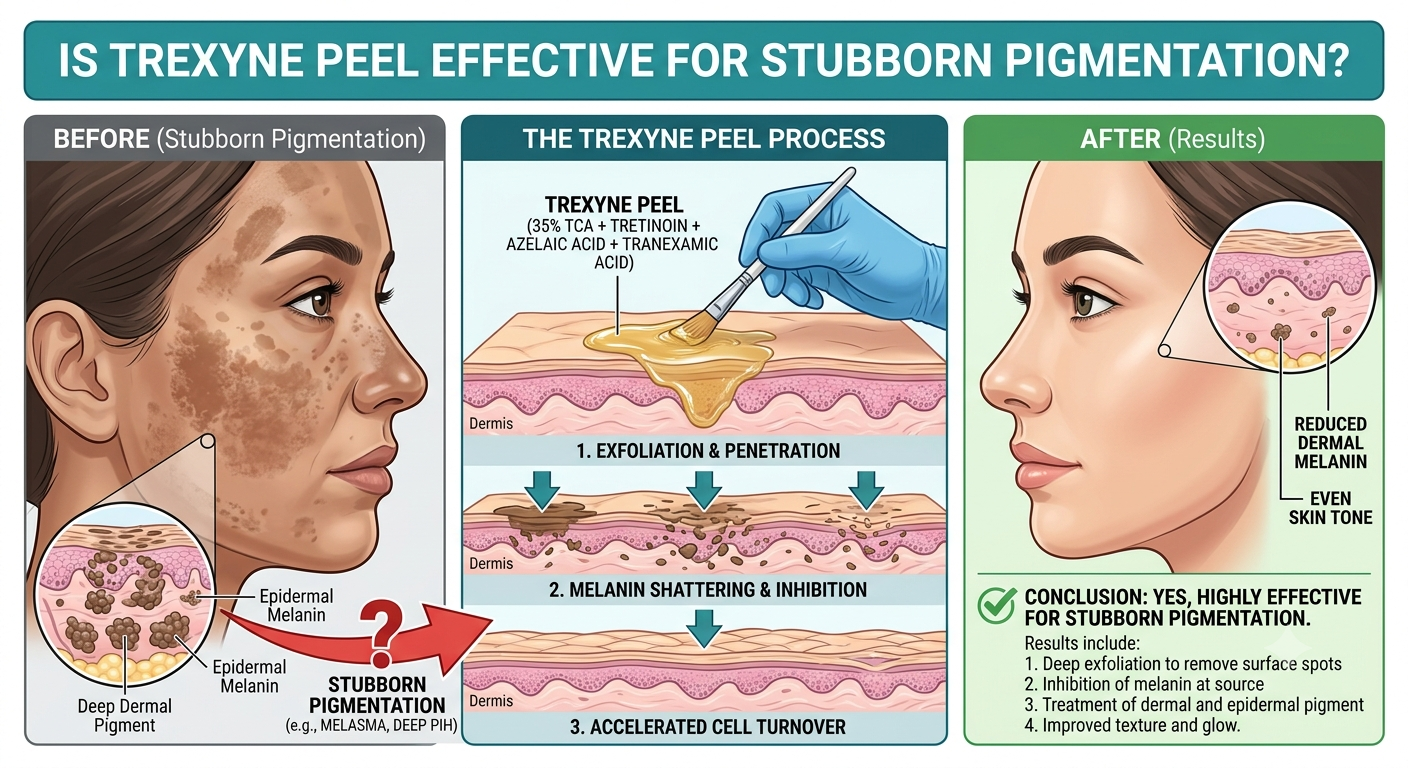
Is Trexyne Peel Effective for Stubborn Pigmentation?
Many individuals spend years cycling through over-the-counter brightening serums, vitamin C drops, and target correctors, only to find that their most prominent dark spots, sun damage, or melasma patches refuse to budge. When hyperpigmentation becomes resistant to standard topical skincare routines, it is classified as stubborn pigmentation. Resolving this concern requires moving beyond surface-level products to a treatment that can penetrate deeper skin layers. The short answer is yes: the Trexyne Peel is highly effective for stubborn pigmentation because it utilizes a clinical-strength mechanism designed to dismantle entrenched melanin clusters directly at their source.
What Makes Pigmentation “Stubborn”?
To understand why some dark spots are so difficult to clear, it helps to examine what is happening beneath the skin surface. Pigmentation becomes stubborn due to two main factors: depth and cellular habituation.
- Dermal and Deep Epidermal Deposition: While mild discoloration sits right on the surface, stubborn pigmentation has often settled deep into the lower tiers of the epidermis or dropped into the dermis. Standard over-the-counter creams simply cannot penetrate deeply enough to interact with these settled pigment clusters.
- Hyperactive Melanocytes: In cases of severe sun damage or hormonal melasma, the pigment-producing cells have become chronically over-stimulated. They continue to produce and pump out excess melanin even if you are using mild daily brighteners, making the discoloration a moving target that regenerates constantly.
The Science of How Trexyne Peel Overcomes Resistant Pigment
The Trexyne Peel does not just coat the skin; it alters the cellular environment through a multi-action approach that targets stubborn pigment from multiple angles.
Deep, Intercellular Dissolution
The professional solution breaks down the tough cellular glue (desmosomes) that holds together dead, heavily pigmented cells in the stubborn layers. By lifting this compacted surface barrier, it allows the skin to clear out old discoloration that has been stuck for months or years.
Accelerated Basal Clearance
By inducing a highly controlled exfoliation phase, the peel sends a message to the basal layer of the skin to rapidly produce fresh, new cells. This compresses the skin renewal cycle, forcing deep-seated pigment clusters to move upward toward the surface faster, where they can be shed away cleanly.
Structural Modulation
The advanced clinical formulation works to normalize the behavior of hyperactive melanocytes. Over a structured series of treatments, it helps down-regulate pigment production, ensuring that as old dark spots are cleared away, the incoming layers of skin develop with a more uniform, balanced tone.
Real Clinical Outcomes Across Different Pigment Concerns
The effectiveness of a clinical-grade peel shines brightest when applied to the specific conditions that cause the most frustration.
- Severe Sun Damage and Age Spots: Long-standing solar lentigines respond exceptionally well to professional chemical peeling. The built-up UV damage is progressively lifted layer by layer, restoring clarity and uniformity to the complexion.
- Resistant Melasma: Melasma is notoriously difficult to manage. Because the Trexyne Peel can be carefully calibrated, it allows practitioners to address melasma patches progressively and safely, reducing the dark mask without triggering the rebound inflammation that aggressive treatments can cause.
- Long-Standing Acne Marks (PIH): Dark post-acne marks that have remained unchanged for a year or more are broken up effectively by the accelerated turnover mechanism, fading them down to match the surrounding skin tone.
Maximizing Your Results: The Professional Protocol
Because stubborn pigmentation is deeply rooted, achieving maximum clearance requires a dedicated, professional approach rather than an overnight fix.
Choosing a professional pigmentation treatment over self-managed options ensures that your skin receives a custom-tailored strategy. Your practitioner will establish a structured series—typically consisting of 4 to 6 sessions spaced several weeks apart—allowing the treatment to reach deeper pigment deposits safely and progressively. This clinical oversight, combined with strict daily sun protection and targeted aftercare, is the definitive combination that transforms resistant discoloration into clear, vibrant, and evenly toned skin.
Conclusion
Stubborn pigmentation requires a clinical solution that can penetrate beyond the surface layer. The Trexyne Peel is highly effective for resistant discoloration because it physically dismantles deep-seated melanin deposits while accelerating the skin’s natural cell renewal process to bring clear skin to the surface. By partnering with a qualified professional and committing to a structured treatment series along with daily UV protection, you can break through the limitations of standard topical products and achieve the clear, balanced, and radiant complexion you have been working toward.
Frequently Asked Questions
1. Why is Trexyne Peel more effective for stubborn pigmentation than expensive home serums?
Home serums use very low concentrations of active ingredients to ensure safety for unsupervised consumer use, meaning they can only affect the top surface layer of dead cells. Trexyne Peel is a high-concentration, clinical-grade formulation applied under professional supervision, allowing it to penetrate safely to the deeper layers where stubborn pigment clusters are anchored.
2. How many sessions of Trexyne Peel are typically needed for stubborn dark spots?
While mild surface spots might show great clearance in 2 or 3 appointments, stubborn, deep-seated pigmentation, severe sun damage, or chronic melasma typically requires a full series of 4 to 6 structured sessions to achieve comprehensive, long-lasting clearance.
3. Can stubborn pigmentation darken temporarily after a Trexyne Peel?
Yes, this is a common and normal part of the clearing process. As the chemical solution forces rapid cellular turnover, deep-seated pigment deposits are drawn up to the surface layer of the skin before they flake away. This can cause the dark spots to look temporarily darker for a few days before they peel off.
4. Will my stubborn pigmentation return after completing the peel series?
Pigmentation can return if the biological triggers—such as unprotected UV exposure, heat, or hormonal shifts—are reactivated, as the pigment-producing cells retain a cellular memory of damage. Maintaining your results requires committing to a daily broad-spectrum SPF and periodic professional maintenance sessions.
5. Is there any downtime associated with treating stubborn pigment with this peel?
Yes, you should expect a visible peeling phase. Typically, the skin feels tight and looks slightly flushed for the first 48 hours, followed by active flaking and shedding from days 3 to 6. By day 7 to 10, the peeling phase concludes, revealing a fresh, bright, and clearer layer of skin.
🚀 Note: আপনার ব্যবহারের সুবিধার্থে এই ৩টি ব্লগ পোস্টেরই সম্পূর্ণ ফরম্যাটেড কপি এবং ব্যাকগ্রাউন্ডে জেনারেট হওয়া .docx ফাইলটি রেডি রয়েছে। পরবর্তী ধাপে অন্য কোনো টাইটেল নিয়ে কাজ করতে চাইলে বা কোনো পরিবর্তন প্রয়োজন হলে আমাকে সরাসরি জানাতে পারেন!