What Is the Best Treatment for Sun Spots on Hands?
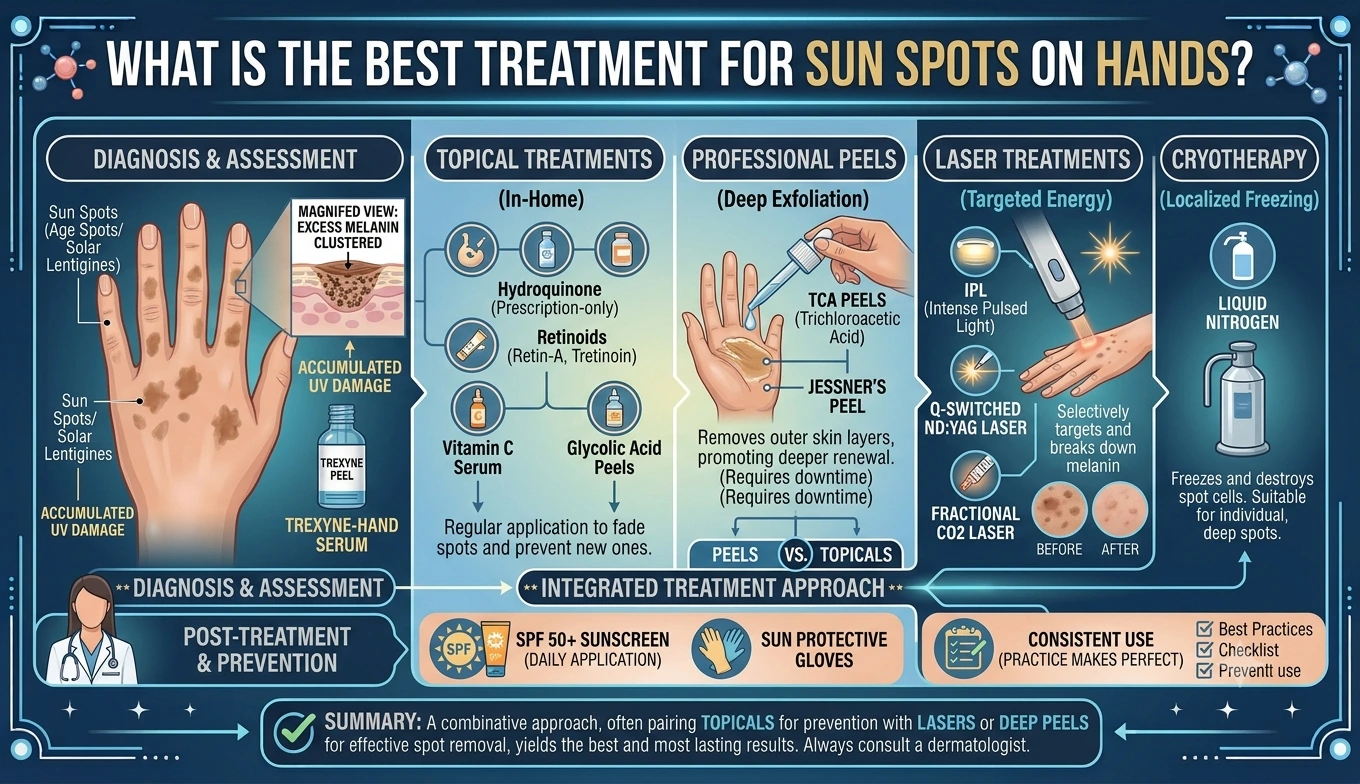
Sun spots on the hands respond best to professional resurfacing treatments that work below the surface to encourage even cell turnover, rather than surface creams alone. For most clients, a course of mechanical resurfacing treatment such as the Trexyne Peel offers a predictable route to a brighter, more even skin tone, without the acids or extended downtime associated with older approaches. Hands are exposed to UV light almost as much as the face, yet they are often left out of a skincare routine entirely. This leaves flat brown patches, known as sun spots or solar lentigines, that build up gradually over years. Understanding why they form, and which treatments genuinely help, makes it far easier to choose the right course of action.
What Causes Sun Spots on the Hands
Sun spots, also called solar lentigines or age spots, form when years of ultraviolet exposure trigger an overproduction of melanin in small, localised areas of skin. Unlike a general tan, which fades evenly across the whole area exposed, this pigment settles into flat, well-defined patches that can range from pale tan to dark brown. The backs of the hands are particularly vulnerable because they are rarely covered by clothing and are frequently exposed to daylight while driving, walking, gardening, or simply carrying out everyday tasks outdoors.
Clients often assume these marks appear suddenly, but in reality they are the visible result of damage that has been accumulating quietly for years. By the time a spot becomes noticeable, the underlying change in pigment distribution has usually been developing for a long time, which is one reason topical products alone often struggle to make a significant visible difference on their own.
UV Exposure and Cumulative Damage
The skin on the hands has a long memory. Every unprotected exposure to sunlight adds to a cumulative total, and melanocytes, the pigment-producing cells in the skin, respond by clustering together in the areas that see the most light. Over decades, this clustering becomes visible as the defined brown marks associated with sun damage. Because hands are used constantly throughout the day, they tend to receive more incidental exposure than people realise, even on cloudy days or during short outdoor errands.
Thinner Skin Speeds Up Visible Ageing
Hands have less fatty tissue and thinner skin than the face, and this thinness tends to increase with age. Thinner skin shows pigment changes more readily and has less natural cushioning to soften the appearance of uneven tone, which is part of why sun spots on the hands can look more pronounced than similar marks elsewhere on the body. Reduced collagen support in this area can also affect surface texture, which draws further attention to any pigment irregularities.
Genetics and Skin Type
Natural skin tone and family history both play a role in how visibly a person develops sun spots. Fairer skin types tend to show pigmentation changes earlier and more distinctly, while deeper skin tones may develop spots later but can sometimes see more contrast between the spot and the surrounding skin. Understanding a client’s skin type is an important part of tailoring any treatment plan, including deciding on the intensity level within a tiered protocol.
Why Hands Show Sun Damage Faster Than the Face
Many people are diligent about applying sun protection to their face but overlook their hands entirely. Daily tasks such as driving, gardening, or simply walking to work expose the hands to incidental UV light, and this exposure adds up far more quickly than most people realise. Because the skin on the hands also has fewer oil glands, it tends to lose elasticity sooner, which allows pigment irregularities to sit closer to the surface and appear more defined.
This combination of frequent exposure and naturally thinner skin explains why sun spots often appear on the hands before they become noticeable anywhere else. It is a pattern seen regularly in clinic, where a client’s facial skin looks well maintained while their hands tell a very different story about years of sun exposure.
The SPF Gap
Even clients with a thorough facial skincare routine frequently admit, when asked, that they rarely apply sun protection to their hands. Handwashing throughout the day also removes any product that has been applied, meaning the hands often go unprotected for long stretches without the person even noticing. This gap in coverage is one of the most common reasons hands show visible pigmentation ahead of other areas.
Are Sun Spots on Hands Permanent?
Left untreated, sun spots on the hands rarely fade on their own and can become more pronounced with continued sun exposure. They are a cosmetic concern rather than a health risk in most cases, though any new or changing mark should always be reviewed by a doctor to rule out other skin conditions. For established, stable pigmentation, professional treatment can help the skin resurface itself, encouraging a more even tone over a course of sessions.
It is worth setting realistic expectations with clients at the outset. Pigmentation that has built up over decades is unlikely to disappear after a single session, and consistency across a structured course tends to produce far more satisfying, longer lasting results than a one-off treatment.
Clients sometimes ask whether spots will simply return straight after treatment. In practice, existing pigmentation that has been addressed through a course of resurfacing tends to stay improved, provided ongoing sun protection is maintained. New spots can still form from future unprotected exposure, which is why prevention remains just as important as treatment itself.
Treatment Options Worth Considering
There are several approaches practitioners commonly discuss with clients looking to address pigmentation on the hands. Topical brightening ingredients can support tone over time when used consistently, but they tend to work slowly and are limited in how much visible change they can create on their own. Professional in-clinic treatments, by contrast, work more directly on the surface layers of the skin, which is why many practitioners recommend them as the primary route for visible, lasting improvement.
When a client asks what will actually make a visible difference, it helps to frame the answer around realistic timelines and combined approaches, rather than presenting any single product or treatment as a quick fix.
Topical Brightening Approaches
Daily use of broad-spectrum SPF and brightening skincare can help prevent sun spots from deepening further and may support overall tone as part of a longer-term routine. These products work gradually and are best viewed as a maintenance step alongside, rather than a replacement for, professional treatment. Clients who rely on topical products alone often find that progress plateaus after the first few weeks, which is a natural point to introduce an in-clinic option.
Professional Resurfacing Treatments
In-clinic resurfacing treatments are generally considered the most effective route for visible pigmentation on the hands, because they work directly on the outer layers of skin to encourage renewal. The Trexyne Peel is one such option, using a mechanical process rather than chemical exfoliants to create controlled micro-channels in the skin’s surface.
How Mechanical Resurfacing Works for Sun Spots
The Trexyne Peel is built around marine-algae spicules and stabilised Vitamin E. It resurfaces, refines, and supports skin renewal through a purely mechanical mechanism, with no acids and no chemical exfoliation involved. This distinction matters for hands specifically, since the skin here is thinner and can be more reactive to some approaches, making a predictable, mechanical process a reassuring option for both practitioner and client.
For clients who have been hesitant to pursue a treatment because they associate resurfacing with harsh chemicals or unpredictable recovery, explaining the mechanical basis of the Trexyne Peel is often the point where they feel comfortable moving forward.
The Role of Marine-Algae Spicules
The marine-algae spicules at the centre of the Trexyne Peel create controlled micro-channels in the skin without the use of chemical exfoliants. This mechanical action encourages the skin’s natural renewal process, which can help support a more even tone in areas affected by pigmentation, including the backs of the hands. Because the mechanism is physical rather than chemical, practitioners have a clear, controllable way to adjust the treatment to each client’s needs.
Vitamin E and the Recovery Phase
Stabilised tocopherol, a form of Vitamin E, is infused throughout the treatment and supports the skin’s recovery phase from the very first application. This is particularly relevant on the hands, where skin can take slightly longer to recover due to reduced natural oil production compared with the face. Supporting recovery from the outset can make the overall experience more comfortable for the client across a course of sessions.
Why a Tiered Protocol Suits Hand Pigmentation
One of the features of the Trexyne Peel is its tiered protocol, which allows a practitioner to match treatment intensity to the client’s skin type and expectations around downtime. This is especially useful on the hands, where clients often want visible results without taking time away from daily tasks that involve constant hand use.
Because the treatment works mechanically rather than chemically, practitioners can adjust intensity level by level, building toward the desired result gradually across a course of sessions rather than relying on a single aggressive application. This step-by-step approach also gives the practitioner room to observe how each client’s skin responds before increasing intensity, which supports a more considered, individualised treatment plan.
For clients with more sensitive skin, or those trying professional resurfacing on their hands for the first time, starting at a lower tier and building up over subsequent sessions is often the most comfortable route toward visible improvement.
What to Expect During and After Treatment
A Trexyne Peel session on the hands is typically quick and is carried out exclusively by a trained aesthetic professional. Clients can generally expect predictable downtime, meaning there are no significant surprises in terms of recovery. Some mild sensitivity or visible resurfacing in the days following treatment is normal and reflects the skin’s natural renewal process.
Setting Expectations at Consultation
A thorough consultation before the first session helps set accurate expectations. This is the point to discuss the client’s skin type, the extent of their pigmentation, and how many sessions may be needed to see meaningful change. Because the protocol is tiered, this conversation also allows the practitioner to explain how intensity will be adjusted across the course.
A course of sessions, rather than a single treatment, is usually recommended for visible pigmentation, since sun spots that have built up over years respond better to a structured programme than a one-off appointment. Spacing sessions appropriately gives the skin time to complete its natural renewal cycle between treatments, which supports a smoother overall result.
Aftercare Between Sessions
In the days following a session, the hands should be treated gently. Avoiding harsh soaps, prolonged hot water, and unprotected sun exposure gives the skin the best possible environment in which to renew itself. Practitioners typically provide written aftercare guidance, and clients are encouraged to reach out to their clinic if they have any questions about what they are seeing during recovery.
Protecting Hands From Further Sun Damage
Treatment results are best supported by consistent daily sun protection. Applying a broad-spectrum SPF to the hands every day, reapplying after washing, and wearing gloves during prolonged outdoor tasks such as gardening can all help reduce the chance of new pigmentation forming. Clients who commit to daily protection alongside their in-clinic treatments tend to see results that hold for longer.
Building a Simple Daily Habit
The most effective approach is often the simplest one: keeping a small tube of SPF by the front door, in a bag, or next to hand cream makes reapplication far more likely to actually happen. Encouraging clients to treat hand SPF as part of their morning routine, alongside their face, helps close the gap that allowed pigmentation to develop in the first place.
Choosing a Practitioner for Hand Pigmentation Treatment
Because the Trexyne Peel is sold strictly to verified practitioners and clinics, it is only available through trained professionals rather than for home use. When researching options, it is worth looking at a clinic’s experience with hand treatments specifically, since the skin here behaves differently to facial skin. Clinics can browse the full range of protocol strengths via the Trexyne shop, and prospective clients are welcome to reach out through the
Trexyne contact page to find a verified practitioner offering the treatment in their area.
Questions Worth Asking Before Booking
Prospective clients are encouraged to ask a prospective clinic how many hand pigmentation treatments they carry out, what a typical course involves, and how the practitioner tailors intensity to individual skin types. A confident, detailed answer to these questions is usually a good sign of genuine experience with this specific area of the body.
How Long Does It Take to See Results?
Timelines vary from client to client depending on the depth and extent of their pigmentation, their skin type, and how closely they follow aftercare guidance. Some clients notice an improvement in overall tone and texture within the first few sessions, while more established sun spots may take a full course to show a clear, visible change.
It is worth reminding clients that visible skin renewal takes time, and that the gradual, tiered nature of the Trexyne Peel protocol is designed to work with the skin’s own natural cycle rather than force rapid change. Patience across a properly spaced course tends to produce the most satisfying long-term outcome.
Combining In-Clinic Treatment With an At-Home Routine
The most consistent results tend to come from pairing in-clinic sessions with a supportive at-home routine. Daily SPF, gentle moisturisation, and avoiding further unprotected sun exposure all help maintain the results of a resurfacing course. Practitioners can advise on the right combination for each client during a consultation, and more information on the full Trexyne range is available on the brand’s homepage.
Clients should also be reminded that hands are used constantly, which means aftercare habits need to be realistic and easy to maintain. A simple routine that a client will actually stick to is far more valuable than an elaborate one they abandon after a week.
Conclusion
Sun spots on the hands develop gradually, driven by years of cumulative UV exposure combined with the naturally thinner, more delicate skin found on the backs of the hands. They rarely fade without intervention, which is why many clients turn to professional treatment rather than topical products alone. A mechanical resurfacing approach, such as the Trexyne Peel, offers a way to support the skin’s natural renewal process using marine-algae spicules and stabilised Vitamin E, without acids or unpredictable downtime. Combined with consistent daily sun protection, a structured course of treatment can help support a brighter, more even-looking complexion on the hands over time.
Frequently Asked Questions
Q: What is the best professional treatment for sun spots on the hands?
Many practitioners recommend mechanical resurfacing treatments, such as the Trexyne Peel, as a first-line professional option. It works through controlled micro-channels created by marine-algae spicules, supporting the skin’s natural renewal process without chemical exfoliants.
Q: How many sessions are usually needed to treat sun spots on hands?
A course of sessions is generally recommended rather than a single treatment, since pigmentation that has built up over years tends to respond better to a structured programme. A practitioner can advise on the right number of sessions during a consultation.
Q: Is the Trexyne Peel a chemical peel?
No. The Trexyne Peel is not a chemical peel. It works through a purely mechanical mechanism using marine-algae spicules, with no acids or chemical exfoliants involved.
Q: Can sun spots on hands be prevented from getting worse?
Daily broad-spectrum SPF, reapplied regularly, along with gloves during prolonged outdoor tasks, may help reduce the chance of existing sun spots deepening or new ones forming.
Q: Is treatment for sun spots on hands painful?
The Trexyne Peel uses a tiered protocol, allowing practitioners to match intensity to individual skin type and comfort level, which supports predictable downtime with no significant surprises.
Q: Can I buy the Trexyne Peel for home use?
No. The Trexyne Peel is sold strictly to verified practitioners and clinics and is designed for use exclusively by trained aesthetic professionals.
Q: Are sun spots on hands a sign of a serious health condition?
In most cases, sun spots are a cosmetic concern related to cumulative UV exposure rather than a health risk. Any new or changing mark should still be reviewed by a doctor to rule out other skin conditions.