What Causes Dark Circles Versus Pigmentation Under the Eyes?
Dark circles and pigmentation under the eyes look similar at first glance, but they come from different causes and respond to different care. Dark circles are usually linked to thin skin, visible blood vessels, or poor circulation, while pigmentation under the eyes develops from excess melanin, often triggered by sun exposure, inflammation, or hormonal changes. Understanding which one you are dealing with matters, because treating the wrong concern rarely brings lasting results. Many practitioners now support clients with professional resurfacing options such as the Trexyne Peel, which works through a botanical mechanism to support smoother, more even-looking skin over time. In this article, we will break down the real causes behind both concerns and what tends to help.
Understanding the Under-Eye Area: Why It’s So Delicate
The skin beneath the eyes is some of the thinnest on the body, often less than half the thickness of skin found elsewhere on the face. It has fewer oil glands, less collagen support, and sits directly over muscle and blood vessels with very little cushioning fat in between. This structure makes the area more reactive to fatigue, dehydration, sun exposure, and repeated facial movement.
Because the skin is so thin, anything happening underneath it, whether that is a visible vessel or a build-up of pigment, tends to show through more clearly than it would on the cheeks or forehead. This is why under-eye concerns can look dramatic even when the underlying cause is relatively minor. It also explains why a one-size-fits-all approach rarely works well here. A practitioner needs to identify the actual driver of the discolouration before recommending a course of action.
Why This Area Ages Differently
The under-eye area tends to show early signs of ageing before other parts of the face. Reduced collagen density and constant movement from blinking and expression can accelerate fine lines and hollowing, which in turn can make shadows and discolouration more noticeable.
What Causes Dark Circles? The Main Triggers
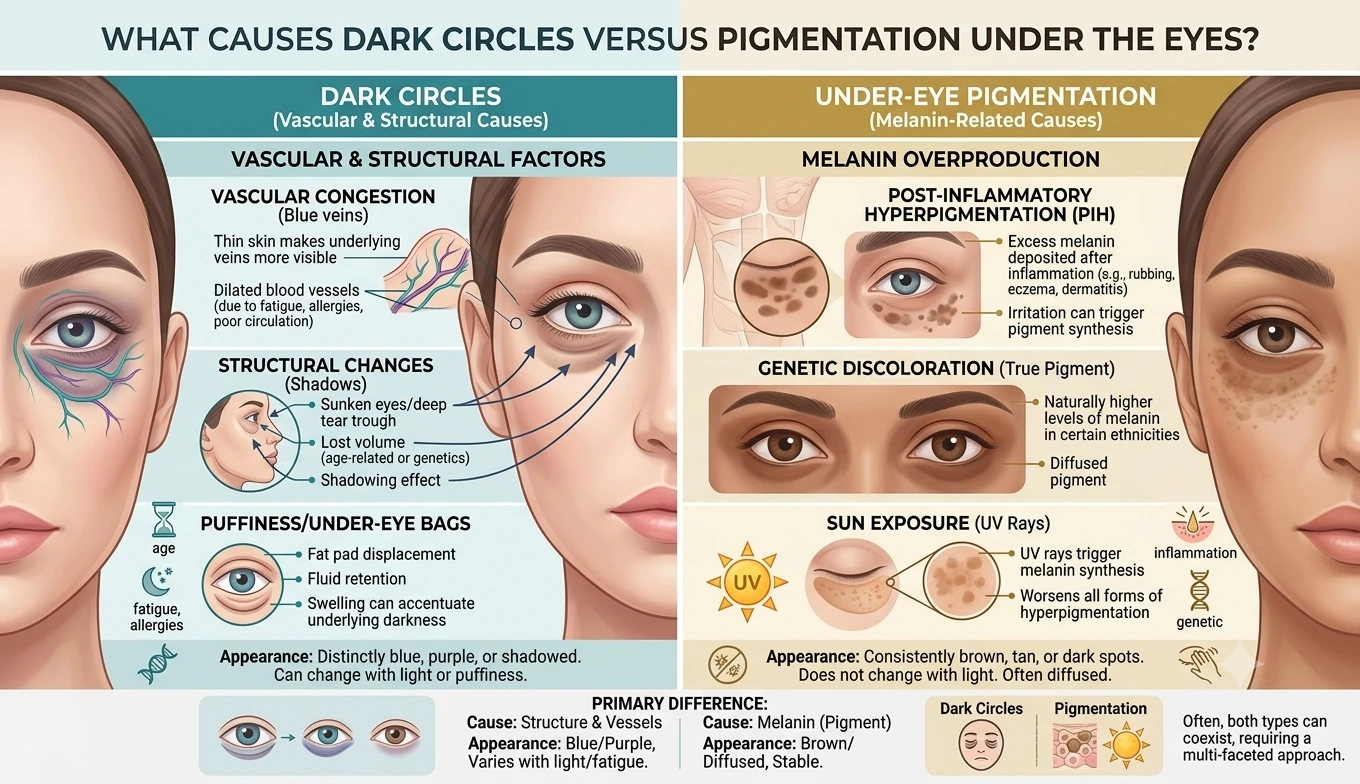
Dark circles are generally the result of structural or circulatory factors rather than pigment production alone. They tend to have a bluish, purple, or grey tone rather than a brown one.
Genetics and Thin Skin
For many people, dark circles are simply inherited. If close family members have visible under-eye shadows, there is a reasonable chance the same trait will appear due to naturally thinner skin or a deeper-set eye socket. In these cases, the discolouration is present from a young age and tends to remain fairly consistent throughout life.
Blood Vessel Visibility and Poor Circulation
Because the under-eye skin is so thin, the small blood vessels sitting just beneath the surface can become more visible, especially when circulation slows. This is why dark circles often look worse first thing in the morning or after a poor night’s sleep, when blood can pool slightly in the delicate capillaries around the eyes.
Lifestyle and Environmental Factors
Several everyday habits can make dark circles more noticeable, including:
- Lack of sleep or irregular sleep patterns
- Dehydration, which can make skin appear thinner and more translucent
- Extended screen time and eye strain
- Smoking, which may affect circulation and skin quality
- High salt intake, which can contribute to fluid retention and puffiness
None of these factors alone tends to cause permanent dark circles, but repeated exposure over time can make the area look consistently tired.
Ageing and Volume Loss
As we age, the fat pad beneath the eyes can shift or reduce, creating a hollow appearance that casts a shadow. This shadow is often mistaken for pigmentation, when in reality it is a structural change related to volume loss rather than excess melanin.
What Causes Pigmentation Under the Eyes?
Pigmentation under the eyes has a different origin story. It usually appears as a brown or tan discolouration rather than the blue-grey tone typical of dark circles, and it develops when melanin production increases in a localised area.
Sun Exposure and UV Damage
Ultraviolet exposure is one of the most common drivers of pigmentation anywhere on the face, and the under-eye area is no exception. Repeated sun exposure without adequate protection can stimulate melanocytes, the cells responsible for producing pigment, leading to patches of darker skin that build up gradually over years.
Post-Inflammatory Hyperpigmentation
When the skin experiences inflammation, whether from rubbing, allergies, eczema, or irritation, it can respond by producing extra pigment as part of the healing process. This is known as post-inflammatory hyperpigmentation, and it is particularly common in people who frequently rub or scratch their eyes due to allergies or sensitivity.
Hormonal Influences
Hormonal fluctuations, including those related to pregnancy, contraception, or certain medical conditions, can influence melanin production across the face, including the delicate under-eye region. This is similar to the mechanism behind other forms of facial pigmentation and tends to respond to consistent, gentle skincare over time.
Genetic Predisposition to Pigmentation
Just as dark circles can run in families, so can a tendency toward pigmentation. People with naturally higher melanin levels in their skin may be more prone to developing under-eye pigmentation, particularly with repeated sun exposure or inflammation.
How to Tell the Difference: Dark Circles vs Pigmentation
Distinguishing between the two is an important first step before recommending any treatment. A few practical indicators can help.
Colour and Tone
Dark circles typically present as blue, purple, or grey, reflecting the blood vessels and structure beneath the skin. Pigmentation, on the other hand, tends to appear brown or tan, reflecting an excess of melanin in the skin itself.
The Stretch Test
Gently stretching the skin under the eye can offer a clue. If the discolouration lightens when the skin is stretched, it is more likely related to visible vessels or thinness. If the tone remains the same, pigmentation is a more likely explanation.
Pattern and Location
Pigmentation often follows a more defined, patch-like pattern and may extend slightly beyond the immediate under-eye area. Dark circles tend to sit directly beneath the lash line and follow the natural curve of the eye socket.
Why Skin Texture and Renewal Matter for Under-Eye Concerns
Regardless of the underlying cause, skin that renews itself efficiently tends to look brighter and more even overall. As skin cells turn over, dull, uneven surface layers are gradually replaced with fresher tissue. When this renewal process slows down, whether due to age, sun damage, or simply the natural passage of time, the skin can look flatter, duller, and more prone to showing discolouration.
This is one of the reasons professional resurfacing treatments have become a popular addition to a broader skincare strategy. Supporting the skin’s natural renewal cycle can help the complexion look more refreshed, and may make both pigmentation and the appearance of dullness less pronounced over time.
The Role of Professional Resurfacing Treatments
For clients dealing with pigmentation concerns or an uneven-looking complexion, professional-grade resurfacing can be a valuable option alongside good daily habits. This is where treatments like the Trexyne Peel fit into a practitioner’s toolkit.
How the Trexyne Peel Works
The Trexyne Peel is a precision botanical peel built around marine-algae spicules and stabilised Vitamin E. Unlike traditional approaches that rely on chemical exfoliants, Trexyne resurfaces and refines the skin through a purely mechanical mechanism. The marine-algae spicules create controlled micro-channels in the surface layers of the skin, encouraging the natural renewal process without the use of acids.
This mechanical approach means there is no chemical penetration involved, which many practitioners appreciate when working with clients who have sensitive or reactive skin. The infusion of stabilised tocopherol, a form of Vitamin E, is designed to support the skin’s recovery phase from the very first application.
A Tiered Protocol for Different Skin Types
One of the features practitioners value most is the tiered protocol built into the Trexyne system. This allows the intensity of treatment to be matched to a client’s individual skin type and their expectations around downtime. Because the mechanism is mechanical rather than chemical, the treatment is associated with predictable downtime, with no unexpected surprises for the client.
It is worth noting that Trexyne Peel is formulated for use exclusively by trained aesthetic professionals and is not intended for home use. Each 30ml practitioner vial provides approximately six to eight full-face treatments, making it a practical addition to a clinic’s professional-only treatment menu. Clinics interested in stocking the product can explore options through the Trexyne shop.
Daily Habits That Support a Brighter Under-Eye Area
Professional treatments work best when paired with consistent daily habits. A few practical steps can make a meaningful difference over time.
Prioritise Sleep and Hydration
Aiming for consistent, adequate sleep can help reduce the appearance of fatigue-related dark circles. Staying well hydrated throughout the day may also support skin plumpness, which can reduce the translucency that makes underlying vessels more visible.
Be Gentle Around the Eyes
Because the under-eye skin is so delicate, repeated rubbing or tugging, whether from removing make-up or scratching due to allergies, can contribute to inflammation and, over time, pigmentation. Using a gentle patting motion when applying products or removing make-up can help protect the area.
Manage Allergies and Irritation
For clients prone to seasonal allergies or sensitivity, addressing the root irritation can reduce the likelihood of post-inflammatory pigmentation developing in the first place.
Sun Protection and Aftercare for Pigmentation-Prone Skin
Sun protection deserves its own section because it plays such a central role in both preventing new pigmentation and protecting the results of any professional treatment.
Daily SPF Is Non-Negotiable
A broad-spectrum sunscreen applied daily, including on the delicate under-eye area, is one of the most effective ways to prevent pigmentation from developing or worsening. This is particularly important for clients who have recently undergone a resurfacing treatment, as freshly renewed skin can be more responsive to UV exposure during the recovery phase.
Supporting Skin After a Professional Treatment
Following any professional resurfacing treatment, clients should follow their practitioner’s specific aftercare guidance closely. Consistent sun protection, gentle skincare, and avoiding unnecessary friction around the eyes can all help support the results and reduce the chance of new pigmentation forming.
When to Consult a Skincare Professional
While home habits can support overall skin health, persistent or worsening under-eye discolouration is often best assessed by a trained professional. A practitioner can help distinguish between structural dark circles, pigmentation, or a combination of both, and can recommend an appropriate treatment plan based on individual skin type and goals.
If you are a practitioner looking to expand your under-eye and pigmentation treatment offering, or a clinic exploring professional-grade resurfacing options, the Trexyne team can be reached directly through the contact page for further guidance on protocols and stock.
Building a Long-Term Under-Eye Care Routine
Lasting improvement rarely comes from a single step. A combined approach that includes daily sun protection, gentle skincare habits, good sleep hygiene, and periodic professional support tends to deliver the most consistent results over time.
For clinics building out a comprehensive pigmentation and resurfacing menu, exploring the full product range on the Trexyne homepage can offer a clearer picture of how mechanical resurfacing fits alongside other professional treatments.
Conclusion
Dark circles and pigmentation under the eyes may look alike, but they stem from different causes. Dark circles are typically linked to genetics, thin skin, visible blood vessels, and lifestyle factors such as sleep and hydration. Pigmentation, by contrast, develops from excess melanin production, often triggered by sun exposure, inflammation, or hormonal changes. Identifying which concern is at play is the first step toward addressing it effectively.
A thoughtful, long-term approach that combines daily sun protection, gentle skincare habits, and professional support tends to bring the most reliable results. For clients dealing with pigmentation or an uneven-looking complexion, the Trexyne Peel offers a mechanical, botanical approach to resurfacing that may help support a brighter, more even-looking complexion over time, without relying on chemical exfoliants.
Frequently Asked Questions
Q: What is the main difference between dark circles and pigmentation under the eyes?
Dark circles are usually caused by thin skin, visible blood vessels, or structural factors, and tend to appear blue, purple, or grey. Pigmentation is caused by excess melanin and typically appears brown or tan in tone.
Q: Can dehydration cause dark circles under the eyes?
Dehydration can make skin appear thinner and more translucent, which may increase the visibility of blood vessels beneath the eyes and make dark circles more noticeable.
Q: Does sun exposure cause pigmentation under the eyes?
Yes, repeated UV exposure without adequate protection can stimulate melanin production, which may lead to patches of pigmentation developing under the eyes over time.
Q: Can rubbing my eyes cause pigmentation?
Frequent rubbing or scratching, often linked to allergies or irritation, can trigger inflammation that may lead to post-inflammatory hyperpigmentation in the under-eye area.
Q: Is the Trexyne Peel suitable for pigmentation under the eyes?
The Trexyne Peel is a professional-only botanical resurfacing treatment that works through a mechanical mechanism using marine-algae spicules. It is designed to support overall skin renewal and may help contribute to a brighter, more even-looking complexion when used as part of a professional treatment plan.
Q: Can dark circles and pigmentation occur at the same time?
Yes, it is common for both concerns to overlap, particularly as skin ages and volume loss combines with years of sun exposure or inflammation. A professional assessment can help clarify which factors are contributing most.
Q: How can I prevent pigmentation from getting worse under my eyes?
Consistent daily sun protection, gentle skincare habits, and avoiding unnecessary rubbing or irritation around the eyes can all help reduce the likelihood of pigmentation worsening over time.