What Causes Uneven Skin Tone on the Face
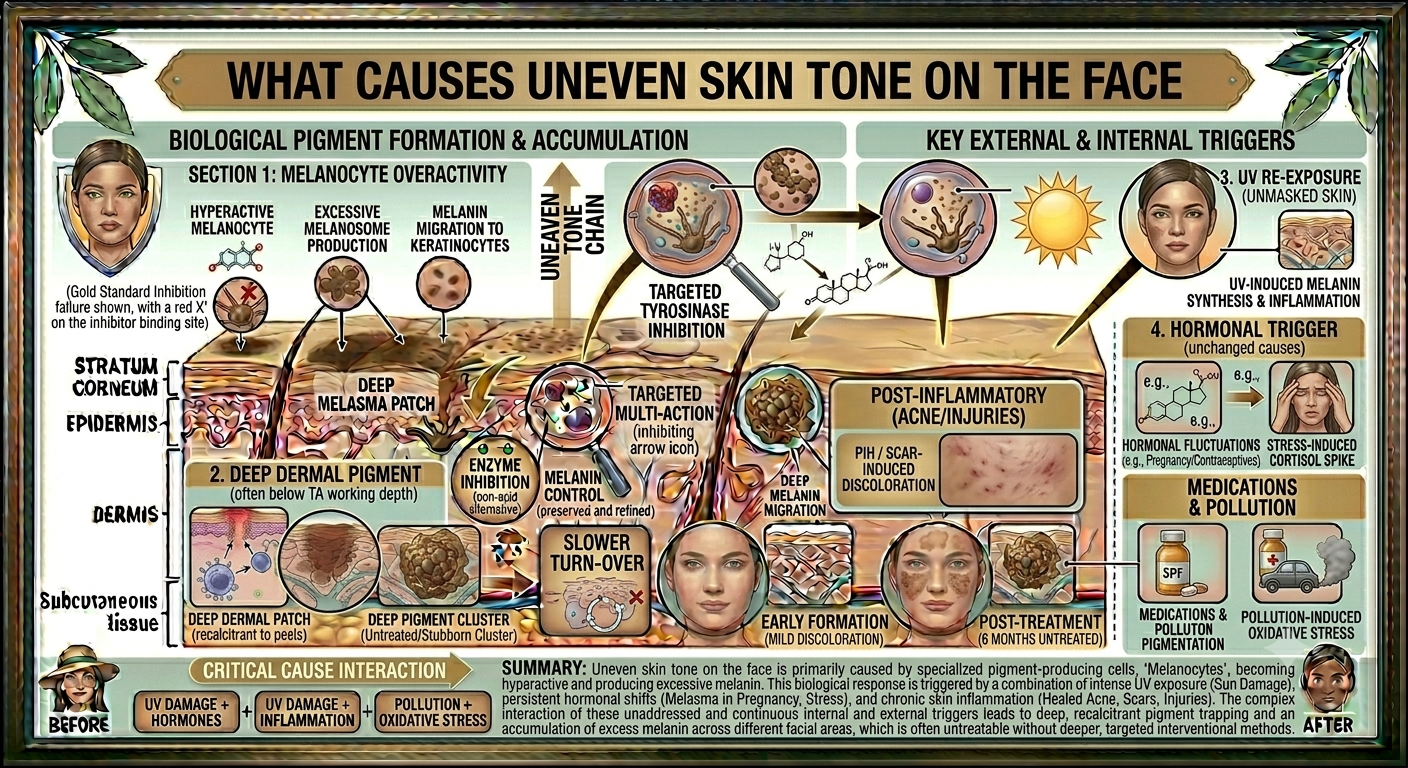
Uneven skin tone is caused by irregular melanin production, slower cell turnover, and surface damage that builds up over time from sun exposure, hormones, inflammation, and ageing. Some areas of the face produce more pigment than others, while dull or rough patches form where dead skin cells are not shedding efficiently. The result is a complexion that looks patchy, dull, or inconsistent in colour rather than smooth and uniform. Clients often notice this gradually rather than overnight, which can make the cause harder to pinpoint without a proper skin assessment. Many practitioners now turn to professional resurfacing treatments such as the Trexyne Peel to support more even-looking skin by encouraging healthier renewal. This article breaks down the main causes of uneven tone and explains where targeted, professional treatment fits into a realistic plan.
What Does Uneven Skin Tone Actually Mean?
Uneven skin tone describes a complexion where colour and texture vary noticeably across the face, rather than appearing smooth and consistent. This can show up as brown patches, redness, dullness, or a combination of all three. It is different from a single blemish or scar, as it tends to affect larger areas and can change in intensity depending on the season, hormone levels, or recent sun exposure.
Understanding that uneven tone is a pattern rather than a single mark helps set the right expectations for treatment. It usually takes a course of consistent care to see a meaningful shift, rather than a single quick fix.
Sun Exposure and UV Damage
Ultraviolet light is one of the most significant contributors to uneven skin tone. UV exposure stimulates melanocytes, the cells responsible for producing pigment, and this response is not always even across the face. Areas that receive more direct sun, such as the cheeks, nose, and forehead, often develop patches of pigmentation faster than areas that are more shaded.
Over years, repeated UV exposure without adequate protection leads to a build up of sun-induced pigmentation, sometimes called sun spots. This type of unevenness tends to worsen gradually and can become more resistant to fading without professional support.
Hormonal Changes and Pigmentation
Hormonal fluctuations are another common cause of uneven tone, particularly in women. Pregnancy, hormonal contraception, and changes during perimenopause can all trigger increased melanin production in certain areas of the face. This often presents as symmetrical patches across the cheeks, forehead, or upper lip.
Hormonally driven pigmentation tends to be more persistent than other forms of unevenness and is often described by clients as patches that fade slightly in winter, then return more visibly with sun exposure in warmer months.
Post-Inflammatory Marks From Acne and Irritation
Any form of skin trauma, including acne, cuts, burns, or aggressive extractions, can leave behind a flat, discoloured mark once the original irritation has healed. This is known as post-inflammatory hyperpigmentation, and it is one of the more common causes of patchy tone in younger skin.
These marks often respond well to treatments that support steady skin renewal, particularly when addressed early before the pigment has had time to settle deeper into the skin.
Slower Skin Cell Turnover With Age
As skin ages, the natural process of shedding old surface cells and replacing them with new ones slows down. This means pigmented or dull cells stay on the surface for longer, contributing to a tired, uneven appearance. Reduced cell turnover also affects how evenly skin reflects light, which is part of why mature skin can look duller even without obvious dark patches.
Supporting this renewal process becomes increasingly important with age, as the skin’s own ability to correct unevenness naturally declines over time.
Why This Matters for Treatment Planning
A practitioner assessing uneven tone in a client over forty will usually consider cell turnover alongside pigmentation when building a treatment plan, since addressing renewal directly can support both texture and tone together.
Genetics and Skin Type
Some people are simply more prone to pigment irregularities than others, regardless of lifestyle or sun habits. Skin type plays a role here, as melanin-rich skin can be more reactive to inflammation and trauma, which increases the likelihood of post-inflammatory marks. Family history of conditions like melasma can also raise the likelihood of developing similar patterns.
While genetics cannot be changed, understanding a client’s predisposition helps a practitioner choose a treatment intensity that suits their skin rather than risking further irritation. Skin that reacts more strongly to inflammation often does better with a gentler, more gradual approach to resurfacing, built up over several sessions rather than rushed into a single intense treatment.
Lifestyle and Environmental Factors
Diet and Hydration
A diet lacking in key nutrients, along with poor hydration, can affect how skin repairs itself and may make existing unevenness more noticeable. Well-hydrated skin tends to reflect light more evenly, which can make tone appear more consistent even before any active treatment.
Sleep and Stress
Poor sleep and chronic stress are linked to changes in skin barrier function and inflammation, both of which can contribute to a duller, patchier complexion over time. Clients under prolonged stress often notice their skin looking more uneven, even without a specific trigger like sun exposure or a new product.
Pollution and Environmental Exposure
Daily exposure to pollution and environmental aggressors can contribute to oxidative stress in the skin, which may worsen the appearance of existing pigmentation and dullness. This is particularly relevant for clients living or working in busy urban areas.
How Professional Resurfacing Helps Even Out Skin Tone
Professional resurfacing treatments work by supporting the skin’s natural renewal cycle rather than simply covering up uneven areas. By encouraging the surface layers to shed and regenerate more efficiently, these treatments can help reduce the visible buildup of pigmented or dull cells over a course of sessions.
This approach tends to suit clients dealing with a mix of causes, since renewal-focused treatment can support improvement in both pigmentation and overall texture rather than targeting a single factor in isolation. Browsing the full shop gives practitioners a clearer view of how resurfacing treatments compare to other options available for tone and texture concerns.
Introducing Trexyne Peel for Uneven Skin Tone
The Trexyne Peel is a precision botanical peel built around marine-algae spicules and stabilised Vitamin E. It works through a purely mechanical mechanism, creating controlled micro-channels in the skin’s surface without the use of chemical exfoliants. There are no acids involved at any stage, and no chemical exfoliation taking place during treatment.
The marine-algae spicules are designed to resurface and refine skin texture while supporting renewal from the very first application. The infused stabilised Vitamin E supports the skin’s recovery phase once treatment is complete, helping the renewal process continue smoothly between sessions.
What to Expect From a Course of Treatment
A Tiered, Predictable Protocol
Trexyne Peel follows a tiered protocol, allowing the practitioner to match treatment intensity to each client’s skin type and expectations. This predictable downtime structure helps practitioners plan a realistic course around a client’s lifestyle and tolerance, rather than relying on guesswork.
Practitioner-Only Application
Trexyne Peel is sold strictly to verified practitioners and clinics, supplied as a 30ml practitioner vial offering approximately six to eight full-face treatments per vial. This ensures every application is carried out by someone trained to assess skin type and pigmentation pattern before treatment begins.
A Course-Based Approach
Because uneven tone usually develops from several overlapping causes, a single session rarely tells the full story. Trexyne Peel is available as a single peel or as a course of 10 or 20 peels, allowing practitioners to build a treatment plan around the client’s specific combination of causes and goals.
Working With a Practitioner on Tone Concerns
Because uneven tone can stem from sun damage, hormones, inflammation, ageing, or a mix of all four, a proper consultation matters before starting any treatment plan. A qualified practitioner will look at the pattern of unevenness, the client’s history, and their lifestyle before recommending an approach. This helps avoid wasted sessions and sets realistic expectations from the start.
A good consultation also gives the practitioner a chance to explain the likely timeline for improvement, which helps clients stay committed to a full course rather than judging results too early. Skin tone rarely shifts dramatically after one session, so this kind of honest, informed guidance tends to lead to better long-term satisfaction.
If you are a practitioner interested in adding a botanical resurfacing option to your clinic, get in touch through the contact us page. You can also learn more about the brand’s approach to professional skincare on the Trexyne homepage.
Conclusion
Uneven skin tone rarely has a single cause. Sun exposure, hormonal changes, post-inflammatory marks, slower cell turnover with age, genetics, and everyday lifestyle factors can all contribute to a complexion that looks patchy or inconsistent rather than smooth. Because these causes often overlap, a single product or quick fix is unlikely to address the full picture. Supporting the skin’s natural renewal process through consistent, professional care tends to offer the most realistic route towards a brighter, more even-looking complexion. Trexyne Peel offers a botanical, mechanical approach to resurfacing, built around marine-algae spicules and stabilised Vitamin E, with a tiered protocol that allows treatment to be matched to each client’s skin and goals.
Frequently Asked Questions
Q: What is the main cause of uneven skin tone on the face?
There is rarely a single cause. Sun exposure, hormonal changes, post-inflammatory marks, and slower cell turnover with age all contribute, often overlapping in the same client.
Q: Can uneven skin tone be improved without chemical peels?
Yes. Mechanical resurfacing treatments, such as those using marine-algae spicules, can support skin renewal and may help improve the appearance of tone without the use of acids or chemical exfoliants.
Q: How long does it take to see an improvement in uneven skin tone?
This depends on the underlying cause and depth of pigmentation, but most professional treatment plans are built around a course of sessions rather than a single visit, since renewal is a gradual process.
Q: Is Trexyne Peel suitable for all skin types dealing with uneven tone?
Trexyne Peel follows a tiered protocol, which allows a practitioner to match treatment intensity to the client’s specific skin type and pigmentation pattern during a consultation.
Q: Does stress really affect skin tone?
Chronic stress is linked to changes in skin barrier function and inflammation, both of which can contribute to a duller, more uneven-looking complexion over time.
Q: Can I use Trexyne Peel at home to even out my skin tone?
No. Trexyne Peel is sold strictly to verified practitioners and clinics and is designed for professional application only.
Q: How many Trexyne Peel sessions are usually needed for uneven skin tone?
Most practitioners recommend a course rather than a single session. Trexyne Peel is available as one peel or as a course of 10 or 20 peels, depending on the client’s needs and goals.