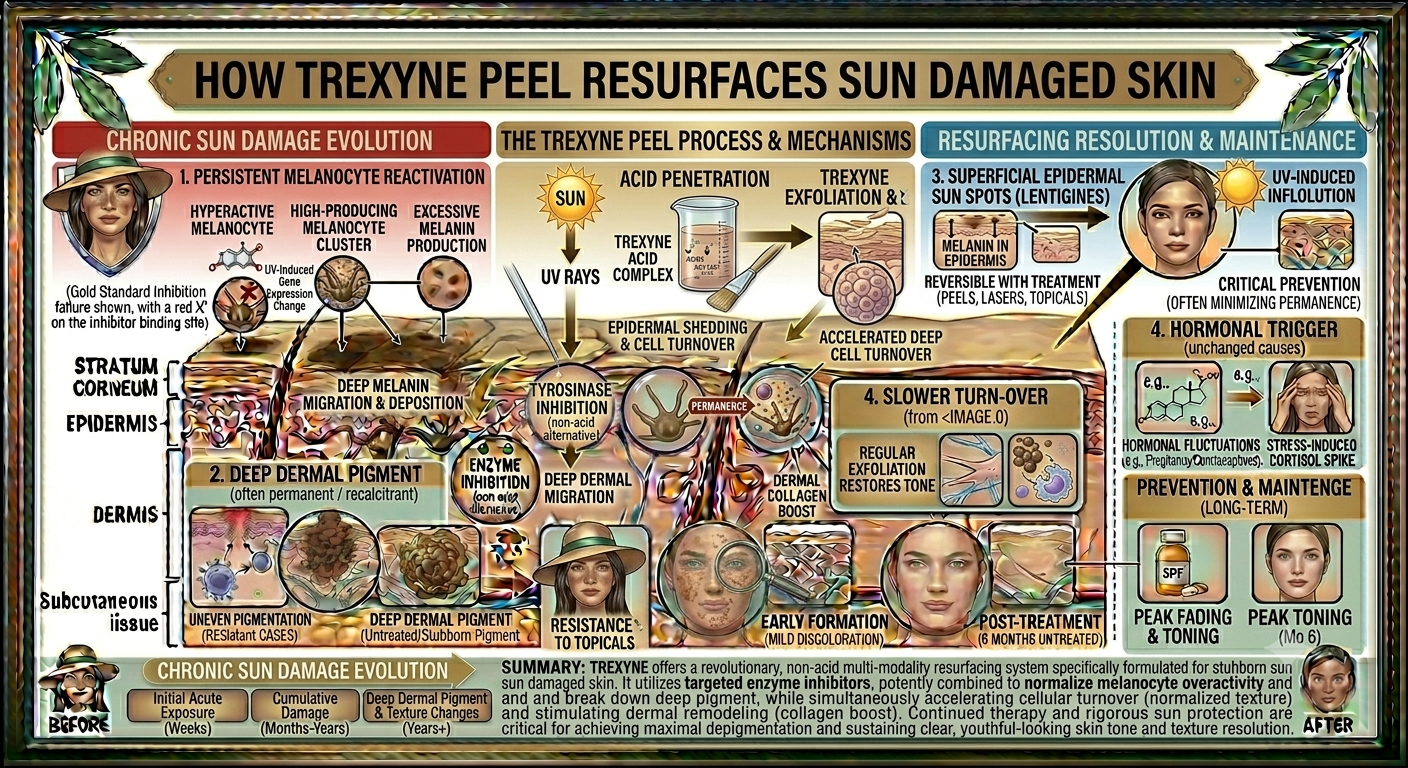
How Trexyne Peel Resurfaces Sun Damaged Skin
Trexyne Peel resurfaces sun damaged skin by using marine-algae spicules to create controlled micro-channels across the surface, encouraging the skin to renew itself more efficiently without relying on chemical exfoliation. Sun damage tends to leave skin looking rough, dull, and uneven in tone, often with thickened or leathery patches alongside visible pigmentation. Because Trexyne works through a purely mechanical mechanism, it offers a predictable way to support renewal in skin that has been affected by years of cumulative UV exposure. Stabilised Vitamin E is infused into the formula to support the skin’s recovery once the resurfacing process has taken place. For practitioners treating sun-damaged skin, the Trexyne Peel offers a structured, botanical approach that fits well within a longer-term treatment plan. This article looks at exactly how the mechanism works and what to expect across a course of treatment.
What Sun Damage Does to the Skin’s Surface
Before looking at how resurfacing helps, it is worth understanding what sun damage actually changes about the skin. Years of UV exposure affect more than just pigment. They alter the texture, thickness, and overall renewal capacity of the skin’s surface.
Uneven Pigmentation
Repeated UV exposure stimulates melanocytes unevenly, leading to patches of concentrated pigment alongside areas of normal tone. This is what creates the blotchy, inconsistent appearance often associated with sun-damaged skin.
Rougher, Thickened Texture
Cumulative sun exposure can cause the outer layers of skin to thicken and become rougher over time, as the skin attempts to protect itself from further damage. This often shows up as a leathery or coarse feel, particularly on areas like the cheeks, forehead, and the back of the hands.
Slower Surface Renewal
Sun damage also affects how efficiently the skin sheds old surface cells and replaces them with new ones. This slower renewal means pigmented and rough cells remain on the surface for longer, compounding the appearance of unevenness and dullness.
The Botanical Mechanism Behind Trexyne Peel’s Resurfacing Action
Trexyne Peel is built around marine-algae spicules, which create controlled micro-channels across the skin’s surface. This mechanical action is designed to disrupt the buildup of older, sun-affected surface cells and encourage the skin to begin renewing itself more actively.
Because this process works mechanically rather than chemically, it does not rely on acids or chemical penetration to achieve its resurfacing effect. The marine spicules themselves provide the resurfacing action, working alongside stabilised Vitamin E within a single, precision-built formula.
Why a Mechanical Mechanism Suits Sun-Damaged Skin
Sun-damaged skin can be unpredictable in how it reacts to treatment, particularly when chemical exfoliants are involved. Skin that has spent years exposed to UV light is often more sensitive and prone to inconsistent reactions, which is part of why some practitioners look for an alternative that avoids chemical exfoliation altogether.
Trexyne Peel is not a chemical peel. There are no acids involved, and the treatment does not work through chemical penetration of the skin. Instead, the mechanical micro-channelling created by the marine-algae spicules offers a way to support renewal in sun-damaged skin while keeping the treatment experience predictable for both practitioner and client.
The Role of Stabilised Vitamin E in Recovery After Resurfacing
Sun-damaged skin often needs additional support during its recovery phase, given the underlying changes to its texture and renewal capacity. This is where the stabilised Vitamin E infused into Trexyne Peel becomes particularly relevant. Tocopherol, the stabilised form of Vitamin E used in the formula, supports the skin’s recovery phase from the very first application.
This means the treatment is not limited to creating micro-channels and leaving the skin to recover unaided. The infused Vitamin E works alongside the mechanical mechanism to support the skin as it moves through its recovery process following each session.
The Tiered Protocol: Matching Intensity to Sun-Damaged Skin
Sun-damaged skin varies enormously between clients. Someone with mild sun spots and generally resilient skin presents very differently to someone with extensive, longstanding discolouration and a thickened, rough texture. Trexyne Peel’s tiered protocol allows the practitioner to match treatment intensity to each individual case rather than applying a single fixed approach.
Starting Conservatively With More Reactive Skin
For clients whose sun-damaged skin is also more reactive or sensitive, a lower tier allows the practitioner to begin gently and assess how the skin responds before considering a more intensive approach in later sessions.
Building Intensity Across a Course
As the skin’s tolerance becomes clearer over the course of treatment, the practitioner can adjust the tier of intensity used in subsequent sessions. This flexibility is particularly useful for sun-damaged skin, where the extent of underlying change is not always obvious at a first consultation.
This kind of staged approach also suits clients who are naturally cautious about trying a new resurfacing treatment. Starting at a lower tier and building up gives them the chance to see how their own skin responds, which tends to build confidence in the process and makes them more likely to commit to completing the full course.
What a Trexyne Peel Treatment Involves for Sun-Damaged Skin
A Trexyne Peel session begins with a thorough assessment of the client’s skin, including the extent and pattern of sun-induced discolouration and texture change. The practitioner then selects an appropriate tier of intensity and applies the treatment using the marine-algae spicule mechanism to begin the resurfacing process.
Each 30ml practitioner vial offers approximately six to eight full-face treatments, which allows clinics to plan effectively for clients undergoing a longer course aimed at addressing more established sun damage. You can browse the full shop to see how this fits alongside other professional treatment options available for skin affected by cumulative sun exposure.
Building a Course Around Cumulative Sun Damage
Because sun damage typically builds up over years rather than appearing from a single event, a single treatment session is rarely enough to create a meaningful, lasting change. Trexyne Peel is available as a single peel or as a course of 10 or 20 peels, which reflects this reality and allows a realistic plan to be structured around the client’s specific history of exposure.
A course-based approach also allows the renewal process to compound gradually across sessions, rather than relying on one intensive treatment to undo years of accumulated change. This tends to produce a more comfortable and predictable experience for the client as well.
Spacing sessions appropriately within a course also gives the skin time to complete its recovery phase between visits, which supports a steadier overall improvement rather than placing too much demand on the skin’s renewal capacity in a short space of time.
Who Trexyne Peel Is Designed For
Trexyne Peel is designed for use exclusively by trained aesthetic professionals. It is sold strictly to verified practitioners and clinics, which means it is never available for clients to use at home, regardless of how mild or extensive their sun damage might be. This professional-only approach ensures that intensity is properly assessed and matched to the individual rather than applied without appropriate training.
Clients presenting with sun spots, textural roughness, or general dullness linked to cumulative UV exposure may all be considered candidates, depending on the practitioner’s assessment during consultation.
Maintaining Results With Daily Sun Protection
Resurfacing treatment works best when paired with consistent daily sun protection afterwards. Freshly renewed skin can be more reactive to UV exposure in the days following a session, which makes protection particularly important throughout a course of treatment rather than only once it has finished.
Clients who maintain consistent sun protection between sessions tend to see more lasting improvement, since they are not continuing to add new sun-induced pigment activity while the skin works through its renewal process. Practitioners play an important role in reinforcing this message clearly at each appointment.
If you would like to discuss adding Trexyne Peel to your clinic’s approach to treating sun-damaged skin, get in touch through the contact us page. You can also learn more about the brand’s approach to professional skincare on the Trexyne homepage.
Conclusion
Sun damage changes more than just pigment. It affects the skin’s texture, thickness, and ability to renew itself efficiently, which is why resurfacing treatments tend to offer a more comprehensive approach than pigment-focused options alone. Trexyne Peel supports this renewal process through a precision botanical mechanism, using marine-algae spicules to create controlled micro-channels and stabilised Vitamin E to support the skin’s recovery phase. With a tiered protocol that allows intensity to be matched to the extent of sun damage, and a course-based structure built around repeated treatment, Trexyne Peel offers practitioners a predictable, mechanical way to support a brighter, more even-looking complexion in clients affected by cumulative sun exposure.
Frequently Asked Questions
Q: How does Trexyne Peel resurface sun damaged skin without chemical exfoliation?
Trexyne Peel works through a purely mechanical mechanism. Marine-algae spicules create controlled micro-channels in the skin’s surface, supporting renewal without the use of acids or chemical exfoliants.
Q: Can Trexyne Peel improve the rough texture caused by sun damage, not just pigmentation?
The mechanical resurfacing action created by the marine-algae spicules supports overall surface renewal, which may help address texture as well as the appearance of pigmentation in sun-affected skin.
Q: How many sessions of Trexyne Peel are usually needed for sun-damaged skin?
Because sun damage typically builds up over years, most practitioners recommend a course of treatments. Trexyne Peel is available as a single peel or as a course of 10 or 20 peels.
Q: Is Trexyne Peel suitable for skin that has become sensitive from years of sun exposure?
Trexyne Peel follows a tiered protocol, allowing a trained practitioner to match treatment intensity to skin that has become more reactive or sensitive due to cumulative sun exposure.
Q: What does stabilised Vitamin E do for sun-damaged skin during treatment?
The stabilised Vitamin E, in its tocopherol form, supports the skin’s recovery phase from the first application, helping the skin recover after the mechanical resurfacing process.
Q: Can I treat my own sun-damaged skin with Trexyne Peel at home?
No. Trexyne Peel is sold strictly to verified practitioners and clinics and is designed for use exclusively by trained aesthetic professionals.
Q: Why does Trexyne Peel avoid using acids for sun-damaged skin?
Trexyne Peel is not a chemical peel. It relies on a mechanical mechanism using marine-algae spicules rather than acids, which can offer a more predictable option for skin that has become sensitive from years of UV exposure.