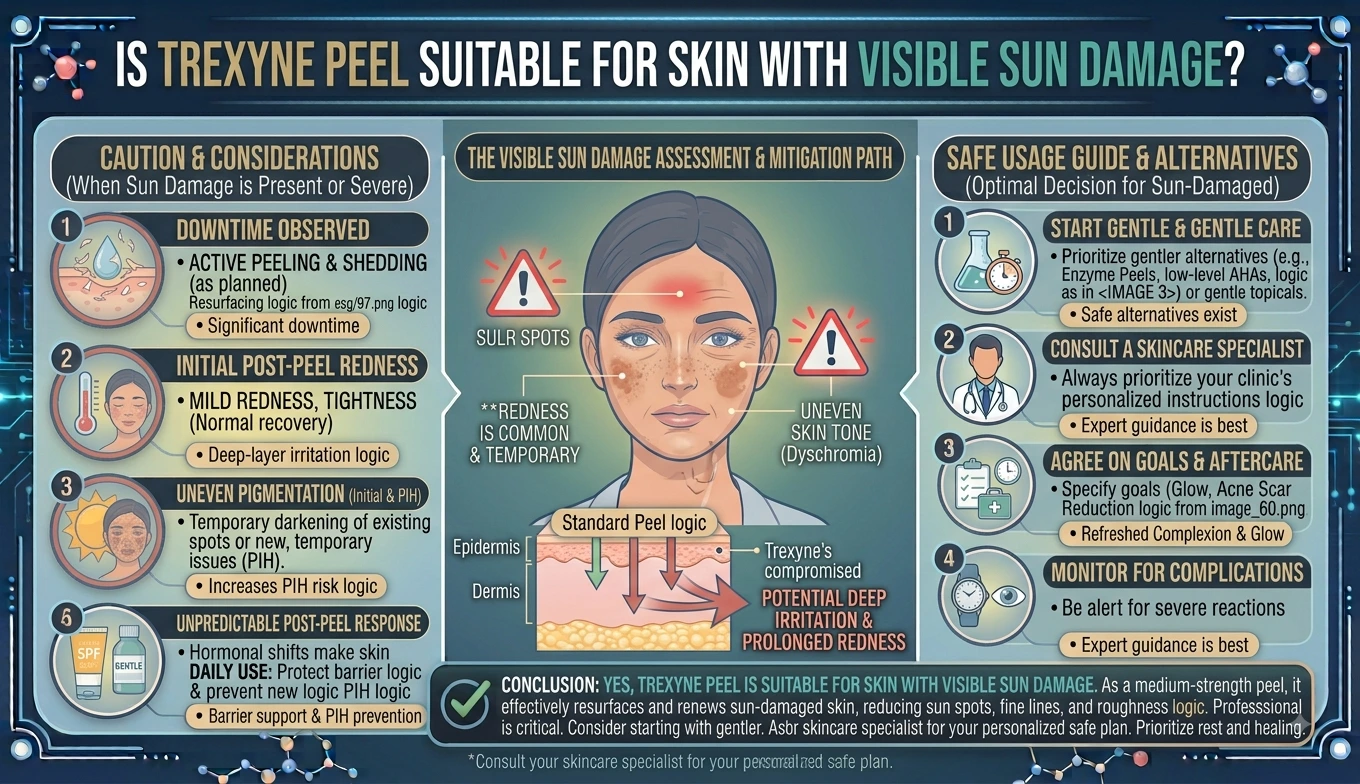
Is Trexyne Peel Suitable for Skin With Visible Sun Damage ?
Yes, the Trexyne Peel is highly suitable for skin showing visible sun damage, such as rough surface texture, premature dullness, and uneven skin tone. Solar exposure alters cellular turnover and causes old, damaged corneocytes to accumulate on the skin surface. Incorporating the Trexyne Peel Professional Algae Resurfacing Treatment
into a clinical plan allows trained aesthetic professionals to address these sun-induced surface changes through a purely mechanical mechanism. Powered by microscopic marine-algae spicules and supported by stabilised Vitamin E, this botanical treatment creates controlled micro-channels that encourage natural desquamation and rapid epidermal renewal. By removing dull surface layers without relying on chemical exfoliants, Trexyne Peel supports a smoother, refined, and brighter-looking complexion with predictable downtime.
Understanding the Physical Manifestations of Visible Sun Damage
Chronic exposure to ultraviolet radiation causes significant structural and visual alterations in the upper layers of the skin. Understanding how solar radiation affects surface biology helps aesthetic professionals select appropriate resurfacing modalities.
Surface Hyperkeratosis and Dullness
Ultraviolet rays disrupt the natural desquamation process, leading to an abnormal accumulation of dead skin cells known as surface hyperkeratosis. As these damaged corneocytes build up, the skin loses its natural light-reflecting properties. This structural buildup results in a persistent dull appearance, coarse surface texture, and dry patches that do not respond well to simple daily moisturizers.
Irregular Pigmentation and Textural Roughness
Solar exposure also triggers irregular melanin distribution and disrupts cellular alignment within the epidermis. Over time, this leads to visible tone inconsistencies, sun spots, and rough, weathered surface topography. To restore clarity, the skin requires targeted physical encouragement to shed these old, discoloured cells and allow fresh, healthy tissue to migrate to the surface.
The Mechanical Advantage of Marine Algae Spicules in Treating Sun-Damaged Skin
Addressing sun-damaged tissue requires an effective method that stimulates skin renewal without causing unnecessary thermal stress or barrier instability.
Physical Micro-Channeling Without Chemical Stress
The cornerstone of Trexyne technology lies in microscopic, needle-like structures derived naturally from marine algae. During application, a trained practitioner gently massages these botanical spicules into the skin, creating thousands of controlled micro-channels in the upper stratum corneum. This physical interaction dislodges stubborn, sun-damaged surface cells and initiates a natural self-repair response without relying on chemical exfoliants or altering skin pH.
Accelerating Natural Cellular Migration
By physically embedding within the upper skin layers, marine spicules signal the body to accelerate cellular movement. Lower epidermal layers respond by producing fresh keratinocytes that push older, sun-damaged surface cells outward. This physical shedding process occurs over three to six days, allowing practitioners to deliver thorough resurfacing with predictable downtime and minimal disruption to the client’s daily schedule.
The Soothing and Supportive Role of Stabilised Vitamin E
Sun-damaged skin often suffers from an impaired lipid barrier and elevated oxidative stress, making immediate barrier support during treatment essential.
Immediate Antioxidant Support for Solar-Stressed Tissue
To support fragile, photo-damaged skin from the moment of application, the Trexyne Peel formulation incorporates stabilised Vitamin E, or tocopherol. Tocopherol is a lipid-compatible antioxidant that integrates seamlessly into the intercellular matrix of the stratum corneum. Applied during the mechanical resurfacing phase, stabilised Vitamin E helps neutralize environmental free radicals and conditions the delicate lipid layer as the spicules engage the tissue.
Fortifying Barrier Integrity During Desquamation
By reinforcing the skin barrier during physical stimulation, stabilised Vitamin E reduces transepidermal water loss and maintains barrier stability throughout the recovery phase. This built-in support ensures that newly revealed epidermal cells remain well-hydrated, supple, and comfortable while old surface tissue sheds naturally. Practitioners seeking professional botanical supplies can browse our complete product offerings on the official Trexyne shop page
.
Tailoring Application Tiers for Various Degrees of Photo-Aging
Sun damage manifests differently across various skin types and age groups, requiring a flexible protocol framework that adapts to specific client needs.
Customising Intensity for Mild to Moderate Sun Damage
Aesthetic professionals can adjust treatment depth by selecting from Trexyne’s tiered protocol framework. For clients presenting with mild solar dullness or early textural roughness, a practitioner might choose a Level 1 or Level 2 protocol using lighter physical pressure. This gentler approach delivers effective surface refinement while maintaining maximum barrier comfort for delicate or reactive skin.
Advanced Resurfacing for Coarse, Weathered Texture
For mature clients with pronounced sun damage, thickened stratum corneum, or deep textural irregularities, practitioners can utilize a higher protocol tier. Applying firmer massage movements increases spicule engagement within the upper tissue layers, driving deeper mechanical exfoliation. This tailored versatility ensures every client receives the precise intensity required to revive weathered, sun-exposed skin safely.
Comparing Marine Spicule Resurfacing with Traditional Physical Abrasives
Understanding why marine spicule technology differs fundamentally from coarse retail scrubs highlights its superior suitability for sun-damaged complexions.
Precision Micro-Channeling Versus Surface Friction Trauma
Retail facial scrubs frequently use jagged seeds, crushed nutshells, or large mineral crystals that drag harshly across the face. These coarse materials create irregular micro-tears, damage fragile surface capillaries, and exacerbate underlying inflammation in sun-sensitive tissue. Micronized marine spicules, by contrast, are refined microscopic structures that penetrate cleanly into the upper stratum corneum without scraping or tearing the surface.
Internal Cellular Drive Versus External Surface Abrasion
Standard manual scrubs attempt to force dead cells off the surface through aggressive friction from the outside. Marine spicules work differently by embedding briefly within the upper epidermal layer to drive natural cell movement from within. As fresh tissue migrates upward, old sun-damaged cells release naturally, producing a smooth, uniform shedding phase without the tissue trauma associated with manual scrubbing.
Essential Post-Treatment Home Care for Sun-Damaged Skin
Guiding clients through appropriate home aftercare is vital for protecting newly revealed tissue and maintaining long-term treatment results.
Preserving Barrier Moisture During Recovery
Following a professional resurfacing session, clients must support their renewing skin with simple, non-irritating home care. For the first few days, cleansing should involve only lukewarm water and a mild, non-stripping cleanser. Clients should apply a rich, simple moisturizer regularly to replenish surface lipids, soothe initial warmth, and keep the shedding tissue well-hydrated.
Non-Negotiable Broad-Spectrum Photoprotection
Because newly exposed epidermal cells have lower natural melanin protection, strict daily sun defense is crucial following a resurfacing session. Clients must apply a generous layer of broad-spectrum sunscreen every morning throughout the recovery window and beyond. Consistent photoprotection prevents new UV-induced oxidative damage and ensures the newly refined complexion stays bright, smooth, and evenly balanced. Practitioners seeking technical protocol resources or clinical support can reach out via our official Trexyne contact page
.
Integrating Trexyne Peel into a Comprehensive Skin Renewal Plan
Achieving optimal clarity and smoothness on sun-damaged skin requires a structured, multi-session clinical approach combined with expert practitioner care.
Conducting a Thorough Pre-Treatment Assessment
Before commencing a resurfacing course, the aesthetic practitioner must perform a detailed skin analysis under bright light. Assessing baseline barrier health, evaluating the extent of surface hyperkeratosis, and reviewing the client’s sun exposure habits ensures they are a suitable candidate for mechanical resurfacing. Identifying potential sensitivities allows the practitioner to select the optimal starting protocol tier.
Structuring a Multi-Session Resurfacing Schedule
To systematically reduce surface roughness, clear persistent dullness, and improve overall skin clarity, practitioners usually recommend a series of three to six sessions. Spacing appointments three to four weeks apart gives the epidermal barrier ample time to recover and rebuild completely between visits. Over time, progressive mechanical resurfacing supports healthy cell turnover and restores a youthful, luminous quality to sun-exposed tissue. Learn more about our professional education and botanical formulations on the main Trexyne homepage
.
Conclusion
Trexyne Peel is an exceptionally suitable solution for skin presenting with visible sun damage, rough surface texture, and premature dullness. Sun-damaged tissue requires effective physical encouragement to shed accumulated, damaged corneocytes and reveal fresh, healthy skin beneath. By utilizing the purely mechanical action of marine-algae spicules, the Trexyne Peel Professional Algae Resurfacing Treatment
creates controlled micro-channels that accelerate natural cellular turnover without relying on chemical exfoliants. Infused with stabilised Vitamin E to condition the stratum corneum and fortify barrier stability, this botanical treatment offers predictable downtime and customizable tiered protocols. When combined with diligent post-treatment sun protection and consistent clinical care, Trexyne Peel helps clients restore a smoother, brighter, and more even-looking complexion safely and effectively.
Frequently Asked Questions
Q: Can Trexyne Peel help smooth out rough, leathery skin texture caused by years of sun exposure?
Yes, Trexyne Peel effectively refines rough surface texture caused by chronic sun exposure. The marine algae spicules physically dislodge accumulated dead skin cells and encourage rapid cellular movement, revealing a much smoother and softer surface underneath.
Q: How soon after a sun-damaged skin resurfacing session will a client begin shedding?
Physical shedding typically begins around day three following the treatment and completes by day six. The client will experience light, predictable flaking as the skin naturally expels the spicules alongside old, sun-damaged surface cells.
Q: Is Trexyne Peel safe to perform on sun-damaged skin during the summer months?
Yes, Trexyne Peel can be performed year-round because it works purely through a mechanical mechanism without chemical exfoliants. However, clients must commit to strict daily broad-spectrum sun protection and avoid direct sun exposure during the active recovery phase.
Q: How does stabilised Vitamin E benefit photo-damaged skin during the resurfacing process?
Stabilised Vitamin E delivers vital antioxidant support directly to solar-stressed tissue, conditioning the intercellular lipid matrix and reducing transepidermal water loss. This helps soothe initial warmth and maintains barrier comfort throughout the shedding cycle.
Q: Can clients buy Trexyne Peel for home application to treat sun spots on their face?
No, Trexyne Peel is strictly a professional-only product available exclusively to verified clinics and trained aesthetic practitioners. Safe application requires professional skin assessment, precise pressure control, and specialized protocol knowledge.
Q: How many Trexyne Peel sessions are needed to see visible improvements in sun-damaged skin?
While clients often notice smoother texture after just one session, practitioners generally recommend a series of three to six sessions spaced three to four weeks apart for significant, long-lasting improvements in tone and surface clarity.