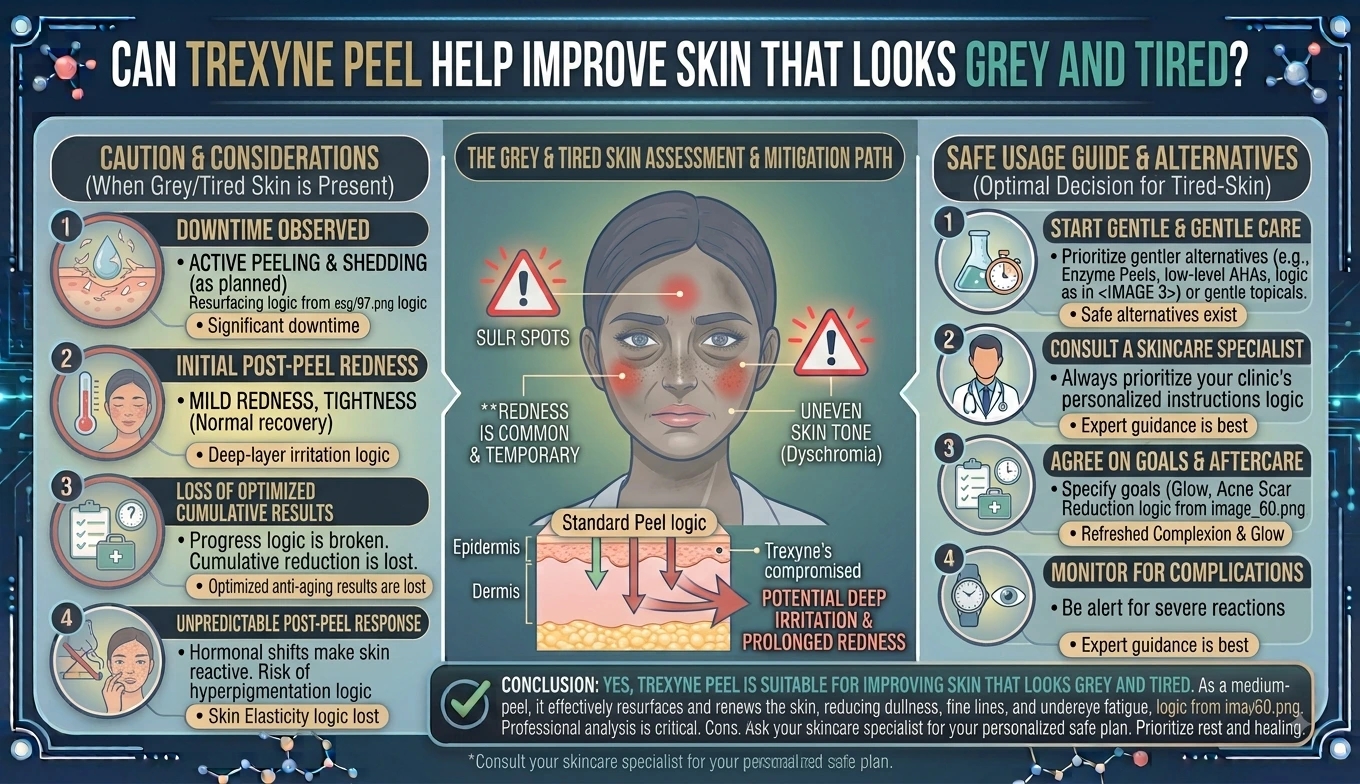
Can Trexyne Peel Help Improve Skin That Looks Grey and Tired ?
Yes, the Trexyne Peel can significantly help improve skin that looks grey and tired by physically removing accumulated dead surface cells and stimulating rapid cellular turnover. Grey, dull complexions occur when old corneocytes build up on the stratum corneum, scattering light unevenly and blocking natural surface radiance. Incorporating the Trexyne Peel Professional Algae Resurfacing Treatment
allows trained aesthetic professionals to revitalize tired skin through a purely mechanical mechanism. Driven by microscopic marine spicules and supported by stabilised Vitamin E, this botanical treatment creates controlled micro-channels that encourage natural desquamation. By releasing dull surface layers without chemical exfoliants, Trexyne Peel supports a fresh, refined, and brighter-looking complexion with predictable downtime.
The Biological Causes of a Grey and Tired Complexion
A dull, greyish appearance is one of the most common cosmetic complaints in modern aesthetic practice. Understanding the underlying biology of skin dullness helps practitioners select effective resurfacing methods.
Stratum Corneum Thickening and Light Scattering
Healthy skin reflects light uniformly because its uppermost layer, the stratum corneum, is smooth, hydrated, and evenly arranged. As cellular renewal slows due to age, environmental exposure, or lifestyle stress, dead skin cells fail to shed efficiently. These accumulated corneocytes create a rough, uneven surface texture that scatters light in multiple directions rather than bouncing it back cleanly. This scattered reflection makes the face appear flat, shadowed, and visually grey.
Impaired Microcirculation and Cellular Sluggishness
A tired complexion often reflects sluggish microcirculation within the upper dermal capillary network. Reduced blood flow limits the delivery of oxygen and essential nutrients to epidermal tissue while slowing down the natural removal of metabolic byproduct buildup. Combined with surface cell accumulation, this reduced microcirculation leaves the skin looking fatigued, sallow, and lacking its natural healthy warmth.
The Mechanical Solution Offered by Marine Algae Spicules
Restoring radiance to tired skin requires an effective mechanism that physically prompts cell movement without subjecting the barrier to chemical stress.
Microscopic Mechanical Channeling
The cornerstone of Trexyne technology lies in microscopic, needle-like spicules derived naturally from marine algae. During clinical application, a trained practitioner massages these botanical spicules gently into the skin. The spicules penetrate the upper stratum corneum to create thousands of controlled micro-channels purely through physical movement. This mechanical action dislodges stubborn, dead surface cells and signals lower epidermal layers to accelerate cell production without relying on chemical exfoliants or pH changes.
Driving Physical Desquamation
As marine spicules embed within the upper epidermal layer, the body recognizes them and initiates a natural repair response. Fresh keratinocytes migrate upward from the basal layer, gradually pushing the spicules and old, grey surface cells outward. This physical shedding process takes place over three to six days, allowing practitioners to clear away dullness and reveal fresh, vibrant tissue beneath.
The Calming and Conditioning Power of Stabilised Vitamin E
Revitalizing tired skin requires more than just removing surface buildup; it demands immediate conditioning and lipid barrier support during the resurfacing process.
Instant Antioxidant Conditioning
To support fatigued tissue from the very start of treatment, the Trexyne formulation combines marine spicules with stabilised Vitamin E, or tocopherol. Tocopherol is a lipid-compatible antioxidant that integrates smoothly into the intercellular matrix of the skin. Applied during the mechanical massage phase, stabilised Vitamin E conditions the delicate lipid layer, neutralizes environmental free radicals, and helps soothe initial surface warmth.
Reinforcing Barrier Stability During Recovery
By supporting the intercellular lipid matrix, stabilised Vitamin E minimizes transepidermal water loss during active desquamation. Preserving surface moisture ensures newly revealed epidermal cells stay supple, well-hydrated, and comfortable throughout the shedding window. This built-in barrier protection helps skin recover predictably, resulting in a smooth, glowing surface. Practitioners looking to source professional resurfacing formulations can browse options on our official Trexyne shop page
.
Tailoring Application Tiers for Sluggish Skin Types
Every client presents with varying degrees of skin fatigue and barrier resilience, making customizable treatment intensity vital for optimal clinical outcomes.
Level 1 Protocols for Early Fatigue and Delicate Skin
For clients experiencing early signs of dullness or those with naturally delicate complexions, practitioners can begin with a Level 1 protocol. This entry-level option utilizes light physical pressure and shorter contact duration to introduce marine spicules smoothly. It delivers gentle surface refinement, clears initial dullness, and boosts skin radiance while ensuring total comfort and minimal downtime.
Advanced Tiers for Persistent Roughness and Heavy Dullness
For clients with pronounced surface buildup, coarse texture, or persistent grey tones, practitioners can advance to higher protocol tiers. Applying firmer physical pressure increases spicule engagement in the upper tissue layers, driving deeper mechanical exfoliation and faster surface renewal. This tiered versatility enables aesthetic professionals to match treatment depth precisely to client expectations.
Comparing Marine Spicule Resurfacing to Traditional Physical Scrubs
Understanding why professional marine spicule technology differs fundamentally from retail facial scrubs highlights its superior safety and performance for tired skin.
Micro-Precision Channeling Versus Surface Friction Trauma
Retail facial scrubs frequently contain jagged seeds, crushed shells, or coarse mineral granules that scrape across the surface of the face. This uneven rubbing causes micro-tears in fragile tissue, damages surface capillaries, and leads to localized irritation without driving deep cellular movement. Micronized marine spicules are refined microscopic structures that enter the upper stratum corneum cleanly without dragging or tearing surface tissue.
Internal Cellular Drive Versus External Surface Abrasion
Standard manual scrubs attempt to force dead cells off the surface through aggressive external rubbing. Marine spicules work differently by embedding briefly within the upper epidermal layer to drive natural cell movement from within. As fresh tissue migrates upward, old grey surface cells release naturally, producing a smooth, uniform shedding phase without the tissue trauma associated with manual home scrubbing.
Essential Post-Treatment Home Care for Radiant Results
Proper aftercare is essential for preserving barrier stability, protecting fresh tissue, and maximizing the brightening benefits of a clinical resurfacing session.
Gentle Cleansing and Deep Moisture Replenishment
Following a professional session, clients must keep their daily home care simple, gentle, and deeply hydrating. For the first few days, cleansing should involve lukewarm water and a mild, non-foaming cleanser applied lightly with the hands. Clients should apply a simple, lipid-replenishing moisturizer regularly to keep the renewing tissue well-hydrated and facilitate smooth desquamation.
Non-Negotiable Broad-Spectrum Photoprotection
Newly revealed surface cells are naturally sensitive to ultraviolet light. Clients must apply a broad-spectrum sunscreen every morning throughout the recovery phase and beyond. Diligent photoprotection shields fresh skin from solar stress and prevents UV-induced oxidative damage, ensuring the complexion retains its luminous, refreshed appearance. Practitioners seeking technical protocol resources or clinical support can reach out via our official Trexyne contact page
.
Integrating Trexyne Peel into a Comprehensive Skin Renewal Plan
Achieving long-term skin brilliance requires a structured, multi-session clinical strategy combined with expert practitioner guidance.
Conducting a Pre-Treatment Visual Assessment
Before beginning a resurfacing treatment, the aesthetic professional must perform a detailed skin analysis under bright light. Assessing baseline barrier health, evaluating surface roughness, and reviewing lifestyle factors like sleep and environmental exposure ensures the client is a suitable candidate. Identifying individual needs allows the practitioner to select the ideal starting protocol tier.
Structuring a Multi-Session Resurfacing Schedule
To systematically eliminate persistent dullness, refine uneven texture, and maintain healthy cell turnover, practitioners usually recommend a series of three to six sessions. Spacing appointments three to four weeks apart gives the epidermal barrier ample time to rest and rebuild completely between visits. Over time, progressive mechanical resurfacing restores a youthful, vibrant, and healthy quality to tired tissue. Learn more about our professional education standards and botanical formulations on the main Trexyne homepage
.
Conclusion
Trexyne Peel is an exceptionally effective professional treatment for improving skin that looks grey, dull, and tired. A fatigued appearance stems from accumulated dead surface cells scattering light unevenly across the face. By utilizing the purely mechanical action of marine-algae spicules, the Trexyne Peel Professional Algae Resurfacing Treatment
creates controlled micro-channels that accelerate natural desquamation without relying on chemical exfoliants. Infused with stabilised Vitamin E to condition the stratum corneum and fortify barrier stability, this botanical treatment offers predictable downtime and customizable tiered protocols. When combined with appropriate practitioner technique and diligent post-treatment home care, Trexyne Peel helps clients clear surface dullness and reveal a smoother, brighter, and more even-looking complexion.
Frequently Asked Questions
Q: How quickly will my client see a reduction in dullness after a Trexyne Peel session?
Clients typically notice a visible improvement in skin brightness and smoothness once the natural shedding phase completes, which usually takes five to seven days post-treatment. Freshly revealed epidermal cells reflect light more evenly, restoring natural radiance.
Q: Can Trexyne Peel help skin that looks tired due to lack of sleep and urban stress?
Yes, Trexyne Peel effectively addresses dullness caused by environmental stress and lifestyle factors. By physically removing accumulated surface dead cells and driving rapid cell renewal, it clears away the grey, sallow layer to reveal a refreshed complexion.
Q: Will marine algae spicules cause noticeable peeling on a tired complexion?
Clients will experience light, predictable flaking or shedding starting around day three post-treatment. This physical shedding is a normal part of the renewal process as old surface cells release to make way for smooth, fresh tissue beneath.
Q: How does stabilised Vitamin E support tired skin during the mechanical resurfacing process?
Stabilised Vitamin E provides immediate antioxidant conditioning and lipid support to the stratum corneum. It soothes initial surface warmth, reduces transepidermal water loss, and maintains barrier stability throughout the active shedding window.
Q: Is Trexyne Peel available for clients to buy for home use to refresh tired skin?
No, Trexyne Peel is strictly a professional-only product available exclusively to trained aesthetic practitioners and verified clinics. Safe application requires professional skin assessment, precise pressure control, and expert protocol knowledge.
Q: How many sessions are needed to transform a dull, grey complexion into a radiant one?
While clients often enjoy a brighter appearance after a single session, practitioners generally recommend a series of three to six sessions spaced three to four weeks apart to achieve progressive texture refinement and long-lasting surface brilliance.