Why Am I Getting Pigmentation on My Face Suddenly?
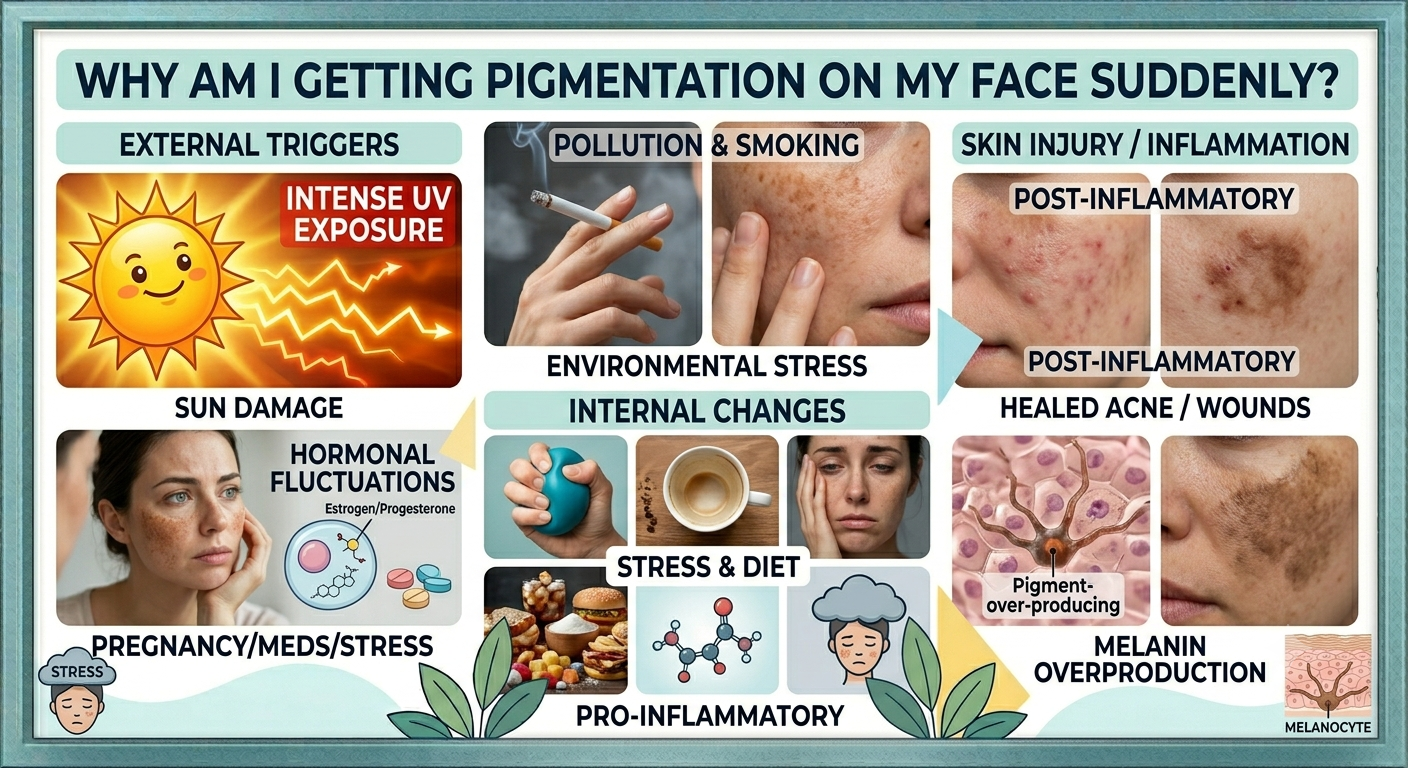
Waking up one morning to find new dark patches or spots on your face that were not there before can be alarming. Sudden pigmentation is one of the most common concerns that brings people to skincare professionals, and the good news is that it almost always has a clear explanation. Pigmentation appears when the skin’s melanin-producing cells are triggered into overdrive, and several factors can set this off quickly and visibly. From hormonal shifts and new medications to stress and sun exposure, sudden facial pigmentation is a signal that something in your body or environment has changed. This article explains the most likely causes and outlines how treatments like the Trexyne Peel can help address the discoloration once it appears.
What Does Sudden Pigmentation Actually Mean?
The word sudden is relative when it comes to skin. Some pigmentation develops so gradually that you only notice it once it has reached a visible threshold. Other times, a new trigger, whether hormonal, environmental, or medication-related, can cause melanin production to spike noticeably over a matter of weeks.
In either case, the underlying mechanism is the same. Melanocytes, the pigment-producing cells in the skin, receive a signal to increase melanin output. The excess melanin gets deposited into surrounding skin cells and migrates to the surface as the skin renews itself, appearing as a dark patch, spot, or area of uneven tone.
Facial skin is particularly sensitive to these triggers because it is constantly exposed to sunlight, affected by hormonal circulation, and frequently disrupted by skincare products and environmental stressors. When people describe pigmentation appearing suddenly on their face, one or more of the triggers below is usually responsible.
1. A Recent Hormonal Change
Hormonal fluctuations are one of the most common reasons for sudden facial pigmentation, especially in women. Estrogen and progesterone directly stimulate melanocyte activity, which means any significant hormonal shift can quickly cause new dark patches to appear.
Pregnancy
Pregnancy is one of the most well-known hormonal triggers for facial pigmentation. The condition it causes, called melasma, can appear as large brown or gray-brown patches across the forehead, cheeks, upper lip, and bridge of the nose. For some women, this develops rapidly during the first or second trimester.
Starting or Changing Contraception
Beginning oral contraceptive pills, switching brands, or starting a hormonal intrauterine device can all prompt new pigmentation to appear within weeks. The estrogen and progesterone in these medications stimulate the same pathways that cause pregnancy-related melasma.
Perimenopause and Menopause
Hormonal fluctuations during perimenopause can also cause pigmentation to appear or worsen. As estrogen levels change, melanocyte sensitivity can shift unpredictably, resulting in new spots or an overall uneven tone developing more quickly than before.
2. A New Medication
Many people do not realize that medications can be a direct cause of sudden facial pigmentation. Certain drugs increase the skin’s sensitivity to UV radiation, a property called photosensitivity. Even brief exposure to sunlight while taking these medications can trigger a disproportionate melanin response.
Medications commonly linked to sudden pigmentation include:
- Tetracycline-based antibiotics, including doxycycline, frequently prescribed for acne
- Nonsteroidal anti-inflammatory drugs taken regularly
- Antimalarial medications such as hydroxychloroquine
- Some antifungal and antiepileptic drugs
- Certain chemotherapy agents
If new facial pigmentation appeared shortly after starting a medication, this connection is worth discussing with your prescribing doctor. In some cases, an alternative can be considered, and in all cases, strict sun protection is essential while taking photosensitizing drugs.
3. Increased Sun Exposure
A common pattern in sudden facial pigmentation is a period of increased sun exposure that the skin was not adequately protected from. This might be a summer holiday, a seasonal change in activity, or simply a period of forgetting to apply sunscreen consistently.
UV radiation activates tyrosinase, the enzyme that drives melanin production. The response can be surprisingly rapid. A week or two of unprotected sun exposure in high UV conditions can cause new sunspots to appear on the cheeks, nose, and forehead, especially in skin that is already primed to respond from years of cumulative UV damage.
Even incidental sun exposure, such as driving, sitting near windows, or spending time outdoors in overcast conditions, contributes over time. People who notice suddenly worsening pigmentation often find that their SPF habits have slipped or that they have been spending more time in direct light without realizing the impact.
4. A Recent Breakout or Skin Inflammation
Post-inflammatory hyperpigmentation can appear to develop overnight following a significant breakout. When a pimple becomes deeply inflamed, the surrounding melanocytes produce extra melanin as part of the healing response. By the time the pimple has resolved, a dark mark is already forming in its place.
This is one of the fastest ways for new facial pigmentation to appear, and it is especially common in people with medium to dark skin tones whose melanocytes are inherently more reactive to inflammation. A single bad breakout across the cheeks or chin can leave behind multiple new marks that collectively change the appearance of the skin within a few weeks.
Other inflammatory triggers beyond acne, including allergic reactions, contact dermatitis from a new skincare product, or a skin condition such as eczema flaring on the face, can also produce sudden post-inflammatory pigmentation in the affected areas.
5. A New Skincare Product Causing Irritation
Introducing a new skincare product, particularly one containing strong active ingredients, is a surprisingly common trigger for sudden facial pigmentation. Retinoids, AHAs, BHAs, vitamin C at high concentrations, and physical scrubs can all cause irritation if introduced too quickly or used on sensitive skin.
When the skin becomes irritated or damaged, the inflammatory cascade that follows can stimulate melanocytes. This is another form of post-inflammatory hyperpigmentation, and it can be particularly frustrating because it develops in response to products that were meant to improve the skin.
The lesson is that new active ingredients should be introduced gradually and that any product causing visible redness, peeling, or persistent irritation should be paused until the skin has calmed. Using a new product before sun exposure, or without adequate SPF, compounds the risk significantly.
6. Stress and Its Effect on the Skin
Chronic stress affects the skin through multiple biological pathways. Elevated cortisol, the body’s primary stress hormone, can influence melanocyte-stimulating hormone levels, which in turn affects melanin production. Stress also compromises the skin barrier and can trigger or worsen inflammatory conditions like acne and eczema, creating additional opportunities for post-inflammatory pigmentation.
People going through periods of significant stress often notice that their skin changes in multiple ways at once, including the appearance of new dark spots or a general dulling and unevenness of tone. While stress management alone will not reverse existing pigmentation, reducing chronic stress is a meaningful part of an overall skin health strategy.
7. An Underlying Health Change
In some cases, sudden pigmentation on the face is a signal of an internal change worth investigating. Thyroid disorders, particularly hypothyroidism and hyperthyroidism, can affect melanin regulation and cause new pigmentation to appear. Adrenal conditions such as Addison’s disease can cause widespread skin darkening.
Nutritional deficiencies, particularly in vitamin B12, folic acid, and vitamin D, have also been associated with changes in skin pigmentation. If you are developing new facial pigmentation without an obvious external trigger, and especially if it is accompanied by other symptoms, it is worth consulting a doctor to rule out an underlying cause before pursuing cosmetic treatment.
When Should You Seek Professional Help?
Most sudden facial pigmentation is cosmetic in nature and responds well to professional treatment. It is worth seeking a professional assessment if:
- The pigmentation appeared rapidly and covers a noticeable area
- You cannot identify an obvious trigger such as sun exposure or a new medication
- The discoloration is spreading or deepening over time
- Topical products have not produced improvement after several months
- The pigmentation is accompanied by other physical symptoms
A professional pigmentation treatment provides a level of assessment and intervention that goes beyond what topical products can offer. A trained practitioner can identify the type of pigmentation, assess its likely cause, and recommend the most appropriate course of action for your specific skin.
How Trexyne Peel Can Address Sudden Facial Pigmentation
Once the trigger for your sudden pigmentation has been identified and managed where possible, the next step is addressing the visible discoloration. The Trexyne Peel is a professionally applied chemical peel that works by removing the outer layers of the skin where excess melanin is concentrated. This controlled exfoliation clears pigmented surface cells and stimulates the production of fresh, more evenly toned skin beneath.
For recent pigmentation, particularly post-inflammatory marks from a breakout or new sun damage, the skin’s melanin deposits are typically still in the upper epidermis and respond quickly to professional exfoliation. Starting treatment early, before the pigmentation becomes deeply established, generally produces faster and more complete results.
A series of sessions spaced several weeks apart, combined with daily SPF and a targeted home routine, allows the skin to progressively clear the discoloration while being protected from new triggers. Your practitioner will design a plan specific to the type and extent of your pigmentation.
Protecting Your Skin After Sudden Pigmentation Appears
Regardless of the cause, there are steps you can take immediately to prevent the existing pigmentation from deepening and to reduce the risk of new discoloration forming.
Apply daily SPF: Broad-spectrum sunscreen of SPF 30 or higher every morning is the most important immediate action. UV exposure will darken existing pigmentation and stimulate new melanin production in areas that are already sensitized.
Pause any irritating products: If a new skincare product may have contributed, stop using it and give the skin time to recover before reintroducing anything active.
Review your medications: If you suspect a medication is contributing, speak with your doctor before making any changes to your prescription.
Avoid picking or squeezing: Any trauma to the skin, including picking at spots or using harsh scrubbing motions, can deepen existing pigmentation and create new inflammatory marks.
Conclusion
Sudden facial pigmentation almost always has a reason behind it. Hormonal changes, new medications, increased sun exposure, a recent breakout, skincare irritation, stress, or an underlying health change are all common triggers. Identifying which one applies to your situation is the first step toward an effective response.
For those who are ready to address the visible discoloration directly, advanced skin peel solutions like the Trexyne Peel offer a professionally guided path to clearer, more even skin. Combined with consistent sun protection and a plan to manage the underlying trigger, this approach gives you the best chance of meaningful and lasting improvement.
Frequently Asked Questions
1. Why is pigmentation suddenly appearing on my face?
Sudden facial pigmentation typically results from a recent change that has triggered excess melanin production in the skin. The most common causes are hormonal shifts from pregnancy, contraception, or perimenopause, increased or unprotected sun exposure, a new medication that sensitizes the skin to UV light, a recent breakout causing post-inflammatory marks, or irritation from a new skincare product. Identifying which of these applies to your situation helps direct the most effective response.
2. Can stress cause sudden pigmentation on the face?
Yes, indirectly. Chronic stress elevates cortisol and can influence melanin-regulating hormones, contributing to new pigmentation over time. It also triggers or worsens inflammatory skin conditions like acne, which create post-inflammatory dark marks. Stress rarely causes pigmentation in isolation, but it is a meaningful contributing factor, especially when combined with other triggers such as sun exposure or hormonal fluctuations.
3. Is sudden facial pigmentation a sign of something serious?
In the vast majority of cases, sudden facial pigmentation is cosmetic and not a sign of a medical problem. However, if pigmentation appears rapidly without an obvious cause, spreads quickly, or is accompanied by other symptoms such as fatigue, weight changes, or unusual skin changes elsewhere on the body, it is worth consulting a doctor to rule out an underlying health condition such as a thyroid disorder or nutritional deficiency.
4. Can a new skincare product cause sudden pigmentation?
Yes. Introducing strong active ingredients too quickly, such as high-concentration retinoids, AHAs, or physical exfoliants, can irritate the skin and trigger post-inflammatory hyperpigmentation as a result of the inflammation. Using these products without adequate sun protection increases the risk further. If a new product caused visible irritation followed by darkening, stop using it and consult a skincare professional before reintroducing actives.
5. How quickly can the Trexyne Peel improve sudden facial pigmentation?
For recent pigmentation that is still in the upper layers of the skin, results from Trexyne Peel can be noticeable within one to two weeks of the first session, once the initial shedding phase is complete. Early treatment, before the pigmentation becomes deeply established, generally produces faster and more complete improvement. A series of sessions builds on each result progressively.
6. Will the pigmentation come back after treatment?
If the original trigger is still present, pigmentation can return. For example, if hormonal changes are ongoing or sun protection is inconsistent, new discoloration will continue to form. Managing the underlying cause alongside professional treatment is essential. With consistent daily SPF, appropriate maintenance sessions, and a targeted skincare routine, results can be sustained long term.
7. Should I see a doctor or a skincare professional for sudden facial pigmentation?
If you have a clear external trigger such as sun exposure, a recent breakout, or a new skincare product, a qualified skincare professional or aesthetic practitioner is the right starting point. They can assess the type of pigmentation and recommend appropriate treatment including options like the Trexyne Peel. If you suspect a medication or underlying health condition is involved, it is worth speaking to your doctor first to address the root cause before beginning cosmetic treatment.