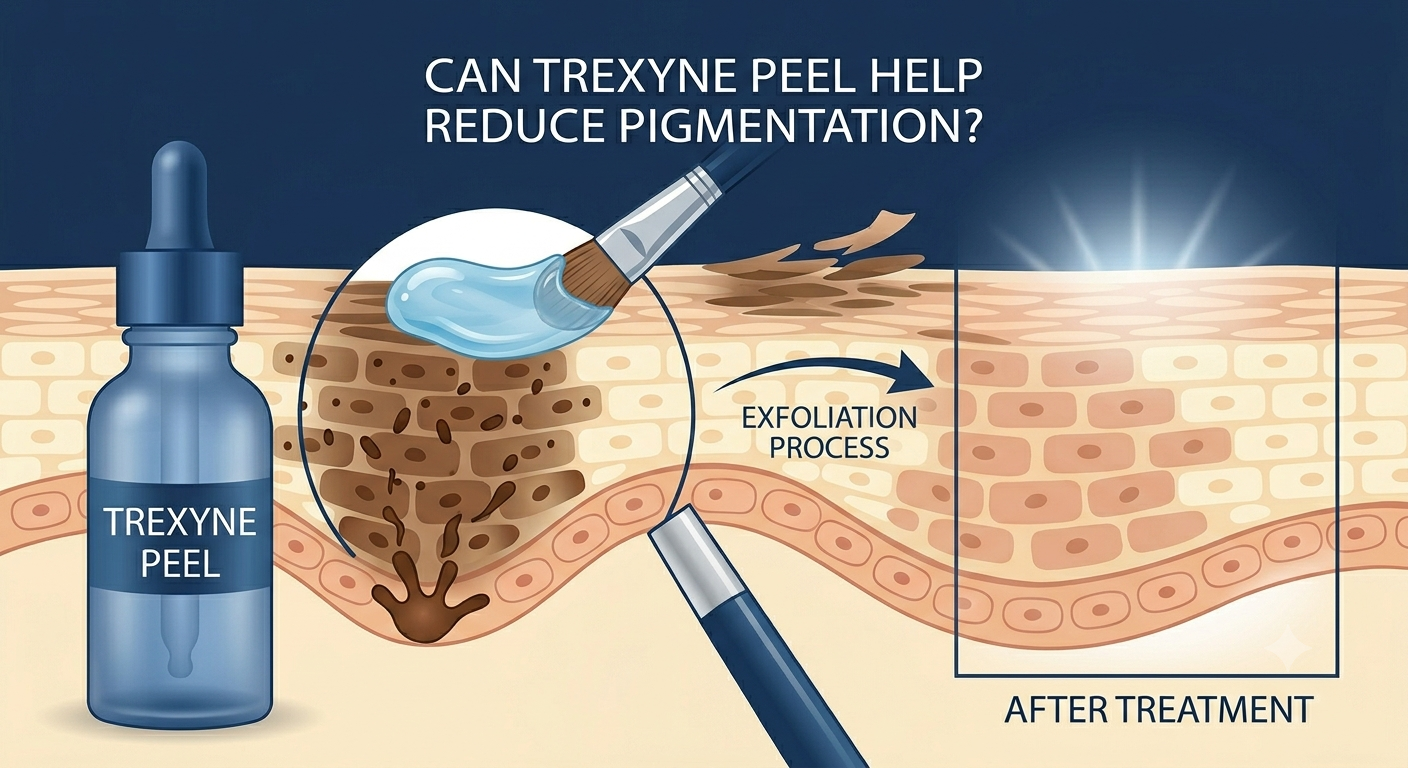
Can Trexyne Peel Help Reduce Pigmentation?
If you have been living with dark spots, uneven skin tone, or stubborn pigmentation that topical products have failed to shift, you may be wondering whether a professional treatment like a chemical peel is worth considering. The short answer is yes. Professionally administered chemical peels, including the Trexyne Peel, are among the most effective clinic-based options for reducing visible pigmentation. They work by removing pigmented surface cells and accelerating the skin’s natural renewal process, revealing a fresher, more even tone beneath. This article explains how Trexyne Peel helps with pigmentation, what types of discoloration it is suited for, and what you can realistically expect from a course of treatment.
Understanding Pigmentation and Why It Persists
Before looking at how Trexyne Peel works, it helps to understand why pigmentation is so persistent in the first place. Pigmentation develops when melanocytes, the cells that produce the skin’s coloring pigment called melanin, overproduce in certain areas in response to triggers such as UV exposure, inflammation, hormonal changes, or aging.
The excess melanin gets deposited into surrounding skin cells and carried to the surface as part of the skin’s normal cycle of renewal. The problem is that this process is slow. The skin takes four to six weeks to fully renew its surface layer, and that timeframe extends significantly in older skin. If the trigger for excess melanin production is ongoing, new discoloration forms faster than the old pigment can clear.
Surface-level discoloration from fresh post-acne marks may fade on its own over several months. But established sunspots, melasma, and deeper or older hyperpigmentation rarely clear without active intervention. This is where professional exfoliation treatments make a meaningful difference.
What Is Trexyne Peel and How Does It Work?
The Trexyne Peel is a professional-grade chemical peel applied in a clinical or aesthetic setting by a trained skincare practitioner. It belongs to the family of treatments that use active acidic compounds to dissolve the structural bonds between dead and damaged skin cells, allowing the outermost skin layer to shed in a controlled and predictable way.
What makes this treatment effective for pigmentation is that it works at a level that topical products simply cannot reach. Over-the-counter brightening products contain active ingredients at low concentrations, which limits how deeply they penetrate. The Trexyne Peel uses professionally formulated concentrations that are calibrated by the practitioner based on the patient’s skin type, tone, and degree of pigmentation. This allows the treatment to address discoloration more directly and with greater precision.
The peel is not a one-size-fits-all procedure. Each session is tailored to the individual, and the treatment series is structured progressively so that the skin is challenged at an appropriate level without being over-treated. This customization is what separates a professional peel from at-home options and is central to its effectiveness.
The Mechanisms Behind Trexyne Peel’s Effect on Pigmentation
Trexyne Peel helps reduce pigmentation through several connected processes that together create meaningful and lasting improvement.
Removal of Pigmented Surface Cells
The most direct mechanism is the physical removal of the skin’s outermost layer, where much of the visible pigmentation is stored. When the peel solution is applied, it loosens the cohesion between cells in the epidermis, triggering controlled shedding. As the skin peels, the discolored cells that contain concentrated melanin are cleared away, revealing the fresher, more uniformly toned layer beneath.
Stimulation of Cell Renewal
Chemical exfoliation sends a signal to the deeper layers of the skin that surface renewal needs to accelerate. This shortens the skin’s natural turnover cycle and brings new cells to the surface more quickly. Fresh cells that have not been exposed to the melanin-producing triggers produce a cleaner, more even tone as they rise to the surface.
Reduction in Melanin Concentration
Over a series of sessions, the cumulative effect of removing pigmented cells and replacing them with new ones gradually reduces the overall concentration of melanin in the treated areas. Dark spots become lighter and less defined, and the general tone of the skin becomes more consistent. This is why results improve progressively across a treatment series rather than appearing all at once after a single session.
Improvement in Skin Texture and Radiance
Beyond the direct effect on pigmentation, Trexyne Peel also removes the layer of dull, rough surface cells that can make the complexion look tired and uneven. The improved texture after peeling contributes to an overall brightening effect that goes beyond spot reduction, giving the skin a more refreshed and healthy appearance.
Which Types of Pigmentation Does Trexyne Peel Treat?
Trexyne Peel is effective across a range of pigmentation types, though the degree of improvement and the number of sessions required will vary depending on the specific condition.
Post-Inflammatory Hyperpigmentation
Dark marks left behind by acne, minor skin injuries, or inflammatory skin conditions are among the most responsive to chemical peeling. Post-inflammatory pigmentation tends to sit in the upper epidermis, making it accessible to the exfoliation process. The sooner treatment begins after the marks form, the faster and more complete the results tend to be.
Sunspots and Solar Lentigines
UV-induced spots are concentrated in the epidermis and respond well to controlled chemical exfoliation. Trexyne Peel removes the surface cells where this type of pigmentation resides, and with proper sun protection between sessions, the improvement is sustained and progressive.
Melasma
Melasma requires a more nuanced approach because it is driven by ongoing hormonal activity and can affect deeper layers of the skin. Chemical peeling can reduce its visibility, but it is most effective when used as part of a broader strategy that includes hormonal management and rigorous sun protection. A practitioner experienced with melasma will structure the treatment carefully to avoid aggravating the condition.
Age Spots and Diffuse Uneven Tone
The general unevenness and age-related spotting that develops over decades of sun exposure also responds to professional peeling. These conditions may take more sessions to address than fresher marks, but consistent treatment produces clear results over time.
How Trexyne Peel Compares to Over-the-Counter Pigmentation Products
This is one of the most practical questions patients ask, and the comparison is straightforward.
Over-the-counter products work by delivering low concentrations of active ingredients to the skin surface. They can modestly slow melanin production and provide some degree of surface brightening over many months of consistent use. For mild or very recent pigmentation, they may be sufficient. For established dark spots, patchy tone, or conditions like melasma, they rarely deliver the results patients are hoping for.
Trexyne Peel works differently. Rather than trying to slow melanin production from the outside, it physically removes the layers of skin where the discoloration is stored and forces the skin to produce new, cleaner cells at a faster rate. This is a structural intervention, not just a surface treatment, and the difference in outcomes reflects that.
Patients who have spent months using vitamin C serums, niacinamide products, and brightening creams without meaningful improvement typically see visible change within the first one to two sessions of a professional peel series. The results are measurably different.
What to Expect Before, During, and After Treatment
Before Treatment
A thorough consultation and skin assessment comes before any treatment session. Your practitioner will evaluate your skin type, the type and depth of your pigmentation, your medical history, and any factors that might affect how your skin responds. This step is essential for determining the appropriate protocol and identifying any contraindications such as active breakouts, recent sun exposure, or use of sensitizing medications.
During Treatment
The skin is cleansed and prepared before the peel solution is applied. The practitioner monitors the skin’s response throughout, adjusting timing and layering as needed. You may feel a mild tingling or warmth during the application, which is normal. The session typically takes between 30 and 60 minutes depending on the protocol used.
After Treatment
The skin will appear pink or slightly flushed immediately after the peel. Over the following days, the surface will begin to shed, which is the exfoliation process doing its work. This peeling phase typically lasts five to ten days depending on the depth of the treatment. During this period, a gentle cleanser, hydrating moisturizer, and high-SPF sunscreen are the only products the skin needs.
Avoid picking at peeling skin. Allow it to shed naturally to protect the new cells forming beneath and reduce the risk of post-treatment irritation.
Who Is a Suitable Candidate for Trexyne Peel?
Trexyne Peel is appropriate for a wide range of patients, but a professional assessment is always required before treatment begins.
Good candidates generally include:
- Adults with visible sunspots, age spots, or solar damage on the face or body
- Those with post-acne dark marks that have not responded to topical treatment
- People with mild to moderate melasma who want professional support in managing the condition
- Individuals with diffuse uneven skin tone and dullness related to aging or cumulative sun exposure
- Those who want to achieve faster, more visible results than topical products alone can deliver
Certain factors may require the practitioner to delay or modify the treatment. These include active inflammatory skin conditions, recent use of isotretinoin, significant recent sun exposure, and pregnancy. A detailed consultation will identify any such factors and ensure the treatment plan is safe and appropriate.
Results, Maintenance, and the Role of Sun Protection
Most patients begin to see visible improvement in their pigmentation within two weeks of their first session, once the initial peeling phase is complete. The skin appears cleaner, brighter, and more even in tone. With each subsequent treatment, the results build and become more pronounced.
A typical initial series involves multiple sessions spaced several weeks apart, allowing the skin to fully recover between appointments. Your practitioner will design the schedule based on your skin’s response and your treatment goals.
After completing the initial series, periodic maintenance sessions help sustain the improvement and prevent significant pigmentation from rebuilding. The professional pigmentation treatment plan your practitioner designs will include guidance on the frequency of maintenance sessions appropriate for your skin.
Sun protection is the single most important factor in protecting and prolonging results. UV exposure is the most common driver of pigmentation, and without daily broad-spectrum SPF 30 or higher, new discoloration will begin to develop and the improvements from treatment will fade more quickly. Sun protection is not optional; it is a core part of the treatment plan, not an afterthought.
Combining Trexyne Peel With Other Pigmentation Strategies
For patients with complex or stubborn pigmentation, Trexyne Peel often works best as part of a multi-layered approach. A well-designed plan might include:
- A daily skincare routine featuring SPF, vitamin C, and a targeted brightening ingredient such as niacinamide or azelaic acid
- Trexyne Peel sessions structured in a series with appropriate spacing
- Hormonal management for patients whose pigmentation is driven by estrogen or progesterone
- Periodic maintenance peels after the initial series to sustain results
Your practitioner will advise on which additional strategies are appropriate for your specific situation. A combined approach almost always outperforms any single intervention on its own.
Conclusion
The answer to whether Trexyne Peel can help reduce pigmentation is a clear yes, with the results depending on the type and severity of the discoloration, the number of sessions completed, and the commitment to sun protection and aftercare. By removing pigmented surface cells, accelerating skin renewal, and progressively reducing melanin concentration in treated areas, this professional treatment achieves outcomes that topical products alone are rarely able to deliver.
If you have been dealing with dark spots, uneven skin tone, or stubborn discoloration and want a clinical, results-driven approach, advanced skin peel solutions like Trexyne Peel, administered by a qualified practitioner, represent one of the most effective paths available to a clearer and more even complexion.
Frequently Asked Questions
1. Can Trexyne Peel really reduce pigmentation?
Yes. Trexyne Peel is a professionally formulated chemical peel that removes pigmented surface cells through controlled exfoliation and stimulates the skin to renew itself at a faster rate. Over a series of sessions, this progressively reduces the appearance of dark spots, uneven tone, and skin discoloration. Results are more significant and faster than those achievable with topical products alone.
2. How soon will I see results after a Trexyne Peel for pigmentation?
Most patients notice visible improvement in their skin tone within one to two weeks of their first session, once the initial shedding phase is complete. Results build with each subsequent treatment, with more significant improvement becoming apparent after two to four sessions. The full benefit of a complete treatment series typically takes several weeks to months to develop, depending on the severity of the pigmentation.
3. Is Trexyne Peel better than using a brightening serum for pigmentation?
For established or moderate to significant pigmentation, yes. Brightening serums work gradually at the skin’s surface and are limited by their lower concentration of active ingredients. Trexyne Peel penetrates more deeply, physically removes pigmented cells, and accelerates renewal in a way that topical products cannot replicate. Many patients who have used brightening products for months without meaningful results see visible change within a few sessions of Trexyne Peel.
4. Does Trexyne Peel work for melasma?
Trexyne Peel can reduce the visible appearance of melasma, but this condition requires a careful approach because it is driven by ongoing hormonal activity and UV exposure. The peel works best for melasma as part of a broader management plan that includes sun protection, potentially topical brightening agents, and hormonal management where applicable. An experienced practitioner will structure the treatment with melasma’s specific characteristics in mind.
5. How many Trexyne Peel sessions do I need to reduce pigmentation?
The number of sessions depends on the type, depth, and severity of the pigmentation. Post-acne marks and mild sunspots may show significant improvement in three to four sessions. More established discoloration, age spots, or melasma may require five or more sessions in the initial series, followed by periodic maintenance. Your practitioner will design a plan specific to your needs after assessing your skin.
6. What happens if I skip sun protection after a Trexyne Peel?
Skipping sun protection after a chemical peel significantly increases the risk of new pigmentation developing. The skin is more sensitive to UV radiation following treatment, and even brief unprotected exposure can stimulate melanocyte activity and produce new dark spots. Worse, this can happen over the freshly treated skin, undoing the improvement from the peel. Daily broad-spectrum SPF 30 or higher is a non-negotiable part of any treatment plan involving Trexyne Peel.
7. Can Trexyne Peel be used to treat pigmentation on the neck and chest as well as the face?
Yes, chemical peels can be applied to areas beyond the face, including the neck, chest, and hands, where sun-induced pigmentation commonly develops. The protocol may be adjusted for these areas based on skin thickness and sensitivity. Your practitioner will advise on the most appropriate approach for each area you want to address and structure the treatment to deliver safe and effective results throughout.