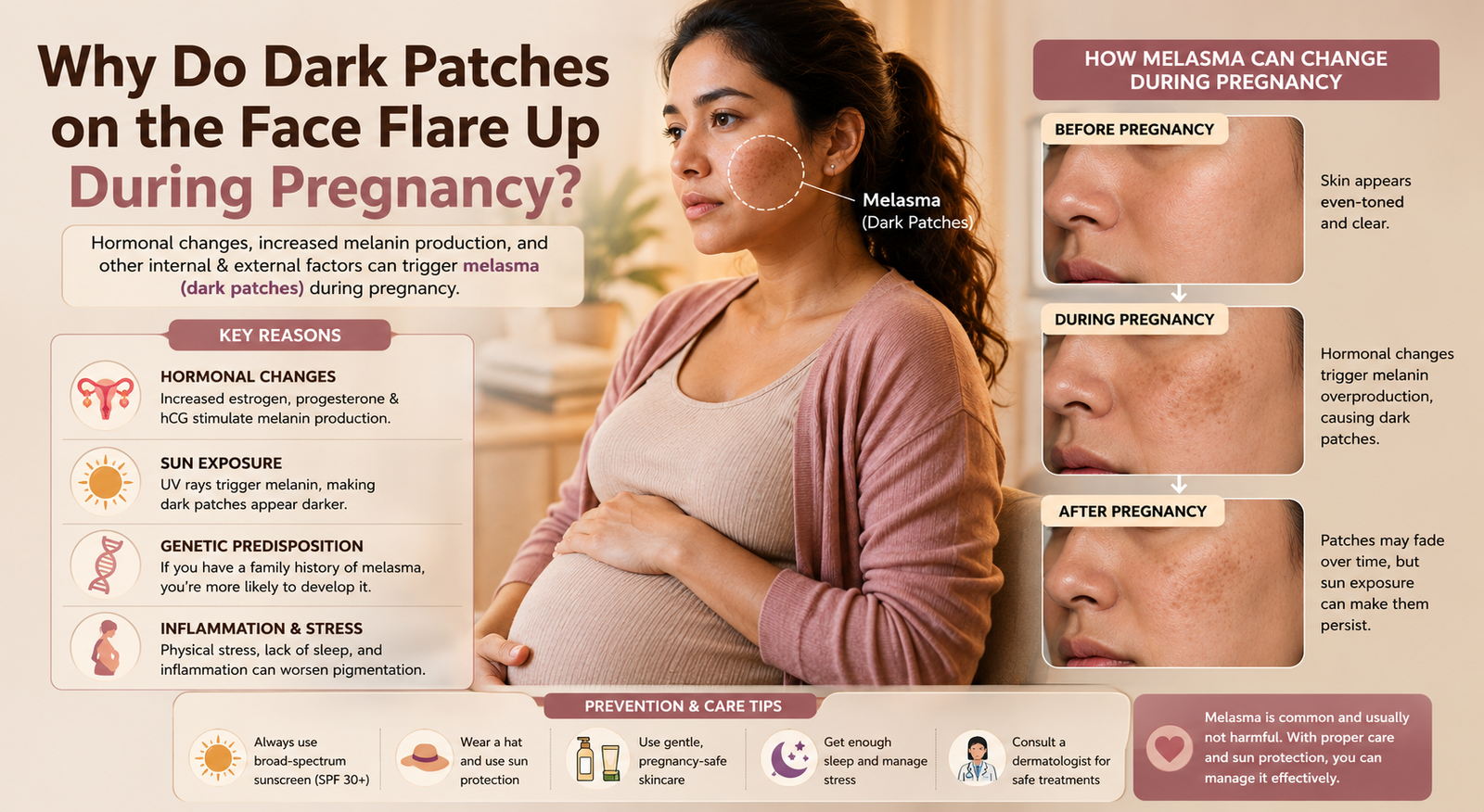
Why Do Dark Patches on the Face Flare Up During Pregnancy?
Dark patches during pregnancy are extremely common, and for most women they appear with little warning and no obvious explanation. The cause is largely hormonal. Rising levels of oestrogen and progesterone during pregnancy stimulate the melanocytes, the cells responsible for producing skin pigment, to become significantly more active. This increased melanin production leads to the darkening of certain areas of the face, most typically the cheeks, forehead, upper lip, and bridge of the nose. This pattern is known as melasma, and it affects a large proportion of pregnant women. Addressing it effectively requires an understanding of the underlying mechanism, careful treatment timing, and the right resurfacing approach post-pregnancy. For practitioners supporting clients through this concern, a botanical option such as the Trexyne Peel may form part of a considered post-natal treatment plan.
The Hormonal Trigger Behind Pregnancy Pigmentation
Pregnancy triggers a cascade of hormonal changes that affect almost every system in the body, including the skin. Melanocyte-stimulating hormone, oestrogen, and progesterone all rise significantly during pregnancy, and each of these plays a role in heightening melanocyte activity. When melanocytes are overstimulated, they produce more melanin than the skin needs, and that excess pigment deposits unevenly in the deeper layers of the epidermis and, in some cases, the dermis.
The face is particularly susceptible because it receives more UV exposure than most other areas of the body. Even routine, incidental sun exposure can amplify the hormonal pigmentation trigger during pregnancy, which is why the condition tends to worsen during the summer months or in women who spend more time outdoors.
Understanding that this pigmentation has a hormonal root rather than a purely surface cause is important. It shapes realistic expectations about treatment and explains why pigmentation that appears during pregnancy often behaves differently to other forms of hyperpigmentation when it comes to fading.
What Is Melasma and How Does It Differ From Other Pigmentation?
Melasma is the term for the pattern of hormonal pigmentation that typically appears across the central face, cheeks, and forehead. It differs from post-inflammatory hyperpigmentation, which follows a specific area of inflammation or injury, and from UV-related sun damage, which tends to appear as more defined and isolated spots.
Melasma during pregnancy, sometimes called chloasma or the mask of pregnancy, tends to present as bilateral patches with soft, irregular borders. The colour can range from light tan to a deeper brown, and in some cases the pigmentation sits quite deep within the skin, which affects how responsive it is to treatment.
One important distinction is that melasma is driven by an active hormonal trigger. During pregnancy, treating it aggressively is not appropriate, partly because many professional resurfacing treatments are not recommended during pregnancy, and partly because the hormonal trigger remains active and can replenish the pigmentation faster than any treatment can clear it. The more appropriate window for professional resurfacing is post-natal.
Why Sun Exposure Makes Pregnancy Pigmentation Worse
The relationship between UV exposure and melasma during pregnancy is direct and significant. Melanocytes that have been primed by hormonal changes are considerably more reactive to UV stimulus than they would otherwise be. Even levels of sun exposure that would not ordinarily cause visible pigmentation changes can push already-active melanocytes into producing more melanin.
This is why daily broad-spectrum sun protection is the single most important intervention during pregnancy for any woman who is already experiencing dark patches or who wants to minimise the risk of them developing. Without adequate SPF, any other steps taken to manage pigmentation are working against a constantly active trigger.
UV exposure does not need to be prolonged or direct to have an effect. Driving, sitting near a window, or walking outdoors for short periods without SPF can all be sufficient to stimulate further darkening in susceptible skin during pregnancy.
Managing Expectations During Pregnancy
Practitioners should be clear with pregnant clients that the active management options available during pregnancy are limited by both clinical safety considerations and by the fact that the hormonal trigger is still present. Professional resurfacing treatments are generally deferred until after pregnancy and, if the client is breastfeeding, until after the breastfeeding period has ended as well.
What can be supported during pregnancy is preventive care. Daily SPF use, a gentle and consistent skincare routine that supports barrier function, and avoiding unnecessary UV exposure are all practical, safe measures that limit how much further the pigmentation develops. Setting realistic expectations here protects the client-practitioner relationship and positions post-natal treatment as the appropriate window for more active intervention.
Letting clients know that there is a credible treatment path available to them after pregnancy, and explaining what that path looks like, gives them something to work towards rather than leaving them feeling helpless during the months when direct treatment is not advisable.
Post-Natal Treatment: When to Begin and What to Consider
Once a client has delivered and, where applicable, has finished breastfeeding, the conversation about professional resurfacing can begin in earnest. Hormonal levels typically begin to normalise after delivery, and for some women the melasma fades significantly on its own within several months post-partum. For others, particularly those with deeper or more established pigmentation, it persists and requires professional support.
The practitioner’s first step at this stage is a thorough skin assessment. Pregnancy can change the skin’s baseline behaviour, and a client who previously tolerated a particular treatment approach well may present with a different skin condition post-natally. Barrier function, hydration levels, and overall skin reactivity should all be assessed before treatment planning begins.
Why the Skin’s Condition Post-Natally Matters
Post-natal clients are often managing sleep deprivation, hormonal fluctuation, and the demands of a new baby alongside any skin concerns. Their skin may be more reactive than usual, and their capacity to follow a strict aftercare routine in the early weeks may be limited. Treatment planning should factor in these realities. A gentle, well-tolerated resurfacing option with predictable downtime and straightforward aftercare is far more likely to deliver consistent results than an aggressive treatment that demands a recovery window the client cannot realistically manage.
Why a Mechanical Resurfacing Approach Suits Post-Natal Skin
Hormonal pigmentation that has settled into the skin over the course of a pregnancy needs a resurfacing approach that can support cell turnover and skin renewal without generating additional inflammation. This matters particularly for melasma, where inflammatory triggers can restimulate melanocyte activity and worsen the pigmentation even after the hormonal driver has reduced.
The Trexyne Peel uses marine-algae spicules to create controlled micro-channels in the skin through a purely mechanical mechanism. Because no acids are involved, the treatment does not generate the chemical inflammatory response that makes acid-based resurfacing risky for melasma-prone skin. Stabilised Vitamin E supports the skin’s recovery from the first application, helping to manage the post-treatment repair phase without adding to the inflammatory load that can trigger further pigmentation.
This combination of a non-inflammatory resurfacing mechanism and active recovery support makes it a considered option for practitioners working with clients who have pregnancy-related pigmentation.
The Role of the Tiered Protocol in Managing Melasma Safely
Melasma is one of the more challenging pigmentation concerns to treat because it can be provoked by the very treatments intended to improve it if the intensity is misjudged. A tiered protocol that allows the practitioner to begin at a conservative intensity, assess the skin’s response, and progress gradually is a safer and more reliable approach than applying maximum intensity from the outset.
The Trexyne Peel’s tiered protocol gives practitioners exactly this level of control. Rather than committing to a fixed treatment depth, the intensity can be matched to what the client’s skin demonstrates it can tolerate at each stage of the course. This is particularly relevant for post-natal skin, which may be responding to residual hormonal fluctuations and requires a gentler approach in the early months after delivery.
Predictable downtime also matters for new mothers who cannot easily plan around extended recovery periods. A treatment with a realistic, manageable recovery window is far more compatible with the realities of early parenthood than one that demands days of visible skin disruption.
Building a Full Post-Natal Pigmentation Protocol
Professional resurfacing forms one part of a broader protocol for managing pregnancy-related dark patches. Practitioners working with post-natal clients on this concern should consider the full picture, including home care between sessions and long-term sun protection habits.
Key elements of a well-rounded protocol include:
- Continued daily broad-spectrum SPF use, maintained consistently even after delivery, since UV exposure remains a significant trigger for melasma even when hormonal levels have stabilised
- A simplified, barrier-supportive home-care routine that avoids ingredients likely to irritate post-natal skin
- Realistic spacing between professional treatment sessions to allow the skin to demonstrate its response before intensity is increased
- Clear written aftercare instructions that work within the practical constraints of a client managing a new baby
Practitioners interested in incorporating a professional botanical peel into their post-natal pigmentation protocols can explore the full product range via the Trexyne shop, or contact the team directly through the Trexyne contact page.
Setting Clients Up for the Best Possible Outcome
Pregnancy-related pigmentation can have a real impact on a client’s confidence, particularly when it persists beyond delivery. The practitioner’s role is both clinical and communicative. Explaining clearly why the pigmentation developed, why treatment timing matters, and what a realistic improvement pathway looks like over a course of sessions gives clients the understanding they need to engage with the process properly.
Clients who understand that improvement builds gradually and that consistency, both in professional treatment and in daily SPF use, is what drives results, are more likely to complete a full treatment course. Long-term compliance with aftercare is often the deciding factor between clients who see significant improvement and those who plateau early.
Further information on the Trexyne approach to botanical resurfacing is available on the Trexyne website.
Conclusion
Dark patches on the face during pregnancy develop primarily because hormonal changes significantly raise melanocyte activity, causing excess melanin to deposit unevenly across the central face. UV exposure amplifies this process, making daily sun protection the most important preventive measure during pregnancy itself. Professional resurfacing is best approached post-natally, once hormonal levels have begun to stabilise and the skin can be assessed properly. For post-natal clients with persistent hormonal pigmentation, a mechanical, acid-free resurfacing treatment may offer a more predictable and better-tolerated route to improvement. The Trexyne Peel resurfaces through marine-algae spicules with stabilised Vitamin E to support recovery, and its tiered protocol allows intensity to be matched carefully to post-natal skin. With consistent treatment and daily SPF, it may help support a brighter, more even-looking complexion in clients navigating the lasting effects of pregnancy-related pigmentation.
FAQs
Q: Why do dark patches appear on the face during pregnancy? Dark patches during pregnancy are caused primarily by hormonal changes. Rising levels of oestrogen, progesterone, and melanocyte-stimulating hormone increase melanin production in the skin. Combined with UV exposure, this leads to uneven pigment deposits across the face, particularly on the cheeks, forehead, and upper lip. The condition is known as melasma or chloasma.
Q: Will pregnancy dark patches fade on their own after delivery? For some women, melasma does fade significantly in the months after delivery as hormone levels normalise. For others, particularly where the pigmentation is deeper or more established, it persists and may require professional treatment to address effectively. Either way, consistent daily SPF use is essential post-natally to prevent further development.
Q: Is it safe to have a skin peel for dark patches during pregnancy? Professional resurfacing treatments are generally not recommended during pregnancy. The more appropriate time to begin a professional treatment course is post-natally, once the client has delivered and finished breastfeeding. During pregnancy, the focus should be on preventive measures including daily broad-spectrum SPF.
Q: What is the best professional treatment for hormonal pigmentation after pregnancy? Post-natal hormonal pigmentation responds best to a gentle, consistent resurfacing approach that avoids triggering further inflammation, since inflammatory responses can restimulate melanin production in melasma-prone skin. A mechanical resurfacing treatment such as the Trexyne Peel, which uses marine-algae spicules with no acids involved, may be a more suitable option for this concern than aggressive acid-based treatments.
Q: How many sessions of the Trexyne Peel are needed for pregnancy-related dark patches? Visible improvement in hormonal pigmentation typically builds across a course of treatments rather than appearing after a single session. The number of sessions required depends on the depth of the pigmentation, the individual client’s skin response, and how consistently aftercare including daily SPF is maintained between appointments.
Q: Why does sun exposure make melasma worse during and after pregnancy? Melanocytes that have been primed by hormonal changes are more reactive to UV stimulus than usual. Even brief, incidental sun exposure can trigger further melanin production in skin that is already prone to melasma. This is why daily broad-spectrum sun protection is strongly recommended both during and after pregnancy, regardless of the weather.
Q: Where can practitioners find out more about treating post-natal pigmentation with the Trexyne Peel? Practitioners can explore the full Trexyne product range via the Trexyne shop or get in touch with the team through the Trexyne contact page for information on incorporating botanical resurfacing into a post-natal pigmentation protocol.