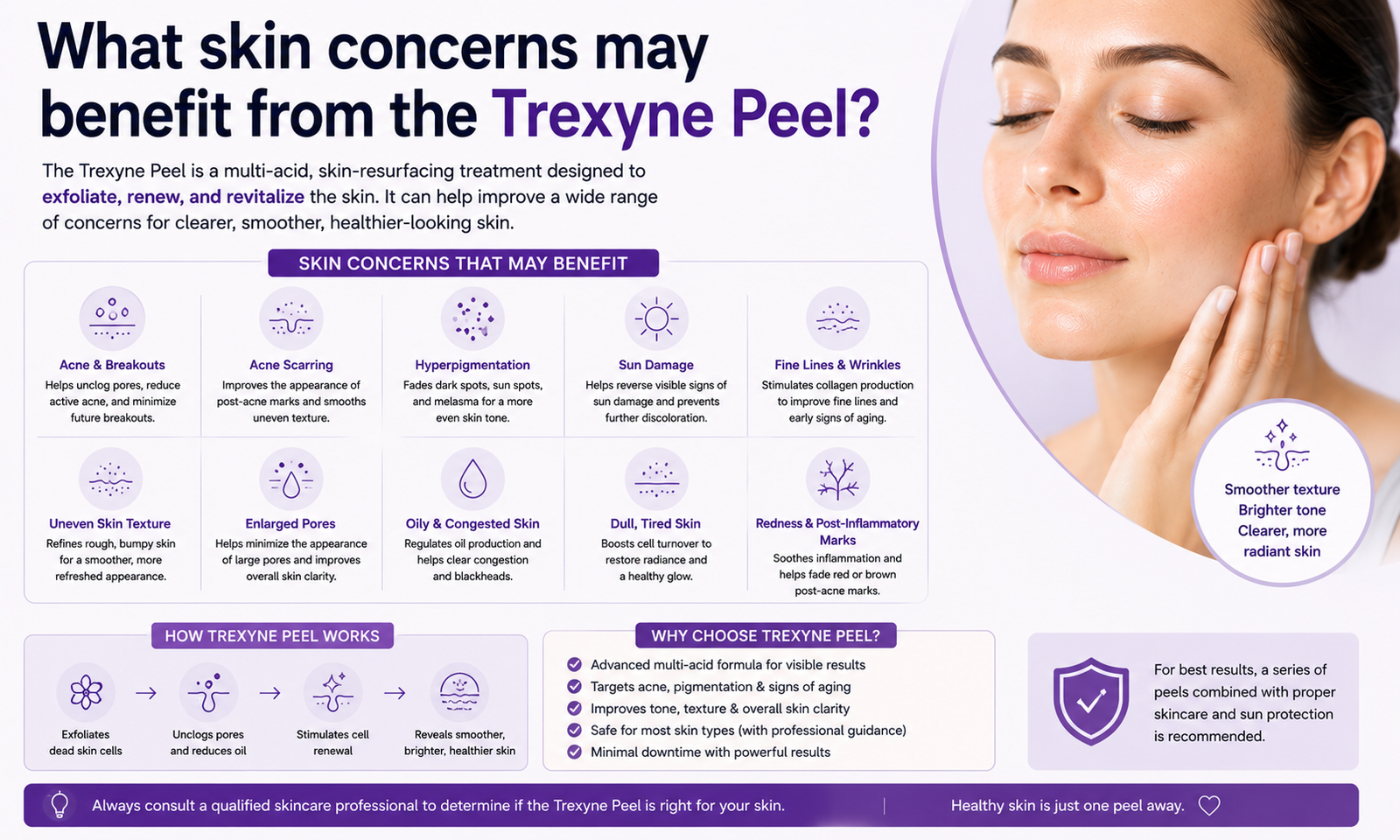
What Skin Concerns May Benefit From the Trexyne Peel?
The Trexyne Peel is a professional resurfacing treatment built around marine-algae spicules and stabilised Vitamin E. It resurfaces through a mechanical mechanism, supporting skin renewal, refinement, and a more even complexion without acids or chemical exfoliants. Because of this, it sits in a clinically distinct category from acid-based resurfacing, and the skin concerns it suits best are those where a controlled, progressive renewal approach is more appropriate than a high-intensity chemical intervention. Hyperpigmentation, uneven skin tone, surface texture irregularities, and the general effects of photodamage on the face are among the concerns most commonly addressed with this kind of mechanical resurfacing. The Trexyne Peel is designed for use exclusively by trained aesthetic professionals, who assess each client individually before any treatment is recommended.
Post-Inflammatory Hyperpigmentation
Post-inflammatory hyperpigmentation, known as PIH, is one of the skin concerns most relevant to the Trexyne Peel’s treatment profile. PIH occurs when the skin’s melanocytes overproduce melanin in response to an inflammatory event, leaving flat, discoloured patches in the areas where the inflammation occurred. Breakouts, skin injuries, previous treatments that triggered an excessive inflammatory response, and procedural irritation can all produce PIH.
The challenge with treating PIH using conventional chemical resurfacing is the risk of creating the very condition you are trying to resolve. Chemical exfoliants generate a degree of inflammatory response in the skin. For skin that is already prone to PIH, this inflammatory stimulus can restimulate melanocyte activity and worsen or extend the pigmentation rather than improving it.
The Trexyne Peel resurfaces through a mechanical mechanism that does not generate a chemical inflammatory trigger. This makes it a more considered option for practitioners working with PIH-prone clients, where the priority is supporting cell turnover and renewal without adding to the inflammatory load that caused the concern in the first place.
Solar Lentigines and Age Spots
Solar lentigines, commonly known as age spots or liver spots, develop from cumulative UV exposure over years and decades. The melanin deposited by repeated UV stimulus builds up across multiple layers of the epidermis, producing flat, defined, brown spots that are most common on the face, backs of the hands, and other areas with high lifetime sun exposure.
Unlike superficial pigmentation changes, established solar lentigines require consistent, progressive cell turnover across a course of professional sessions to produce visible improvement. A single resurfacing session can begin the process, but the accumulated depth of pigmentation responds to gradual displacement over time rather than a single high-intensity intervention.
The tiered protocol within the Trexyne Peel framework allows practitioners to match intensity to the individual client’s skin condition and to build progressively across a course. This patient, incremental approach is well suited to the nature of age spot pigmentation, which responds to consistency rather than aggression.
Hormonal Pigmentation and Melasma
Melasma is a pattern of hormonal pigmentation characterised by bilateral patches across the cheeks, forehead, and upper lip. It is driven by hormonal changes that increase melanocyte activity, and it is notoriously difficult to treat because inflammatory triggers can restimulate melanin production in the affected areas even when the original hormonal driver has reduced.
This sensitivity to inflammatory stimulus makes melasma one of the skin concerns where treatment mechanism matters most. Resurfacing approaches that generate a significant chemical inflammatory response can worsen melasma in susceptible skin, which is one of the reasons practitioners managing this concern are increasingly selective about what they use and how intensively.
The Trexyne Peel’s mechanical mechanism avoids the chemical inflammatory trigger, which may reduce the risk of restimulating melanocyte activity in melasma-prone skin during the resurfacing process. For post-natal clients whose hormonal pigmentation has persisted after delivery and whose skin is ready for professional resurfacing, a gentle mechanical approach with a tiered protocol offers a more controllable route to supporting improvement.
Uneven Skin Tone and Generalised Dullness
Uneven skin tone and a dull, flat complexion are among the most common everyday skin concerns that clients seek professional resurfacing to address. These presentations often reflect a combination of slower cell turnover, accumulated surface-level skin damage, and inconsistent melanin distribution that gives the skin a tired or uneven quality even without defined pigmentation spots.
Professional resurfacing supports improvement in this kind of generalised unevenness by stimulating cell turnover and encouraging fresher, more evenly pigmented skin cells to the surface over a course of sessions. The Trexyne Peel’s mechanical resurfacing mechanism supports this renewal process without the extended downtime or unpredictable recovery profile that can make acid-based resurfacing an impractical commitment for clients with busy schedules.
The predictable downtime associated with the Trexyne Peel’s tiered protocol means that clients can plan their treatment course around their lives rather than having to accommodate extended or variable recovery periods between sessions.
Photodamage and Sun-Related Skin Changes
Photodamage is the cumulative effect of UV exposure on the skin over years. It produces a characteristic pattern of changes including irregular pigmentation, textural roughness, and a generally aged and weathered appearance. Clients with significant photodamage often present with a combination of concerns rather than a single isolated issue, including age spots, uneven tone, and surface texture irregularities appearing together.
Addressing photodamage professionally requires a resurfacing approach that can support renewal across all of these changes rather than targeting one in isolation. Mechanical resurfacing across a planned course of sessions can contribute to gradual improvement in skin clarity and surface quality by supporting consistent cell turnover, which is the common mechanism underlying improvement in pigmentation, texture, and overall skin quality.
The Trexyne Peel treats the face as a whole treatment area rather than isolating individual spots, which makes it practical for clients with widespread photodamage rather than just those with one or two defined age spots.
Why Photodamaged Skin Benefits From a Gentle Approach
Photodamaged skin is often less resilient than healthier, younger skin. Years of UV exposure reduce collagen density, impair barrier function, and leave the skin less able to manage aggressive interventions than it would have been at a younger age. For this skin type, a mechanical approach with a tiered protocol that starts conservatively and builds gradually is often a more appropriate choice than high-intensity resurfacing. The practitioner retains control over intensity at every session, adjusting based on how the skin presents and responds.
Surface Texture and Skin Refinement
Uneven surface texture, including rough patches, visible pores, and a generally unrefined skin surface, can develop from a range of causes including sun exposure, sluggish cell turnover, and the natural changes that come with age. Clients who describe their skin as looking dull, rough, or lacking clarity without a specific pigmentation concern are often describing this kind of textural irregularity.
Professional resurfacing addresses surface texture by stimulating cell turnover and supporting the renewal of the outer skin layers. The Trexyne Peel creates controlled micro-channels in the skin surface through the action of marine-algae spicules, which stimulates the skin’s natural renewal response. Over a course of sessions, this can contribute to a progressively more refined, even surface that reflects light more consistently and appears healthier and more radiant.
Texture improvement from resurfacing tends to be cumulative, with the most noticeable changes becoming visible across a sustained course rather than after a single session.
Skin That Has Not Responded Well to Previous Resurfacing
Clients who have had difficult experiences with previous resurfacing treatments, whether from prolonged redness, post-inflammatory pigmentation, or barrier disruption, represent a specific group for whom the Trexyne Peel is particularly relevant. Their skin has demonstrated that it does not tolerate the chemical inflammatory burden of acid-based resurfacing, but that does not mean resurfacing is off the table entirely. It means the mechanism needs to change.
The Trexyne Peel’s mechanical approach removes the chemical inflammatory trigger that caused the previous reaction. The tiered protocol allows the practitioner to begin at a conservative intensity appropriate to a skin that has been sensitised or compromised by a previous experience. And the stabilised Vitamin E supports recovery from the first session, which matters significantly for clients whose barrier is already compromised.
This group often requires careful consultation and genuine clinical explanation of why this treatment is different and why a different outcome is credible. Practitioners comfortable with this conversation will find that clients who have been failed by other approaches are often among the most committed to a treatment course that delivers.
Sensitive and Reactive Skin Types Seeking Resurfacing
Sensitive and reactive skin types are not automatically excluded from the benefits of professional resurfacing, but they require a resurfacing approach calibrated to their biology. For these clients, the priority is achieving meaningful cell turnover and skin renewal without generating the inflammatory response that their skin cannot manage without visible, prolonged consequences.
The Trexyne Peel is specifically relevant for this group because of the combination of its mechanical mechanism, which avoids a chemical inflammatory trigger, and its tiered protocol, which allows intensity to be matched to the skin’s demonstrated tolerance at each session. Stabilised Vitamin E in the formulation supports the recovery phase, which is the period of greatest vulnerability for sensitive skin following any resurfacing.
Practitioners looking to incorporate a professional botanical peel into their sensitive skin treatment menu can explore the full range via the Trexyne shop. For specific questions about the product and its clinical applications, the team can be contacted through the Trexyne contact page.
How Practitioners Should Assess Suitability
The Trexyne Peel is designed for use exclusively by trained aesthetic professionals, who assess each client’s suitability individually before recommending and administering treatment. The concerns listed in this post represent the broader territory of skin presentations that may benefit from a mechanical resurfacing approach, but individual suitability depends on the client’s specific skin condition, history, current health, and treatment goals.
A thorough consultation before treatment begins is the clinical foundation of any responsible resurfacing course. Practitioners who take the time to understand the individual before selecting a treatment approach deliver better outcomes and build stronger long-term client relationships than those who apply a generic protocol regardless of individual variation.
More information on the Trexyne approach to professional botanical resurfacing is available on the Trexyne website.
Conclusion
The Trexyne Peel may be relevant for a range of skin concerns including post-inflammatory hyperpigmentation, solar lentigines and age spots, hormonal pigmentation, uneven skin tone, photodamage, surface texture irregularities, and reactive or sensitive skin types seeking a more tolerable resurfacing approach. In each case, the clinical rationale connects to the same core features: a mechanical resurfacing mechanism that avoids chemical inflammatory triggers, stabilised Vitamin E that supports recovery from the first application, and a tiered protocol that allows trained practitioners to match intensity to the individual. The Trexyne Peel is not a universal solution for every skin concern, but for the clients and concerns described here, it offers a more considered and predictable route to a brighter, more even-looking complexion than acid-based alternatives can provide for these specific presentations.
FAQs
Q: What skin concerns is the Trexyne Peel most suitable for?
The Trexyne Peel is most relevant for concerns involving pigmentation, uneven tone, surface texture, and photodamage. It is particularly well suited to skin types that have not tolerated or are not appropriate candidates for acid-based resurfacing, including sensitive skin, PIH-prone skin, and skin in Fitzpatrick types III to VI where the inflammatory risk of chemical peeling is higher.
Q: Can the Trexyne Peel help with post-inflammatory hyperpigmentation?
The Trexyne Peel supports cell turnover through a mechanical mechanism that does not generate a chemical inflammatory trigger. For PIH-prone skin, this may reduce the risk of restimulating melanocyte activity during resurfacing, making it a more considered option for practitioners working with clients whose pigmentation was caused by or worsened by inflammation.
Q: Is the Trexyne Peel suitable for sensitive skin?
Yes, within the context of professional assessment and a tiered protocol that matches intensity to the individual skin’s tolerance. The mechanical mechanism avoids the chemical inflammatory response that reactive skin struggles to manage, and stabilised Vitamin E in the formulation supports recovery. A practitioner assesses suitability at each session.
Q: Can the Trexyne Peel address multiple skin concerns at once?
Because the Trexyne Peel is applied to the full face as a treatment area, it supports renewal across the treated zone rather than targeting a single spot in isolation. This makes it practical for clients with a combination of concerns, such as uneven tone alongside surface texture irregularities or generalised photodamage.
Q: Is the Trexyne Peel suitable for clients with melasma?
Melasma is sensitive to inflammatory triggers, which makes treatment mechanism selection important. The Trexyne Peel’s mechanical approach avoids a chemical inflammatory stimulus, which may reduce the risk of restimulating melanocyte activity during resurfacing. Practitioners assess individual suitability at consultation, and treatment timing relative to hormonal status is also considered.
Q: How does the Trexyne Peel help with skin texture?
The marine-algae spicules in the Trexyne Peel create controlled micro-channels in the skin’s surface through mechanical action, stimulating the skin’s natural renewal response. Over a course of professional sessions, this can contribute to a progressively more refined and even skin surface as fresher skin cells replace the outer layers that have been disrupted and shed.
Q: Where can practitioners find the Trexyne Peel for their treatment menu?
Practitioners can explore the full product range and stocking options through the Trexyne shop, or contact the team directly via the Trexyne contact page for guidance on incorporating the treatment into their clinical protocols for pigmentation, texture, and photodamage concerns.