How Soon Can I Wash My Face After a Trexyne Peel?
Most clients can cleanse their skin gently within 12 to 24 hours after a Trexyne Peel, though the exact timing depends on the protocol intensity your practitioner selected and how your skin typically responds to resurfacing treatments. The Trexyne Peel works through a mechanical mechanism using marine-algae spicules, so recovery tends to be more predictable than with treatments that rely on chemical exfoliation. There is no single answer that suits every client, but understanding what influences this window helps practitioners set realistic expectations and helps clients care for their skin properly during the days that follow their appointment.
This guide walks through the factors that affect post-treatment cleansing, what a safe first wash looks like, and how to recognise when skin has settled back into its normal rhythm.
Understanding How the Trexyne Peel Works
Before discussing aftercare, it helps to understand what is actually happening to the skin during treatment. The Trexyne Peel is a botanical resurfacing treatment built around marine-algae spicules and stabilised Vitamin E. Rather than relying on acids or chemical exfoliants, it creates controlled micro-channels through a purely mechanical action. This distinction matters because it changes how the skin barrier responds afterwards.
Why the Mechanism Affects Aftercare Timing
Because there is no chemical penetration involved, the skin is not left managing the same kind of surface disruption seen with acid-based treatments. The micro-channelling effect from the marine spicules encourages the skin’s natural renewal process, and the infused Vitamin E supports the recovery phase from the very first application. This combination tends to produce a more settled healing pattern, which is part of why aftercare windows can often feel shorter and more predictable.
Why Post-Treatment Timing Matters
Cleansing too soon, or using the wrong technique, can disturb the skin while it is still in an active recovery phase. Cleansing far too cautiously, on the other hand, can allow product residue or environmental debris to sit on the skin longer than necessary. Getting the timing right supports comfort and helps the skin move through its renewal process without unnecessary irritation.
Practitioners who offer the Trexyne Peel as part of their treatment menu often find that clear, written aftercare guidance reduces the number of follow-up questions from clients in the first 48 hours. A simple explanation of what to expect goes a long way toward client confidence.
The General Aftercare Window: What Most Clients Can Expect
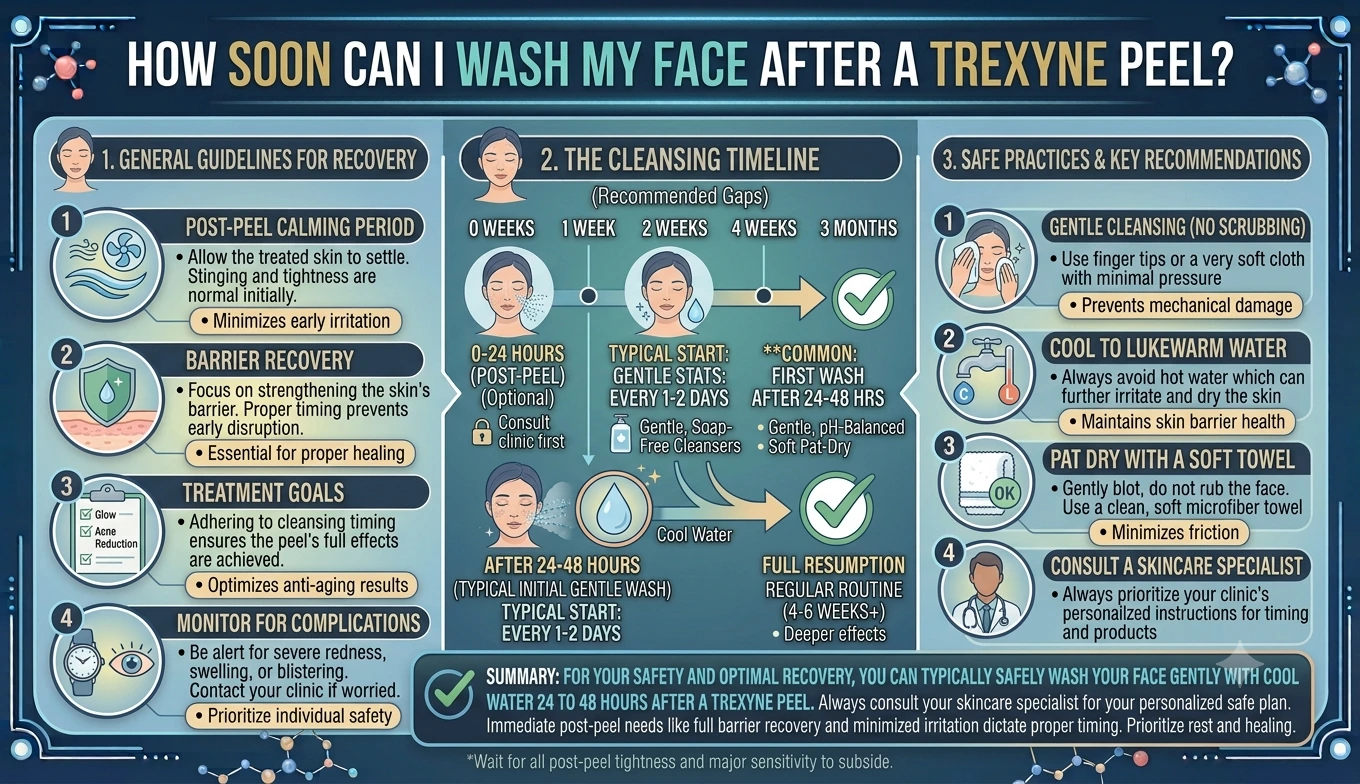
While every clinic protocol may differ slightly, a common pattern looks like this:
- First 6 to 12 hours: Skin is left untouched, allowing the treatment to settle without interference.
- 12 to 24 hours: A gentle, lukewarm rinse with fingertips only, no cleanser required if the practitioner advises against it initially.
- 24 to 48 hours: Introduction of a mild, non-abrasive cleanser once any initial sensitivity has calmed.
- Beyond 48 hours: Gradual return to a normal skincare routine, guided by how the skin looks and feels.
This is a general framework rather than a fixed rule, and practitioners should always tailor advice to the individual client and the protocol intensity used.
Factors That Influence How Soon Skin Can Be Cleansed
Several variables affect the ideal cleansing timeline, and no two clients will have identical recovery patterns.
Skin Type and Sensitivity
Clients with naturally reactive or thinner skin may need a slightly longer window before introducing cleanser, while those with more resilient skin often tolerate gentle washing sooner. Sensitivity history should always be discussed during the consultation stage.
Protocol Intensity Chosen by the Practitioner
The tiered protocol built into the Trexyne Peel allows practitioners to match treatment intensity to skin type and client goals. A lighter protocol generally allows for an earlier return to normal cleansing, while a more intensive session may call for a slightly extended period of minimal intervention.
Individual Healing Response
Age, hydration levels, recent sun exposure, and even sleep quality can all play a small role in how quickly skin settles after resurfacing. Practitioners often find it useful to check in with clients 24 hours post-treatment to confirm everything is progressing as expected.
Step-by-Step Guidance for the First Wash
When the practitioner confirms the client is ready for their first wash, the following approach tends to work well.
- Use lukewarm water, never hot or cold, as extreme temperatures can feel uncomfortable on freshly treated skin.
- Apply cleanser with fingertips only, avoiding flannels, sponges, or cleansing brushes.
- Use light, circular motions without pressing or rubbing.
- Rinse thoroughly to avoid any product residue sitting on the skin.
- Pat the skin dry with a clean, soft towel rather than rubbing.
- Follow with any recommended post-treatment product, if advised by the practitioner.
Clients should always follow the specific instructions given by their treating practitioner, since individual protocols can vary.
What to Avoid in the First 24 to 48 Hours
Certain habits and products can slow recovery or cause unnecessary discomfort during this window.
- Avoid exfoliating scrubs, cleansing devices, or muslin cloths.
- Avoid hot showers, steam rooms, or saunas that expose the face to heat.
- Avoid strenuous exercise that causes excessive sweating on treated skin.
- Avoid picking, peeling, or touching the treated area.
- Avoid direct sun exposure without appropriate SPF once cleared to reapply sunscreen.
These precautions support the skin’s natural recovery process and reduce the likelihood of irritation.
Choosing the Right Cleanser During Recovery
Not every cleanser is suitable during the recovery window. A good post-treatment cleanser is generally:
- Fragrance-free or very lightly fragranced
- Free from added exfoliating particles
- Low-foaming rather than heavily lathering
- pH-balanced and gentle on the skin barrier
Clients often ask their practitioner for a specific recommendation, and clinics offering the Trexyne Peel may already have a curated aftercare range that pairs well with the treatment.
Signs That Skin Is Ready for a Normal Cleansing Routine
Most clients can return to their usual skincare routine once the following signs are present:
- Any initial tightness or mild warmth has faded
- Skin no longer feels unusually delicate to the touch
- There is no visible flaking that would be disturbed by regular cleansing
- The practitioner has confirmed at a follow-up check that recovery is on track
If any of these signs are absent, it is worth waiting a little longer before resuming a full routine, including active ingredients such as retinoids or additional exfoliants.
How Practitioners Can Set Client Expectations Before Treatment
Clear communication before the appointment reduces confusion afterwards. Many practitioners find it helpful to:
- Explain the mechanical, non-chemical mechanism of the Trexyne Peel during consultation
- Provide written aftercare instructions the client can refer to at home
- Confirm which cleanser the client currently uses and whether it is suitable
- Offer a clear point of contact for questions during the recovery period
This kind of preparation tends to lead to smoother recoveries and more satisfied clients overall.
When to Contact Your Practitioner About Aftercare Concerns
While most recoveries progress smoothly, clients should reach out to their practitioner if they notice anything unexpected, such as prolonged redness, unusual discomfort, or signs that seem inconsistent with what was discussed during consultation. Clinics offering the Trexyne Peel can get in touch with the brand directly for professional guidance on protocol selection and aftercare support.
Conclusion
Knowing how soon to wash the face after a Trexyne Peel comes down to understanding the treatment’s mechanical mechanism, the specific protocol used, and how an individual’s skin tends to respond to resurfacing. Because the Trexyne Peel works through marine-algae spicules rather than chemical exfoliation, recovery windows are often more predictable, though timing should always be confirmed with the treating practitioner. Following gentle cleansing steps, avoiding harsh products in the early recovery phase, and watching for the right signs before resuming a full routine all support a smoother recovery. With the right aftercare approach, clients are well placed to support their skin’s natural renewal process and work toward a brighter, more even-looking complexion over time.
Frequently Asked Questions
Q: Can I wash my face the same day as my Trexyne Peel treatment? Most practitioners advise leaving the skin untouched for the first several hours after treatment, and a full cleanse is typically not recommended on the same day. A gentle rinse with lukewarm water may be suitable later that day, depending on the protocol used, but this should always be confirmed with the treating practitioner.
Q: What happens if I wash my face too soon after a Trexyne Peel? Washing too early, or using the wrong technique, may disturb skin that is still in an active recovery phase. This can lead to unnecessary sensitivity. Following the specific timeline given by the practitioner helps support a more comfortable recovery.
Q: Can I use my normal cleanser after a Trexyne Peel? Not immediately. A gentle, fragrance-free, non-exfoliating cleanser is generally recommended during the first 24 to 48 hours. Clients can usually return to their normal routine once the practitioner confirms the skin has settled.
Q: Is the Trexyne Peel recovery different from a chemical peel? Yes. The Trexyne Peel works through a mechanical mechanism using marine-algae spicules, without acids or chemical exfoliants. This tends to produce a different recovery pattern compared with chemical-based treatments, though individual experiences can still vary.
Q: How long does skin sensitivity last after a Trexyne Peel? This varies by client and by the intensity of the protocol selected. Some clients notice mild, temporary sensitivity that settles within a day or two, while others may need a little longer. A follow-up check with the practitioner can help confirm recovery is progressing as expected.
Q: Can I apply moisturiser before washing my face after treatment? Practitioners may recommend a specific post-treatment product immediately after the session, separate from the client’s usual moisturiser. It is best to follow the exact aftercare instructions provided rather than substituting products without guidance.
Q: Who can perform a Trexyne Peel treatment? The Trexyne Peel is sold exclusively to verified practitioners and clinics, and it is designed for professional use only. Clients should always have this treatment carried out by a trained practitioner rather than attempting any form of at-home resurfacing.