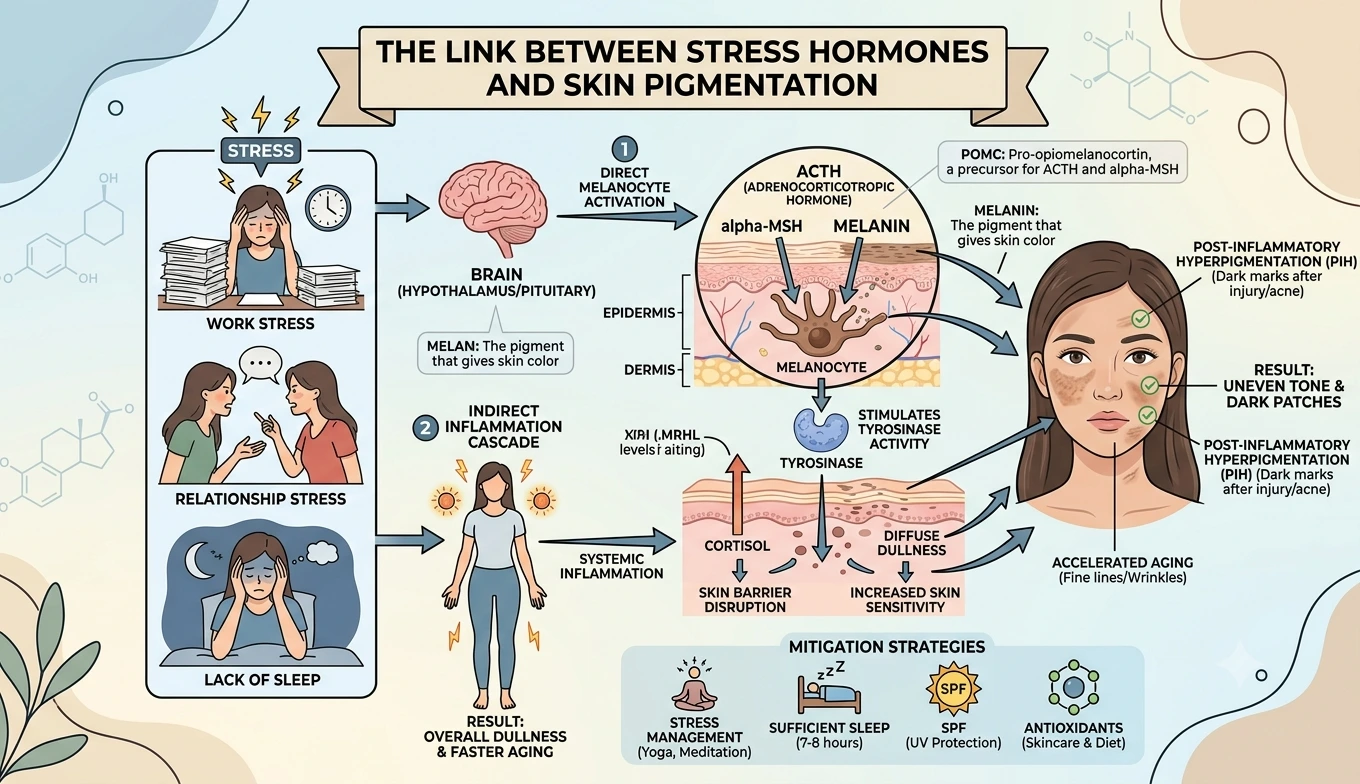
What Is the Link Between Stress Hormones and Skin Pigmentation?
Stress hormones, particularly cortisol, can influence skin pigmentation by disrupting the skin’s natural balance and triggering excess melanin production in some individuals. This connection explains why many clients notice new patches of uneven tone or a flare-up of existing dark spots during periods of prolonged stress. Understanding this hormonal pathway helps practitioners guide clients toward realistic expectations and appropriate in-clinic solutions. For those looking to address stress-related pigmentation professionally, the Trexyne Peel offers a mechanical resurfacing approach that supports visibly brighter, more even-looking skin without relying on chemical exfoliants. This article explores how stress hormones affect pigmentation, why some clients are more prone to this response than others, and how a structured in-clinic protocol can help restore balance to the complexion.
How Stress Hormones Affect the Skin
The skin is deeply connected to the body’s hormonal system. When a person experiences ongoing stress, the adrenal glands release cortisol as part of the body’s natural response. Cortisol is useful in short bursts, but when stress becomes chronic, cortisol levels can remain elevated for extended periods. This sustained elevation can affect several skin functions, including barrier integrity, oil production, and the skin’s ability to repair itself.
Practitioners often see this show up as dullness, sensitivity, or a general loss of radiance in stressed clients. Some clients also report that their skin becomes more reactive during stressful periods, which can compound existing concerns like uneven pigmentation.
The Skin as a Stress Indicator
Many clients do not connect their skin concerns to stress until a practitioner asks the right questions. Skin often reflects internal changes before a person consciously registers how stressed they feel. This makes skin consultations a useful opportunity to discuss lifestyle factors alongside any treatment plan.
The Cortisol and Melanin Connection
Melanin is the pigment responsible for skin colour, and its production is regulated by a specialised group of skin cells called melanocytes. Research suggests that elevated cortisol may stimulate melanocyte activity in some individuals, encouraging these cells to produce more melanin than usual. This is thought to be part of an evolutionary stress response, though the exact mechanisms are still being studied.
For clients who are already prone to pigmentation concerns, such as those with melasma or a history of post-inflammatory hyperpigmentation, this hormonal influence can be particularly noticeable. Stress does not create pigmentation out of nothing, but it can act as a trigger or accelerant for a process that was already underway.
Why Some Clients Are More Affected Than Others
Not every client with high stress levels will develop visible pigmentation changes. Genetics, skin type, and existing hormonal patterns all play a role. Clients with naturally higher melanin activity, including many with medium to deep skin tones, may be more susceptible to stress-triggered pigmentation. Sun exposure history also matters, as previously sun-damaged skin tends to respond more dramatically to any additional trigger.
Stress, Inflammation, and Uneven Skin Tone
Chronic stress does not only affect hormone levels. It also promotes low-grade inflammation throughout the body, and the skin is not exempt from this process. Inflammation can disrupt the normal turnover of skin cells, leading to a build-up of dull, uneven surface texture. When inflammation occurs alongside heightened melanocyte activity, the result is often patchy, uneven pigmentation that can be difficult to treat with topical products alone.
This is one of the reasons professional-grade treatments are often more effective than home skincare routines for stress-related pigmentation. A qualified practitioner can assess the depth and pattern of pigmentation and recommend a treatment intensity suited to the individual’s skin.
Common Presentation Patterns
Stress-related pigmentation often appears as:
- Diffuse dullness across the cheeks and forehead
- Patchy darkening around the mouth or jawline
- A worsening of pre-existing melasma
- Uneven tone that seems to fluctuate with stress levels
Recognising these patterns during a consultation helps practitioners tailor their approach rather than applying a one-size-fits-all protocol.
The Role of Sleep and Cortisol Rhythm
Cortisol naturally follows a daily rhythm, peaking in the morning and gradually declining throughout the day. Poor sleep quality can disrupt this rhythm, keeping cortisol elevated at times when it should be tapering off. Clients who struggle with sleep often report that their skin looks tired, uneven, and less radiant, even when they are using an otherwise solid skincare routine.
Practitioners can gently encourage clients to consider sleep hygiene as part of a broader approach to skin health, while also offering professional treatments that can support the skin’s appearance regardless of what is happening internally. This dual approach, addressing lifestyle alongside in-clinic care, tends to produce more satisfying outcomes for clients dealing with stress-related concerns.
Why Topical Products Alone Often Fall Short
Many clients try to manage stress-related pigmentation with over-the-counter brightening creams and serums. While a good home routine can support results, topical products alone often struggle to address pigmentation that has a hormonal driver. This is because most home products work on the skin’s surface, while the melanocyte activity driving pigmentation happens deeper within the epidermis.
Professional in-clinic treatments can offer a more direct route to addressing surface pigmentation and supporting the skin’s natural renewal process. This is where a treatment like the Trexyne Peel becomes a valuable addition to a client’s care plan, particularly for those whose pigmentation has become more noticeable due to stress.
How Trexyne Peel Supports Stress-Affected Skin
The Trexyne Peel works through a purely mechanical mechanism, using marine-algae spicules to create controlled micro-channels in the skin’s surface. This is not a chemical peel and does not rely on acids or chemical exfoliation of any kind. Instead, the botanical spicules physically encourage the skin’s natural resurfacing process, which can help support a more even-looking tone over time.
The treatment is also infused with stabilised Vitamin E, a tocopherol form known to support the skin’s recovery phase from the very first application. For clients dealing with stress-related dullness or patchiness, this combination of controlled resurfacing and antioxidant support can be a meaningful part of their treatment plan.
A Tiered Approach for Individual Needs
One of the advantages of the Trexyne Peel is its tiered protocol, which allows practitioners to match treatment intensity to each client’s skin type and expectations around downtime. This is particularly useful when treating stress-related pigmentation, as clients often present with varying degrees of sensitivity depending on how their skin has responded to prolonged stress. A more cautious approach can be taken for reactive or sensitised skin, while a slightly more intensive protocol may suit clients with resilient, thicker skin.
Because the mechanism is mechanical rather than chemical, practitioners can offer predictable downtime without the surprises that can sometimes come with chemical exfoliation. This predictability is reassuring for clients who may already feel that their skin is behaving unpredictably due to stress.
Building a Consultation Around Stress and Pigmentation
When a client presents with new or worsening pigmentation, it is worth asking about recent life changes, sleep patterns, and general stress levels as part of the consultation process. This does not replace a thorough skin assessment, but it does provide useful context that can shape the treatment plan.
Explaining the hormonal connection to clients, in simple terms, often helps them feel more understood and less frustrated by their skin. Many clients assume pigmentation is purely a sun damage issue, so learning that stress plays a role can be a helpful reframe. It also opens the door to discussing realistic timelines, since stress-related pigmentation may need a combination of consistent treatment and lifestyle adjustment to improve.
Setting Realistic Expectations
Pigmentation that has built up over months of chronic stress will not disappear after a single session. Clients benefit from understanding that a series of treatments, spaced appropriately, tends to produce the most noticeable improvement. Practitioners can browse the full range of treatments available to build a plan that suits each client’s timeline and budget.
Supporting Clients Beyond the Treatment Room
While in-clinic treatments play a central role in managing stress-related pigmentation, practitioners can also offer simple, practical advice that supports results between sessions. This might include recommending gentle, non-irritating skincare, consistent daily SPF use, and general encouragement around stress management techniques such as regular movement or mindfulness practices.
None of this replaces professional treatment, but it does help protect the results achieved in clinic. Clients who feel supported in this broader sense often report higher satisfaction with their overall treatment journey.
Why Professional Guidance Matters
Pigmentation concerns, especially those linked to hormonal fluctuation, benefit from professional assessment rather than guesswork. A trained practitioner can distinguish between different types of pigmentation, assess skin sensitivity, and recommend a protocol that is appropriate for the individual. This is particularly important given that some pigmentation patterns, such as melasma, can worsen if treated incorrectly.
Clinics interested in offering the Trexyne Peel as part of their pigmentation management services can find out more by visiting the Trexyne website or reaching out directly via the contact page to discuss training and product access. The Trexyne Peel is sold strictly to verified practitioners and clinics, ensuring it is always used within a professional setting.
Conclusion
Stress hormones, particularly cortisol, can play a genuine role in the development and worsening of skin pigmentation. Through their influence on melanocyte activity and their contribution to low-grade inflammation, elevated stress levels may trigger or intensify uneven tone, dullness, and patchy pigmentation in many clients. Understanding this connection allows practitioners to take a more informed approach during consultations and to set realistic expectations for treatment outcomes.
The Trexyne Peel offers a mechanical, botanical approach to supporting brighter, more even-looking skin. Using marine-algae spicules to encourage controlled resurfacing, alongside stabilised Vitamin E to support recovery, it provides practitioners with a predictable, tiered treatment option for clients dealing with stress-related pigmentation concerns. When combined with thoughtful consultation and realistic client expectations, it can be a valuable part of a broader approach to managing hormonally influenced skin changes.
FAQs
Q: Can stress really cause dark spots on the skin?
Stress itself does not create pigmentation from nothing, but elevated cortisol levels may stimulate melanocyte activity, which can trigger or worsen existing pigmentation concerns in some individuals. This is particularly noticeable in clients who already have a tendency toward conditions like melasma.
Q: How long does it take for stress-related pigmentation to improve?
Improvement timelines vary depending on the depth and extent of the pigmentation, as well as how consistently stress levels are managed. Most clients need a series of professional treatments spaced over several weeks to notice a meaningful difference in tone.
Q: Is the Trexyne Peel suitable for treating stress-related pigmentation?
The Trexyne Peel may support a more even-looking complexion through its mechanical resurfacing action and Vitamin E content. It is designed for use exclusively by trained aesthetic professionals, who can assess whether it suits a client’s specific pigmentation pattern.
Q: Does managing stress alone fix uneven skin tone?
Managing stress can support overall skin health, but it is unlikely to fully reverse pigmentation that has already developed. A combination of lifestyle adjustment and professional in-clinic treatment tends to produce the best results.
Q: Is the Trexyne Peel a chemical peel?
No. The Trexyne Peel is not a chemical peel. It works through a purely mechanical mechanism using marine-algae spicules to create controlled micro-channels, without any chemical exfoliants or acids involved.
Q: Can poor sleep make pigmentation worse?
Poor sleep can disrupt the natural cortisol rhythm, keeping levels elevated at times when they should be declining. Over time, this may contribute to dullness and uneven tone, alongside other stress-related skin changes.
Q: Who can access the Trexyne Peel for their clinic?
The Trexyne Peel is sold strictly to verified practitioners and clinics. Interested professionals can get in touch via the Trexyne contact page to learn more about access and training.