What Should I Do if My Skin Turns Dark After a Facial Peel?
If your skin has darkened after a facial peel, you are most likely experiencing post-inflammatory hyperpigmentation. This is a well-recognised skin response in which melanocytes produce excess pigment following inflammation or skin disruption. It is particularly common when a peel has been too aggressive for the skin type, or when post-treatment care has not adequately protected the recovering skin from UV exposure. The good news is that this type of pigmentation can often be addressed with the right follow-up protocol. For practitioners rethinking their resurfacing approach, an acid-free option such as the Trexyne Peel may offer a more predictable route with less risk of triggering this response in the first place.
Understanding Why Skin Can Darken After a Peel
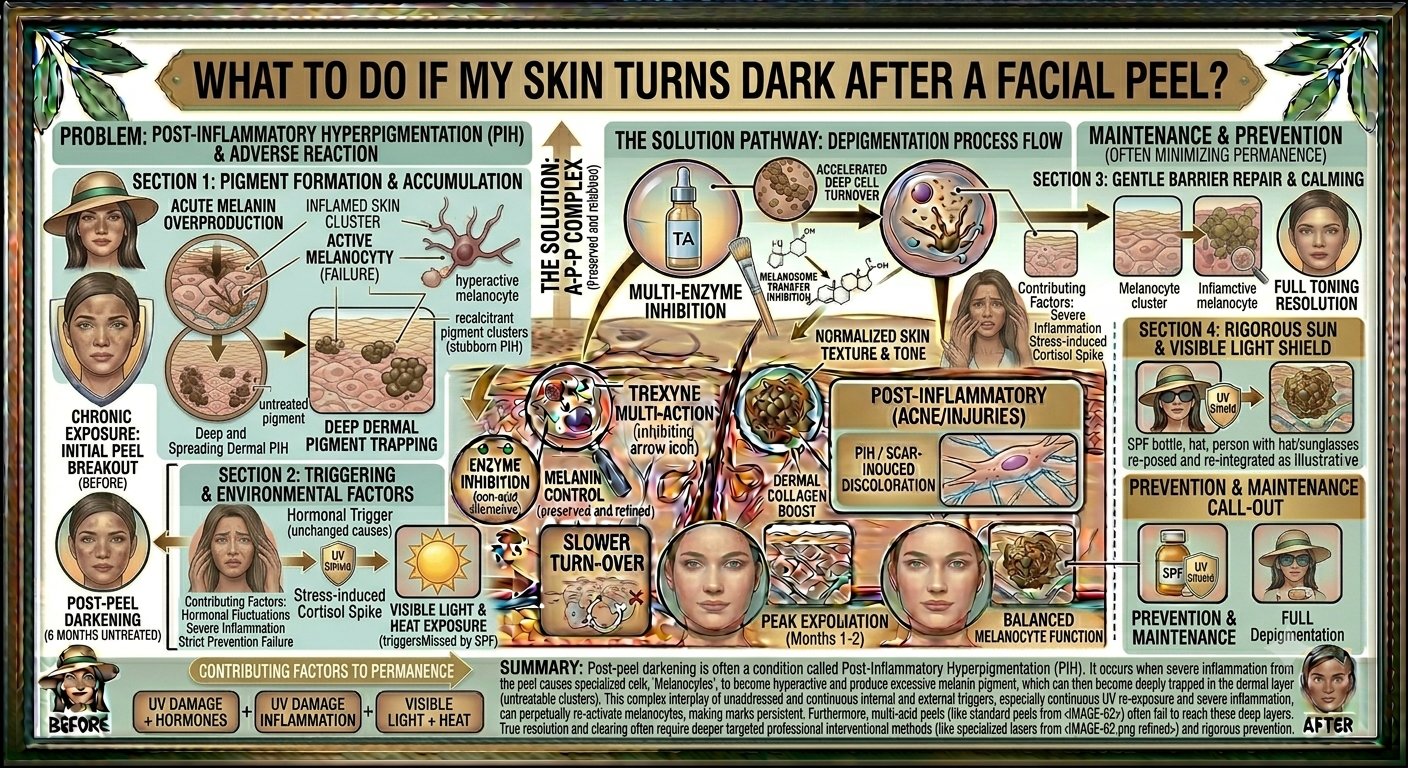
Skin darkening after a resurfacing treatment is nearly always a result of post-inflammatory hyperpigmentation, often referred to as PIH. When skin experiences a degree of inflammation, whether from the treatment itself or from UV exposure during the recovery window, melanocytes can respond by producing more melanin than usual. This excess melanin deposits unevenly in the skin, creating patches or a generalised darkening that can look worse than the original concern the client came in with.
PIH does not mean the treatment permanently damaged the skin. It is a reactive process, and in most cases it does settle with time and the right follow-up care. However, understanding why it happened is important before attempting any further treatment, because applying another aggressive peel to recently inflamed skin can restart the inflammatory cycle and worsen the outcome.
Who Is Most at Risk of Post-Peel Darkening?
Not every client will experience post-peel darkening, but certain skin types and histories carry a higher risk. Fitzpatrick skin types III to VI, which include medium, olive, brown, and darker skin tones, tend to produce stronger melanin responses to inflammation. Clients with a history of post-inflammatory hyperpigmentation from breakouts, waxing, or previous treatments are also more likely to experience it following a peel. Sensitive or reactive skin types can respond similarly even at lower treatment intensities, because the inflammatory trigger does not have to be severe to provoke a melanin response in susceptible skin.
The Role of Sun Exposure After Treatment
One of the most common reasons for post-peel darkening is sun exposure during the recovery window. Freshly resurfaced skin is more vulnerable to UV damage than intact skin, and even brief, incidental sun exposure can trigger or worsen PIH in the days following a peel. This is not just about staying out of direct sunlight. UV exposure through a car window, while walking between buildings, or during outdoor activities without SPF can all be sufficient to provoke a reaction in compromised skin.
Clients who do not receive clear, specific aftercare instructions about SPF use are at significantly higher risk of developing post-peel darkening through this mechanism.
Immediate Steps to Take After Post-Peel Darkening Appears
If a client contacts you concerned about skin darkening after a peel, the first step is to assess when the darkening appeared, how extensive it is, and what aftercare they have been following. Darkening that appears within a few days of treatment and covers the treated area broadly is most likely PIH. Darkening that appears in isolated spots or clusters may have a different cause worth investigating.
In most cases, the following steps are appropriate as an immediate response:
- Ensure the client is applying a broad-spectrum SPF of at least 30 every morning, reapplied as needed throughout the day
- Advise them to stop using any active home-care products temporarily, particularly those containing retinoids or exfoliating acids, until the skin has settled
- Recommend a gentle, fragrance-free moisturiser to support barrier recovery without further irritation
- Book a follow-up consultation to assess the skin before planning any further treatment
Do not apply another resurfacing treatment while the skin is still visibly reactive or inflamed. Waiting until the skin has stabilised gives a much cleaner picture of what needs addressing and reduces the risk of compounding the PIH.
Why Treatment Choice Matters Going Forward
Post-peel PIH often prompts practitioners and clients to reconsider the resurfacing approach being used. If darkening occurred following a chemical peel, this is a signal that the mechanism, the intensity, or both were not well matched to the client’s skin. For clients who are prone to PIH, the challenge is finding a resurfacing option that achieves meaningful cell turnover without generating the inflammatory response that triggers melanin overproduction.
This is one of the reasons practitioners working with PIH-prone skin have increasingly looked towards mechanical resurfacing as an alternative route. The Trexyne Peel works through marine-algae spicules that create controlled micro-channels at the skin’s surface without any acid-based exfoliation involved. Because there is no chemical penetration, the inflammatory burden on the skin can be significantly lower compared to acid-based treatments, which may reduce the risk of triggering a melanin response in susceptible skin.
How the Trexyne Peel Differs From Chemical Resurfacing
The distinction between mechanical and chemical resurfacing matters most precisely when PIH is a concern. Chemical exfoliants work by dissolving the bonds between skin cells, which introduces a degree of chemical reaction and associated inflammation into the recovery process. In PIH-prone skin, this inflammation can be the direct trigger for further darkening.
The Trexyne Peel does not use acids at any stage. Its mechanism is entirely physical, relying on the structure of marine-algae spicules to resurface the skin. The formulation also includes stabilised tocopherol, a form of Vitamin E, which supports the skin’s recovery phase from the first application. This combination of a non-inflammatory resurfacing mechanism and a recovery-supportive ingredient profile makes it a considered option for practitioners working with clients who have a documented history of PIH.
A Tiered Protocol for Better Control
One of the practical advantages of the Trexyne Peel is that the tiered protocol allows practitioners to select an intensity level appropriate to the individual client’s skin type and history. For a client who has previously experienced post-peel darkening, beginning at a lower intensity and assessing the skin’s response before progressing gives both the practitioner and the client much greater confidence in the outcome. This kind of controlled, adjustable approach is difficult to replicate with a fixed-strength chemical peel where the skin’s response is harder to moderate once the product is applied.
Rebuilding Client Confidence After a Difficult Experience
Clients who have experienced post-peel darkening are often anxious about further treatment. Some will have lost confidence in the process entirely, while others will be looking for reassurance that there is a different, safer route available to them. Handling this conversation well is as important as any clinical decision about what to treat them with next.
Being transparent about what caused the darkening, what has changed in the proposed protocol, and what the realistic timeline for improvement looks like goes a long way towards rebuilding trust. Clients who understand the mechanism behind a treatment, including why a botanical, acid-free approach may suit their skin better, are generally more likely to commit to a full treatment course and follow aftercare instructions carefully.
Practitioners looking for more detail on how the Trexyne Peel may fit into their treatment protocols can explore the full range via the Trexyne shop or get in touch directly through the Trexyne contact page.
Supporting Skin Recovery Between Sessions
While the skin is settling after post-peel darkening, the focus should be on recovery rather than active treatment. Barrier support, daily SPF, and avoiding anything that provokes further inflammation are the three pillars of good recovery care. This is not a passive waiting period. It is an active phase of skin management that directly influences how the next treatment performs.
Clients sometimes find this difficult to accept when they are unhappy with how their skin looks and want faster results. The practitioner’s role here is to hold a calm, clear line about the right timing while making the client feel genuinely supported through the process.
When to Refer On
Most cases of post-peel PIH will respond to a carefully managed follow-up protocol and do not require onward referral. However, if darkening is very extensive, worsening despite appropriate aftercare, or if there is any doubt about the nature of the pigmentation change, it is always appropriate to refer the client to a dermatologist for assessment. Conditions such as melasma can sometimes be confused with post-inflammatory hyperpigmentation, and they respond differently to treatment. Getting the diagnosis right before committing to a treatment plan is always the better course.
Practitioners can find further information about the Trexyne approach to botanical resurfacing on the Trexyne website.
Managing Aftercare to Prevent Recurrence
Once the skin has settled and a new treatment plan is in place, the most important thing a practitioner can do is equip the client with clear, specific aftercare guidance that prevents the same outcome from happening again. Written aftercare instructions are more reliable than verbal ones, especially around SPF use, which clients often underestimate in the days following treatment.
For clients who are returning to resurfacing after a PIH episode, a thorough consultation before each session, including a review of any sun exposure or product use since the last appointment, supports consistent, well-managed outcomes.
Conclusion
Skin darkening after a facial peel is most commonly a post-inflammatory hyperpigmentation response triggered by the treatment itself or by unprotected UV exposure during recovery. It can be addressed with appropriate follow-up care, but it also calls for a reassessment of the resurfacing approach being used. For PIH-prone clients, switching to an acid-free, mechanically acting treatment may significantly reduce the risk of the same outcome recurring. The Trexyne Peel resurfaces through marine-algae spicules without chemical exfoliation and includes stabilised Vitamin E to support recovery, offering practitioners a more predictable, controlled option for clients whose skin has not responded well to conventional resurfacing in the past. With the right protocol, thorough aftercare, and a carefully managed return to treatment, it is entirely possible to support a brighter, more even-looking complexion without the risk of triggering further darkening.
FAQs
Q: Why has my skin turned dark after a facial peel?
Skin darkening after a peel is most commonly caused by post-inflammatory hyperpigmentation. This happens when the skin’s melanocytes overproduce pigment in response to inflammation, whether from the treatment itself or from UV exposure during the recovery period. It is a reactive response rather than permanent damage, and with appropriate care it can settle over time.
Q: How long does post-peel hyperpigmentation last?
The timeline varies depending on the depth of the original pigmentation, skin type, and how consistently aftercare has been followed. Superficial PIH can sometimes begin to improve within several weeks, though deeper or more extensive darkening may take longer to fade, particularly if sun protection has not been consistent throughout recovery.
Q: Can I have another peel if my skin went dark after the last one?
Yes, but not immediately. It is important to allow the skin to fully settle before considering further resurfacing. When you do return to treatment, it is worth discussing a different approach with your practitioner, particularly if you are prone to PIH. A mechanical, acid-free option may reduce the risk of the same outcome.
Q: What type of peel is safest for skin that is prone to hyperpigmentation?
For skin that is prone to post-inflammatory hyperpigmentation, a resurfacing treatment that does not rely on acid-based exfoliation can carry a lower risk of triggering a melanin response. The Trexyne Peel resurfaces through marine-algae spicules and contains no chemical exfoliants, making it a considered option for practitioners working with PIH-prone clients.
Q: Should I use SPF after a facial peel? Consistent SPF use is one of the most important parts of post-peel aftercare. Freshly resurfaced skin is more vulnerable to UV damage, and even brief unprotected sun exposure during the recovery window can provoke or worsen post-inflammatory darkening. A broad-spectrum SPF of at least 30 applied every morning and reapplied as needed is strongly recommended.
Q: Is the Trexyne Peel suitable for clients who have had PIH after previous treatments?
The Trexyne Peel uses a mechanical mechanism with no acids involved, and includes stabilised Vitamin E to support recovery. Practitioners can assess each client’s history and choose an appropriate intensity within the tiered protocol, making it a more considered option for those with a history of post-inflammatory hyperpigmentation.
Q: Can a practitioner use the Trexyne Peel on darker skin tones?
The Trexyne Peel is a professional treatment designed for use by trained aesthetic practitioners, who are best placed to assess suitability based on individual skin type, history, and concern. Fitzpatrick skin types that carry a higher risk of PIH can benefit from the lower inflammatory burden of a mechanical resurfacing approach compared to acid-based treatments.