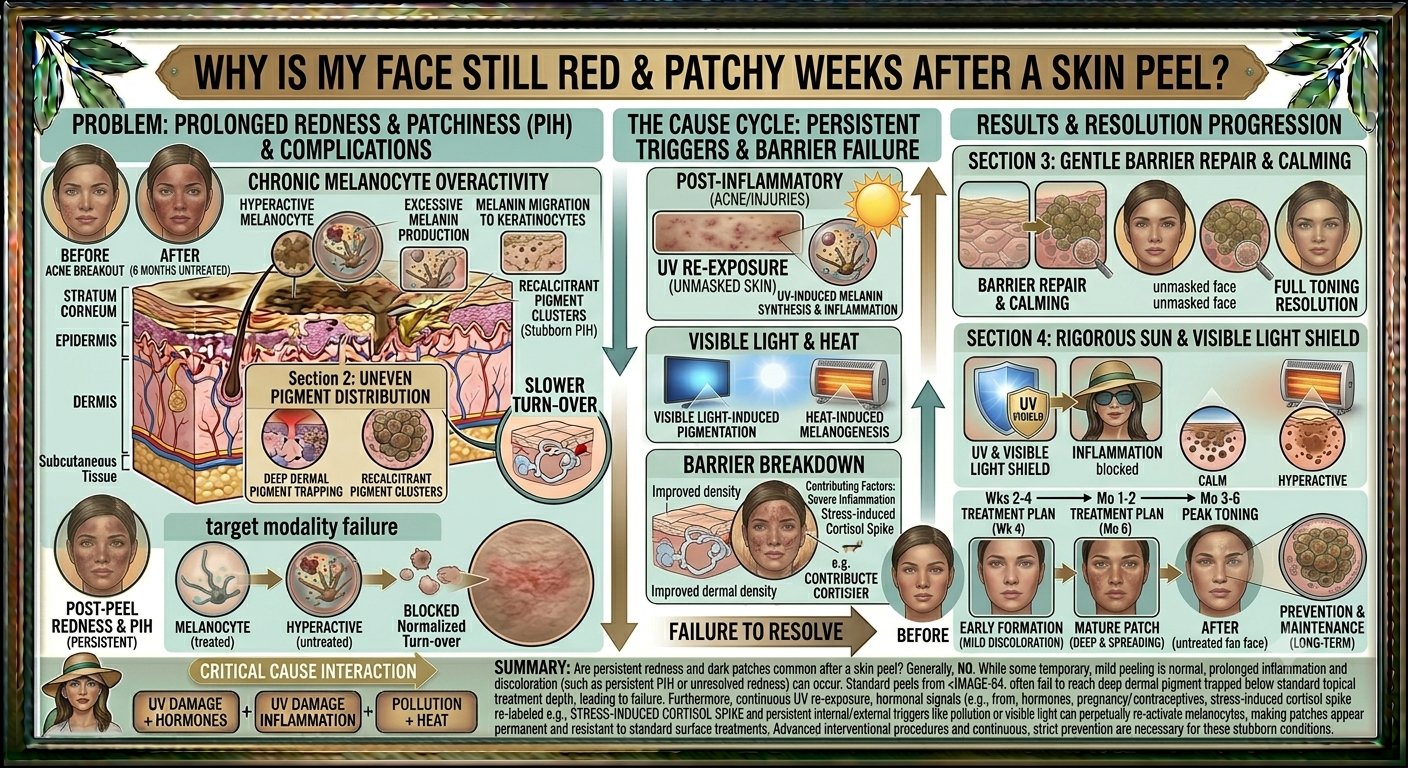
Why Is My Face Still Red and Patchy Weeks After a Skin Peel?
Redness and patchiness that lasts for days after a skin peel is not unusual. Redness and patchiness that persists for several weeks is a different matter, and it deserves a closer look. In most cases, prolonged post-peel redness points to one of a few common causes: a treatment that exceeded the skin’s tolerance, barrier disruption that has not yet fully resolved, or an inflammatory response that has been inadvertently prolonged by aftercare choices. The encouraging news is that the skin is generally capable of recovery when given the right conditions. For practitioners reconsidering their resurfacing approach, a mechanical, acid-free option such as the Trexyne Peel may offer a more predictable recovery profile from the outset.
What Normal Post-Peel Recovery Actually Looks Like
Setting expectations correctly before treatment is one of the most important things a practitioner can do. Understanding what normal recovery looks like makes it much easier to identify when something has gone beyond the expected range.
After a resurfacing treatment, some degree of redness, tightness, and superficial flaking is expected. This typically settles within a few days to a week for most clients undergoing moderate-intensity treatments. The skin may look slightly uneven or flushed during this period as the renewal process takes place. This is the skin doing exactly what it should.
What is not expected is redness that remains visibly inflamed, patches that feel warm or tender to the touch, or skin that continues to peel in an uncontrolled way beyond the first week. When clients describe still being red and patchy several weeks after treatment, it is a signal that the recovery process has been disrupted or that the treatment triggered a response the skin was not prepared to handle.
The Most Common Reason: Barrier Disruption
The skin’s barrier function is the most likely explanation for prolonged post-peel redness. The barrier is responsible for keeping moisture in and external irritants out. When a resurfacing treatment disrupts the barrier significantly, the skin loses moisture faster than it can replenish it, and it becomes reactive and vulnerable to environmental triggers. This state of compromised barrier function can present as persistent redness, sensitivity, and a patchiness that seems to shift rather than resolve cleanly.
Barrier disruption is more likely to occur when the treatment intensity was not well matched to the client’s skin, when multiple active products were used at home in the days before or after treatment, or when the aftercare failed to properly support recovery.
What Barrier Disruption Feels Like
Clients with barrier disruption typically describe their skin as feeling raw, tight, or uncomfortable even when they are doing nothing to provoke it. They may notice that products they usually tolerate are suddenly stinging or causing redness. The skin can look both dry and reactive at the same time, which can be confusing for clients who associate redness with oiliness.
This symptom picture is distinct from an infection or an allergic reaction, though these should be considered and ruled out if symptoms are severe, worsening rather than plateauing, or accompanied by swelling.
When the Treatment Was Too Aggressive for the Skin Type
If a treatment exceeded what the client’s skin could tolerate, the inflammatory response that results can take considerably longer to resolve than standard post-peel recovery. This is true for any skin type but it is particularly common in clients with:
- A reactive or sensitised skin type that was not identified before treatment
- Skin that was already compromised at the time of treatment, for example by a recent sunburn, active breakout, or use of retinoids
- Fitzpatrick skin types III to VI, where the inflammatory response to aggressive treatments tends to be stronger and the risk of complications including post-inflammatory hyperpigmentation is higher
Treatment-induced prolonged inflammation is the body’s way of signalling that the level of disruption was beyond its capacity to recover from quickly. Importantly, applying another resurfacing treatment on top of still-inflamed skin is likely to extend the problem rather than resolve it.
The Role of Aftercare in Prolonging Redness
Aftercare decisions made in the days following treatment have a significant influence on recovery outcomes. Clients who do not follow post-treatment guidance, or who receive vague guidance in the first place, are more likely to experience extended recovery periods.
Common aftercare mistakes that can prolong redness and patchiness include:
- Using active skincare products such as retinoids, acids, or strong antioxidants too soon after treatment
- Exposing the skin to direct or indirect UV radiation without adequate SPF protection
- Using hot water on the face, which dilates blood vessels and prolongs visible redness
- Applying fragranced or alcohol-based products to skin that is already compromised
- Picking or rubbing at areas of flaking skin rather than allowing them to shed naturally
Each of these can re-irritate skin that is in the process of recovering, effectively resetting the inflammatory clock. When clients report persistent redness, it is always worth reviewing their aftercare routine in detail before drawing conclusions about what happened during treatment.
When to Be Concerned and When to Refer
Most cases of prolonged post-peel redness will resolve with appropriate management and do not require medical referral. However, there are scenarios where onward referral to a dermatologist is the right course of action. These include:
- Redness or patches that are worsening rather than plateauing or improving
- Symptoms consistent with contact dermatitis or an allergic reaction, such as spreading redness, swelling, or blistering
- Pigmentation changes appearing in the affected area, particularly if the pattern suggests post-inflammatory hyperpigmentation or the redness is concealing developing dark patches
- Any situation where the practitioner is uncertain about the cause
Identifying these scenarios early and acting on them promptly protects the client and demonstrates a level of clinical responsibility that builds long-term trust.
Practical Steps to Support Recovery
Once a serious reaction has been ruled out and the likely cause of prolonged redness identified, the focus should shift entirely to supporting barrier recovery. This means actively reducing the load on the skin rather than trying to treat the redness with further intervention.
Practical steps to support recovery at this stage include:
- Stripping back the home-care routine to the minimum: a gentle cleanser, a fragrance-free moisturiser, and a broad-spectrum SPF during the day
- Avoiding any actives, exfoliants, or treatment-focused products until the barrier has clearly stabilised
- Keeping the skin comfortably moisturised without overloading it with heavy occlusive products if the skin is also congested
- Advising the client to avoid saunas, steam rooms, intense exercise, and other heat sources during recovery
- Reinforcing the importance of daily SPF, not just on sunny days, but consistently, since UV exposure can prolong inflammation even on overcast days
This is a period of active management, not passive waiting. Clients who understand that their aftercare is having a real effect on their timeline tend to follow it more consistently.
Rethinking the Resurfacing Approach
A client who experiences prolonged post-peel redness is, understandably, often reluctant to undergo further resurfacing. Rebuilding their confidence requires a clear explanation of what happened and a credible alternative protocol. For many practitioners, this means reconsidering whether a chemical resurfacing method is the right route for that particular client, and whether a mechanical alternative would carry a lower risk of the same outcome.
The Trexyne Peel is built around marine-algae spicules that create controlled micro-channels in the skin through a purely physical mechanism. Because no acids are used at any stage, the treatment does not generate the chemical reaction that is often associated with a pronounced inflammatory response post-treatment. Stabilised Vitamin E in the formulation supports the skin’s recovery phase from the first application, working with the skin’s natural repair process rather than placing additional demands on it.
For clients who have previously experienced prolonged post-peel redness, the difference in mechanism can make a meaningful clinical difference.
The Advantage of a Tiered Protocol
The Trexyne Peel’s tiered protocol allows practitioners to match intensity to skin type and current condition. Rather than committing to a fixed level of intervention that may be too much for a compromised or sensitised skin, the practitioner retains the flexibility to begin conservatively and build intensity gradually as the skin demonstrates its tolerance. This approach is particularly valuable when returning a client to resurfacing after a difficult experience, where the priority is rebuilding confidence alongside rebuilding the skin.
Practitioners interested in incorporating the Trexyne Peel into their treatment menu can explore the full product range via the Trexyne shop or direct any clinical questions to the team through the Trexyne contact page.
Setting Better Expectations Before the Next Treatment
Whether a client is returning to resurfacing after a difficult experience or considering their first treatment, the consultation before the next session is an opportunity to get the foundation right. Conducting a thorough skin assessment, reviewing the client’s home-care routine, asking about any current or recent skin concerns, and explaining the recovery protocol in specific, practical terms all reduce the risk of an unwelcome outcome.
Written aftercare guidance, sent to the client before or on the day of treatment, removes the ambiguity that often leads to the kind of aftercare mistakes that prolong recovery. Clients who know exactly what to expect, what to do, and what to avoid, are significantly better placed to have a smooth recovery experience.
Further information on the Trexyne approach to botanical resurfacing is available on the Trexyne website.
Conclusion
Redness and patchiness that persists for weeks after a skin peel is most commonly the result of barrier disruption, treatment intensity that exceeded the skin’s tolerance, or aftercare missteps that prolonged the inflammatory response. Addressing it begins with identifying the likely cause, supporting recovery through simplified home care and consistent SPF use, and giving the skin the time it needs to stabilise before considering any further treatment. When it is time to return to resurfacing, a mechanical approach may carry a meaningfully different recovery profile. The Trexyne Peel works through marine-algae spicules with no acids involved and includes stabilised Vitamin E to support recovery from the first application, offering a more predictable route that may help practitioners and clients move forward with greater confidence.
FAQs
Q: Why is my skin still red and patchy three weeks after a facial peel?
Redness lasting three weeks or more after a peel usually points to prolonged barrier disruption, a treatment that exceeded the skin’s tolerance, or ongoing aftercare mistakes such as UV exposure or the continued use of active products. In most cases, stripping back to a simple recovery routine and maintaining daily SPF will help the skin stabilise, but it is worth consulting your practitioner if symptoms are worsening rather than improving.
Q: Is it normal to be red for weeks after a skin peel?
A degree of redness in the first few days after a peel is normal, but redness that extends into weeks is beyond the expected recovery range for most standard treatments. It suggests the skin’s barrier has been disrupted or that the inflammatory response has been inadvertently prolonged, and it warrants a review of both the treatment and the aftercare being followed.
Q: Can I have another peel while my skin is still red from the previous one?
No. Applying a resurfacing treatment to skin that is still red and inflamed from a previous session is likely to worsen the situation rather than improve it. The skin needs to return to a stable baseline before any further treatment is considered.
Q: What is the best peel for sensitive skin that is prone to prolonged redness?
For skin that reacts strongly or takes longer to recover from resurfacing, a mechanical approach that does not rely on acid-based exfoliation can carry a lower risk of prolonged inflammation. The Trexyne Peel uses marine-algae spicules and no acids, and includes stabilised Vitamin E to support recovery. Practitioners can also select the appropriate intensity within a tiered protocol to match the client’s skin condition.
Q: What aftercare should I follow if my skin is still red after a peel?
Focus on barrier recovery: use a gentle, fragrance-free cleanser, a simple moisturiser, and a broad-spectrum SPF every day. Avoid all active skincare products, hot water, saunas, and direct sun exposure until the skin has clearly settled. If symptoms are worsening rather than improving, seek advice from your practitioner or a dermatologist.
Q: Can SPF use really make a difference to post-peel redness?
Yes. UV exposure, even on overcast days, can prolong inflammation and trigger further skin responses such as post-inflammatory hyperpigmentation. Consistent daily SPF use is one of the single most effective aftercare steps for supporting a smooth post-peel recovery.
Q: Is the Trexyne Peel suitable for clients recovering from a difficult post-peel reaction?
The Trexyne Peel is a professional treatment designed for use exclusively by trained practitioners, who can assess suitability on a case-by-case basis. Because the mechanism is mechanical rather than chemical and the formulation includes recovery-supportive Vitamin E, it can be a considered option for returning clients once the skin has fully stabilised.