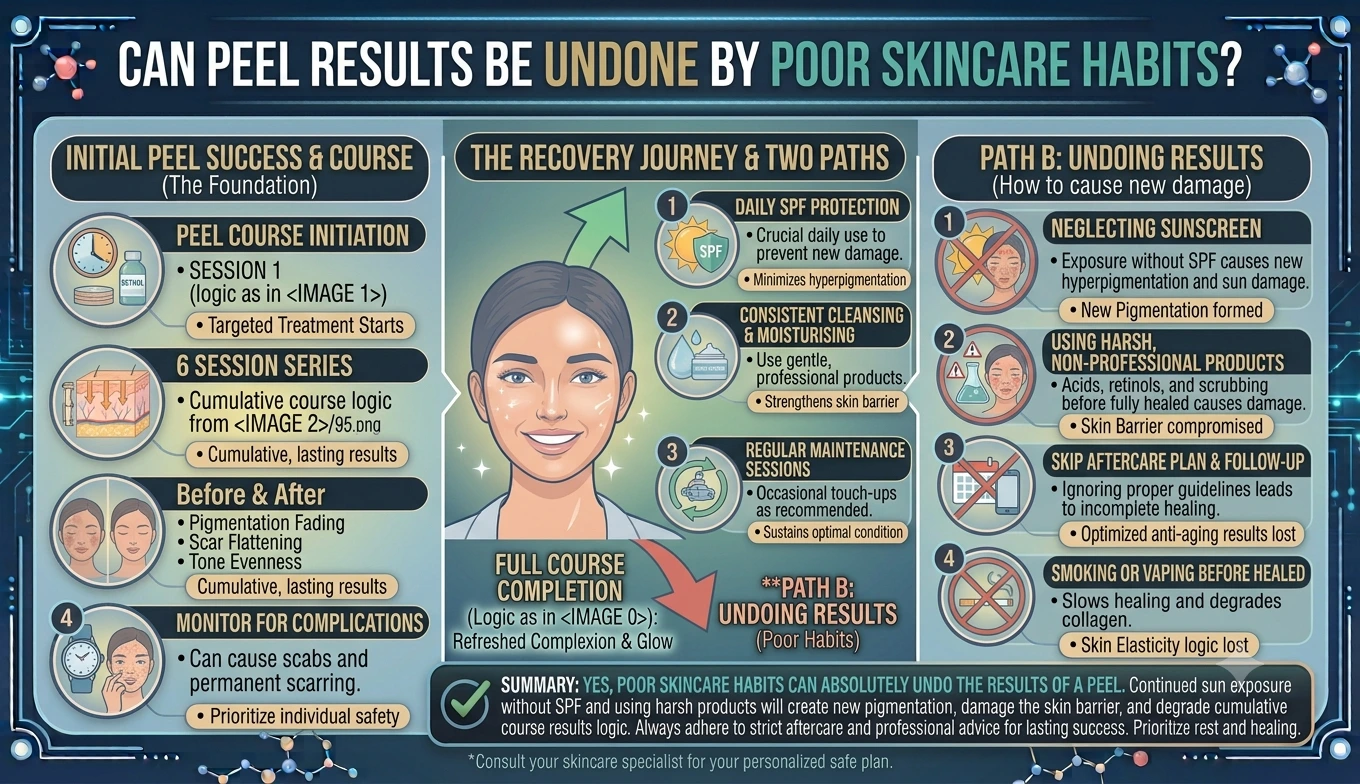
Can Peel Results Be Undone by Poor Skincare Habits ?
Yes, poor skincare habits can absolutely undo or significantly compromise the visible results achieved from a professional resurfacing session. Inadequate sun protection, aggressive physical scrubbing, picking at flaking tissue, and using unsupportive home care products disrupt the critical recovery phase and compromise the delicate epidermal barrier. Incorporating a professional treatment like the Trexyne Peel Professional Algae Resurfacing Treatment
initiates vital cellular turnover through microscopic marine spicules. However, maintaining that smooth, refined, and glowing complexion requires consistent, protective home care. Understanding how daily habits impact post-treatment recovery helps clients protect their clinical investment and maintain long-term skin health.
The Biological Connection Between Clinical Resurfacing and Home Care
Achieving a radiant, refreshed complexion requires a continuous partnership between professional clinic treatments and disciplined home care routines. A resurfacing treatment acts as a powerful catalyst for skin renewal, but home habits dictate how well that new skin matures and maintains its health.
The Role of Post-Treatment Epidermal Vulnerability
When skin undergoes professional resurfacing, the stratum corneum temporarily experiences altered barrier function as dead corneocytes loosen and detach. This active renewal phase reveals newly formed epidermal cells that are naturally more delicate and sensitive to external factors. Without proper daily support, these vulnerable surface cells become susceptible to environmental oxidation, transepidermal water loss, and inflammatory stress, which can quickly dull the initial brilliance of your treatment.
Why Home Habits Dictate Long-Term Treatment Success
Professional resurfacing accelerates natural desquamation, but daily habits determine whether your skin retains its smooth topography and balanced tone. Applying harsh formulations, exposing newly revealed skin to direct ultraviolet radiation, or neglecting basic lipid barrier support counteracts the benefits of clinical care. Practitioners must emphasize to clients that post-session aftercare is not merely optional maintenance, but an essential component of the resurfacing protocol itself.
The Consequences of Neglecting Daily Sun Protection
Ultraviolet radiation represents the single greatest threat to newly resurfaced skin, capable of rapidly degrading freshly revealed tissue and inducing unwanted tone irregularities.
How UV Exposure Affects Freshly Resurfaced Skin
Following a resurfacing session, the newly exposed epidermal surface contains lower levels of accumulated melanin, making it particularly vulnerable to sunlight. Unprotected exposure to ultraviolet rays during the active recovery window can trigger excess melanin production as an emergency protective response. This localized pigment surge can lead to uneven skin tone and hyperpigmentary marks, directly undermining the brightening benefits of your treatment.
Best Practices for Post-Resurfacing Photoprotection
To preserve skin clarity and protect delicate new cells, clients must commit to daily broad-spectrum sun protection regardless of weather conditions. Applying a generous layer of broad-spectrum sunscreen every morning shields the skin from oxidative stress and pigment triggers. Combining diligent sun defense with shade-seeking habits during peak daylight hours ensures that your refined complexion remains calm, bright, and evenly balanced for weeks after your clinic visit.
How Forced Exfoliation and Picking Damage Skin Renewal
The physical shedding phase is a normal, healthy part of skin renewal, but improper manual interference during this window can lead to lasting surface damage.
The Dangers of Picking and Pulling Flaking Skin
As the stratum corneum naturally detaches, clients are often tempted to pick, peel, or pull at loose fragments of dry skin. Manually removing tissue before it is biologically ready tears away immature epidermal cells that are still firmly anchored to the underlying tissue. This premature stripping creates micro-wounds, prolonged redness, and localized raw patches that take significantly longer to heal and increase the risk of post-inflammatory marks.
Why Aggressive Scrubbing Undermines Natural Shedding
Attempting to speed up the shedding process using harsh physical scrubs, abrasive sponges, or textured cleansing cloths causes severe friction trauma. Rather than creating an even surface, mechanical rubbing destabilizes the fragile skin barrier and induces widespread irritation. The skin must be allowed to complete its natural desquamation cycle at its own pace using gentle, hands-only cleansing techniques.
Disrupting the Skin Barrier with Inappropriate Home Topicals
Using overly aggressive, drying, or unsupportive skincare products during the post-treatment window can severely disrupt the skin’s protective mantle and halt visible progress.
The Risk of Introducing Harsh Surface Agents Too Soon
Introducing strong active topicals, highly perfumed formulations, or astringent cleansers immediately after a resurfacing session can cause severe stinging, localized redness, and barrier breakdown. Freshly stimulated tissue requires a calm, supportive environment to rebuild its lipid structures. Applying aggressive products prematurely disrupts intercellular cohesion, causing the skin to become reactive, tight, and uncomfortably dry.
Selecting Supportive Cleansers and Barrier Creams
During the initial recovery phase, your daily routine should center strictly around mild, non-stripping cleansers and deeply comforting moisturizers. Look for rich, simple formulations that replenish essential surface lipids and lock in ambient hydration. Practitioners looking to guide their clients toward suitable post-treatment protocols can explore options through our official Trexyne shop page
.
How Mechanical Algae Spicules Initiate Natural Renewal
Understanding the unique mechanism behind botanical resurfacing highlights why protective home care is so vital for preserving results.
Controlled Micro-Channel Formation via Marine Spicules
The Trexyne Peel
functions through a purely mechanical mechanism powered by micronized marine-algae spicules. Derived from natural ocean sources, these microscopic needle-like structures are gently worked into the skin by a trained professional. The spicules create thousands of controlled micro-channels within the upper stratum corneum without relying on chemical exfoliants.
Accelerating Cellular Movement Through Mechanical Action
This physical stimulation triggers the skin’s natural self-repair mechanism, signaling the lower epidermal layers to accelerate cell production. As fresh keratinocytes migrate upward, they naturally push older, dull surface cells outward, resulting in predictable desquamation over three to six days. Because this process relies entirely on mechanical action, the skin’s recovery path is highly controlled and predictable, provided it is not disrupted by poor home habits.
The Soothing and Supportive Role of Stabilised Vitamin E
Optimizing post-treatment outcomes requires delivering comforting, supportive nutrients to the tissue from the very moment of application.
Immediate Lipid Support and Antioxidant Conditioning
To support the skin during mechanical stimulation, the Trexyne Peel incorporates stabilised Vitamin E, or tocopherol, directly within its formulation. Tocopherol is a potent antioxidant naturally compatible with human skin lipids. Applied during the resurfacing process, stabilised Vitamin E helps neutralize free radicals, conditions the stratum corneum, and provides immediate comfort to soothe initial warmth and tightness.
Maintaining Barrier Stability Throughout Recovery
By fortifying the intercellular matrix with stabilised Vitamin E from the start, the skin maintains better moisture retention and structural stability throughout the shedding phase. This built-in support helps ensure that desquamation occurs evenly and comfortably. However, clients must continue supporting this recovery process at home by applying simple, hydrating aftercare products to maintain barrier health.
Lifestyle Factors That Directly Impact Skin Recovery Speed
Beyond tropical creams and cleansing habits, daily lifestyle choices significantly influence how efficiently the skin repairs itself after a professional session.
The Impact of Dehydration and Inadequate Sleep
Skin regeneration is an energy-intensive biological process that relies heavily on systemic hydration and cellular rest. Inadequate daily water intake starves newly developing skin cells of vital moisture, leading to a dull, prolonged shedding phase. Similarly, chronic sleep deprivation elevates stress hormones like cortisol, which impairs natural barrier repair and slows cellular turnover.
Heat Exposure, Sweating, and High-Intensity Workouts
Engaging in strenuous exercise, hot yoga sessions, or saunas within the first forty-eight hours post-treatment can compromise your results. Heavy sweating introduces salty fluid onto freshly stimulated skin, leading to intense stinging and localized heat buildup. Elevated body temperature can also exacerbate erythema and prolong tissue recovery, making a temporary pause on intense heat exposure necessary.
Establishing a Sustainable Post-Peel Aftercare Routine
A well-structured home care plan protects your investment, maintains continuous radiance, and prepares your skin for future clinical sessions.
Step-by-Step Aftercare Protocol for the First Week
For the first forty-eight hours post-treatment, focus strictly on gentle, hands-only cleansing with lukewarm water, followed by a comforting barrier cream and broad-spectrum sun protection. From days three through six, as natural flaking begins, continue your simple, hydrating routine without picking or scrubbing. By day seven, as shedding concludes, you will enjoy a noticeably smoother, fresher, and more refined complexion.
Professional Guidance and Practitioner Consultations
Aesthetic practitioners play a crucial role in educating clients on proper post-treatment maintenance and identifying habit-related complications early. Practitioners seeking detailed technical guidance, protocol steps, or clinical support can reach out directly via the official Trexyne contact page
.
Combining Clinical Resurfacing with Disciplined Home Maintenance
Achieving long-term skin health is not a one-time event, but an ongoing cycle of professional treatment and dedicated home care.
Planning a Multi-Session Resurfacing Schedule
For optimal refinement of rough texture, dullness, and minor tone irregularities, practitioners often recommend a structured series of resurfacing sessions. Spacing appointments three to four weeks apart allows the epidermal barrier to recover completely while maintaining positive momentum in cellular renewal. Protecting your results between appointments ensures each session builds upon a healthy, resilient skin foundation.
Cultivating Lifelong Healthy Skincare Habits
Treating your skin with care after a professional session often inspires better long-term beauty habits. Committing to daily sun protection, gentle cleansing, and consistent moisture replenishment keeps your complexion looking vibrant, smooth, and youthful throughout the year. Discover more about our professional botanical formulations and clinical education standards by visiting the main Trexyne homepage
.
Conclusion
Professional resurfacing results can indeed be undone or compromised by poor skincare habits such as picking flaking skin, skipping daily sun protection, using aggressive physical exfoliants, or neglecting basic barrier hydration. Achieving and maintaining a luminous, refined complexion requires a harmonious partnership between clinical treatments and protective home care. By utilizing the pure mechanical action of marine-algae spicules combined with the soothing benefits of stabilised Vitamin E, the Trexyne Peel Professional Algae Resurfacing Treatment provides a predictable, controlled method for encouraging natural cell renewal. When supported by gentle home aftercare, diligent photoprotection, and healthy lifestyle choices, clients can preserve their brilliant results and enjoy a smoother, brighter, and more even-looking complexion long after leaving the clinic.
Frequently Asked Questions
Q: Will picking at flaking skin after a Trexyne Peel cause permanent damage or marks?
Picking at flaking skin can pull away immature tissue prematurely, leading to prolonged redness, raw patches, and post-inflammatory marks. It is crucial to let the tissue shed naturally while keeping the area well-moisturized with a simple barrier cream.
Q: How soon after a Trexyne Peel can I resume using my normal active skincare products?
You should wait until the physical shedding phase is completely finished and your skin barrier feels calm and fully restored, which typically takes seven to ten days. Consult your aesthetic practitioner for personalized timing based on your skin type.
Q: Can going to the gym or taking hot showers right after a peel ruin my results?
Heavy sweating and high heat within the first forty-eight hours can cause stinging, increased redness, and elevated skin inflammation. It is best to avoid intense workouts, saunas, and hot showers for two days following your resurfacing session.
Q: Why is sun protection so critical after a mechanical algae spicule resurfacing treatment?
Newly revealed skin cells have lower natural melanin protection and are highly susceptible to UV-induced damage. Failing to apply broad-spectrum sunscreen daily after resurfacing can trigger excess pigment production and result in an uneven skin tone.
Q: Is Trexyne Peel available for purchase as an at-home maintenance treatment between clinic visits?
No, Trexyne Peel is strictly a professional-only product sold exclusively to verified clinics and trained aesthetic practitioners. It requires professional expertise and assessment to apply safely and achieve optimal results.
Q: What should I do if my skin feels uncomfortably tight or dry a few days after my resurfacing session?
Tightness and mild dryness are normal signs that natural desquamation is underway. Apply a simple, rich lipid-replenishing moisturizer as needed throughout the day to soothe the skin, maintain comfort, and support the natural renewal process.