What Is the Fastest Way to Clear Dark Patches on Sensitive Skin?
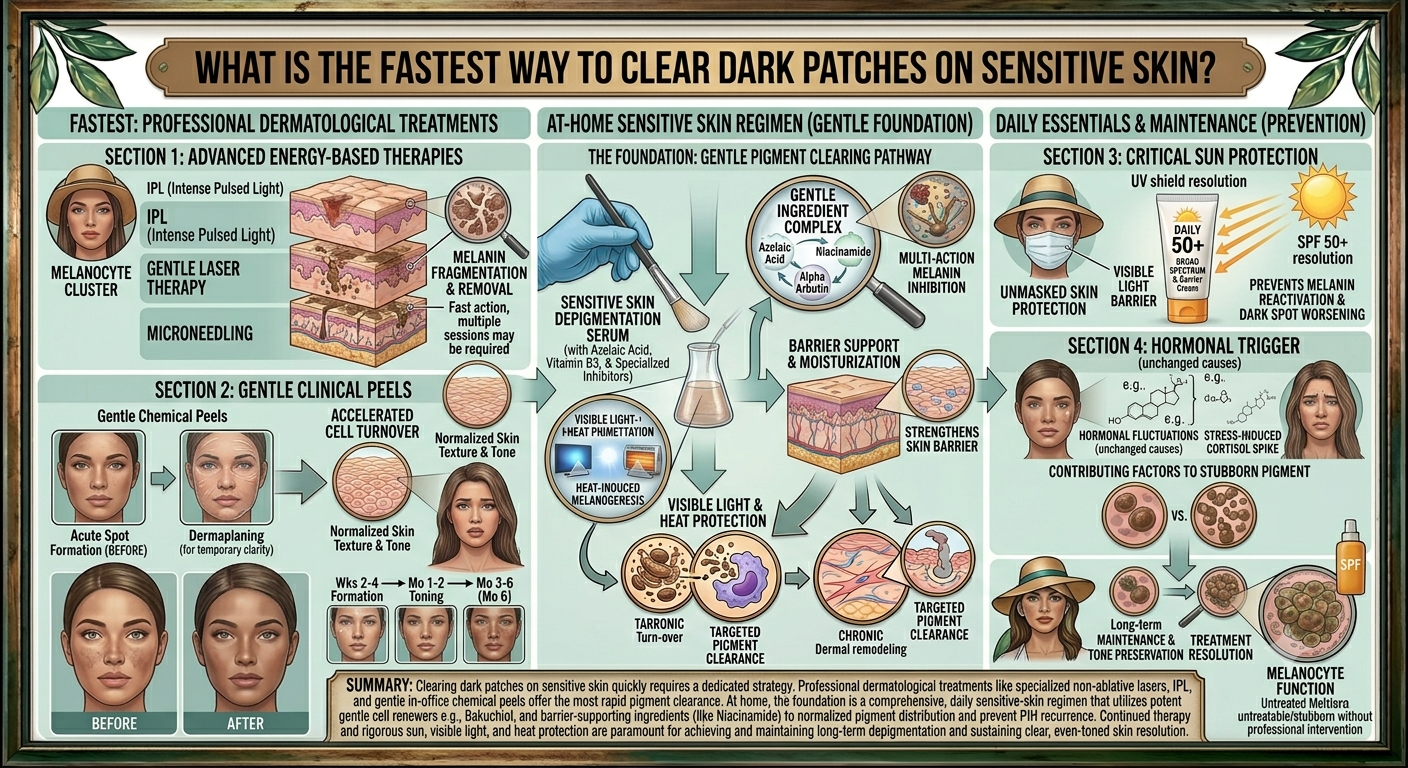
There is no single overnight fix for dark patches on sensitive skin, but the quickest realistic route is a combination of consistent daily SPF, targeted ingredients that calm rather than provoke, and a professionally administered resurfacing treatment that works without triggering inflammation. Sensitive skin complicates the picture because many of the fastest-acting brightening options rely on chemical exfoliation, and that is exactly what tends to backfire on reactive skin types. A more sustainable approach pairs gentle home care with an in-clinic treatment such as the Trexyne Peel, which resurfaces using a mechanical mechanism rather than acids. For clients who have tried and reacted to chemical options before, this distinction often makes the difference between visible progress and another flare-up.
Why Dark Patches Form in the First Place
Dark patches, also known as hyperpigmentation, develop when melanocytes produce excess pigment in response to a trigger. Common triggers include UV exposure, hormonal changes, inflammation, and skin trauma from picking, waxing, or harsh treatments. On sensitive skin, the inflammatory trigger is often the bigger issue. Reactive skin produces a stronger inflammatory response to irritation, and that inflammation itself can stimulate melanin production. This is known as post-inflammatory hyperpigmentation, and it explains why sensitive skin types often see patches appear after a breakout, a reaction to a new product, or even after a treatment that was too aggressive for their skin.
Hormonal pigmentation, sometimes called melasma, tends to present as broader patches across the cheeks, forehead, or upper lip, and can be influenced by pregnancy, contraception, or thyroid changes. UV-related pigmentation often appears as more defined spots in areas with the most sun exposure, such as the cheeks, nose, and backs of the hands. Post-inflammatory pigmentation tends to follow the exact shape of the original blemish or irritation, which is often the clue that helps a practitioner identify the cause during consultation.
Understanding this link matters because it changes the treatment priority. For sensitive skin, the goal is not just to target existing pigment but to avoid creating new inflammation while doing so. A treatment plan that ignores this risks a cycle where each session intended to fade pigmentation ends up creating the conditions for more to form.
Why Sensitive Skin Needs a Different Approach
Sensitive skin reacts faster and more visibly to active ingredients than resilient skin types. Redness, stinging, tightness, and flaking are common signs that a product or treatment is too harsh. Many conventional brightening routes rely on acids such as glycolic, lactic, or trichloroacetic acid to chemically exfoliate the skin. These can be effective for some skin types, but on sensitive skin they often cause irritation that worsens pigmentation rather than improving it.
This is the central challenge for practitioners working with reactive clients who want visible results. The treatment needs to resurface the skin and encourage cell turnover, but it cannot rely on chemical penetration that the skin cannot tolerate. This is where mechanical resurfacing methods become particularly relevant for sensitive skin protocols.
The Role of Mechanical Resurfacing
Mechanical resurfacing works differently to chemical exfoliation. Instead of dissolving the bonds between skin cells using acid, it creates controlled micro-channels at the skin’s surface using a physical, non-chemical mechanism. The Trexyne Peel is built around marine-algae spicules that achieve this resurfacing effect mechanically, with no acids involved at any stage.
For clients with sensitive skin, this distinction is not just a marketing point, it is a genuine clinical consideration. A mechanical mechanism allows the practitioner to influence the intensity of the treatment through technique and protocol, rather than relying on a fixed chemical reaction that can be harder to control once it is on the skin.
How Marine-Algae Spicules Work
Marine-algae spicules are naturally occurring structures that, when applied correctly, create fine, controlled micro-channels in the skin’s outer layers. This stimulates the skin’s natural renewal process without the chemical irritation associated with acid-based peels. Because the mechanism is physical rather than chemical, there is no unpredictable penetration depth to manage, which gives practitioners more confidence when working with reactive skin types.
Why Vitamin E Matters During Recovery
Resurfacing treatments place a temporary demand on the skin’s barrier, and how the skin recovers afterwards matters just as much as the treatment itself. The Trexyne Peel is infused with stabilised tocopherol, a form of Vitamin E that supports the skin’s recovery phase from the very first application. This is particularly relevant for sensitive skin, where the recovery window is often where irritation or rebound redness can occur.
A treatment that supports recovery alongside resurfacing helps reduce the risk of the inflammatory response that can lead to further pigmentation. This is one of the reasons mechanical resurfacing paired with a supportive ingredient profile tends to suit reactive skin better than aggressive chemical options.
Building a Realistic Timeline for Visible Improvement
Clients asking for the fastest route to clearer skin often expect results within days. It is worth setting honest expectations early. Dark patches that have built up over months or years will not disappear after one session, regardless of the treatment used. What can genuinely speed up visible progress is consistency, the right intensity for the skin type, and avoiding setbacks caused by irritation.
A tiered protocol, where intensity is matched to the client’s skin type and expectations, tends to produce more reliable results over a realistic timeframe than chasing a single dramatic session. This is exactly the approach the Trexyne Peel is designed around, allowing practitioners to scale intensity appropriately rather than applying a one-size-fits-all treatment.
Why Predictable Downtime Matters for Sensitive Clients
Sensitive skin clients are often more anxious about downtime than other clients, having previously experienced reactions that took longer to settle than expected. A tiered protocol with predictable downtime allows practitioners to set clear, accurate expectations before treatment, which improves client confidence and treatment compliance. Predictability also makes it easier to plan a treatment course around a client’s lifestyle, work commitments, or upcoming events.
Daily Habits That Support Faster Results
In-clinic treatment works best when supported by consistent daily habits between sessions. Clients sometimes assume the treatment itself is doing all the work, but home care between appointments has a real impact on how quickly and how visibly pigmentation fades. For sensitive skin specifically, the following habits make a meaningful difference:
- Daily broad-spectrum SPF, reapplied if the client is outdoors for extended periods
- Avoiding picking, scrubbing, or over-exfoliating at home between professional treatments
- Using gentle, fragrance-free skincare that supports rather than challenges the barrier
- Avoiding hot water and prolonged sun exposure immediately after a resurfacing session
These habits will not replace professional treatment, but they protect the results of each session and reduce the risk of new pigmentation forming from incidental irritation.
Why Professional-Only Treatments Matter for This Concern
Hyperpigmentation on sensitive skin is a concern that benefits from professional assessment rather than guesswork. A trained practitioner can identify whether the pigmentation pattern suggests sun damage, hormonal influence, or post-inflammatory changes, and tailor the protocol accordingly. The Trexyne Peel is designed for use exclusively by trained aesthetic professionals, which means every application is backed by clinical judgement rather than a generic at-home routine.
This professional-only approach also means the intensity of each treatment can be adjusted in real time based on how the client’s skin is responding, something that is simply not possible with an over-the-counter product used without supervision.
What to Look for in a Practitioner-Led Protocol
Not every resurfacing treatment is suitable for sensitive, pigmentation-prone skin. When researching options, it is worth asking whether the treatment uses a mechanical or chemical mechanism, whether the intensity can be adjusted across a tiered protocol, and whether the formulation includes any ingredients to support recovery. These questions matter more for sensitive skin than for any other skin type, since the margin between a beneficial treatment and an irritating one is narrower.
Clinics offering the Trexyne Peel can talk clients through exactly how the marine-algae spicule mechanism works and how a treatment plan would be tailored to their skin.
Practitioners interested in stocking professional botanical peel treatments can view the full range via the Trexyne shop, or get in touch through the Trexyne contact page for further product information.
Setting Expectations With Clients
Part of delivering good results for sensitive skin clients is managing expectations honestly from the first consultation. Explaining that visible improvement builds over a course of treatments, rather than a single session, helps clients commit to the protocol rather than abandoning it after one appointment expecting immediate results. It also reduces the temptation for clients to seek faster, harsher alternatives between sessions that could undo progress.
A short pre-treatment patch test and an honest conversation about the client’s skin history go a long way towards building trust, particularly with clients who have been let down by overly aggressive treatments in the past. Taking the time to explain why a mechanical, tiered approach is being recommended often reassures clients more than any promise of speed could.
Practitioners can find more detail on the brand’s approach to botanical resurfacing on the Trexyne homepage.
Conclusion
Dark patches on sensitive skin are usually the result of UV exposure, hormonal changes, or an inflammatory trigger that stimulates excess melanin production. Because sensitive skin reacts strongly to irritation, the fastest realistic path to visible improvement is not the harshest treatment available, but one that resurfaces effectively while protecting the skin’s barrier throughout. A mechanical, acid-free approach such as the Trexyne Peel may help support a brighter, more even-looking complexion over a course of professionally guided treatments, working alongside daily SPF and gentle home care to protect results between sessions. For sensitive skin in particular, predictable, tiered, professional-led treatment tends to deliver more reliable outcomes than chasing speed alone.
FAQs
Q: What is the fastest way to treat dark patches on sensitive skin without irritation?
A combination of daily SPF, gentle home care, and a professional resurfacing treatment that avoids chemical exfoliants tends to give the most reliable results without triggering further irritation. Mechanical resurfacing options can be a suitable choice for reactive skin types.
Q: Can sensitive skin have a resurfacing peel safely?
Yes, provided the treatment is matched to the skin’s sensitivity level. A tiered protocol that allows intensity to be adjusted, combined with a mechanical rather than chemical mechanism, can make resurfacing more manageable for reactive skin.
Q: Why do dark patches keep coming back on reactive or sensitive skin?
Reactive skin tends to produce a stronger inflammatory response to triggers like sun exposure, breakouts, or irritation, and this inflammation can stimulate further melanin production. Without consistent SPF use and gentle aftercare, new patches can continue to form even after treatment.
Q: Is the Trexyne Peel suitable for clients with sensitive skin?
The Trexyne Peel uses a mechanical mechanism with no acids involved, and includes stabilised Vitamin E to support the skin’s recovery phase. Practitioners can assess each client’s skin and select an appropriate intensity within the tiered protocol.
Q: How long does it take to see visible improvement in dark patches?
Timelines vary depending on how long the pigmentation has been present and the individual’s skin response, but visible improvement is generally associated with a course of treatments rather than a single session, supported by consistent daily SPF use.
Q: What is the difference between a chemical peel and a mechanical resurfacing treatment like Trexyne?
A chemical peel relies on acids to exfoliate the skin, while a mechanical resurfacing treatment such as the Trexyne Peel uses marine-algae spicules to create controlled micro-channels without any chemical exfoliants involved.
Q: Can I buy the Trexyne Peel for home use?
No, the Trexyne Peel is sold strictly to verified practitioners and clinics and is intended for professional use only.