What Should I Tell My Practitioner Before a Peel Session?
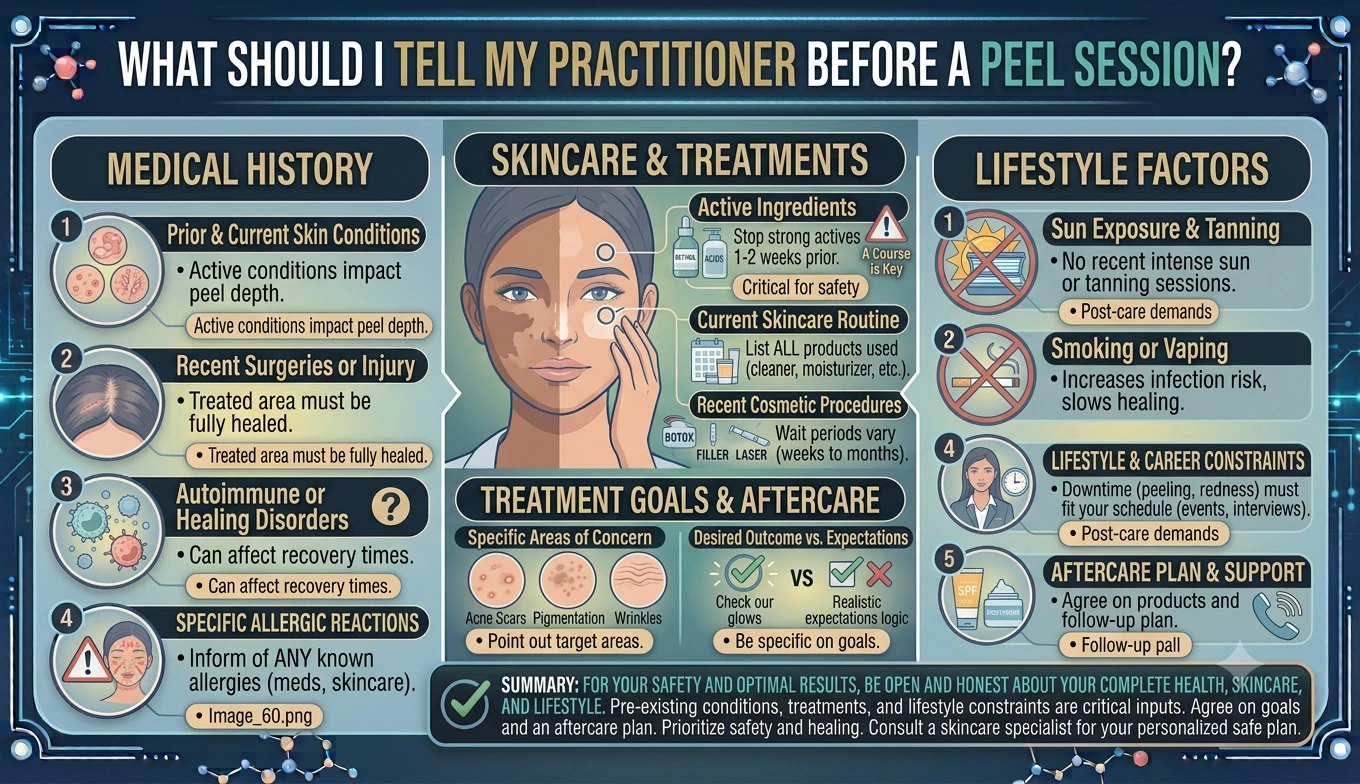
Open and honest communication with your aesthetic practitioner before undergoing a professional resurfacing treatment is the single most important factor in achieving safe, predictable, and glowing results. Before your treatment begins, you should inform your practitioner about your current daily skincare routine, recent aesthetic procedures, medical history, lifestyle habits, and upcoming social events. Sharing these crucial details allows your skincare professional to assess your suitability and select the precise protocol tier for your needs. When using an advanced mechanical formula like the Trexyne Peel Professional Algae Resurfacing Treatment
, transparent disclosure ensures your practitioner can safely tailor application pressure and massage duration to match your skin barrier strength while delivering optimal desquamation and surface refinement.
Why Full Disclosure Matters in Professional Aesthetic Consultations
A thorough pre-treatment consultation forms the foundation of every successful aesthetic journey. Skipping details or underreporting recent skin activities can lead to unexpected reactions, compromised barrier health, or disappointing treatment outcomes.
Establishing a Safe Baseline for Skin Resurfacing
Every individual possesses a unique epidermal barrier with varying levels of tolerance, hydration, and resilience. During your consultation, your practitioner evaluates your skin’s current baseline condition to determine if your tissue can handle active resurfacing. Disclosing your complete skin history helps your professional identify potential underlying sensitivities, compromised barrier function, or subclinical inflammation before applying any treatment.
Preventing Adverse Skin Reactions and Over-Exfoliation
Aesthetic treatments rely on controlled tissue stimulation to encourage cell renewal. If your skin has already been thinned or sensitized by recent unmentioned treatments, adding further resurfacing can easily overwhelm the tissue. Full transparency eliminates guesswork, allowing your practitioner to prevent over-stimulation, prolonged erythema, or excessive shedding.
Detailing Your Daily Skincare Routine and Active Ingredients
The products you apply at home every morning and evening significantly influence how your skin responds to professional clinic treatments. You must provide a comprehensive list of every product in your current regimen.
Disclosing Recent Topicals and Sensitising Agents
Inform your practitioner if you have used strong surface-refining topicals, retinoids, or exfoliating liquids in the days leading up to your session. Even gentle over-the-counter smoothing serums can alter your stratum corneum density. Sharing the exact timing of your last product application enables your practitioner to determine if your skin needs a short resting period before receiving professional mechanical stimulation.
Documenting Cleansers, Moisturisers, and Sunscreen Usage
Your choice of basic maintenance products reveals a great deal about your overall skin barrier health. Tell your practitioner whether you use heavy lipid-rich creams, lightweight gels, or active cleansing washes. Disclosing your daily sun protection habits is equally essential, as post-resurfacing care requires diligent broad-spectrum sun defense to protect newly revealed epidermal cells.
Reporting Recent Aesthetic Procedures and Treatments
Stacking multiple aesthetic treatments without adequate recovery intervals between them places undue stress on the skin barrier. Your practitioner needs a clear timeline of all professional procedures performed in recent weeks.
Facial Treatments, Extractions, and Dermaplaning
Tell your practitioner if you have had recent deep-cleansing facials, manual extractions, or mechanical blading procedures within the last month. Treatments that remove surface cells or place physical pressure on the follicles alter tissue responsiveness. Allowing proper time between sessions ensures your skin barrier remains stable prior to mechanical spicule resurfacing.
Injectables and Advanced Clinical Interventions
Always declare recent cosmetic injections, such as anti-wrinkle treatments or dermal fillers, in the treatment area. Practitioners generally recommend waiting at least fourteen days after receiving injectables before undergoing mechanical resurfacing. This precaution prevents localized swelling, pressure discomfort, or unwanted product displacement during application. You can explore the full range of professional formulations available to verified clinics on our Trexyne shop page
.
Discussing Medical History, Allergies, and Sensitivities
Your underlying physical health directly impacts your skin’s healing capacity, inflammatory response, and speed of cellular renewal.
Skin Conditions, Cold Sores, and Micro-Circulation
Be completely transparent about any history of facial cold sores, localized eczema, or inflammatory skin conditions. Mechanical stimulation can sometimes trigger latent viral flare-ups if prophylactic measures are not taken. Additionally, inform your practitioner if you experience chronic facial redness or fragile capillaries, as this influences how firmly they apply the treatment.
Systemic Health and Medication Disclosures
Certain systemic medications and lifestyle health factors alter tissue healing and moisture retention. Tell your practitioner about any prescription medications, health changes, or recovery challenges you have experienced recently. This biological context guides your practitioner in managing treatment expectations and planning appropriate post-care support.
Sharing Lifestyle Habits and Environment Factors
Your daily environment and personal habits play a major role in how smoothly your skin recovers following a resurfacing session.
Sun Exposure, Travel Plans, and Outdoor Activities
Always disclose any recent intense sun exposure or upcoming holiday plans in warm, bright climates. Freshly resurfaced skin requires strict protection from direct sunlight to maintain a calm, even appearance. If you plan to travel within a week of your session, your practitioner may adjust the treatment intensity or advise rescheduling until you return.
Exercise Routines and Heat Exposure
Inform your practitioner if you engage in regular high-intensity workouts, hot yoga, or frequent sauna visits. Activities that induce heavy sweating and elevated body heat during the first forty-eight hours post-treatment can heighten warmth and irritation. Your practitioner will advise you on the exact timeframe for pausing intense exercise while your skin undergoes its initial renewal phase.
Outlining Upcoming Social and Professional Events
Managing your personal and professional calendar alongside your aesthetic treatments ensures that your skin looks its best when it matters most.
Event Timelines and Event Planning
Tell your practitioner if you have major professional commitments, public speaking engagements, or social events scheduled within the next ten days. Because resurfacing treatments encourage natural shedding, timing is critical. Your practitioner can help you schedule your session far enough in advance so that any temporary flaking completely resolves before your important date.
Matching Protocol Intensity to Your Calendar
When your practitioner understands your upcoming schedule, they can choose the ideal application tier. If you have an event in five days, a lighter protocol offers subtle refinement with minimal downtime. If your calendar is completely clear for a week, a more intensive application can be used to address deeper texture concerns without interrupting your routine.
How Practitioners Use Your Information with the Trexyne Peel
The information you provide directly informs how your practitioner customises your treatment using the unique mechanical properties of the Trexyne Peel.
Tailoring the Mechanical Marine Spicule Application
The Trexyne Peel
relies on microscopic marine-algae spicules to create controlled micro-channels in the upper epidermal layers. By understanding your skin history, your practitioner can carefully adjust massage pressure, duration, and protocol density. This physical, non-chemical mechanism stimulates natural desquamation and accelerates cell movement from within, keeping the renewal process predictable and controlled.
Leveraging Stabilised Vitamin E for Recovery
Your consultation details also guide how your practitioner supports your skin’s recovery phase. The Trexyne Peel incorporates stabilised Vitamin E, or tocopherol, directly into its botanical matrix. This powerful antioxidant provides immediate lipid support and conditions the stratum corneum from the very first application. Your practitioner uses your health and lifestyle information to pair this Vitamin E support with an appropriate, simple home recovery plan.
Navigating Aftercare Guidelines with Your Practitioner
Communication does not end when you leave the treatment room. Establishing clear aftercare instructions during your consultation ensures you know exactly how to manage your skin at home.
Following Simple Post-Treatment Instructions
Your practitioner will outline straightforward post-care guidelines tailored to your specific protocol tier. For the first few days, you will need to keep your routine clean, simple, and hydrating. Avoid picking or pulling at flaking skin as it sheds naturally, and avoid introducing aggressive surface products until full barrier stability is restored.
When to Contact Your Aesthetic Clinic
Your practitioner will explain normal recovery sensations, such as mild warmth, subtle prickling, and light shedding. They will also provide guidelines on when to reach out if you have questions during your recovery window. Verified practitioners seeking further protocol details or technical guidance can connect with our team through the official Trexyne contact page
.
Long-Term Consultation Strategy for Continuous Results
Building an ongoing relationship with your aesthetic professional leads to progressively better skin outcomes over time.
Adjusting Protocols Across Seasons and Life Changes
As seasons change and your personal lifestyle evolves, your skin’s needs shift accordingly. Updating your practitioner at every appointment allows them to adapt your resurfacing frequency and protocol intensity. Autumn and winter sessions might focus on clearing summer dullness, while spring treatments prepare the skin for lighter seasonal hydrators.
Creating a Sustainable Professional Care Plan
A honest, collaborative relationship with your practitioner ensures every treatment builds upon the success of the last. By pairing clear communication with the advanced mechanical benefits of botanical resurfacing, you maintain a smooth, refined, and vibrant complexion throughout the year. Learn more about our brand philosophy and professional training standards on the main Trexyne homepage
Conclusion
Preparing for a professional resurfacing session begins long before you lie down on the treatment bed. Disclosing your daily skincare routine, recent aesthetic procedures, health history, lifestyle habits, and upcoming calendar events empowers your practitioner to deliver a safe, bespoke treatment tailored to your exact needs. By utilizing a pure mechanical mechanism powered by marine-algae spicules and supported by stabilised Vitamin E, the Trexyne Peel Professional Algae Resurfacing Treatment offers trained professionals a controlled, predictable way to refine skin texture and support natural renewal. Clear communication ensures your treatment path is smooth, comfortable, and highly effective, leaving your skin looking refreshed and visibly radiant.
Frequently Asked Questions
Q: What should I do if I forgot to tell my practitioner about a recent product I used before my peel?
You should notify your practitioner immediately before they begin the treatment. Sharing this information allows them to assess your current skin barrier and adjust the massage pressure or protocol tier accordingly to prevent over-stimulation.
Q: How long before my Trexyne Peel session should I pause active home skincare products?
It is generally recommended to pause aggressive surface-refining products and topicals for several days prior to your session. Your practitioner will provide specific timing guidance during your initial consultation based on your skin type.
Q: Why does my practitioner need to know about my upcoming holiday plans before a resurfacing treatment?
Freshly resurfaced skin is more sensitive to direct sunlight. Telling your practitioner about travel plans allows them to choose a lighter protocol tier or help you schedule the session so your skin fully recovers before sun exposure.
Q: What makes the mechanical action of Trexyne Peel unique compared to traditional resurfacing?
Trexyne Peel works through a purely mechanical mechanism using natural marine-algae spicules to create controlled micro-channels. It triggers natural skin renewal without chemical exfoliants, offering a predictable recovery phase managed easily by trained professionals.
Q: Can I buy Trexyne Peel to perform my own pre-consultation treatment at home?
No, Trexyne Peel is strictly a professional-only product available exclusively to verified clinics and trained aesthetic practitioners. It requires professional expertise to assess skin readiness and perform the treatment safely.
Q: How soon after my consultation can I receive a Trexyne Peel treatment?
If your skin barrier is healthy and you have no recent contraindications, your practitioner may perform the treatment on the same day as your consultation. If you have recently used strong topicals or had other procedures, they may advise waiting a week or two.