Can I Have a Trexyne Peel Before a Job Interview?
Planning your aesthetic calendar around important career milestones requires careful consideration of skin recovery times and treatment outcomes. If you are preparing for an upcoming job interview, you can certainly schedule a professional resurfacing session to enhance your complexion, provided you allow an appropriate window for recovery. Performing a Trexyne Peel Professional Algae Resurfacing Treatment
approximately seven to ten days before your interview allows your skin to complete its natural shedding phase and present a refined, smooth appearance. Understanding treatment timelines ensures you arrive at your meeting feeling confident, polished, and fresh without experiencing unexpected surface flaking or lingering redness.
The Visual Impact of Skin Health on Professional Confidence
First impressions in a professional setting carry significant weight during career interviews. How your skin looks can directly influence your personal posture, self-assurance, and overall presence when entering a boardroom or video conference.
First Impressions and Non-Verbal Communication
When you step into an interview room, your appearance communicates self-care, attention to detail, and poise before you speak a single word. Dull, congested, or uneven skin can make you feel self-conscious, leading to subtle nervous habits or compromised eye contact. A bright, well-maintained complexion naturally projects vitality and confidence, helping you focus entirely on articulating your professional qualifications.
The Desire for Immediate Skin Polish Before Important Events
Many professionals seek aesthetic treatments right before major career events to eliminate surface dullness and achieve a radiant glow. However, rapid skin refinement requires balancing immediate visual goals with biological recovery timelines. Choosing the right resurfacing modality ensures you achieve that desired polish without subjecting your skin to unpredictable irritation or prolonged redness on the big day.
How Mechanical Algae Resurfacing Prepares the Skin
Achieving a refined complexion before a high-stakes event requires a clear understanding of how different resurfacing methods interact with the skin barrier.
Understanding the Marine Spicule Mechanism
The Trexyne Peel
offers a sophisticated alternative to traditional resurfacing methods by utilizing natural marine-algae spicules. These microscopic, needle-like botanical structures penetrate the upper layers of the stratum corneum during application. Unlike coarse physical scrubs that rub horizontally across the surface, marine spicules create controlled vertical micro-channels that stimulate natural desquamation from within.
Why Mechanical Exfoliation Offers Predictable Outcomes
Because this process relies strictly on a physical, mechanical mechanism without relying on harsh chemical interactions, the tissue response remains remarkably consistent. The skin recognizes the micro-channels as a signal to accelerate its own natural renewal cycle. The microscopic spicules naturally work their way out of the epidermis within forty-eight to seventy-two hours as fresh cells migrate upward, creating a clean, manageable timeline ideal for event planning.
Ideal Timelines: When to Schedule Your Peel Before an Interview
Timing is everything when preparing your skin for an upcoming interview. Booking your session at the right time guarantees that your skin finishes peeling well before your appointment.
The Seven to Ten Day Golden Window
The ideal time to receive a resurfacing session is seven to ten days prior to your job interview. This timeframe provides ample opportunity for the initial skin response to settle, allows the full shedding phase to conclude naturally, and gives the fresh underlying tissue time to stabilize. By day seven, any temporary flaking completely subsides, leaving behind a smooth and vibrant surface.
Why Last-Minute Treatments Should Be Avoided
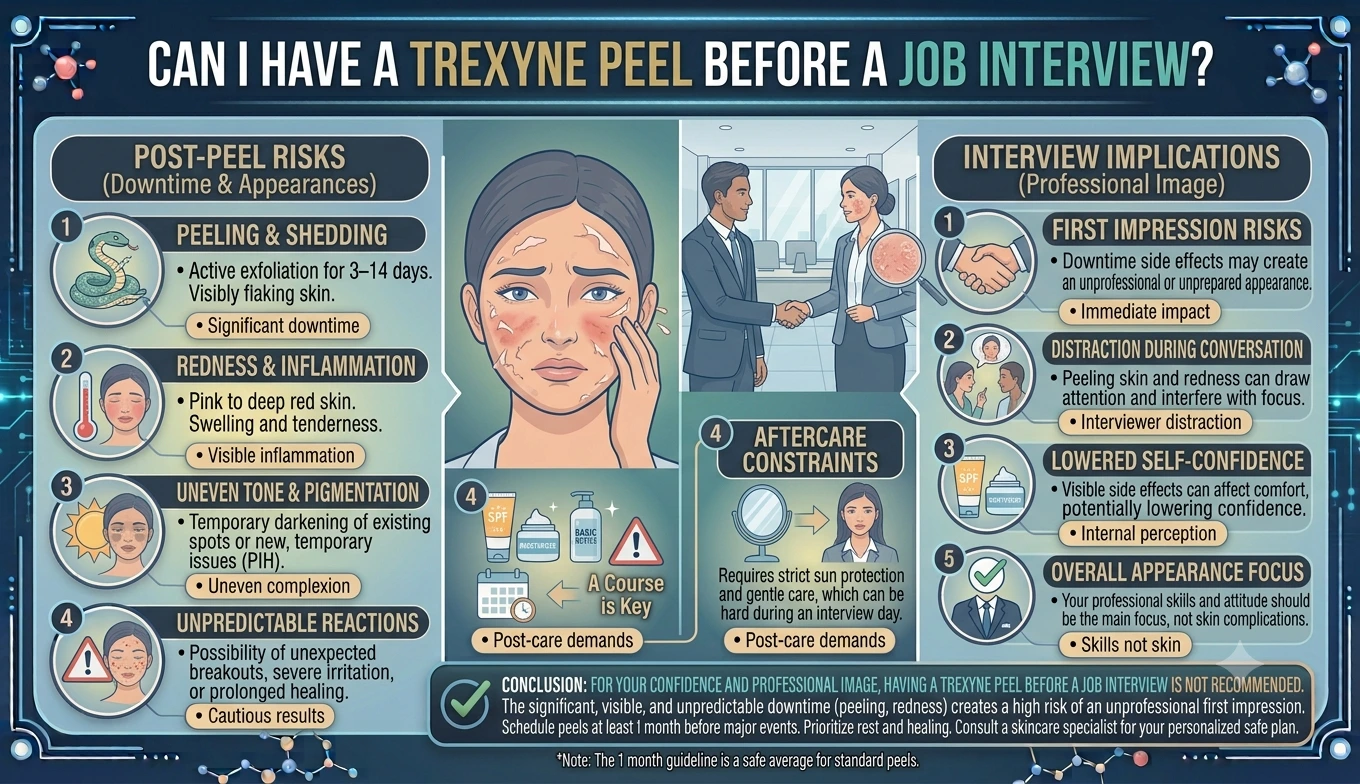
Receiving any intensive professional resurfacing treatment forty-eight or seventy-two hours before an interview is never recommended. During the first three days post-treatment, the skin actively undergoes its renewal response, which involves mild redness, warmth, and the start of physical shedding. Attempting to compress this timeline risks visible flaking and temporary makeup disruption during your interview.
What to Expect: Day-by-Day Post-Treatment Recovery
Knowing the exact progression of your recovery allows you to plan your work week and interview preparation with complete peace of mind.
Days One to Three: Initial Tissue Response and Activation
Immediately following your session, you will experience a mild warmth and a subtle pricking sensation when touching your face, indicating that the marine spicules are actively stimulating the tissue. Days one and two usually bring moderate surface redness similar to a light flush. By day three, the skin begins to feel slightly tight as old surface cells prepare to separate from the underlying tissue.
Days Four to Seven: The Shedding and Renewal Phase
Active shedding typically occurs between days three and six as the skin naturally releases dead corneocytes. This process appears as light to moderate flaking across different areas of the face. By day seven, shedding ceases entirely, revealing a smoother, softer, and more even-looking complexion. Practitioners can review the complete professional product details on our Trexyne shop page
to better guide their clients through this sequence.
The Role of Stabilised Vitamin E in Post-Peel Recovery
Accelerating comfort and maintaining barrier integrity during the post-treatment phase is essential when working against a fixed event deadline.
Supporting Barrier Comfort During the Recovery Phase
The Trexyne Peel formulation incorporates stabilised Vitamin E, also known as tocopherol, directly alongside marine spicules. Tocopherol provides immediate lipid support to the newly stimulated stratum corneum. This nutrient helps soothe the skin from the very first application, calming initial warmth and supporting the natural lipid mantle throughout the recovery days.
Facilitating a Smooth Transition to Fresh Skin
By delivering antioxidant nourishment during the mechanical stimulation phase, stabilised Vitamin E helps maintain optimal moisture balance within the skin. This ensures that the subsequent shedding process occurs evenly rather than in harsh, patchy flakes, allowing you to transition smoothly to a refined complexion well ahead of your interview date.
Choosing the Right Protocol Tier for Event Preparation
To accommodate individual schedules and skin sensitivity levels, treatment intensity can be customized using a tiered application framework.
Level 1 Maintenance Protocol for Quick Refreshing
If your interview is approaching in less than a week, a Level 1 protocol offers a gentle approach. This application uses lighter pressure and shorter massage times to provide mild refining benefits. Downtime is kept to a absolute minimum, with light redness resolving within twenty-four hours and minimal flaking around day three, making it a safer option for tight schedules.
Level 2 Advanced Protocol for Maximum Radiance
For clients who book their appointment well within the recommended ten-day window, a Level 2 protocol delivers deeper resurfacing. This level embeds a higher density of spicules to address stubborn textural roughness and dullness. The resulting shedding is slightly more pronounced but yields a noticeably brighter and more refined skin surface by day seven.
Managing Post-Peel Aftercare Around Your Interview Schedule
Proper aftercare ensures that your skin heals efficiently and looks its absolute best when you meet your potential employer.
Daily Skincare Rules During the Shedding Window
During the recovery week, keep your daily routine exceptionally simple and supportive. Cleanse gently with a mild, non-irritating formula and apply hydrating, lipid-rich creams to keep the skin comfortable. Never pick, pull, or manually scrub flaking skin, as forced exfoliation can cause localized raw patches and delay total recovery.
Professional Guidance and Support
Aesthetic professionals must educate clients on precise aftercare protocols to guarantee flawless results before major life events. Clinic owners and practitioners seeking technical guidance or protocol details can reach out directly via the official Trexyne contact page
for comprehensive support.
Applying Makeup and Presenting a Professional Image
Knowing how and when to reintroduce decorative cosmetics ensures a polished look on the day of your interview.
Cosmetic Application Guidelines During Recovery
You should avoid wearing heavy liquid foundations or powders during the active shedding phase from days two through five. Applying makeup over flaking skin can accentuate dry patches and clog newly formed micro-channels. Once shedding completes around day six or seven, makeup will glide onto your refined skin far more smoothly than before your treatment.
Final Touches on the Day of the Interview
On the morning of your interview, focus on deep hydration and sun protection. Apply a gentle moisturizer followed by a broad-spectrum sunscreen to safeguard your fresh skin cells. Your smooth, renewed skin will require minimal coverage, allowing your natural glow and professional presence to take center stage. To learn more about our botanical resurfacing philosophy, visit the main Trexyne homepage.
Conclusion
Scheduling a Trexyne Peel before a job interview is an excellent way to boost your professional confidence and achieve a radiant, well-cared-for appearance. By adhering to the recommended seven to ten day timing window, you give your skin adequate time to process the mechanical action of marine spicules, navigate the natural shedding phase, and reveal fresh, smooth tissue. Supported by stabilised Vitamin E and proper aftercare, this botanical resurfacing treatment helps refine surface texture and brightens your overall tone. With thoughtful planning, you can walk into your interview feeling calm, prepared, and entirely confident in your professional presentation.
Frequently Asked Questions
Q: Can I have a Trexyne Peel two days before my job interview?
Having a Trexyne Peel two days before an interview is not recommended. Days one to three involve mild redness, warmth, and the onset of natural shedding, which can interfere with makeup application and your overall visual presentation.
Q: Will my skin be noticeably flaking during my interview if I book seven days in advance?
If you schedule your treatment seven to ten days in advance, active flaking will typically be finished. Most clients complete their shedding process between days three and six, leaving the skin smooth and clear by day seven.
Q: How does a marine spicule peel differ from other resurfacing treatments before an event?
Marine spicules utilize a mechanical mechanism to create microscopic channels in the upper skin layers without chemical interaction. This physical stimulation produces a predictable, manageable recovery phase that fits reliably into event planning.
Q: Can I wear makeup to my interview if my skin is still slightly peeling?
It is best to avoid heavy makeup over active peeling, as powder and foundation can cling to dry flakes and emphasize uneven texture. Allowing the shedding phase to conclude naturally yields the smoothest makeup application.
Q: Is the Trexyne Peel available for purchase to do a quick treatment at home before an interview?
No, the Trexyne Peel is strictly a professional-only product available exclusively to verified clinics and trained aesthetic practitioners. It requires professional skill and training to apply safely and achieve optimal outcomes.
Q: What should I do if my interview is rescheduled to an earlier date during my shedding phase?
If your interview moves up into your shedding window, focus on heavy hydration with simple, lipid-rich moisturizers to soothe dry patches. Keep your skincare routine gentle and avoid picking at any flaking areas.