How Many Days of Downtime Does a Professional Peel Require?
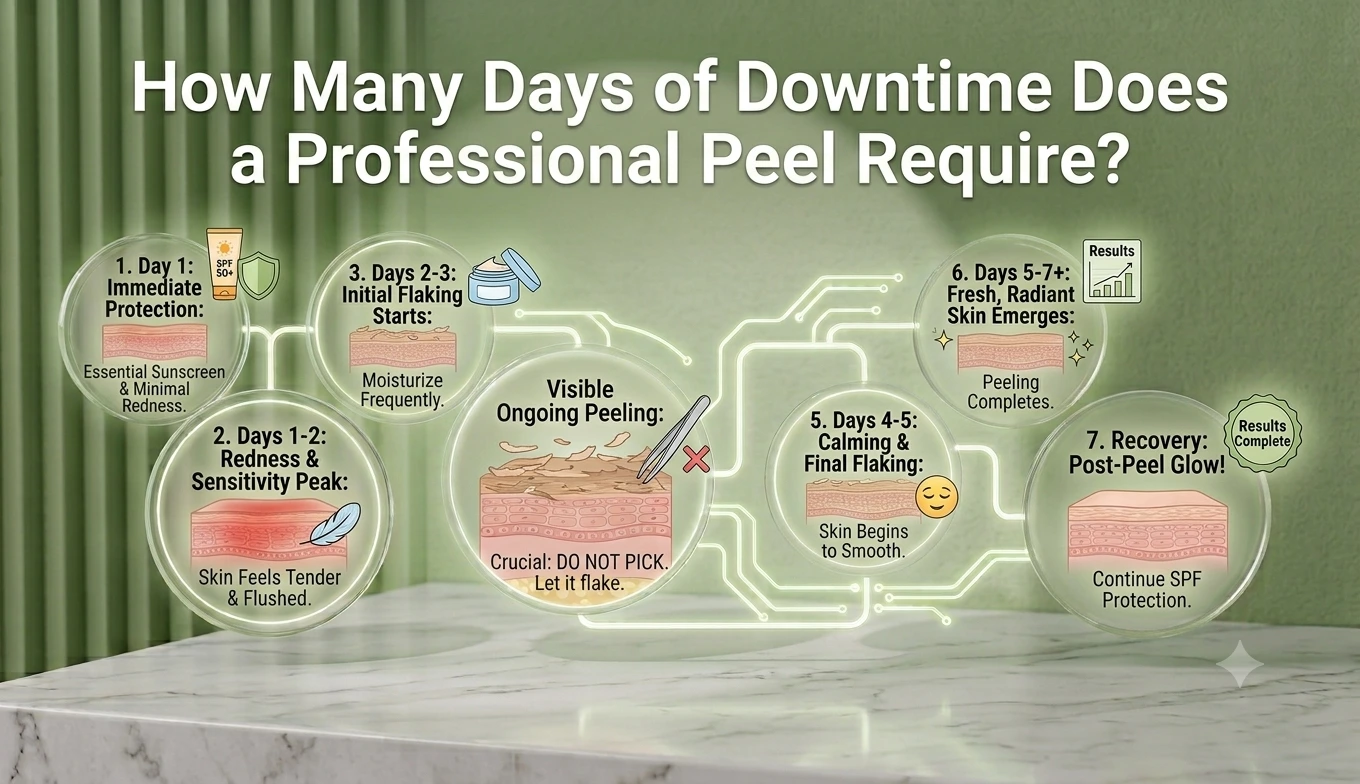
For most clients receiving a professional resurfacing treatment at a moderate intensity, visible recovery typically takes between five and seven days. The first 48 hours tend to involve some redness and tightness, followed by light superficial shedding over the next few days, with the skin settling into a noticeably refreshed state by the end of the first week. That said, downtime is not fixed. It depends significantly on the type of treatment, the intensity used, and the individual’s skin. The Trexyne Peel is specifically designed around the principle of predictable, manageable downtime, using a mechanical resurfacing mechanism that supports a more consistent recovery experience than treatments with more variable outcomes. For practitioners and clients planning around appointments, events, and daily life, understanding what downtime actually involves and what influences its length is far more useful than a single number.
What Downtime After a Peel Actually Means
The word downtime is used loosely in the skincare industry and means different things to different practitioners and clients. It is worth being specific about what it actually involves in the context of professional resurfacing.
Downtime does not necessarily mean being confined to the house or unable to function normally. For most moderate-intensity resurfacing sessions, it means a period during which the skin looks and feels different from its normal state, during which certain activities need to be avoided, and during which makeup use is restricted or reduced.
In the first 48 hours, the skin typically appears flushed and may feel tight or mildly sensitive. This is the skin’s initial response to the resurfacing stimulus and reflects increased blood flow to the treated area as the repair process begins. Most clients can go about normal daily activities during this period, provided they avoid significant heat exposure, vigorous exercise, and anything that would require prolonged makeup use.
From around day three, light superficial shedding may become visible as the outer skin layers begin to shed and fresher cells move towards the surface. This shedding is normal and a positive indicator that the renewal process is working. It is not the same as dramatic peeling and does not require the client to stay home, but it does mean makeup should be kept minimal and applied and removed gently.
By the end of the first week, most clients at moderate intensity find the visible recovery has resolved and the skin looks clearer, brighter, and more refined than before treatment.
How Treatment Intensity Affects Downtime
Downtime is not uniform across all professional resurfacing sessions. The intensity of the treatment is the single most significant determinant of how long visible recovery takes, and this varies considerably even within the same treatment type.
A first session at a conservative intensity may involve barely any visible recovery beyond mild redness that settles within 24 hours. A more intensive session later in a treatment course, after the skin has been prepared by earlier sessions and the practitioner has progressed the intensity through the tiered protocol, may involve a more pronounced shedding phase and a recovery period of five to seven days.
The Trexyne Peel’s tiered protocol is designed precisely to give practitioners this kind of control. Rather than applying a fixed intensity regardless of the client’s skin or their stage in the treatment course, the practitioner selects the appropriate tier at each session. This means clients can have a realistic, session-specific expectation of their downtime rather than a generic estimate that may or may not apply to their particular appointment.
For clients who are new to resurfacing or who have sensitive skin, beginning at a conservative intensity within the tiered protocol produces a very manageable recovery that builds confidence before intensity is progressed. For clients further into a course with demonstrated tolerance, higher intensity sessions produce more significant renewal and a corresponding recovery period.
Why the Trexyne Peel’s Mechanism Supports Predictable Recovery
The mechanism of a resurfacing treatment directly influences the nature and predictability of its recovery period. Treatments that involve a chemical reaction in the skin can produce recovery periods that vary based on how the individual skin responds to the chemical process, which can make downtime harder to predict with precision.
The Trexyne Peel uses marine-algae spicules to create controlled micro-channels in the skin surface through a purely mechanical process. No chemical reaction takes place. The recovery period reflects the skin’s response to this mechanical disruption, which tends to be more consistent and predictable across different clients than recovery from chemical-based resurfacing. This is what is meant by the product’s principle of no surprises: the recovery profile is reliable enough for the practitioner to communicate it to the client with genuine confidence before the session.
Stabilised Vitamin E in the formulation supports the skin’s recovery from the first application. By actively supporting repair rather than leaving the skin to manage recovery without formulation-level support, this ingredient contributes to a smoother and more efficient recovery period. For clients planning their schedule around treatment, this recovery-supportive component reduces the likelihood of the recovery extending unexpectedly beyond the anticipated window.
Planning Around Downtime: What to Consider
Clients often ask how far in advance they should book a resurfacing session before an important event, holiday, or social commitment. The answer depends on the treatment intensity planned and the individual’s recovery pattern, but the following general principles help with planning.
For a first session at a conservative intensity, allowing seven to ten days before any important event provides a comfortable buffer. The actual recovery will likely be mild, but the buffer removes any pressure if the skin takes slightly longer to settle than expected.
For more intensive sessions later in a course, allowing at least ten to fourteen days before a significant event is more appropriate. Intensive sessions can produce a visible shedding phase that takes up to ten days to resolve completely, and arriving at an important occasion mid-shedding is an avoidable situation with enough forward planning.
Holidays involving sun exposure, swimming, or sustained outdoor activity require a longer gap. The skin following resurfacing is more vulnerable to UV damage than intact skin, and an early post-treatment holiday with significant sun exposure can compromise recovery and undo progress. A minimum of two to three weeks between a resurfacing session and a sun-heavy holiday is a sensible guideline.
The Trexyne Peel is a professional treatment, and the practitioner is the best source of advice on session timing relative to specific plans and events. A brief conversation at the consultation stage about the client’s upcoming diary allows the course to be planned around their lifestyle rather than conflicting with it.
What Clients Can and Cannot Do During Downtime
Understanding what is and is not appropriate during the recovery period helps clients plan practically and avoid inadvertently extending their downtime through lifestyle choices.
In the first 48 hours after a session, clients should avoid intense cardiovascular exercise that significantly raises core body temperature, saunas and steam rooms, hot showers and baths (lukewarm water only for the face), and direct or prolonged sun exposure. All of these generate heat that dilates blood vessels and prolongs visible redness, extending the most uncomfortable phase of recovery.
Normal daily activities including work, light walking, and time outdoors with SPF applied are generally appropriate from the day after the session. Clients do not need to take time off work for moderate-intensity resurfacing sessions in most cases, though they should be prepared for the skin to look flushed and possibly slightly reactive for the first couple of days.
Makeup can typically be worn from around day three for most clients, but should be applied lightly with clean tools and removed gently. Heavy coverage products and vigorous rubbing or cleansing should be avoided until shedding has fully settled.
Active skincare products including retinoids, exfoliating acids, and high-concentration vitamin C should remain paused until the skin has fully settled, typically seven to ten days post-treatment, and reintroduced gradually thereafter.
How Skin Type Influences Downtime
Individual variation in skin type and condition influences how recovery progresses, which is why downtime guidance should always be framed as a range rather than a fixed period.
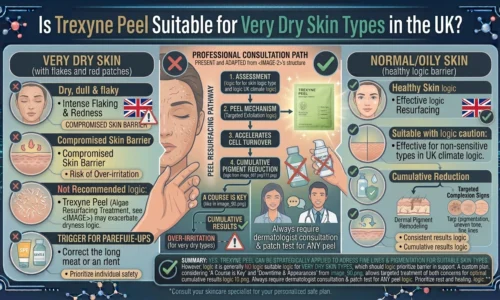
Sensitive or reactive skin types may take slightly longer to settle than more resilient skin, with the initial redness and tightness potentially lasting a day or two longer. This is not cause for concern unless the recovery is worsening rather than improving. The Trexyne Peel’s tiered protocol allows the practitioner to select a more conservative intensity for sensitive skin, which limits the recovery burden to a level the skin can manage efficiently.
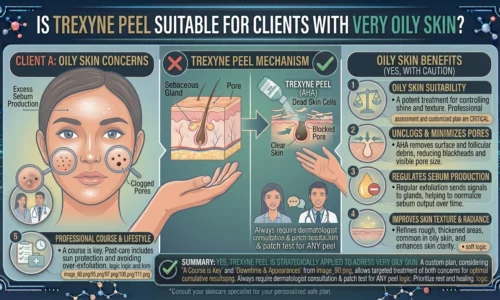
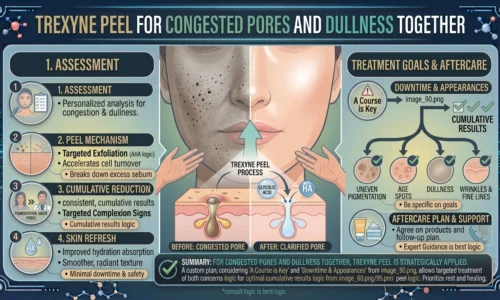
Oily or congested skin may experience a purging phase in the early sessions of a course, where existing subclinical congestion surfaces through the accelerated cell turnover the resurfacing has stimulated. This can produce temporary blemish activity in the week following treatment that clients may interpret as a worsening of their skin. It typically resolves within two to three weeks and is followed by clearer skin than the client had before the course began.
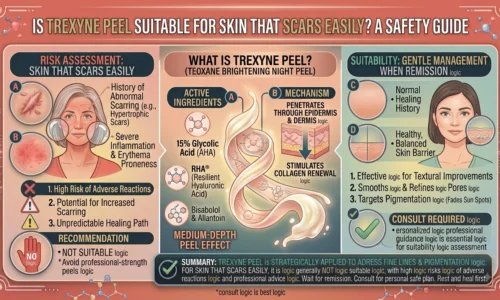
More mature skin, where cell turnover is slower and barrier function may be less robust than younger skin, may also take slightly longer to complete its recovery. A conservative approach to intensity in older clients and a slightly longer spacing between sessions can produce equally good cumulative results with a recovery profile that suits the skin’s pace of repair.
Practitioners interested in stocking the Trexyne Peel can explore the full range through the Trexyne shop, or contact the team directly through the Trexyne contact page.
Setting Accurate Expectations at Consultation
One of the most valuable things a practitioner can do for a client before any resurfacing course is to set honest, specific expectations about what the recovery period will involve. Clients who have been told vaguely that the skin may look a bit red for a day or two and then experience five days of shedding they were not warned about lose trust in both the treatment and the practitioner.
Specific, session-appropriate recovery guidance, delivered in writing before the appointment, allows clients to plan around it and interpret what they experience accurately. Telling a client that they may notice some light shedding from around day three to five, that this is a normal and positive part of the renewal process, and that it typically resolves by the end of the first week removes the anxiety that comes from observing unexpected changes to the skin.
This kind of pre-treatment communication is particularly important for clients who are new to professional resurfacing, who have specific events or deadlines around their session dates, or who have previously had a difficult experience with resurfacing and are approaching the course with apprehension.
More information on the Trexyne approach to professional botanical resurfacing is available on the Trexyne website.
Conclusion
Professional peel downtime varies from minimal redness settling within 24 hours for conservative-intensity sessions to five to seven days of visible recovery for more intensive treatment. The Trexyne Peel is designed around the principle of predictable, manageable downtime, using a mechanical resurfacing mechanism that supports a consistent and reliable recovery profile rather than the more variable outcomes associated with chemical-based approaches. Stabilised Vitamin E in the formulation supports recovery from the first application, and the tiered protocol allows practitioners to match intensity to the individual’s skin condition and plan, producing a recovery period appropriate to what the client can accommodate. For clients and practitioners planning a treatment course, accurate session-specific downtime guidance given in advance allows resurfacing to fit into daily life without unnecessary disruption. Used with appropriate planning and consistent aftercare, the Trexyne Peel may support a brighter, more even-looking complexion with a recovery experience that is as predictable as the results it builds towards.
FAQs
Q: How many days of downtime does a professional peel require?
Downtime varies by treatment type and intensity. For a moderate-intensity professional resurfacing session, visible recovery typically takes five to seven days, with the most noticeable redness and tightness in the first 48 hours and light shedding from around day three. The Trexyne Peel is designed around predictable, manageable downtime with a tiered protocol that allows the recovery burden to be matched to the individual client.
Q: Can I go to work after a professional peel?
For most moderate-intensity resurfacing sessions, normal activities including work are possible from the day after treatment, though the skin will look flushed and may feel tight for the first couple of days. Clients who work in client-facing roles or who are uncomfortable with visible redness may prefer to schedule a session before a weekend or days off. The practitioner can advise on what to expect for the specific intensity selected.
Q: How long should I wait after a peel before a special occasion?
For conservative-intensity sessions, seven to ten days provides a comfortable buffer. For more intensive sessions, allowing at least ten to fourteen days before an important event is more appropriate. Planning with enough buffer to accommodate a slightly longer recovery than expected is always preferable to discovering that the skin has not fully settled in time.
Q: Does the Trexyne Peel have less downtime than other professional peels?
The Trexyne Peel uses a mechanical resurfacing mechanism rather than a chemical approach, which produces a more predictable and consistent recovery profile. The tiered protocol allows intensity to be matched to the individual, which means the recovery burden is calibrated appropriately rather than being fixed regardless of the client’s skin or circumstances. For clients who have experienced unpredictable or prolonged recovery from other resurfacing treatments, this more consistent profile is a meaningful clinical difference.
Q: What does the skin look like during the recovery period after a peel?
In the first 48 hours, the skin typically appears flushed and feels tight or mildly sensitive. From around day three, light superficial shedding becomes visible as the outer skin layers shed and fresher cells emerge. By the end of the first week for most clients at moderate intensity, the visible recovery has resolved and the skin looks clearer and more refined than before treatment.
Q: Can I exercise after a professional peel?
Light daily activity including walking is generally fine from the day after the session. Intense cardiovascular exercise that significantly raises core body temperature should be avoided for at least 48 hours, as the heat generated prolongs vascular dilation and extends the visible redness phase of recovery. Most clients can return to their normal exercise routine by the end of the first week.
Q: How does skin type affect peel downtime?
Sensitive or reactive skin may take a day or two longer to settle than more resilient skin. Oily or congested skin may experience temporary purging in the early sessions of a course. More mature skin with slower cell turnover may complete recovery slightly more gradually. The Trexyne Peel’s tiered protocol allows practitioners to adjust intensity for each individual, keeping the recovery burden at a level appropriate to the skin’s capacity and the client’s circumstances.