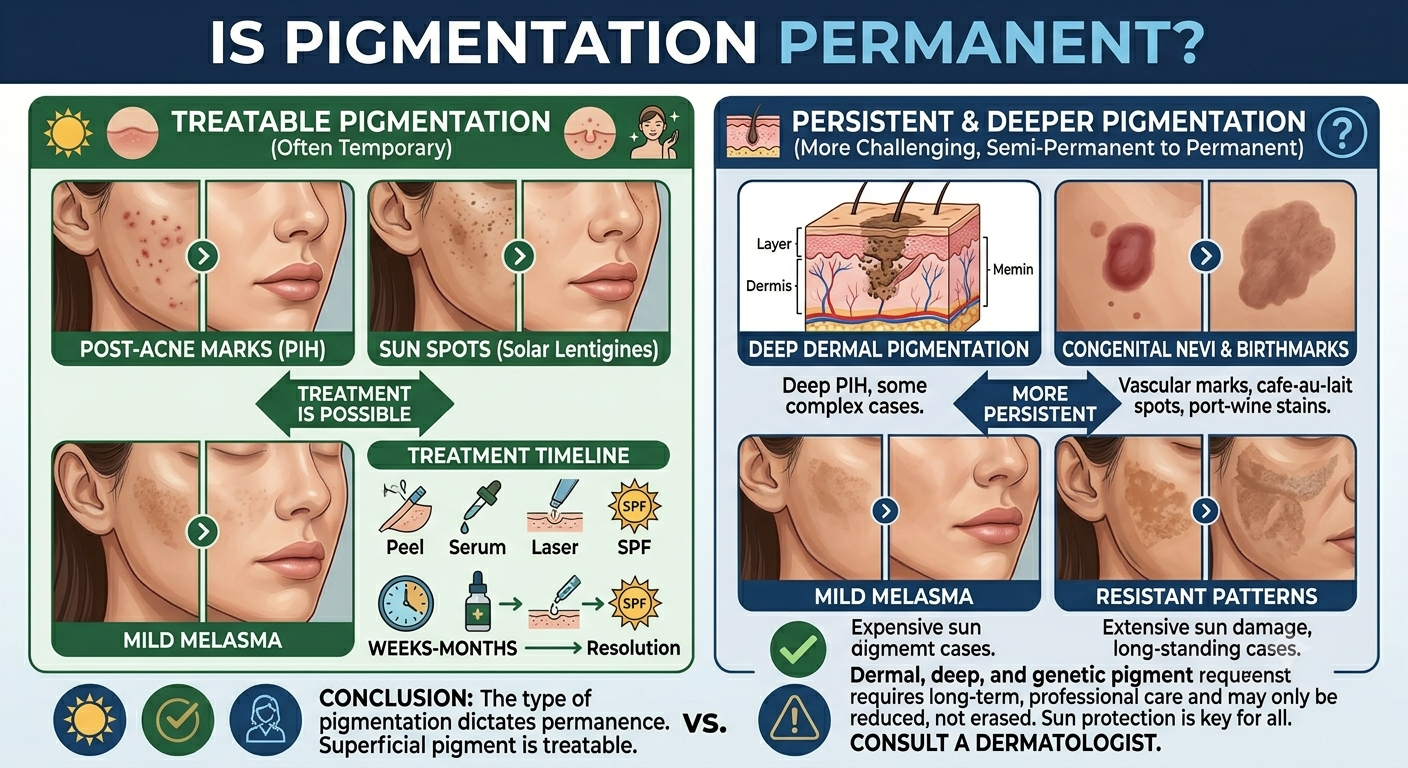
Is Pigmentation Permanent?
One of the most common questions people ask about pigmentation is whether it will ever go away on its own, or whether the dark spots and uneven patches are simply a permanent fixture they have to live with. The honest answer is that it depends. Some types of pigmentation fade gradually without any treatment, while others are deeply established and return repeatedly unless the underlying cause is actively managed. What is clear is that most pigmentation is not truly permanent in a biological sense, but it can feel that way without the right approach. For those dealing with stubborn or slow-fading discoloration, professional treatments like the Trexyne Peel offer a structured, clinically guided path to a visibly clearer and more even complexion.
What Pigmentation Actually Is
Pigmentation is the result of excess melanin, the skin’s natural coloring pigment, accumulating in concentrated areas. Melanin is produced by cells called melanocytes, which are found throughout the epidermis. Under normal conditions, melanocytes distribute melanin evenly, giving the skin its baseline tone.
When something triggers these cells to overproduce, whether UV radiation, inflammation, hormonal shifts, or aging, melanin builds up in specific areas and produces the dark spots, patches, and uneven tone that people recognize as a pigmentation problem. The word permanent implies that the melanin is fixed in place and cannot be cleared. In reality, the skin is constantly renewing itself, and melanin-rich cells are shed and replaced as part of this process. The question is not whether the cells can clear, but whether the skin can do so fast enough and without the trigger continuing to replenish the discoloration.
Types of Pigmentation and How Permanent They Are
Different types of pigmentation sit at different points on the spectrum between temporary and persistent. Understanding where your specific concern falls helps set realistic expectations for treatment.
Post-Inflammatory Hyperpigmentation
Post-inflammatory hyperpigmentation develops after the skin experiences inflammation from acne, a minor injury, or an allergic reaction. It is one of the most common types and, in most cases, one of the most treatable. If the original trigger is resolved and sun protection is maintained, post-inflammatory marks will gradually fade as the skin renews its surface over time. In lighter skin tones, this can happen in a few months. In darker skin tones, where melanocytes are more reactive, marks can persist for a year or longer without active treatment. This type of pigmentation is not permanent, but without intervention it can feel that way.
Sunspots and Solar Lentigines
UV-induced sunspots are more persistent than post-inflammatory marks because they represent years of accumulated melanin stimulation rather than a single event. They do not fade meaningfully on their own, even with reduced sun exposure, because the melanin has built up in concentrated deposits over time. Without active treatment, they tend to deepen gradually rather than improve. With professional intervention and consistent sun protection, they can be significantly reduced. They are not biologically permanent, but they require deliberate treatment to clear.
Melasma
Melasma is one of the most persistent forms of pigmentation and the one most commonly described as feeling permanent. It is driven by ongoing hormonal activity and UV exposure, which means the triggers that produce it are often continuously present. Even with effective treatment, melasma has a strong tendency to return. This does not mean it is untreatable, but it does mean it requires ongoing management rather than a one-time fix. With the right combination of professional treatment, strict sun protection, and hormonal management where applicable, melasma can be visibly reduced and kept under control.
Age Spots
Age spots, also called liver spots, result from decades of cumulative UV exposure and the gradual decline in the skin’s ability to regulate melanin production evenly. They do not fade without treatment and tend to deepen slowly over time with continued sun exposure. Professional exfoliation treatments remove the surface layers where these deposits are concentrated and, combined with ongoing sun protection, can produce meaningful improvement. Like sunspots, they are not permanently fixed, but they require active intervention to address.
Why Pigmentation Can Feel Permanent
Even when pigmentation is technically treatable, several factors create the impression that it is permanent.
Slow natural cell turnover: The skin renews its surface every four to six weeks, a timeline that extends significantly in aging skin. Pigmented cells clear slowly through this process, particularly when new melanin is being produced at the same time.
Ongoing triggers: If the cause of the pigmentation, such as daily UV exposure, hormonal fluctuations, or recurring acne, is still active, new melanin production replaces what is being cleared. The discoloration appears stable or worsening even when the skin is actually cycling through its renewal process.
Depth of the pigment: Melanin that has settled deeper in the epidermis, or in some cases the upper dermis, is harder to clear than surface deposits. This deeper pigmentation requires more targeted interventions and takes longer to show visible improvement.
Inadequate treatment: Many people rely on topical products that are not concentrated enough to reach established melanin deposits. When these products produce no visible change, pigmentation is mistakenly assumed to be untreatable.
What Makes Pigmentation Fade?
Pigmentation fades through the skin’s natural cell turnover cycle, which gradually replaces melanin-rich surface cells with fresher, less pigmented ones. This process can be supported and significantly accelerated by the right interventions.
Sun protection is the most foundational step. UV exposure continuously stimulates melanin production, which means that without daily SPF, the skin is constantly receiving the signal to produce more pigment. Consistent broad-spectrum sunscreen of SPF 30 or higher removes one of the primary drivers of ongoing discoloration.
Targeted topical ingredients such as vitamin C, niacinamide, and azelaic acid can slow the rate of new melanin production and contribute modestly to surface brightening over time. For mild or very recent pigmentation, this approach may be sufficient to produce meaningful improvement.
For established or moderate to significant pigmentation, professional treatments that physically accelerate cell turnover and remove pigmented layers are far more effective than topical management alone.
How Professional Treatment Changes the Outcome
This is where the distinction between pigmentation feeling permanent and actually being permanent becomes most relevant. A professional pigmentation treatment addresses the problem at a structural level rather than simply trying to slow melanin production from the surface.
Chemical peels like the Trexyne Peel remove the outer layers of the skin where accumulated melanin is stored. Rather than waiting for the skin’s slow natural cycle to eventually clear the discoloration, the peel accelerates the process by directly removing pigmented cells and stimulating the production of fresh, more evenly toned skin beneath. Each session in a structured series builds on the last, and the cumulative improvement across the full series is measurably greater than what natural turnover or topical products alone can achieve.
Patients who have spent months convinced that their pigmentation was simply permanent often find that a correctly structured professional peel series produces visible change they had stopped expecting. The pigmentation was not permanent. It had simply not been treated at an appropriate level.
The Role of Sun Protection in Preventing Pigmentation From Returning
Even when pigmentation has been successfully reduced through professional treatment, it is not immune to returning. The biological machinery that produced it, the melanocytes and their sensitivity to UV light and hormonal signals, is still present. Without protecting the skin from ongoing triggers, new discoloration will form over time.
Daily broad-spectrum sunscreen is the single most important maintenance habit. It does not just protect existing results. It prevents the conditions that created the pigmentation from regenerating the problem. Patients who complete a peel series and maintain consistent SPF use retain their results far more effectively than those who treat sun protection as optional.
Additional protective measures such as wearing a wide-brimmed hat during outdoor activities, seeking shade during peak UV hours, and using UV-filtering window film for cars and offices all contribute to reducing cumulative UV dose over time.
When Pigmentation Is More Likely to Be Long-Lasting
While most pigmentation is not truly permanent, some forms are more challenging and require longer or more intensive management.
- Melasma with an active hormonal trigger, such as ongoing contraceptive use or perimenopause, is more likely to recur and requires ongoing management rather than a one-time treatment series
- Very deep pigmentation that has penetrated into the dermis responds more slowly and may not fully clear even with repeated professional treatment
- Pigmentation in patients who continue to receive significant UV exposure without adequate protection will continue to worsen regardless of treatment
- Rare genetic pigmentation conditions or those linked to underlying health issues may not respond to cosmetic treatment in the same way as acquired pigmentation
For the vast majority of people with common acquired pigmentation, however, the question is not whether it can improve but whether the right treatment is being applied at the right level.
How Trexyne Peel Addresses Pigmentation That Feels Permanent
The Trexyne Peel is a professionally applied chemical peel that targets the specific layers of skin where melanin accumulates. By removing these layers through controlled exfoliation and stimulating the skin’s renewal cycle, it clears pigmentation that topical products have failed to reach and delivers results that change the patient’s perception of what their skin is capable of achieving.
For sunspots that have been present for years, post-acne marks that feel like they have settled permanently into the skin, and areas of general discoloration that have resisted every serum tried, a structured Trexyne Peel series administered by a qualified practitioner gives the skin the level of intervention it actually needs.
Combined with consistent sun protection and a maintenance plan designed around the individual’s skin, the results are not only achievable but sustainable.
Conclusion
Pigmentation is not truly permanent in the biological sense, but it can be persistent, deep, and resistant to approaches that are not matched to its type and severity. Post-inflammatory marks, sunspots, melasma, and age spots all have different timelines and respond differently to treatment, but all are addressable with the right professional approach and consistent habits.
If your pigmentation has felt permanent because nothing you have tried has produced real change, the answer is likely not that the discoloration cannot be shifted, but that it requires a more targeted level of intervention. Advanced skin peel solutions like Trexyne Peel are designed exactly for this situation, providing a professionally guided path to the clearer, more even complexion that feels within reach once the right treatment is in place.
Frequently Asked Questions
1. Is pigmentation on the face permanent?
Most facial pigmentation is not biologically permanent, but it can persist for months or years without the right treatment. Post-inflammatory marks from acne may fade on their own over time, though this can take considerably longer in darker skin tones. Sunspots and age spots do not clear without active intervention. Melasma is the most persistent type and tends to return if its hormonal and UV triggers are not managed. Professional treatments like Trexyne Peel can significantly reduce all of these types when applied correctly.
2. Can sunspots disappear on their own?
Sunspots do not typically disappear on their own without active treatment. They represent years of accumulated melanin stimulation and are too deeply deposited to clear through the skin’s natural renewal cycle at a meaningful rate. Reducing sun exposure prevents new spots from forming and existing ones from deepening, but reversing established UV damage requires professional intervention such as a chemical peel series.
3. Why does my pigmentation keep coming back after treatment?
Pigmentation returns when the underlying trigger is still active. If UV exposure continues without adequate sun protection, if hormonal changes are ongoing, or if recurring acne is not managed, new melanin production will replenish the discoloration even after successful treatment. Managing the trigger alongside the treatment is essential for maintaining results. Consistent daily SPF and periodic maintenance peel sessions are the combination that keeps pigmentation at bay long term.
4. How long does it take for pigmentation to fade with Trexyne Peel?
Most patients begin to see visible improvement within one to two weeks of their first Trexyne Peel session, once the initial peeling phase is complete. Significant and lasting improvement develops progressively across a series of sessions. Post-inflammatory marks and mild sunspots often show meaningful clearing after three to four sessions. Deeper or more established discoloration may require five to seven or more sessions. Your practitioner will give you a realistic timeline based on your specific skin and pigmentation type.
5. Is melasma permanent?
Melasma is not permanent in a strict biological sense, but it is highly persistent and has a strong tendency to recur because its triggers, hormonal activity and UV exposure, are often ongoing. It can be visibly reduced with professional treatment including Trexyne Peel, but it requires ongoing management rather than a one-time cure. Strict sun protection, potentially hormonal management in consultation with a doctor, and periodic maintenance treatments are all part of a realistic long-term approach to melasma.
6. Can darker skin tones successfully treat pigmentation?
Yes. People with darker skin tones can achieve meaningful improvement in pigmentation with professional treatment, including Trexyne Peel, when it is administered by a practitioner with specific expertise in diverse complexions. Darker skin tones require a more conservative approach to minimize the risk of post-inflammatory hyperpigmentation from the treatment itself, but the results are achievable. A thorough consultation and pre-treatment preparation are especially important for patients with types IV through VI skin.
7. What is the most effective way to prevent pigmentation from becoming permanent?
The most effective prevention strategy is daily broad-spectrum sunscreen use combined with management of other known triggers such as acne and hormonal activity. Starting professional treatment early, before pigmentation becomes deeply established, also significantly improves outcomes. The sooner marks are addressed after they form, the faster and more completely they respond to treatment. Waiting until pigmentation feels permanent makes the treatment process longer and more complex than it needs to be.