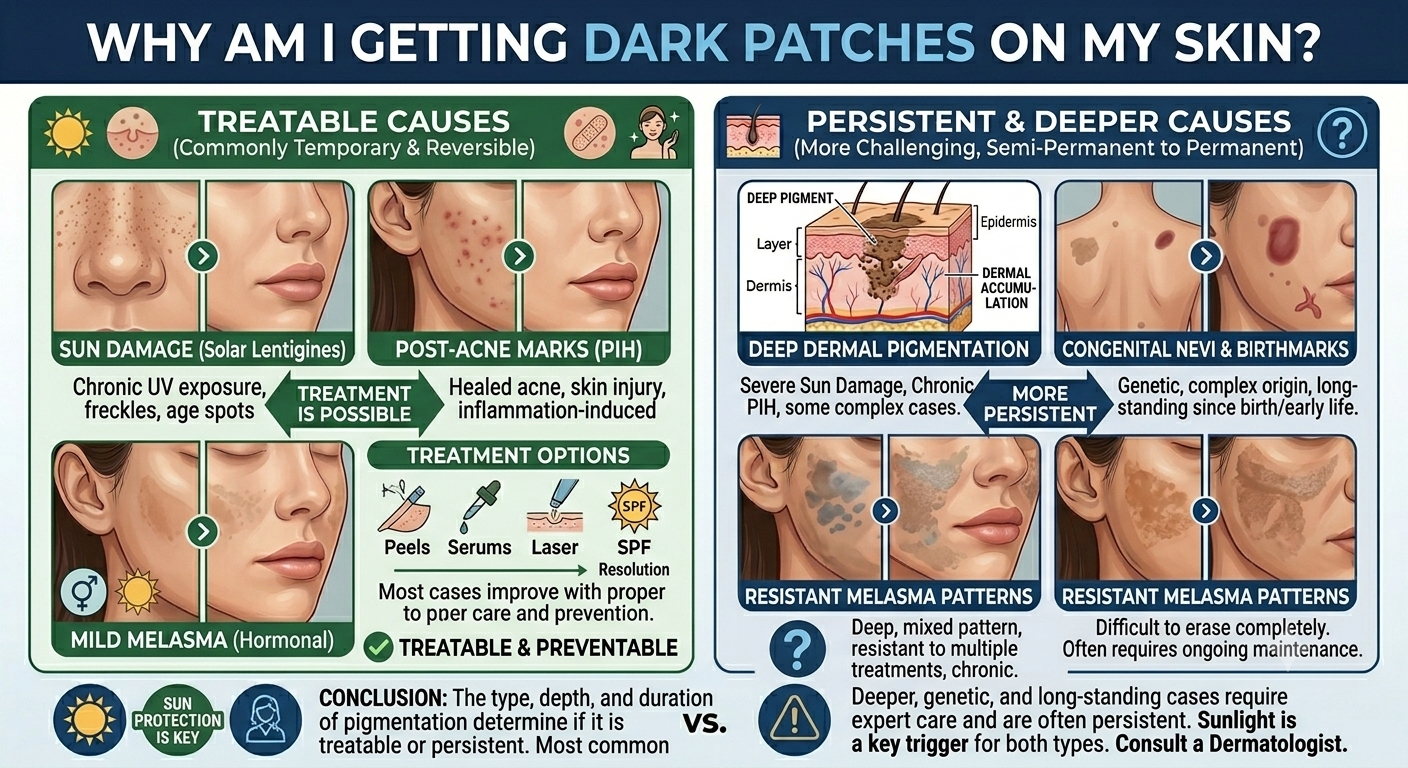
Why Am I Getting Dark Patches on My Skin?
Dark patches on the skin are one of the most common concerns that bring people to skincare professionals, and they almost always have a clear explanation. These patches develop when the skin’s melanin-producing cells are stimulated to overproduce in certain areas, resulting in areas that appear darker than the surrounding skin. The causes range from sun exposure and hormonal shifts to acne, aging, medication, and internal health changes. Understanding which trigger is responsible for your specific patches is the first step toward addressing them effectively. For those who want to take meaningful action, professional treatments like the Trexyne Peel are designed to target the visible discoloration directly and support a return to a clearer, more even skin tone.
What Are Dark Patches on the Skin?
Dark patches are areas of the skin where melanin, the pigment that gives skin its color, has accumulated in higher concentrations than the surrounding tissue. The medical term for this is hyperpigmentation. The patches can vary significantly in size, shape, and depth of color, and they may appear on the face, neck, hands, chest, or anywhere else on the body.
Melanin is produced by specialized cells called melanocytes. These cells respond to a range of stimuli by increasing their output. When the stimulus is widespread, such as with sun exposure over the entire face, the result is a generally uneven tone. When the stimulus is localized, such as with a single inflamed pimple, the result is a more defined dark mark.
Dark patches are not harmful in a medical sense, but they are among the most persistent and frustrating cosmetic skin concerns because they often develop gradually, can be slow to fade, and tend to return if the underlying cause is not managed.
1. Sun Exposure
UV radiation from the sun is the most universal cause of dark patches. When UV rays reach the skin, they activate melanocytes through an enzyme called tyrosinase, signaling them to produce more melanin. In the short term this creates a tan. Over years of cumulative exposure, the melanin accumulates in specific areas rather than distributing evenly, and the result is flat, defined dark patches on regularly sun-exposed areas.
The cheeks, forehead, nose, and upper lip are the most commonly affected areas on the face. The backs of the hands, the chest, and the shoulders are also frequently affected. UV-induced patches tend to deepen gradually with continued exposure and do not fade meaningfully without active treatment and consistent sun protection.
2. Hormonal Changes
Hormones have a direct influence on melanocyte activity. Estrogen and progesterone can stimulate pigment-producing cells, which is why significant hormonal events often produce new or worsening dark patches on the face.
The condition most strongly linked to hormonal pigmentation is melasma. It appears as large, irregular, and often symmetrical patches of brown or gray-brown discoloration, typically across the cheeks, forehead, upper lip, and nose. It is most commonly triggered by pregnancy, earning it the informal name mask of pregnancy, but it is also caused by hormonal contraceptives and hormone replacement therapy.
Hormonal patches can appear surprisingly quickly once a trigger is introduced, and they are among the most challenging types to treat because the driving force, the hormonal fluctuation, may be ongoing. Even after successful treatment, they often return if hormonal management and sun protection are not consistently maintained.
3. Acne and Post-Inflammatory Response
Every significant acne breakout carries the risk of leaving behind a dark patch. When a pimple becomes inflamed, the skin’s healing response activates melanocytes in the affected area, which produce extra melanin as part of the process. Once the pimple has resolved, this excess pigment remains as a flat dark mark.
This type of dark patch, known as post-inflammatory hyperpigmentation, is particularly common in people with medium to dark skin tones. Their melanocytes are more reactive, meaning even relatively minor breakouts can leave behind visible and persistent marks. In lighter skin tones, the marks may appear pink or red initially before turning brown as the melanin oxidizes.
Picking, squeezing, or aggressively scrubbing inflamed skin worsens the inflammatory response and deepens the resulting pigmentation. Managing acne effectively and avoiding trauma to inflamed spots are both important in preventing new dark patches from forming.
4. Aging
As the skin ages, its ability to regulate melanin production evenly diminishes. Melanocytes can become unevenly distributed across the skin, and decades of cumulative UV exposure cause some areas to accumulate melanin at higher concentrations than others. Paired with a significantly slower cell turnover rate in older skin, this produces the age spots, uneven patches, and generally mottled tone that become more noticeable from the mid-thirties onward.
Age-related patches are not caused by aging alone but by the combination of aging and cumulative UV exposure over a lifetime. People who have been diligent about sun protection throughout their lives tend to develop significantly fewer and less pronounced age-related patches than those who have had years of unprotected exposure.
5. Certain Medications
Some medications trigger dark patches as a side effect, either by increasing the skin’s photosensitivity, its sensitivity to UV radiation, or by directly affecting melanin metabolism. This type of pigmentation can appear relatively quickly after starting a new medication and may affect areas of the skin beyond the face.
Medications commonly associated with drug-induced pigmentation include:
- Doxycycline and other tetracycline antibiotics
- Hormonal contraceptives
- Antimalarial drugs such as hydroxychloroquine
- Nonsteroidal anti-inflammatory medications used long term
- Some antifungal and antiepileptic drugs
- Certain chemotherapy agents
If new dark patches appeared after starting a medication, discussing this with the prescribing doctor is an important step. Sun protection is particularly critical for anyone taking photosensitizing medications.
6. Friction and Physical Trauma
Repeated friction or physical trauma to the skin can stimulate melanocytes in the same way that inflammation from acne does. Areas that are frequently rubbed, pressed, or irritated may develop dark patches over time. This is why inner thighs, underarms, elbows, and knees, areas of regular friction or pressure, are common sites for this type of pigmentation.
On the face, frequent touching, rubbing the eyes, or using rough towels or cloths can contribute to localized darkening over time. The mechanism is the same as post-inflammatory hyperpigmentation: repetitive low-grade trauma activates the skin’s melanin production response in the affected area.
7. Underlying Health Conditions
In some cases, dark patches on the skin are a symptom of an internal health condition rather than a cosmetic concern. Several medical conditions can cause changes in skin pigmentation.
Addison’s disease: A disorder of the adrenal glands that causes widespread skin darkening, particularly in skin folds, scars, and pressure points.
Thyroid disorders: Both hypothyroidism and hyperthyroidism have been associated with changes in skin tone, including the development of dark patches.
Insulin resistance and diabetes: A condition called acanthosis nigricans produces dark, velvety patches in body folds such as the neck, armpits, and groin, and is associated with insulin resistance.
Nutritional deficiencies: Low levels of vitamin B12, folic acid, or vitamin D have been linked to pigmentation changes in some cases.
Dark patches that appear without a clear external cause, spread rapidly, or are accompanied by other symptoms warrant medical evaluation before pursuing cosmetic treatment.
8. Genetics
Some people are simply more predisposed to developing dark patches due to their genetic background. People with naturally darker skin tones have more reactive melanocytes, which produce melanin more readily in response to any stimulus. A family history of melasma, post-inflammatory pigmentation, or other hyperpigmentation conditions increases an individual’s likelihood of developing similar concerns.
Genetics cannot be changed, but knowing your predisposition helps you make more informed decisions about prevention, sun protection, and when to seek professional treatment before pigmentation becomes established.
How to Address Dark Patches Effectively
The approach to treating dark patches should match both the type of pigmentation and its severity. Mild, recent marks from acne may respond to a consistent topical routine over several months. More established or widespread discoloration, particularly sunspots, melasma, and older post-inflammatory marks, generally requires professional intervention.
A professional pigmentation treatment allows a trained practitioner to assess your specific patches, identify the most likely cause, and recommend a treatment plan matched to your skin type and pigmentation profile. This level of individualized assessment is not possible with over-the-counter products alone.
The Trexyne Peel is one of the most effective professional options for addressing dark patches. It works by removing the outer skin layers where excess melanin is concentrated, using controlled chemical exfoliation to clear pigmented cells and stimulate the production of fresh, more evenly toned skin. A structured series of sessions produces cumulative improvement across the full range of common pigmentation types.
The Non-Negotiable Role of Sun Protection
Regardless of what is causing your dark patches, sun protection is the foundation of any management strategy. UV exposure will continue to stimulate new melanin production in skin that is already sensitive to this stimulus, undermining both natural fading and the results of any professional treatment.
A broad-spectrum sunscreen with SPF 30 or higher, applied every morning as a daily habit rather than only when outdoors, is the single most important step. It prevents existing patches from deepening, reduces the likelihood of new ones forming, and protects the results of professional treatment from being reversed by ongoing UV damage.
Conclusion
Dark patches on the skin develop when melanocytes are triggered to overproduce melanin in specific areas. Sun exposure, hormonal shifts, acne, aging, medications, friction, genetics, and underlying health conditions are all potential causes, and often several factors contribute at once.
Identifying the specific cause of your patches puts you in the strongest position to address them. For those seeking professional help to clear established discoloration, advanced skin peel solutions like the Trexyne Peel offer a clinically guided, structured approach that works at the depth and precision level that topical products cannot match, supporting a visibly clearer, more even, and more confident complexion.
Frequently Asked Questions
1. Why am I suddenly getting dark patches on my skin?
Sudden dark patches usually signal a new or recently intensified trigger. The most common causes are hormonal changes from pregnancy, new contraceptive use, or perimenopause; increased sun exposure without adequate protection; a recent acne breakout leaving post-inflammatory marks; or a new medication that increases the skin’s UV sensitivity. If the patches appeared without any obvious external cause or are accompanied by other symptoms, consulting a doctor to rule out an underlying health condition is worth considering.
2. Are dark patches on the skin dangerous?
In the vast majority of cases, dark patches are cosmetic in nature and not medically dangerous. They result from excess melanin production in response to common external triggers. However, any dark patch that is rapidly changing in size, shape, or color, has irregular borders, or is accompanied by other skin changes should be evaluated by a dermatologist to rule out conditions that require medical attention.
3. Can dark patches from acne be treated?
Yes. Post-inflammatory dark marks from acne are among the most responsive types of pigmentation to professional treatment. They tend to sit in the upper epidermis and clear effectively with controlled chemical exfoliation. Trexyne Peel is well-suited to this type of pigmentation, particularly when treatment begins before the marks become deeply established. Consistent sun protection is essential during and after treatment to prevent the marks from deepening.
4. How long does it take for dark patches to fade?
The timeline depends on the type and depth of the pigmentation. Recent post-acne marks in lighter skin tones may fade naturally within a few months. Established sunspots, melasma, and longer-standing dark patches require active treatment. With a professional peel series like Trexyne Peel, patients typically see visible improvement within the first one to two sessions and more significant results across three to six sessions, depending on the severity of the discoloration.
5. Can hormonal dark patches be treated with a peel?
Yes, with appropriate management. Hormonally driven patches, particularly melasma, respond to professional chemical peeling but require careful treatment because the hormonal trigger may be ongoing. Trexyne Peel can reduce the visible appearance of these patches, but it works best as part of a broader plan that includes strict sun protection and, where possible, addressing the hormonal driver with medical guidance. Melasma is prone to recurrence, so ongoing maintenance is an important part of the long-term strategy.
6. Does diet affect dark patches on the skin?
Diet has an indirect influence on skin pigmentation. A diet rich in antioxidants, particularly vitamin C, supports the skin’s natural defense against UV-induced melanin production. Nutritional deficiencies in vitamin B12, folic acid, or vitamin D have been associated with pigmentation changes in some cases. While diet is not the primary driver of most dark patches, a balanced, nutrient-rich diet supports overall skin health and complements professional treatment and sun protection.
7. Is Trexyne Peel effective for all types of dark patches?
Trexyne Peel is effective for the most common types of dark patches including post-inflammatory marks from acne, UV-induced sunspots, age spots, and the surface component of melasma. Very deep dermal pigmentation or certain rare conditions may require additional or alternative approaches. A practitioner consultation before treatment identifies the specific type of pigmentation and determines whether Trexyne Peel alone or in combination with other strategies is the most appropriate plan.