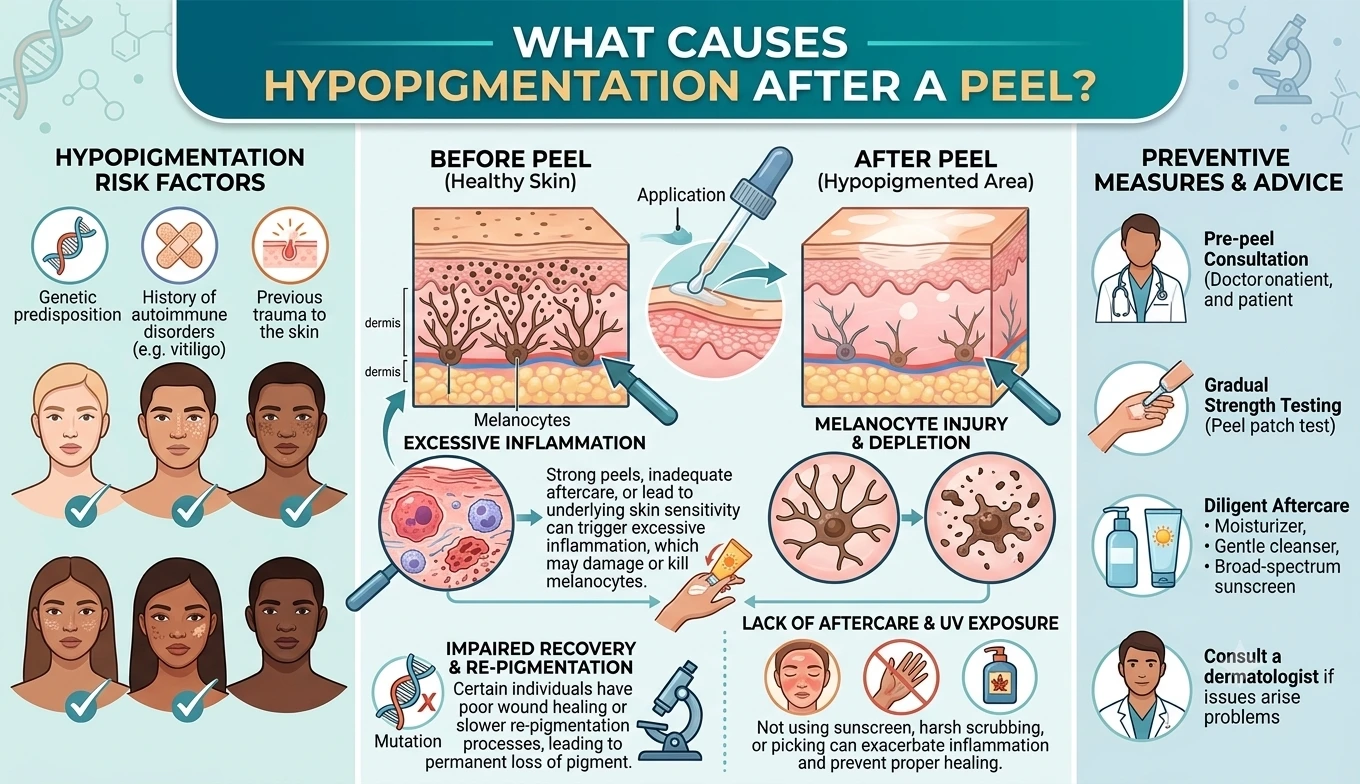
What Causes Hypopigmentation After a Peel?
Hypopigmentation after a peel is one of the less commonly discussed post-treatment concerns, but it is an important one for practitioners to understand. While most conversations around pigmentation focus on darkening of the skin, lightening of the skin following a resurfacing treatment is a real outcome that can occur in certain circumstances. It presents as patches of skin that appear lighter than the surrounding tone, and it can be distressing for clients when it arises unexpectedly. The Trexyne Peel is designed with predictability and skin safety at its core, and understanding hypopigmentation as a risk factor helps practitioners make better treatment decisions for every client.
Understanding Hypopigmentation and How It Differs From Hyperpigmentation
Pigmentation changes after a resurfacing treatment can go in either direction. Most practitioners are familiar with post-inflammatory hyperpigmentation, where the skin produces excess melanin in response to inflammation or disruption. Hypopigmentation is the opposite response: the skin produces less melanin than normal in a localised area, resulting in patches that appear lighter or paler than the surrounding skin tone.
Why the Distinction Matters Clinically
Hyperpigmentation and hypopigmentation require different management strategies. Hyperpigmentation responds to treatments that target melanin overproduction. Hypopigmentation is more complex because the goal is to support melanin production in areas where it has reduced, rather than suppress it.
For practitioners, identifying which type of pigmentation change a client is experiencing is the essential first step. The two can sometimes appear alongside each other, particularly in clients who have undergone repeated or aggressive resurfacing without adequate recovery time between sessions.
What Causes Hypopigmentation After a Peel
Hypopigmentation after a resurfacing treatment does not happen at random. There are specific reasons why the melanocytes, the cells responsible for producing melanin in the skin, may reduce their activity following treatment.
Disruption to Melanocyte Function
Melanocytes sit in the basal layer of the epidermis. When a treatment reaches this layer or causes significant disruption around it, melanocyte activity can be affected. In some cases this disruption is temporary, and melanin production resumes as the skin fully recovers. In other cases, particularly where the treatment has been applied too aggressively or repeated too frequently, the disruption can be longer-lasting.
The degree to which melanocytes are affected depends on how deeply and intensively the skin has been disrupted, the individual client’s skin biology, and whether the skin was given sufficient recovery time between sessions.
Inflammatory Response and Melanocyte Sensitivity
An intense inflammatory response in the skin can, in some individuals, actually suppress melanocyte activity rather than stimulate it. This is the opposite of the mechanism behind post-inflammatory hyperpigmentation, but it is a recognised response, particularly in clients with fair or lighter skin tones.
The relationship between inflammation and melanocyte behaviour is individual. This is one of the reasons why understanding a client’s full history of skin reactivity before beginning a resurfacing course is so important.
Who Is More at Risk of Post-Peel Hypopigmentation
Not all skin types carry the same level of risk for hypopigmentation. Understanding which clients may be more susceptible allows practitioners to take a more protective approach from the outset.
Skin Tone and Fitzpatrick Type Considerations
Hypopigmentation is more visible and often more pronounced in clients with medium to deeper skin tones because the contrast between the lightened area and the surrounding skin is greater. However, the underlying risk of melanocyte disruption is not exclusive to any one skin tone.
Clients with Fitzpatrick types I and II may experience hypopigmentation following over-treatment, but it may be less immediately visible. In contrast, clients with Fitzpatrick types III to VI may notice lighter patches more readily, and these can have a significant impact on how the client perceives their treatment outcome.
Clients With a History of Pigmentation Sensitivity
Any client who has experienced significant pigmentation changes following previous treatments, sun exposure, or skin trauma may have more reactive melanocytes. This reactivity can increase the risk of an unpredictable melanocyte response when resurfacing is introduced.
A thorough consultation that includes questions about pigmentation history is an essential part of client assessment before any resurfacing treatment begins. Practitioners can reach the Trexyne team for guidance on managing specific client presentations.
The Role of Treatment Intensity in Hypopigmentation Risk
Treatment intensity is one of the most controllable risk factors for hypopigmentation. Practitioners who apply too much pressure, repeat sessions too frequently, or do not adjust their approach for individual skin responses increase the likelihood of melanocyte disruption.
Overtreatment as a Primary Cause
Overtreatment occurs when the skin is resurfaced before it has fully recovered from the previous session. This is a cumulative issue. Each session that is applied before the skin has completed its renewal cycle adds to the stress the melanocytes are experiencing. Over time, this can result in localised areas where melanin production reduces noticeably.
Practitioners should always assess the skin’s current state before proceeding with a session. Visible redness, incomplete healing, or client-reported sensitivity are all reasons to delay the next treatment.
The Importance of a Tiered Protocol
The Trexyne Peel is built around a tiered protocol that allows practitioners to calibrate intensity according to each client’s skin type and recovery response. This tiered approach is a direct safeguard against overtreatment. Rather than applying a fixed intensity to every client, practitioners can increase intensity gradually as the skin demonstrates consistent recovery and tolerance.
This calibrated approach reduces the risk of melanocyte disruption by ensuring the skin is never pushed beyond what it can comfortably manage within the recovery period.
How Trexyne Peel’s Mechanical Approach Reduces Unpredictable Outcomes
The mechanism of a resurfacing treatment has a direct bearing on the predictability of its outcomes, including the risk of post-treatment pigmentation changes.
Botanical Mechanical Action Versus Other Resurfacing Methods
The Trexyne Peel uses marine algae spicules to create controlled micro-channels in the skin’s surface. This is a purely mechanical and botanical process. The spicules work physically on the skin without the involvement of chemical exfoliants or agents that alter the skin’s biological environment in unpredictable ways.
This mechanical precision matters when it comes to pigmentation risk. The practitioner controls the application, and the tiered protocol determines the intensity. There is no variable chemical reaction occurring beneath the surface that the practitioner cannot anticipate or manage. The predictability of the Trexyne mechanism is therefore directly relevant to reducing unexpected outcomes, including unwanted lightening of the skin.
Stabilised Vitamin E and the Recovery Phase
The Trexyne Peel contains stabilised tocopherol, which supports the skin’s recovery phase from the first application. A skin that recovers efficiently is a skin that is less likely to experience prolonged disruption to its melanocyte activity. Supporting the recovery phase is not just about surface comfort. It is about giving the skin’s deeper cellular processes, including melanin production, the best possible environment in which to resume normal function after treatment.
Managing a Client Who Develops Hypopigmentation After a Peel
Despite best practice, hypopigmentation can still occur. How a practitioner responds to it makes a significant difference to the client’s experience and recovery.
Immediate Steps
Stop resurfacing sessions immediately and allow the skin to fully recover. Applying further treatments to a skin that is already showing signs of melanocyte disruption will not resolve the issue and may worsen it. The priority is to create a stable, supportive environment in which the skin can recover.
Advise the client on a gentle, minimal routine that avoids any active ingredients likely to further suppress melanin production. Sun exposure should be minimised, and a broad-spectrum SPF applied daily, as UV exposure on already sensitised skin can complicate recovery.
Setting Realistic Expectations
Hypopigmentation varies in its duration. Some cases resolve within weeks as the melanocytes resume normal activity. Others take longer, and in rare cases, particularly where significant overtreatment has occurred, the change may persist for an extended period.
Being honest with clients about this timeline, while remaining supportive and solution-focused, is a core part of professional practice. Clients need accurate information to make informed decisions about next steps, and they need to feel confident that their practitioner is managing the situation with care and expertise.
Post-Treatment SPF and Its Role in Pigmentation Stability
Sun protection is consistently one of the most important factors in post-treatment pigmentation management, and it is directly relevant to hypopigmentation risk and recovery.
Why SPF Matters After Resurfacing
After any resurfacing treatment, the skin is in an active renewal state. UV exposure during this period affects the skin’s surface cells at a time when they are particularly responsive. In clients who are managing hypopigmentation, further UV exposure can complicate the pattern of melanin production as the skin works to recover its normal balance.
Daily SPF application, even on days with limited sun exposure, is a non-negotiable part of aftercare for any client undergoing a resurfacing course. Practitioners should communicate this clearly at every stage of the treatment journey.
Differentiating Hypopigmentation From Natural Skin Variation
Not every lighter patch of skin after a resurfacing treatment represents true hypopigmentation. Practitioners should be able to distinguish between different presentations before drawing conclusions.
What to Look For
Natural skin variation, seasonal changes, and the effects of a client’s home skincare routine can all create the appearance of uneven tone. True post-treatment hypopigmentation tends to present in areas that correspond to where the treatment was applied, is usually sharply delineated from the surrounding skin, and persists beyond the normal recovery window.
If practitioners are uncertain about a client’s presentation, documenting the skin with photographs before and after treatment is a practical tool for comparison and tracking. Clear records also support clinical decision-making during the course.
Practitioners with questions about specific client presentations can contact the Trexyne team directly for support.
Building a Treatment Course That Prioritises Skin Safety
The best approach to hypopigmentation is prevention. A well-structured treatment course that respects the skin’s recovery process, uses a tiered intensity protocol, and includes regular skin assessments is the most effective way to minimise the risk of pigmentation disruption.
Key Principles of a Safe Resurfacing Course
Assess before every session, not just at the initial consultation. The skin changes throughout a course, and what was appropriate in session one may need adjustment by session four or five.
Allow adequate recovery time between sessions. Rushing a course to achieve faster results increases cumulative stress on the skin and raises the risk of overtreatment outcomes, including hypopigmentation.
Use the tiered protocol as it is intended. The Trexyne Peel’s tiered approach exists precisely to give practitioners control over intensity at every stage. Following it consistently is one of the simplest and most effective ways to keep outcomes predictable and clients safe.
Practitioners looking to incorporate the Trexyne Peel into a structured clinic programme can explore the full range of professional formats through the Trexyne professional shop.
Conclusion
Hypopigmentation after a peel is caused by disruption to melanocyte function, most commonly as a result of overtreatment, excessive intensity, or insufficient recovery time between sessions. Certain skin types are more visually susceptible, though the underlying risk is present across all Fitzpatrick types. The best protection against this outcome is a carefully planned treatment course that respects the skin’s recovery cycle and adjusts intensity based on individual response.
The Trexyne Peel’s botanical mechanical mechanism, tiered protocol, and stabilised Vitamin E recovery support give practitioners the tools to carry out resurfacing with a high degree of predictability. For clients with pigmentation sensitivity or a history of reactive skin, this approach may support a safer, more controlled treatment experience and a more even-looking complexion over time.
Frequently Asked Questions
Q: What causes hypopigmentation after a resurfacing peel treatment?
Hypopigmentation after a peel is caused by disruption to the melanocytes, the cells responsible for producing melanin in the skin. This can occur when a treatment is applied too intensively, when sessions are repeated before the skin has fully recovered, or when an individual’s melanocytes respond to inflammation by reducing activity rather than increasing it. Ensuring adequate recovery time and using a tiered protocol helps minimise this risk.
Q: Is hypopigmentation after a peel permanent?
In many cases, hypopigmentation that follows a resurfacing treatment is temporary. As the skin recovers and melanocyte function normalises, pigmentation in the affected area often begins to return. However, where significant overtreatment has occurred, the recovery process can take longer, and in rare cases changes may be more persistent. Early recognition and a conservative management approach give the skin the best chance of recovery.
Q: Which skin types are most at risk of hypopigmentation after a peel?
Hypopigmentation can occur across all skin types, but it tends to be more visible in clients with medium to deeper skin tones due to the contrast with the surrounding skin. Clients with a history of reactive melanocytes or previous pigmentation changes following skin trauma or treatment may also carry a higher risk. A thorough pre-treatment consultation helps practitioners identify and manage this risk appropriately.
Q: Can the Trexyne Peel cause hypopigmentation?
Any resurfacing treatment carries a theoretical risk of pigmentation change when not applied appropriately. The Trexyne Peel is designed to reduce this risk through its tiered protocol, which allows practitioners to calibrate intensity to individual skin tolerance. Its botanical mechanical mechanism provides a predictable and controlled resurfacing experience, and stabilised Vitamin E supports the skin’s recovery phase. Following the protocol as intended is the most effective way to minimise pigmentation-related outcomes.
Q: How do I tell the difference between hypopigmentation and normal post-treatment skin variation?
True hypopigmentation tends to appear in areas directly corresponding to treatment application, presents as clearly delineated lighter patches, and persists beyond the normal recovery window. Natural skin variation, dehydration, or seasonal tone changes tend to affect the skin more diffusely and resolve as the skin stabilises. Photographic documentation before and throughout the treatment course is a practical tool for accurate comparison.
Q: What should a practitioner do if a client develops hypopigmentation during a peel course?
The first step is to pause the resurfacing course and allow the skin to fully recover. A gentle, minimal routine should be recommended, and daily SPF is essential. The practitioner should document the presentation clearly and set honest, realistic expectations with the client about the recovery timeline. Once the skin has stabilised, a decision can be made about whether and how to resume treatment, using a more conservative intensity setting.
Q: Does SPF help prevent hypopigmentation after a peel treatment?
SPF does not directly prevent hypopigmentation, but it plays an important supporting role. UV exposure on skin that is in an active renewal phase can complicate pigmentation recovery and affect the skin’s surface cells at a time when they are particularly responsive. Daily broad-spectrum SPF use throughout a resurfacing course, and during the recovery period that follows, helps create the most stable environment for the skin’s pigmentation processes to function normally.