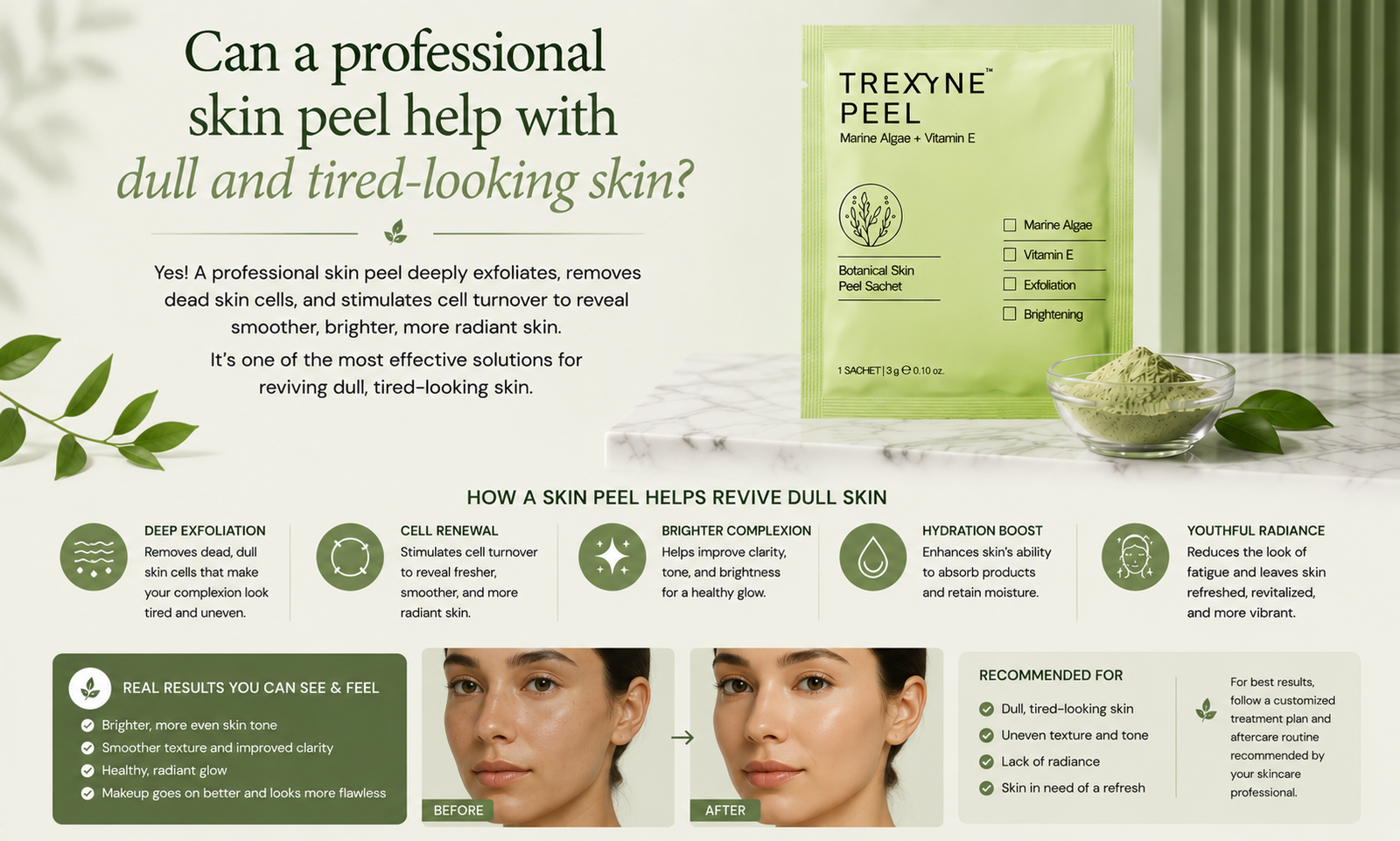
Can a Professional Skin Peel Help With Dull and Tired-Looking Skin?
Yes, a professional skin peel can be a genuinely effective option for dull and tired-looking skin, and it is one of the most common reasons clients seek out resurfacing treatment in the first place. Dullness is rarely caused by a single factor. It usually reflects a combination of slower cell turnover, an accumulation of dead skin cells at the surface, and uneven light reflection across the skin that gives the complexion a flat, lacklustre appearance rather than the radiant, even glow that healthy, well-renewed skin produces. Professional resurfacing addresses this directly by accelerating the skin’s natural renewal process, encouraging fresher cells to the surface more efficiently than the skin would manage on its own. The Trexyne Peel supports this renewal through a mechanical resurfacing mechanism, making it a relevant option for clients whose primary concern is restoring brightness and vitality rather than addressing a specific pigmentation issue.
What Causes Skin to Look Dull and Tired
Understanding the underlying causes of dullness helps explain why resurfacing is such an effective approach for this concern. The skin’s natural cell turnover cycle replaces older cells at the surface with newer ones generated in the deeper layers of the epidermis. In younger skin, this cycle completes in around 28 days. As we age, the cycle lengthens, sometimes extending to 45 days or more by midlife.
A slower turnover cycle means dead skin cells accumulate at the surface for longer before they shed naturally. This build-up creates an uneven surface that scatters light irregularly rather than reflecting it evenly, which is one of the primary mechanisms behind the appearance of dullness. Skin that turns over efficiently looks brighter simply because its surface reflects light more consistently.
Other contributing factors compound this effect. Dehydration reduces the skin’s plumpness and can make surface texture appear rougher than it otherwise would. Poor sleep and chronic stress raise cortisol, which can impair barrier function and slow the skin’s repair processes. Cumulative sun exposure thickens and roughens the outer layers of skin over time, contributing to both dullness and uneven tone. Environmental pollutants and everyday grime can settle on the skin’s surface, compounding the visual effect of a sluggish turnover cycle.
Why Dullness Is Different From Pigmentation Concerns
It is worth distinguishing dullness from pigmentation concerns such as age spots, melasma, or post-inflammatory hyperpigmentation, because the two are sometimes conflated but respond differently to treatment in terms of timeline and intensity required.
Pigmentation concerns involve localised, concentrated melanin deposits that require sustained, progressive cell turnover across a course of sessions to visibly fade. Dullness is more diffuse and reflects an overall slowing of the skin’s renewal process rather than concentrated pigment in specific areas. This means dullness often responds more quickly and visibly to resurfacing than established pigmentation does, because there is no deep, concentrated pigment to work through. The improvement comes from accelerating a general process rather than displacing a specific, layered deposit.
This is encouraging for clients whose primary concern is dullness rather than defined dark spots, since visible improvement in radiance and surface clarity can often be seen earlier in a treatment course than the more gradual fading associated with deeper pigmentation.
How Professional Resurfacing Restores Radiance
Professional resurfacing treatments work by creating a controlled disruption to the outer layers of the skin, prompting the skin to prioritise renewal and accelerate the shedding of the older, duller surface cells. As this process unfolds over the days following treatment, fresher cells move into place at the surface, restoring a more even, light-reflective quality to the skin.
The Trexyne Peel achieves this through marine-algae spicules that create controlled micro-channels in the skin’s surface via a purely mechanical mechanism. This stimulates the skin’s natural renewal response without relying on chemical exfoliants, supporting the same fundamental outcome, accelerated cell turnover, through a route that does not generate the chemical inflammatory response associated with acid-based resurfacing.
For clients whose dullness is their primary concern rather than a specific pigmentation issue, the mechanism used to achieve resurfacing matters less than it does for clients with pigmentation-related risks such as post-inflammatory hyperpigmentation. However, the same advantages that make mechanical resurfacing well suited to sensitive or reactive skin also apply here: a more predictable recovery and a lower risk of complications regardless of the underlying motivation for treatment.
Why Stabilised Vitamin E Supports the Outcome
Restoring radiance is not just about removing dull surface cells. It is also about how well the skin recovers and rebuilds after that disruption. A skin that struggles through a difficult or prolonged recovery period will not look its best in the days immediately following treatment, even if the underlying resurfacing has been effective.
The Trexyne Peel includes stabilised tocopherol, a form of Vitamin E, which supports the skin’s recovery phase from the first application. For clients seeking brightness and radiance, this recovery support contributes to the skin settling more smoothly after treatment, which means the renewed, more even-looking skin becomes visible sooner and with less interim disruption than it might otherwise.
Why This Matters More for Dullness Than It Might Seem
Clients seeking treatment for dullness are often looking for a relatively quick, visible improvement, sometimes ahead of a specific occasion or simply because they want their skin to look its best as soon as possible. A treatment with a predictable, well-supported recovery profile delivers that outcome more reliably than one with a longer or more variable recovery window, where the skin might look worse before it looks better for an extended period.
Surface Texture and the Visual Impact of Smoothness
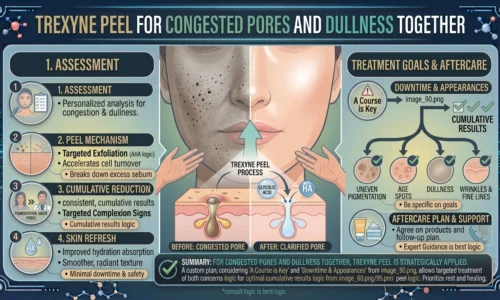
Surface texture plays a significant role in how dull or radiant skin appears, independently of tone or pigmentation. Rough, uneven texture scatters light unpredictably across the skin’s surface, which reads visually as a lack of clarity even in skin with otherwise even pigmentation. Smoother, more refined texture reflects light more consistently, producing the kind of even glow that is often described as healthy or radiant skin.
Resurfacing treatments that stimulate cell turnover support textural refinement as a direct consequence of the renewal process. As older, rougher surface cells are replaced with newer ones, the overall texture of the skin becomes smoother and more even, contributing significantly to the perception of brightness and vitality.
For clients whose dullness presents alongside visible texture concerns, such as enlarged pores or a generally uneven surface, the textural improvement from resurfacing often produces some of the most visible and immediately satisfying results in the early stages of a treatment course.
What to Expect From a Single Session Versus a Course
For dullness specifically, a single professional resurfacing session can produce a noticeable improvement in skin brightness that many clients find satisfying on its own. This is one of the reasons single-session treatments for radiance, sometimes described informally as a refresher peel, are popular ahead of events or simply as an occasional treatment for clients who are not addressing a more complex underlying concern.
However, for clients who want to address the root causes of ongoing dullness, such as a slower turnover cycle associated with ageing or persistent environmental exposure, a course of sessions produces more sustained improvement than a single treatment. Regular resurfacing supports the skin’s renewal process consistently over time rather than producing a temporary boost that fades back to baseline within a few weeks.
A practitioner can advise on whether a single session or a planned course is most appropriate based on the client’s specific presentation, goals, and how their skin has responded to previous treatments if any.
Building Dullness Treatment Into a Broader Skincare Approach
Professional resurfacing for dullness works most effectively when supported by an appropriate home-care routine between sessions. Daily broad-spectrum SPF protects the skin from further UV-related dulling and damage, which is particularly relevant since UV exposure thickens and roughens the outer skin layers over time, contributing directly to the dullness the treatment is addressing.
Adequate hydration, both through topical skincare and general fluid intake, supports the skin’s plumpness and overall appearance between sessions. A gentle, consistent skincare routine that avoids unnecessary irritation allows the skin to maintain the improvements achieved through professional treatment rather than undermining them with an overly aggressive or inconsistent home routine.
Practitioners interested in offering the Trexyne Peel as part of a radiance and resurfacing treatment menu can explore the full product range via the Trexyne shop, or get in touch with the team directly through the Trexyne contact page.
Who Benefits Most From Treating Dullness With Professional Resurfacing
Clients who tend to benefit most clearly from professional resurfacing for dull, tired-looking skin include those whose dullness has developed gradually with age as their natural cell turnover cycle has slowed, clients with visible surface texture irregularities alongside a lack of radiance, clients preparing for a specific occasion who want a visible improvement in skin clarity within a defined timeframe, and clients whose dullness coexists with mild pigmentation concerns that would benefit from the same underlying mechanism of accelerated cell turnover.
A thorough consultation remains important even for what might seem like a relatively straightforward concern. Understanding the client’s skin history, current routine, and any contributing factors such as sleep, hydration, or sun exposure habits allows the practitioner to set realistic expectations and recommend the most appropriate approach, whether that is a single refreshing session or a planned course for more sustained results.
More information on the Trexyne approach to professional botanical resurfacing is available on the Trexyne website.
Conclusion
A professional skin peel can be genuinely effective for dull and tired-looking skin, addressing the underlying causes of dullness, slower cell turnover, accumulated surface cells, and uneven texture, through accelerated skin renewal. Because dullness does not typically involve the concentrated, layered pigmentation seen in concerns such as age spots, visible improvement in radiance and surface clarity often appears earlier in a treatment course than results for deeper pigmentation concerns. The Trexyne Peel supports this renewal through a mechanical mechanism using marine-algae spicules, with stabilised Vitamin E to support recovery and a tiered protocol that allows treatment intensity to be matched to the individual. Whether approached as a single refreshing session or as part of a sustained treatment plan, professional resurfacing may help restore a brighter, more even-looking, and more vibrant complexion for clients whose skin has lost some of its natural radiance.
FAQs
Q: Can a professional skin peel really help with dull, tired-looking skin?
Yes. Professional resurfacing accelerates the skin’s natural cell turnover, helping fresher, more evenly reflective skin cells reach the surface more quickly than they would naturally. This addresses the accumulated dead skin cells and uneven texture that contribute most directly to a dull, lacklustre appearance.
Q: How quickly will I see results from a peel for dull skin?
Dullness often responds more quickly than deeper pigmentation concerns because it does not involve concentrated, layered melanin deposits. Many clients notice improved brightness and clarity within the first week after a single professional session, although a course of treatments produces more sustained improvement for ongoing or age-related dullness.
Q: Do I need a course of peels or just one session for dull skin?
A single session can provide a noticeable, satisfying improvement in brightness, which is often sufficient for clients seeking an occasional refresh. For dullness related to ageing or persistent environmental exposure, a course of sessions produces more lasting improvement by supporting the skin’s renewal process consistently over time rather than producing a temporary effect.
Q: What causes skin to look dull as you get older?
The skin’s natural cell turnover cycle slows progressively with age, extending from around 28 days in younger skin to 45 days or more by midlife. This slower cycle means dead skin cells remain at the surface for longer, creating an uneven, light-scattering surface that produces the appearance of dullness rather than the even, reflective quality of efficiently renewing skin.
Q: Will a skin peel help with both dullness and texture issues?
Yes. Surface texture and dullness are closely linked, since rough or uneven texture scatters light unpredictably and contributes directly to a dull appearance. Professional resurfacing supports textural refinement as a natural consequence of accelerated cell turnover, often producing visible improvement in both texture and overall radiance simultaneously.
Q: Is the Trexyne Peel suitable for treating dull, tired skin?
The Trexyne Peel supports skin renewal through a mechanical resurfacing mechanism using marine-algae spicules, which can contribute to a brighter, more even-looking complexion by accelerating cell turnover. Stabilised Vitamin E in the formulation supports recovery, and the predictable downtime makes it a practical option for clients seeking visible improvement in radiance without an unpredictable recovery period.
Q: What can I do at home to help maintain brightness after a professional peel?
Daily broad-spectrum SPF protects the skin from further UV-related dulling and supports the results achieved through treatment. Maintaining adequate hydration and following a gentle, consistent skincare routine between sessions helps sustain the improvements in clarity and texture, allowing the skin to continue benefiting from the renewal stimulated during professional treatment.