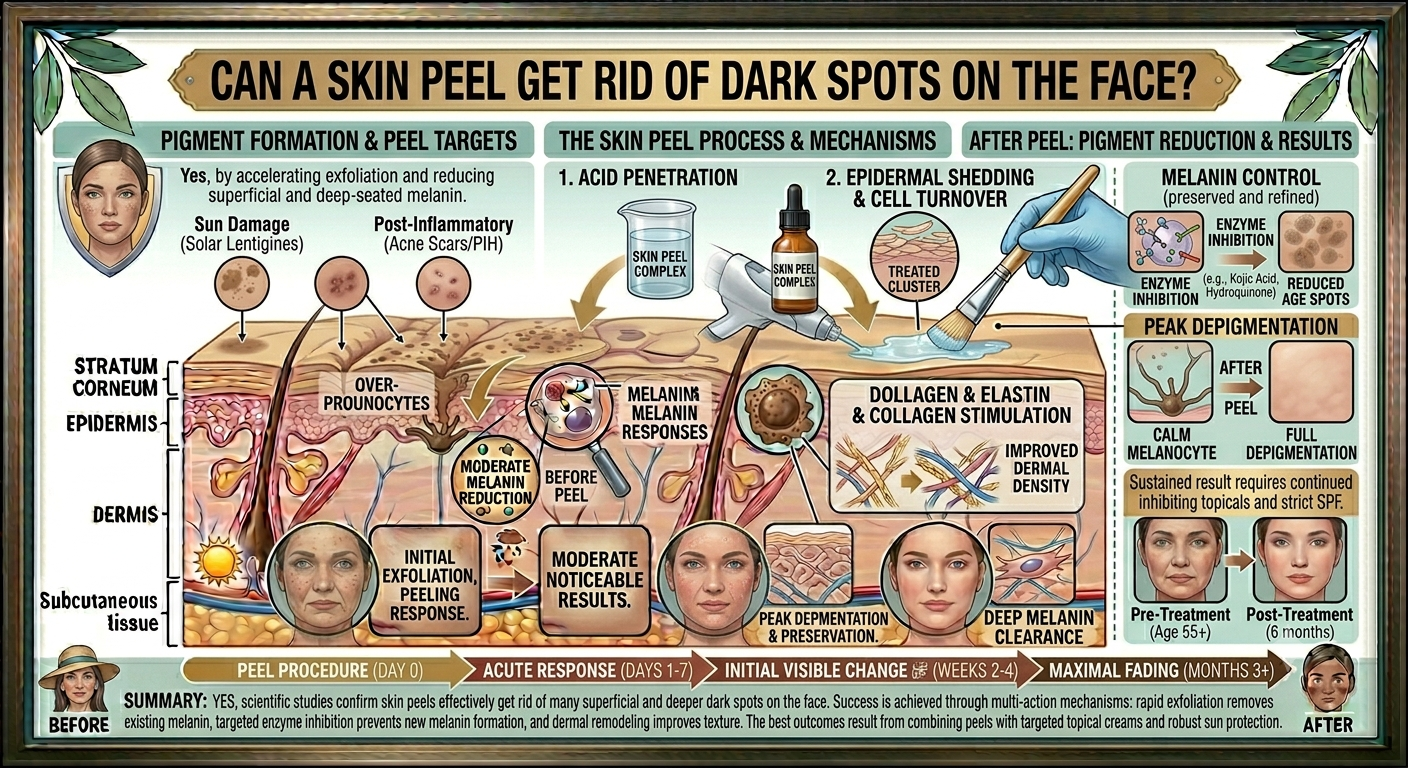
Can a Skin Peel Get Rid of Dark Spots on the Face
The short answer is yes — a well-chosen skin peel can make a meaningful difference to facial dark spots. But the longer, more clinically useful answer depends on the type of pigmentation, the depth it sits at, and how the peel actually works. Not all resurfacing treatments are built the same, and getting results without causing further skin trauma requires the right approach for each client. For practitioners looking for a botanical option that resurfaces without chemical exfoliants, the Trexyne Peel — Professional Algae Resurfacing Treatment offers a mechanically driven alternative that supports skin renewal in a controlled, predictable way.
Understanding Dark Spots: What You Are Actually Treating
Before selecting a treatment, it helps to be precise about what type of hyperpigmentation you are dealing with. The term “dark spots” covers a broad range of presentations, and each has a slightly different profile.
Post-Inflammatory Hyperpigmentation
Post-inflammatory hyperpigmentation (PIH) develops in response to skin trauma. Acne, minor abrasions, or even an overly aggressive treatment can trigger the melanocytes to overproduce melanin in that localised area. The pigment tends to sit in the upper layers of the skin, which makes it more accessible to resurfacing treatments. However, the inflammatory origin means that any new trauma to the skin can cause further pigmentation. This is worth bearing in mind when selecting treatment intensity.
Solar Lentigines
Sun spots, or solar lentigines, accumulate after years of cumulative UV exposure. They tend to appear on the cheeks, forehead, nose, and the backs of the hands. They are usually well-defined, uniformly pigmented, and respond well to a consistent resurfacing programme combined with SPF compliance.
Melasma
Melasma is the most complex of the three to manage. It has hormonal drivers and often involves pigment sitting at both epidermal and deeper dermal levels. Resurfacing can support improvement in the epidermal component, but melasma has a tendency to recur, particularly if UV exposure and hormonal triggers are not also managed. Clients with melasma benefit from realistic expectations and a long-term management plan rather than a quick-fix approach.
How Skin Peels Work on Pigmentation
A skin peel works by disrupting or removing the outermost layers of the epidermis, encouraging new cell turnover and allowing fresher, less pigmented skin to rise to the surface. Over a course of treatments, this process can progressively improve the appearance of uneven tone and reduce the visibility of dark spots.
The key variable is the mechanism the peel uses to achieve this. Different mechanisms carry different risk profiles, particularly for clients with pigmentation-prone or darker skin tones.
The Difference Between Mechanical and Chemical Resurfacing
This is where the conversation becomes clinically important. Many practitioners default to thinking of peels as synonymous with chemical exfoliation, but mechanical resurfacing represents a distinct category with a different risk profile.
Chemical resurfacing relies on active compounds that penetrate the skin surface and break down the bonds between cells. The results can be effective, but the process carries risks for certain clients, particularly those with hyperpigmentation-prone skin. The inflammatory response triggered by more aggressive chemical approaches can, in some cases, stimulate further melanin production and worsen the very pigmentation you are trying to address.
Mechanical resurfacing, by contrast, creates physical micro-disruption to the skin surface without relying on chemical penetration. This approach allows the skin to respond to the treatment signal without the same inflammatory burden.
How the Trexyne Peel Works on Dark Spots
The Trexyne Peel is built on a mechanical mechanism rather than a chemical one. Its active component is marine algae spicules — microscopic, needle-like structures that create controlled micro-channels across the skin surface when applied by a trained practitioner.
Marine Spicules and Skin Renewal
The micro-channels created by the spicules trigger the skin’s natural renewal response. Cell turnover accelerates. Pigmented surface cells shed more efficiently. Over a structured course of treatments, this process can lead to a progressively more even-looking complexion.
Because the mechanism is mechanical rather than chemical, the Trexyne Peel does not introduce the inflammatory chemical signals that carry a risk of rebound pigmentation. For practitioners managing clients with PIH or those working across a range of Fitzpatrick skin types, this distinction is practically significant.
Stabilised Vitamin E for the Recovery Phase
Alongside the marine spicules, the Trexyne Peel formulation includes stabilised tocopherol — a form of Vitamin E. This ingredient may support the skin’s recovery phase from the first application, helping to maintain skin integrity as the renewal process progresses.
This combination of active resurfacing and recovery support is central to the treatment’s approach. You are not simply disrupting the skin surface. You are providing the conditions for a constructive cellular response.
Who Can Benefit From a Peel for Dark Spots
Not every client presenting with facial dark spots is at the same stage, and not every presentation responds identically to resurfacing. A thorough consultation shapes the entire outcome.
Clients with Surface-Level PIH
Clients whose dark spots are primarily post-inflammatory and sitting in the upper epidermal layers tend to respond well to a course of resurfacing treatments. The Trexyne Peel’s tiered protocol allows practitioners to begin at a lower intensity and build progressively, reducing the risk of triggering further pigmentation through over-treatment.
Clients with Solar Lentigines
Sun spot clients often present with a willingness to commit to a treatment course. Their pigmentation tends to be more predictable in its response to resurfacing, and consistent SPF compliance alongside treatment typically leads to visible improvement over time.
Clients with Darker Skin Tones
Clients with Fitzpatrick skin types IV through VI require careful assessment before any resurfacing programme. The risk of treatment-induced PIH is higher, and both treatment intensity and interval need to be calibrated accordingly. The mechanical approach of the Trexyne Peel, with its tiered protocol and the absence of chemical exfoliants, makes it a treatment worth considering in this context. That said, patch testing and a conservative starting protocol remain essential.
Setting Up a Treatment Course for Pigmentation
Single treatment results are possible but rarely sufficient for established hyperpigmentation. A structured course allows cumulative renewal to build, and the skin’s response can be monitored and adjusted at each visit.
Planning the Course
The Trexyne Peel is available in packs of 1, 10, and 20 treatments, which makes course planning straightforward. You can visit the Trexyne shop to view the full pricing structure and pack options. A course of 10 or 20 vials suits practitioners running dedicated pigmentation programmes, where regular treatment intervals are built into the client’s schedule.
Each 30ml vial provides approximately 6 to 8 full-face treatments, which keeps per-treatment costs manageable without compromising on product quality.
Adjusting Intensity Over the Course
The tiered protocol within the Trexyne Peel system allows you to adapt intensity across a treatment course. If a client shows increased sensitivity or early signs of over-response, you can reduce intensity at the next appointment. As the skin demonstrates resilience and consistent renewal, you can build intensity incrementally. This adaptability is particularly valuable when managing pigmentation in sensitive or reactive skin profiles.
The Role of SPF in Any Pigmentation Peel Programme
It is impossible to overstate how much SPF compliance influences the outcome of any pigmentation-focused treatment programme. UV exposure is the single most consistent driver of melanocyte stimulation. Clients who are actively resurfacing are also presenting skin that is more responsive at the surface, which makes protection even more critical during a treatment course.
The clinical conversation around SPF needs to happen at every appointment, not just the first. Clients underestimate how quickly UV exposure can undo resurfacing progress. SPF 30 is the minimum. SPF 50 is more appropriate during summer months or for clients who spend significant time outdoors. Reapplication through the day matters too.
Without consistent SPF compliance, a resurfacing programme for hyperpigmentation is unlikely to deliver lasting improvement regardless of how well the treatment itself is performing.
What to Advise Clients Between Treatments
Managing a client’s skin between appointments is part of the treatment programme, not an afterthought.
Avoiding Triggers
Clients should avoid picking or manipulating any active breakouts or areas of pigmentation. Even minor trauma can trigger further melanin production, particularly in PIH-prone skin. Vigorous scrubbing, harsh physical exfoliants, and anything that creates heat or inflammation at the skin surface should be minimised during the course.
For clients with melasma, heat exposure in general — including saunas, steam rooms, and prolonged hot showers — is worth discussing as a potential trigger.
Home Skincare Considerations
While home skincare alone is unlikely to resolve established pigmentation, it can support the work being done in the treatment room. Antioxidant-rich products and those containing brightening botanical actives may support a more even-looking complexion between sessions. The priority remains SPF compliance, which has a greater impact on outcomes than any other home-use product.
How Many Peel Sessions Are Typically Needed for Dark Spots
This is one of the most common questions clients ask, and the honest answer is that it varies. The type of pigmentation, how long it has been present, the client’s skin tone, their lifestyle, and their SPF compliance all influence how quickly visible improvement occurs.
As a general guide, surface-level PIH may begin to show improvement after a handful of treatments, whereas solar lentigines and melasma tend to require a more sustained programme. Setting this expectation clearly from the outset helps maintain client trust when results take time.
Practitioners interested in learning more about how to structure pigmentation programmes with the Trexyne Peel are welcome to get in touch with the Trexyne team.
Why Professional-Only Treatments Matter for Pigmentation
Managing hyperpigmentation is not a straightforward process, and the treatment decisions that come with it sit firmly in the domain of trained professionals. Over-treatment, inappropriate product selection, or failure to assess contraindications can cause lasting harm.
The Trexyne Peel is sold exclusively to verified practitioners and clinics. This is not simply a commercial decision. It reflects the reality that effective pigmentation treatment requires clinical knowledge, skin assessment skills, and the ability to adapt protocols in response to the skin’s behaviour across a course of treatment. Consumer-grade resurfacing products cannot replicate this, and clients who have attempted DIY approaches often arrive in the treatment room with additional complications to manage.
For more on the Trexyne range and its practitioner-only positioning, visit Trexyne.com.
Conclusion
Facial dark spots develop through predictable mechanisms: UV exposure driving solar lentigines, inflammation triggering PIH, hormonal shifts generating melasma. Each type requires a considered approach, and resurfacing treatments sit at the centre of most effective management plans.
Skin peels work by accelerating cell turnover and encouraging the shedding of pigmented surface cells, which can lead to a progressively more even-looking complexion over a structured course of treatment. The Trexyne Peel offers practitioners a botanical, mechanically driven option that may support this renewal process without relying on chemical exfoliants. Its stabilised Vitamin E component may support skin recovery between sessions, and its tiered protocol allows treatment intensity to be matched to each client’s skin profile. Combined with consistent SPF compliance and a considered home care routine, a professional resurfacing programme using the Trexyne Peel may help clients achieve a brighter, more even complexion over time.
Frequently Asked Questions
Q: Can a skin peel really get rid of dark spots on the face, or just fade them?
A skin peel is unlikely to eliminate all pigmentation in every case, but it can produce meaningful, visible fading over a structured course of treatment. By accelerating cell turnover and encouraging pigmented surface cells to shed, resurfacing treatments help reveal fresher, more evenly toned skin beneath. The degree of improvement depends on the type and depth of the pigmentation, the consistency of the treatment programme, and SPF compliance between sessions.
Q: How does the Trexyne Peel differ from a standard chemical peel for dark spots?
The Trexyne Peel uses a purely mechanical mechanism to resurface the skin. Marine algae spicules create controlled micro-channels in the epidermis without any chemical exfoliants. This is clinically distinct from chemical peels, which rely on acid-based compounds to penetrate and break down the skin surface. The mechanical approach may reduce the risk of treatment-induced inflammation and rebound pigmentation, which can be a concern with chemical resurfacing in certain skin types.
Q: How many Trexyne Peel sessions are needed to see improvement in facial dark spots?
The number of sessions required varies depending on the type of pigmentation, how long it has been present, and the client’s skin tone and lifestyle. Surface-level post-inflammatory pigmentation may begin to respond after a small number of sessions, while solar lentigines and melasma typically benefit from a longer, more sustained programme. Practitioners generally recommend a structured course rather than individual treatments for meaningful pigmentation improvement.
Q: Is the Trexyne Peel safe for dark skin tones with hyperpigmentation?
Clients with deeper skin tones require careful assessment and a graduated approach before beginning any resurfacing programme. The mechanical nature of the Trexyne Peel and its tiered protocol make it a considered option in this context, as the absence of chemical exfoliants may reduce the risk of treatment-induced PIH. However, patch testing and a conservative starting intensity are always advisable, and treatment decisions should be made by a trained practitioner on an individual basis.
Q: Can the Trexyne Peel be used to treat melasma?
Melasma can be partially addressed through resurfacing, particularly the epidermal component. However, melasma has hormonal drivers and a tendency to recur, so resurfacing alone is rarely sufficient. The Trexyne Peel may support improvement in surface-level pigmentation, but practitioners should approach melasma with a comprehensive management plan that includes SPF compliance, discussion of hormonal triggers, and realistic expectations about recurrence. Clients with suspected melasma should be assessed carefully before beginning any treatment course.
Q: Where can verified practitioners purchase the Trexyne Peel?
The Trexyne Peel is available exclusively to verified practitioners and clinics. Single vials are priced from £175.00, with course packs of 10 and 20 treatments also available. Each 30ml vial provides approximately 6 to 8 full-face treatments. You can view the full range and pricing via the Trexyne shop, or contact the team with any clinical or purchasing queries.
Q: Does SPF really make a difference when using a skin peel for dark spots?
SPF is one of the most important factors in determining whether a pigmentation treatment programme delivers lasting results. UV exposure is the primary driver of melanocyte stimulation, and skin undergoing active resurfacing is more responsive at the surface level. Without consistent daily SPF use, new pigmentation can form and existing spots can deepen, regardless of how well the resurfacing treatment is working. Clients should use broad-spectrum SPF 30 as a minimum every day throughout and after the treatment course.