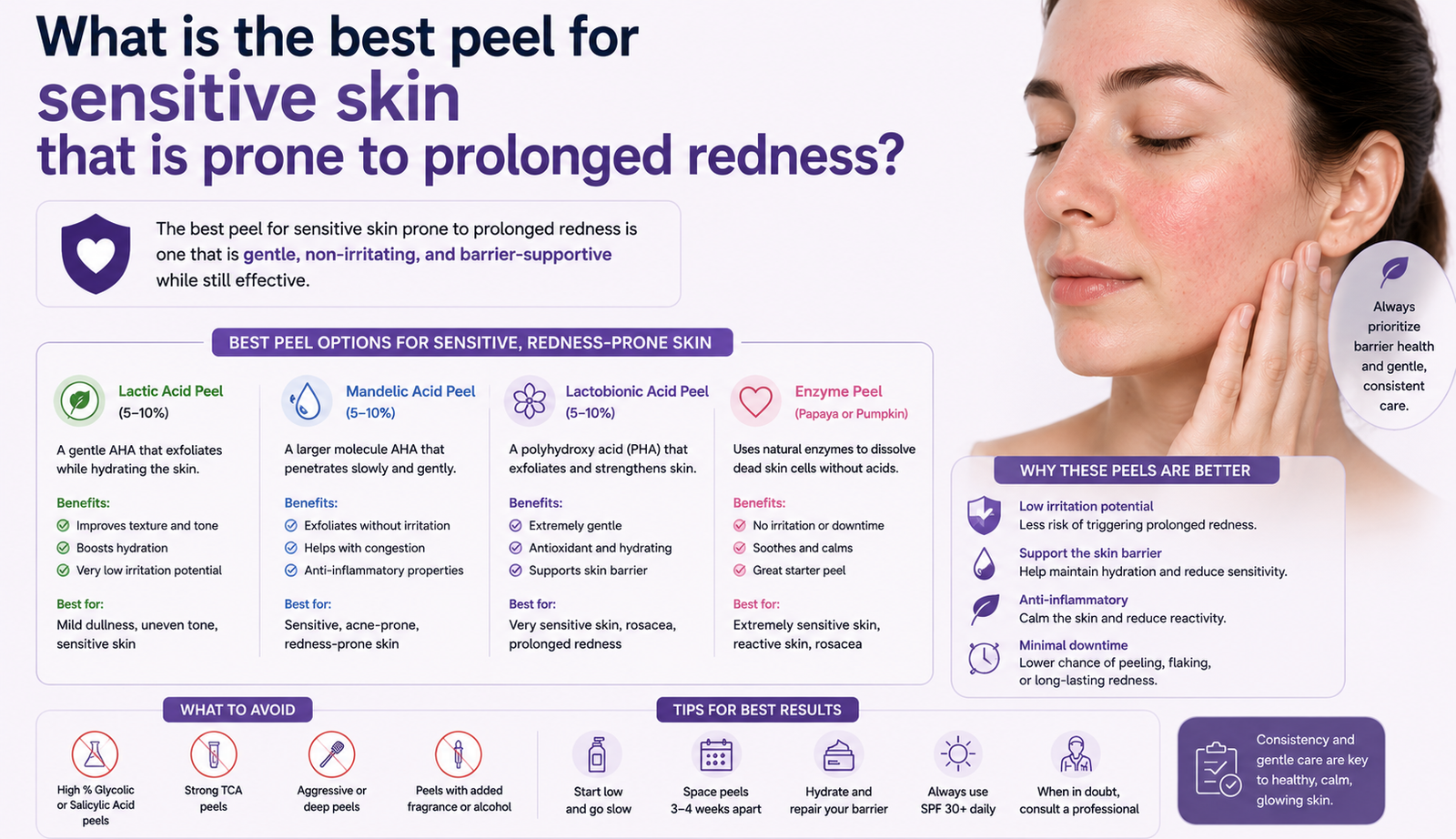
What Is the Best Peel for Sensitive Skin That Is Prone to Prolonged Redness?
For sensitive skin that is prone to prolonged redness, the best peel is one that resurfaces without generating the kind of inflammatory response that reactive skin cannot manage efficiently. That principle immediately narrows the field. Many standard resurfacing options rely on chemical exfoliation, which involves a degree of controlled chemical reaction in the skin and the associated inflammation that comes with it. Skin that is already reactive struggles to contain and resolve that inflammatory load quickly, which is why redness in these clients often extends well beyond the recovery window that other skin types experience. A mechanical resurfacing approach, such as the Trexyne Peel, removes the chemical inflammatory trigger entirely while still supporting meaningful skin renewal. For practitioners building protocols around this client group, that distinction is the most clinically significant factor in treatment selection.
Understanding Why Sensitive Skin Stays Red Longer
The reason sensitive skin experiences prolonged redness after resurfacing is rooted in barrier function. A healthy, resilient barrier acts as the skin’s first line of defence against external stimulus and also helps regulate the inflammatory responses generated by treatments. When the barrier is compromised or weakened, which is characteristic of sensitive and reactive skin types, it cannot contain inflammation as effectively or resolve it as quickly.
Resurfacing treatments that generate a chemical reaction in the skin add an internal inflammatory load on top of whatever environmental or product-related inflammation the skin is already managing. For resilient skin, this additional load is temporary and manageable. For sensitive skin, it can tip the balance into a prolonged inflammatory state that presents as persistent redness, stinging, and heightened reactivity that lasts days or weeks beyond the expected recovery window.
This is not a fixed property of the skin that cannot be worked around. It is a property that shapes which treatment mechanisms are appropriate and which carry a higher risk of triggering an outcome the client and practitioner both want to avoid.
The Difference Between Temporary and Prolonged Post-Peel Redness
Not all post-peel redness is the same, and it is worth drawing the distinction clearly before selecting a treatment approach. Temporary redness in the first day or two after a resurfacing session is a normal part of the skin’s response to controlled disruption. Blood flow increases to the treated area as part of the repair process, and this produces visible flushing that settles as the initial response resolves.
Prolonged redness that extends beyond a week, that fluctuates rather than steadily reducing, or that is accompanied by ongoing sensitivity and discomfort is a different picture. This pattern indicates that the skin’s inflammatory response has not resolved as expected. It can result from a treatment that exceeded the skin’s tolerance, from aftercare that inadvertently maintained the inflammatory cycle, or from UV exposure during the recovery window restimulating the skin before it had stabilised.
For sensitive skin clients, the risk of temporary redness tipping into prolonged redness is significantly higher than for resilient skin types. Treatment selection and protocol design need to reflect this from the outset rather than treating it as a risk to be managed after it occurs.
Why Mechanism Matters More Than Concentration for This Skin Type
A common assumption is that reducing the concentration of a resurfacing treatment will automatically make it safer for sensitive skin. This is partly true, but it misses the more fundamental point. Concentration is one variable in the inflammatory load a treatment places on the skin, but mechanism is a more significant one.
A lower concentration of a chemical resurfacing treatment still generates a chemical reaction in the skin. That reaction still triggers an inflammatory pathway that sensitive, compromised skin may struggle to resolve. Reducing the concentration reduces the degree of that reaction, but it does not change its nature. For skin that is genuinely prone to prolonged redness, the more meaningful change is to move from a chemical mechanism to a mechanical one, removing the chemical inflammatory trigger altogether rather than simply dialling it down.
This is the clinical reasoning that makes mechanical resurfacing a more appropriate first choice for this skin type, not a fallback option after chemical approaches have already been tried and caused problems.
How the Trexyne Peel’s Mechanical Mechanism Addresses This
The Trexyne Peel is built around marine-algae spicules that create controlled micro-channels in the skin’s surface through a purely physical mechanism. No acids are involved at any stage. The resurfacing effect is achieved through the structure of the spicules themselves rather than through any chemical interaction with skin tissue. This means the skin undergoes meaningful resurfacing and cell turnover stimulation without the chemical inflammatory burden that acid-based treatments generate.
For sensitive skin prone to prolonged redness, this distinction changes the risk profile of resurfacing in a clinically meaningful way. The skin still needs to manage a recovery period, because any resurfacing creates a degree of controlled disruption. But the nature of that disruption is mechanical rather than chemical, and the inflammatory load the skin is asked to manage is lower as a result. This reduces the likelihood of the prolonged inflammatory response that makes resurfacing such a difficult category for reactive skin types.
No Extended Downtime as a Clinical Principle
The Trexyne Peel is designed around the principle of no extended downtime. For sensitive skin clients, this is not simply a convenience feature. It is a clinical outcome in itself. A practitioner who can offer a resurfacing treatment with predictable, manageable downtime to a client who has previously experienced prolonged post-peel redness is offering something genuinely different from what that client has encountered before. Predictability builds confidence, and confidence supports the kind of long-term treatment commitment that produces visible, lasting results.
The Role of Stabilised Vitamin E in Supporting Reactive Skin
Sensitive skin that is prone to prolonged redness particularly benefits from recovery support during and after resurfacing. The recovery phase is precisely where reactive skin most often runs into difficulty, as the barrier, already working below its optimal capacity, tries to manage repair and renewal simultaneously.
The Trexyne Peel includes stabilised tocopherol, a form of Vitamin E, which supports the skin’s recovery phase from the first application. This recovery-supportive ingredient works with the skin’s own repair processes, providing active support during the phase when sensitive skin is most vulnerable to the kind of inflammatory extension that produces prolonged redness. For practitioners treating this client group, the combination of a non-chemical resurfacing mechanism and formulation-level recovery support addresses both the primary risk factor and the secondary one within the same treatment.
Matching Intensity to the Skin’s Actual Tolerance
Sensitive skin clients do not present identically at every appointment. A client may arrive for their second session in a better or worse baseline state than their first, depending on recent stress, sleep quality, sun exposure, product use, or seasonal changes in their skin’s reactivity. A protocol that locks in a fixed intensity regardless of how the skin presents on any given day does not serve this client group well.
The Trexyne Peel’s tiered protocol allows practitioners to select and adjust intensity based on the skin’s actual condition at each appointment. Starting conservatively with a client whose skin has a documented history of prolonged redness is not overly cautious. It is the correct clinical starting point. Progressing intensity only as the skin demonstrates its tolerance gives both the practitioner and the client real information about what that individual skin can manage, session by session.
This graduated approach also means that if a client presents for an appointment with skin that looks more reactive than usual, the treatment can be scaled back without abandoning the session entirely. Flexibility within the protocol protects results and protects the practitioner-client relationship.
Building a Practical Protocol Around Sensitive Skin Clients
Selecting the right treatment mechanism is the first step in building a successful protocol for sensitive skin prone to prolonged redness. The steps around it matter just as much. Pre-treatment assessment should review the client’s recent skin behaviour, any new product introductions, and current barrier condition. If the skin looks unduly reactive at the appointment, deferring or reducing the session is always the right call.
Post-treatment aftercare guidance for sensitive skin clients should be specific and written rather than verbal. Key points to cover include keeping the routine stripped back to a gentle cleanser, a fragrance-free moisturiser, and daily broad-spectrum SPF. Avoiding heat sources including hot showers, saunas, and intense exercise for at least the first 48 hours. Steering clear of all active skincare products until the skin has clearly settled. And understanding that some degree of short-term redness and tightness is normal and does not indicate a problematic reaction.
Practitioners looking to stock the Trexyne Peel for sensitive skin protocols can explore the full range through the Trexyne shop, or speak with the team directly via the Trexyne contact page.
Setting Realistic and Honest Expectations
Clients with sensitive skin prone to prolonged redness have often had experiences that left them anxious about resurfacing. They may have been given overly optimistic recovery timelines before, and the gap between what they were told and what they experienced undermined their trust. Honest, specific communication before treatment begins is one of the most important things a practitioner can offer this group.
Explaining that improvement builds progressively across a course of sessions rather than appearing after one appointment. Describing the expected recovery in concrete terms, including what the skin is likely to look and feel like in the first 48 hours and how that typically progresses. Clarifying what distinguishes normal post-treatment redness from something that warrants a call to the clinic. These conversations take time but they make the difference between a client who completes a full course and one who abandons it after the first session because the experience did not match their expectations.
Further information on the Trexyne approach to professional botanical resurfacing is available on the Trexyne website.
When to Consider a Dermatology Referral
For clients whose redness is persistent regardless of treatment approach, or whose skin presents with other signs beyond reactivity and sensitivity, a dermatology referral may be appropriate before any resurfacing treatment is begun. Conditions including rosacea, eczema, and contact dermatitis can all present with patterns of chronic redness that require dermatological diagnosis and management before aesthetic resurfacing is considered. Identifying these early and acting on them appropriately is a mark of clinical responsibility that protects the client and supports the practitioner’s professional reputation.
Conclusion
Sensitive skin prone to prolonged redness needs a resurfacing approach that achieves meaningful skin renewal without generating the chemical inflammatory response that compromised, reactive skin struggles to resolve. The answer is mechanical resurfacing, which removes the primary trigger for prolonged redness by working through physical action rather than chemical reaction. The Trexyne Peel resurfaces through marine-algae spicules with no acids involved, includes stabilised Vitamin E to support recovery, and offers a tiered protocol that allows practitioners to match intensity carefully to each individual client’s demonstrated tolerance. With consistent treatment, honest expectation-setting, and thorough aftercare guidance, it may offer sensitive skin clients a more manageable, more predictable pathway to a brighter, more even-looking complexion than chemical resurfacing options have been able to provide.
FAQs
Q: What is the best type of peel for sensitive skin that goes red easily?
For sensitive skin that is prone to prolonged redness, a mechanical resurfacing treatment is generally a better-matched option than a chemical one. Mechanical resurfacing achieves skin renewal without generating a chemical inflammatory response, which is the primary trigger for prolonged redness in reactive skin. The Trexyne Peel uses marine-algae spicules and no acids, and includes stabilised Vitamin E to support recovery.
Q: Why does sensitive skin stay red longer after a peel than normal skin?
Sensitive skin typically has a compromised barrier that cannot contain or resolve inflammatory responses as efficiently as a healthy, resilient barrier. When resurfacing generates inflammation, reactive skin takes longer to work through it, producing redness that extends well beyond the recovery window seen in other skin types. A treatment that generates less inflammatory burden in the first place reduces this risk.
Q: Can sensitive skin have professional resurfacing without prolonged redness?
Yes, with the right treatment mechanism and protocol. A tiered, mechanical resurfacing approach allows practitioners to match intensity to the individual skin’s tolerance and adjust at each session, reducing the likelihood of the inflammatory overload that produces prolonged redness. Clear, specific aftercare guidance and consistent SPF use also play a significant role in how smoothly recovery progresses.
Q: How does the Trexyne Peel reduce the risk of prolonged redness in sensitive skin?
The Trexyne Peel resurfaces through a purely mechanical mechanism using marine-algae spicules, removing the chemical inflammatory trigger that acid-based treatments introduce. Stabilised Vitamin E in the formulation supports the skin’s recovery phase from the first application. The tiered protocol allows intensity to be matched to the skin’s current condition, further reducing the risk of generating more inflammation than the skin can manage comfortably.
Q: How many sessions does sensitive skin need to see improvement with the Trexyne Peel?
Visible improvement in skin tone, texture, and clarity typically builds across a course of sessions rather than appearing dramatically after one treatment. The pace of improvement depends on the individual’s skin condition, how the intensity is progressed across the course, and how consistently aftercare including daily SPF is maintained between appointments.
Q: Should I stop using all skincare products after the Trexyne Peel if I have sensitive skin?
In the immediate post-treatment period, simplifying the routine significantly is advisable. A gentle cleanser, fragrance-free moisturiser, and daily broad-spectrum SPF are the core aftercare essentials. All active products including retinoids and treatment serums should be paused until the skin has clearly settled. A practitioner will provide specific guidance tailored to the individual’s skin and the intensity of the session.
Q: Where can practitioners find the Trexyne Peel for sensitive skin treatment protocols?
Practitioners can view the full product range and purchase options via the Trexyne shop, or contact the Trexyne team directly through the contact page for guidance on incorporating the treatment into protocols for sensitive, reactive, or redness-prone skin.