What Skincare Ingredients Should Be Avoided Before a Peel?
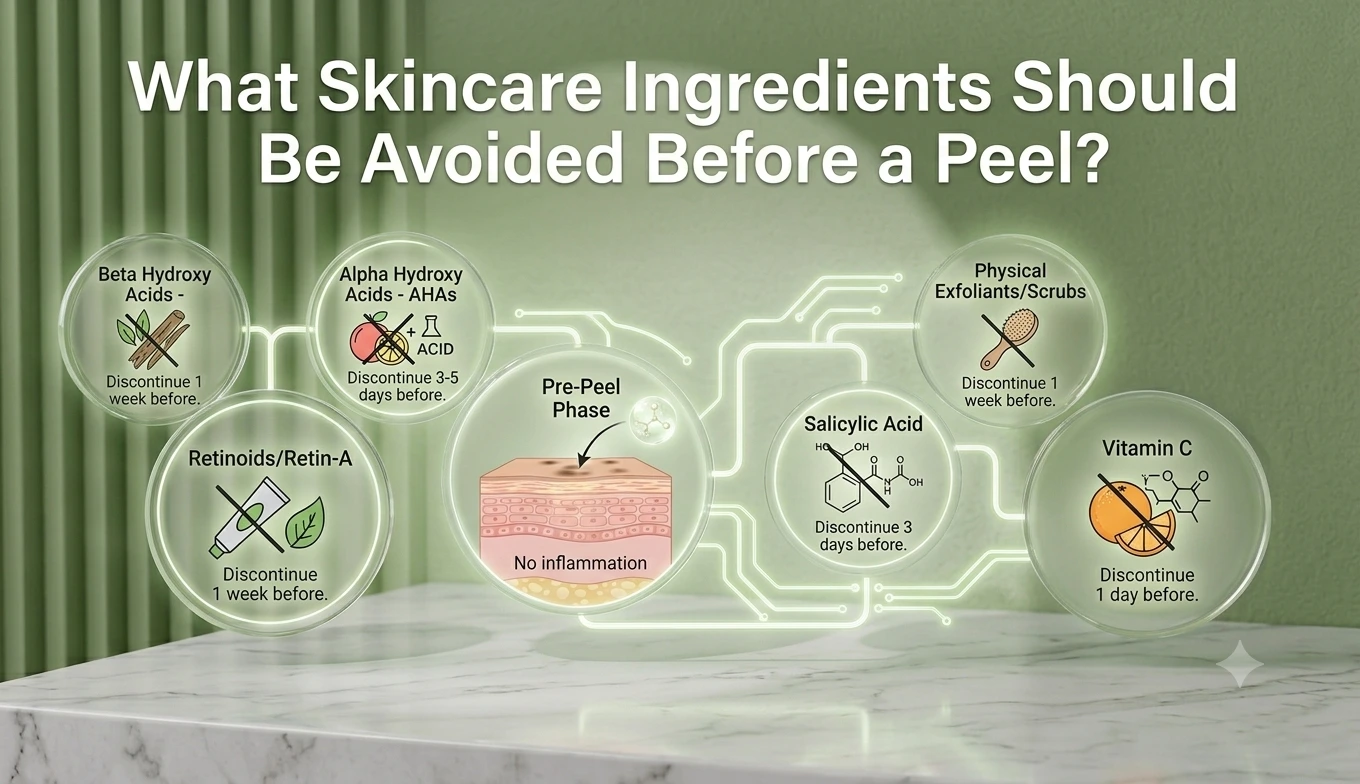
Knowing which ingredients to avoid before a professional peel is one of the most practical steps a client can take to protect their skin and ensure the session delivers the outcome both they and their practitioner are working towards. Certain skincare ingredients increase skin sensitivity, thin the stratum corneum, or introduce active stimuli that, when combined with professional resurfacing, can produce a response more intense than the selected treatment intensity would normally generate. Getting this preparation wrong is one of the most common causes of unnecessarily difficult recoveries, and it is entirely preventable. The ingredients that matter most are retinoids, certain forms of vitamin C, home-use exfoliating acids, and several other categories that are worth understanding clearly before any professional treatment is booked. For clients attending a session of the Trexyne Peel, the same principles apply, and a practitioner will typically provide written pre-treatment guidance that covers these points specifically.
Retinoids: The Most Important Category to Pause
Retinoids are the ingredient category that requires the most consistent and clearly communicated pre-treatment pause across all skin types and treatment intensities. This group includes over-the-counter retinol, retinaldehyde, and retinyl esters, as well as prescription-strength retinoids including tretinoin and adapalene.
Retinoids work by accelerating cell turnover and, over time, thinning the stratum corneum, the outermost layer of dead skin cells that provides the skin’s primary surface protection. When a professional resurfacing treatment is applied to skin with a thinned stratum corneum, the resurfacing mechanism interacts with more sensitive and less protected underlying layers than it would on skin that has not recently been using retinoids. The result can be a more intense inflammatory response, a longer and more uncomfortable recovery, and an increased risk of post-inflammatory hyperpigmentation in susceptible skin types.
Over-the-counter retinol should be paused for five to seven days before a professional session. Prescription-strength retinoids, which produce a greater degree of stratum corneum thinning, require a longer pause of at least seven to ten days. The practitioner should be informed of any retinoid use at every pre-session assessment, not just the first consultation, since the skin’s condition relative to recent retinoid use can change significantly between appointments.
High-Concentration Vitamin C Serums
High-strength L-ascorbic acid serums, typically those formulated at fifteen percent concentration and above, require a shorter pause than retinoids but should still be considered in pre-treatment preparation. L-ascorbic acid is formulated at a low pH, typically between 2.5 and 3.5, to maintain its stability and bioavailability. This low pH contributes to the product’s efficacy but also means it introduces an acidic stimulus to the skin that can increase sensitivity and reactivity.
On skin that is approaching a professional resurfacing session, consistent daily use of high-strength L-ascorbic acid in the days immediately before the appointment can contribute to an elevated baseline sensitivity that may influence how the skin responds during treatment. Pausing high-concentration vitamin C serums for two to three days before a session is a reasonable precaution for clients using these products regularly.
Gentler vitamin C derivatives, including sodium ascorbyl phosphate, ascorbyl glucoside, and magnesium ascorbyl phosphate, are formulated at higher, more skin-compatible pH levels and carry a lower risk of contributing to pre-treatment sensitivity. Clients using these forms of vitamin C do not need the same pause period, though reducing frequency slightly in the few days before a session is a prudent approach.
Home-Use Exfoliating Acids
Home-use exfoliating acids are among the most commonly overlooked ingredients in pre-treatment preparation, partly because many clients use them daily without thinking of them as particularly active. This category includes:
AHAs such as glycolic acid, lactic acid, and mandelic acid, which work by dissolving the bonds between skin cells at the skin’s surface and are widely used in toners, serums, and moisturisers at varying concentrations.
BHAs, primarily salicylic acid, which dissolves oil and penetrates the pore to address congestion and acne-related concerns.
PHAs such as gluconolactone and lactobionic acid, which are gentler than AHAs and BHAs but still act as chemical exfoliants.
These ingredients exfoliate the skin surface and increase its sensitivity to subsequent treatments. Applying a professional resurfacing treatment to skin that has been using home chemical exfoliants in the days before the appointment adds to the cumulative exfoliation the skin is experiencing, which can produce a more significant response than the professional treatment alone would generate. All home-use exfoliating acids should be paused for at least five to seven days before a professional session.
Benzoyl Peroxide
Benzoyl peroxide is widely used in acne management for its antibacterial properties and its ability to reduce comedone formation. It is available in over-the-counter products at concentrations up to five percent and in prescription formulations at higher concentrations.
Benzoyl peroxide is a potent oxidising agent that can cause skin dryness, flaking, and increased sensitivity with regular use. On skin that is approaching a professional resurfacing session, the sensitisation and barrier disruption associated with benzoyl peroxide use can compound the recovery burden of the resurfacing treatment. Clients using benzoyl peroxide should pause it for at least three to five days before a professional session and disclose its use to their practitioner at the pre-session assessment.
Prescription Topicals and Medicated Skincare
Several prescription topical treatments used for acne, rosacea, and other skin conditions affect the skin’s sensitivity and barrier function in ways that are relevant to professional resurfacing.
Topical antibiotics prescribed for acne, such as clindamycin and erythromycin, do not typically carry the same pre-treatment concerns as retinoids or exfoliants, but their use should be disclosed to the practitioner at consultation, as it provides clinical context about the skin’s condition and management history.
Topical corticosteroids used for inflammatory skin conditions can affect barrier function with prolonged use and should be disclosed even if not applied directly to the area being treated.
Azelaic acid, used for acne and rosacea management, has exfoliating and pigmentation-modifying properties and should be considered alongside other exfoliants in pre-treatment preparation. Pausing azelaic acid for three to five days before a professional session is reasonable for clients using it at therapeutic concentrations.
The general principle for any prescription topical is that the prescribing clinician should be informed if the client is planning a professional resurfacing treatment, and the aesthetic practitioner should have a full picture of all topical medications being used.
Enzyme Exfoliants
Enzyme exfoliants, including papain from papaya and bromelain from pineapple, are found in a range of face masks, cleansers, and treatment products marketed as gentle exfoliating options. They work by dissolving keratin proteins at the skin’s surface, producing a degree of controlled exfoliation similar in effect to mild AHAs.
Although generally gentler than acid exfoliants, enzyme exfoliants still increase skin sensitivity and should be avoided for at least three to five days before a professional resurfacing session. Clients who use enzyme exfoliant masks weekly as part of their routine should include this in their pre-treatment pause, particularly if the mask is applied in the days immediately before their appointment.
Vitamin A Products Beyond Standard Retinol
Beyond the retinol category already discussed, several other vitamin A derivatives appear in skincare formulations and warrant mention in pre-treatment guidance. Retinaldehyde, also spelled retinal, is a more potent form of over-the-counter vitamin A that sits between retinol and prescription tretinoin in terms of activity. It requires the same or a slightly longer pause period than retinol, typically five to seven days, and should be disclosed to the practitioner alongside any retinol or retinoid use.
Some clients use bakuchiol, a plant-derived ingredient sometimes marketed as a natural retinol alternative, without realising it has some degree of cell-turnover-stimulating activity. The sensitisation it produces is generally milder than retinol, but clients using bakuchiol daily should mention it at their pre-session consultation.
What This Means in Practice: A Pre-Treatment Pause Window
The practical implication of all of the above is that a pre-treatment window of approximately one week, during which the skincare routine is simplified to a gentle cleanser, fragrance-free moisturiser, and daily SPF, represents the safest and most consistent preparation for most clients before a professional resurfacing session.
This window does not require abandoning all skincare. It requires pausing the active ingredients that increase sensitivity. Niacinamide, hyaluronic acid, peptides, and gentle moisturising formulations are all appropriate to continue using before and after professional resurfacing sessions without concern. It is specifically the exfoliating, cell-turnover-stimulating, and highly active ingredients that create the pre-treatment sensitivity risk.
For the Trexyne Peel, which uses a mechanical resurfacing mechanism rather than a chemical one, the pre-treatment preparation principles are the same as for any professional resurfacing treatment. Arriving at the session with skin that is at its settled baseline, rather than actively sensitised by recent active ingredient use, allows the practitioner to select and apply the appropriate intensity within the tiered protocol with confidence rather than having to account for an unknown additional sensitivity variable.
Practitioners looking to incorporate the Trexyne Peel into their practice can explore the full product range through the Trexyne shop, or contact the team directly through the Trexyne contact page.
How Practitioners Can Support Better Pre-Treatment Preparation
The most reliable way to ensure clients arrive at each session having followed appropriate pre-treatment preparation is to provide clear, written guidance that they can refer back to in the days before the appointment. Verbal instructions given at the end of an appointment are easily forgotten or misremembered, particularly when clients are managing complex skincare routines.
Written pre-treatment guidance that lists the specific ingredient categories to pause, the recommended pause periods for each, and the stripped-back routine to use during the preparation window gives clients the concrete, actionable information they need to prepare correctly. Including a note that they should contact the clinic if they are unsure whether a specific product they use contains any of the listed ingredients removes the ambiguity that can lead to incomplete preparation.
Asking at every pre-session check whether the client has paused their actives, rather than assuming they remember from a previous appointment, consistently produces better preparation compliance than assuming the initial guidance is retained across multiple sessions of a long course.
More information on the Trexyne approach to professional botanical resurfacing is available on the Trexyne website.
Conclusion
The skincare ingredients that should be avoided before a professional peel fall into a consistent pattern: those that thin the stratum corneum, increase skin sensitivity, or introduce active exfoliating stimuli that compound the effect of professional resurfacing. Retinoids require the longest pause, typically five to ten days depending on strength. Home-use exfoliating acids, high-concentration vitamin C, benzoyl peroxide, and enzyme exfoliants all warrant pausing for three to seven days before a session. A simplified routine of cleanser, moisturiser, and SPF in the preparation window gives the skin the calmest possible baseline for treatment. For clients attending a session of the Trexyne Peel, the practitioner will provide specific written pre-treatment guidance, and disclosing all active skincare use at every assessment ensures that intensity is selected accurately for the skin’s actual condition, supporting a smooth recovery and the best possible outcome from every session.
FAQs
Q: What skincare ingredients should I avoid before a professional peel?
The main categories to pause before a professional peel are retinoids (five to ten days), home-use exfoliating acids including AHAs, BHAs, and PHAs (five to seven days), high-concentration vitamin C serums (two to three days), benzoyl peroxide (three to five days), and enzyme exfoliants (three to five days). A simplified routine of cleanser, moisturiser, and SPF for approximately one week before treatment is the safest preparation for most clients.
Q: How long before a peel should I stop using retinol?
Over-the-counter retinol requires a pause of five to seven days before a professional session. Prescription-strength retinoids including tretinoin require at least seven to ten days. The pause period reflects how significantly each form of vitamin A thins the stratum corneum and increases skin sensitivity, which affects how the skin responds to resurfacing.
Q: Can I use glycolic acid or other AHAs before a professional peel?
No. Home-use exfoliating acids including glycolic acid, lactic acid, salicylic acid, and mandelic acid should be paused for at least five to seven days before a professional resurfacing session. These ingredients increase skin sensitivity and, combined with professional resurfacing, can produce a more intense response and longer recovery than expected.
Q: Should I stop using vitamin C before a professional peel?
High-concentration L-ascorbic acid serums (fifteen percent and above) should be paused two to three days before a professional session due to their low pH and potential to contribute to skin sensitivity. Gentler vitamin C derivatives at moderate concentrations carry lower risk and require a shorter or less strict pause. Disclose all vitamin C use to your practitioner at the pre-session assessment.
Q: Is niacinamide safe to use before a professional peel?
Niacinamide is one of the gentler active ingredients and does not carry the same pre-treatment sensitivity risk as retinoids or exfoliating acids. It does not thin the stratum corneum or significantly increase skin sensitivity in the way that these categories do. Most clients can continue using niacinamide up to a day or two before a professional session without concern, though the practitioner’s specific guidance takes precedence.
Q: What should my skincare routine look like in the week before a peel?
A gentle, fragrance-free cleanser, a simple fragrance-free moisturiser, and daily broad-spectrum SPF form the appropriate pre-treatment routine for most clients. All active ingredients including retinoids, exfoliating acids, high-concentration vitamin C, and benzoyl peroxide should be paused during this preparation window. Gentler ingredients such as niacinamide, hyaluronic acid, and peptide-based moisturisers can generally be continued.
Q: Do I need to tell my practitioner about all the skincare I use before a peel?
Yes, at every appointment. Practitioners select treatment intensity based on the skin’s current condition, and active ingredient use directly influences that condition in ways that are not always visible. Disclosing all active skincare products, including any that have been paused and for how long, gives the practitioner the information needed to select an appropriate intensity and ensures the session produces the intended outcome.