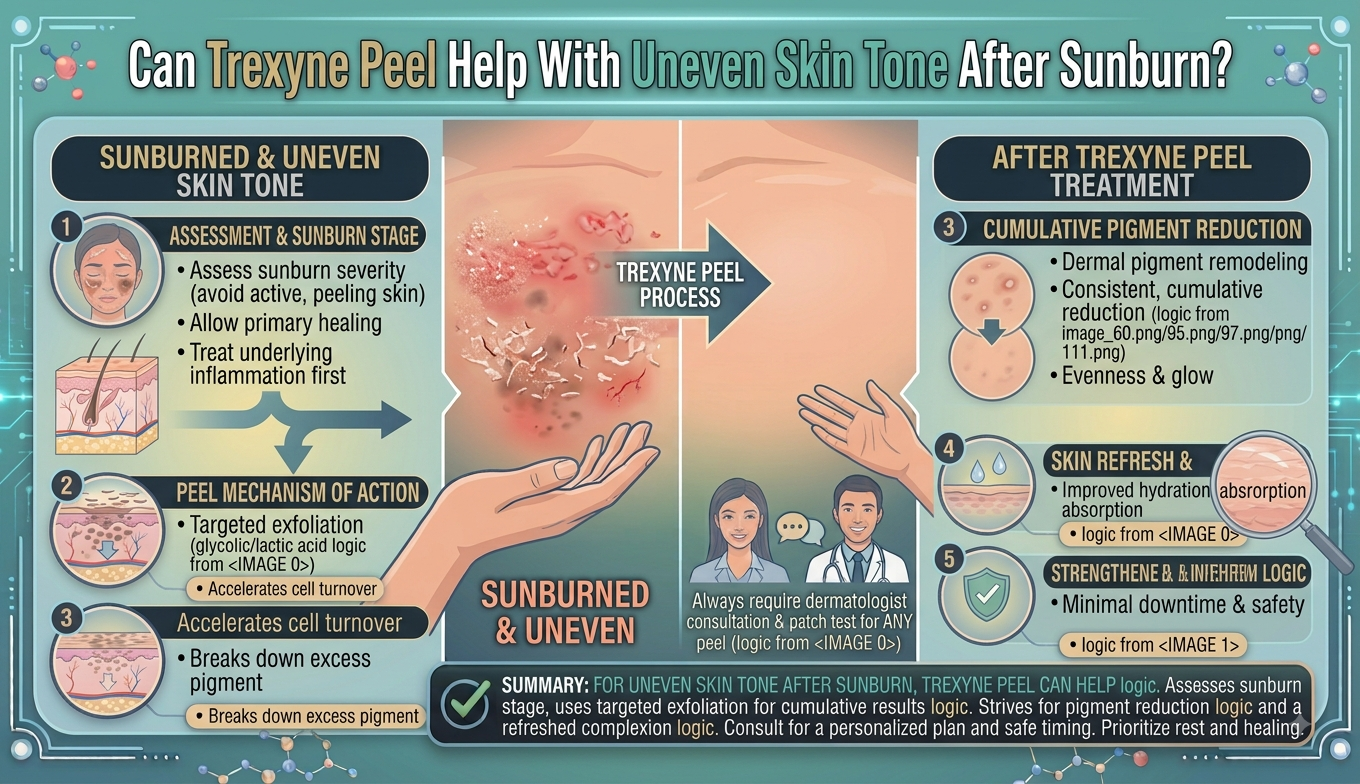
Can Trexyne Peel Help With Uneven Skin Tone After Sunburn ?
Yes, Trexyne Peel can help improve uneven skin tone after sunburn once the acute inflammation has fully resolved and the skin barrier has healed. Solar overexposure damages surface keratinocytes, causing uneven pigmentation, patchy discolouration, and localized rough texture across the face. Integrating the Trexyne Peel Professional Algae Resurfacing Treatment
into a clinic setting allows trained aesthetic professionals to clear post-sunburn surface irregularities through a purely mechanical mechanism. Powered by microscopic marine-algae spicules and enriched with stabilised Vitamin E, this botanical treatment forms controlled micro-channels that encourage rapid, natural cellular shedding. By physically releasing old, discoloured surface layers without relying on chemical exfoliants, Trexyne Peel supports a smoother, refined, and significantly brighter-looking complexion with predictable downtime.
Understanding the Formation of Uneven Skin Tone Following Sunburn
Sunburn represents an acute inflammatory reaction to excessive ultraviolet radiation. Analyzing how solar stress impacts epidermal biology helps practitioners manage post-sunburn discolouration effectively.
Epidermal Damage and Irregular Pigment Distribution
Ultraviolet rays penetrate the upper cutaneous layers, causing structural damage to keratinocytes and overstimulating localized melanocytes. This acute photo-damage prompts melanocytes to release pigment unevenly throughout the surrounding tissue. As the immediate redness fades, the skin often retains patchy dark spots, uneven tone, and sallow areas where damaged cells remain trapped within the upper stratum corneum.
Disrupted Cellular Turnover and Surface Scaling
Solar injury interrupts the natural cycle of desquamation. Damaged cells clump together instead of shedding smoothly, leading to localized areas of thickened, dry, and rough skin. This irregular surface texture disrupts natural light reflection, compounding the visual appearance of patchy discolouration and leaving the complexion looking dull, uneven, and prematurely aged.
The Mechanical Resurfacing Power of Marine Algae Spicules
Clearing sun-damaged surface cells requires an effective treatment modality that stimulates tissue renewal without introducing chemical stress to recovering skin.
Physical Micro-Channeling Without Chemical Aggression
Trexyne Peel relies entirely on microscopic spicules naturally derived from marine algae. During clinical application, the practitioner massages these spicules gently into the skin. The spicules create thousands of precise, mechanical micro-channels within the upper stratum corneum. This physical action dislodges damaged, discoloured surface cells cleanly without relying on chemical exfoliants, altering natural skin pH, or irritating vulnerable tissue.
Driving Natural Cellular Shedding
Once embedded in the upper epidermal layers, marine spicules signal the skin to initiate a rapid self-repair response. Basal layer keratinocytes divide faster, pushing older, sun-damaged tissue and spicules upward toward the surface. This mechanical desquamation process takes place over three to six days, allowing practitioners to facilitate uniform shedding of discoloured cells with minimal disruption to the client’s schedule.
The Soothing and Conditioning Influence of Stabilised Vitamin E
Post-sunburn tissue often struggles with compromised barrier function and persistent dryness, making immediate nourishment critical during resurfacing.
Immediate Lipid Matrix Support
To support skin during the renewal phase, the Trexyne Peel formulation incorporates stabilised Vitamin E, or tocopherol. Tocopherol is a lipid-compatible antioxidant that integrates seamlessly into the intercellular lipid matrix of the stratum corneum. As the spicules create physical micro-channels, stabilised Vitamin E delivers instant conditioning to soothe the tissue and maintain surface flexibility.
Reducing Transepidermal Water Loss During Recovery
Reinforcing the intercellular lipid barrier helps prevent excessive moisture loss while the skin undergoes physical desquamation. Stabilised Vitamin E maintains barrier hydration, reduces surface redness, and ensures newly revealed epidermal cells remain soft and comfortable. Aesthetic practitioners wishing to source authentic clinical formulations can explore options on the official Trexyne shop page
.
Timing and Safety: Assessing Skin Readiness Post-Sunburn
Performing a resurfacing procedure too soon after a sunburn can compromise recovery, making careful practitioner assessment essential.
Strict Contraindications for Acute Sunburn
Practitioners must never apply Trexyne Peel to actively sunburned, inflamed, or peeling skin. Acute solar erythema indicates active thermal inflammation and micro-vascular swelling. Introducing physical spicules or manual massage during this delicate phase will exacerbate pain, heighten inflammation, and potentially cause post-inflammatory hyperpigmentation.
Determining Optimal Treatment Timing
Resurfacing treatments should only proceed after the skin has completely recovered from the acute sunburn event. Practitioners should wait until all redness, heat, tenderness, and spontaneous peeling have entirely subsided, which typically takes three to four weeks. Confirming complete barrier recovery allows the practitioner to proceed safely with mechanical exfoliation to address leftover discolouration.
Customising Protocol Tiers for Post-Sun Discolouration
Sun damage affects every individual differently, requiring a flexible protocol framework that adapts to varying skin sensitivities and degrees of pigment irregularity.
Level 1 Protocols for Early or Mild Discolouration
When treating skin that has recently recovered from solar stress, starting with a Level 1 protocol is highly prudent. This gentle entry tier employs light physical massage pressure and a brief contact time. It allows the practitioner to introduce marine spicules smoothly, clearing mild patchy tone and surface dullness while preserving total barrier comfort.
Advancing Tiers for Stubborn Sun Spotting
For clients with lingering, coarse texture and deep post-sun discolouration, practitioners can gradually transition to higher protocol tiers in subsequent sessions. Increasing physical pressure deepens spicule engagement within the upper stratum corneum, driving more pronounced mechanical exfoliation. This tiered versatility empowers aesthetic professionals to tailor every treatment to match client expectations precisely.
Comparing Marine Spicule Resurfacing with Rough Manual Scrubs
Understanding why marine spicule technology excels over traditional retail facial scrubs illustrates its superior clinical safety for sun-damaged complexions.
Precision Micro-Spicules versus Jagged Friction Materials
Retail facial scrubs often utilize jagged nutshells, crushed seeds, or irregular mineral salts. When rubbed across skin recovering from solar stress, these coarse granules cause micro-tears, scrape delicate surface tissue, and exacerbate underlying inflammation. Micronized marine spicules are refined microscopic structures that enter the upper stratum corneum cleanly without dragging or tearing surface capillaries.
Controlled Internal Renewal versus Aggressive External Abrasion
Manual home scrubs rely on harsh external friction to scrape away loose skin, which often yields uneven results and surface irritation. Marine spicules work from within by temporarily resting in the upper epidermal layer to drive natural cell movement. As fresh keratinocytes ascend, damaged, discoloured surface cells detach naturally and uniformly without tissue trauma.
Essential Post-Treatment Care for Post-Sunburn Recovery
Guiding clients through appropriate home aftercare ensures the newly revealed skin barrier stays protected, hydrated, and visually balanced.
Hydration and Lipid Replenishment
Following a professional resurfacing treatment, clients must maintain a simple, highly hydrating home care routine. Cleansing should involve lukewarm water and a gentle, non-stripping cleanser applied lightly with fingertips. Clients should apply a rich, lipid-replenishing moisturizer regularly to keep the shedding tissue thoroughly hydrated and support barrier recovery.
Strict Daily Photoprotection
Newly revealed epidermal cells possess lower natural melanin protection and remain highly susceptible to UV-induced stress. Clients must apply a high-factor, broad-spectrum sunscreen every morning throughout the recovery period and beyond. Diligent photoprotection prevents fresh sun spotting and maintains a luminous, uniform complexion. Practitioners seeking clinical support or technical documentation can contact us directly through the Trexyne contact page
.
Building a Comprehensive Clinical Plan for Radiant Skin
Restoring complete clarity to complexions affected by solar damage requires a structured, multi-session approach guided by professional expertise.
Detailed Pre-Treatment Consultation
Before initiating a resurfacing series, the aesthetic practitioner must conduct a thorough consultation and visual analysis under magnification. Assessing baseline barrier resilience, evaluating the depth of tone irregularities, and reviewing recent sun exposure history ensures the client is a prime candidate for mechanical resurfacing.
Session Intervals for Optimal Barrier Renewal
To clear persistent discolouration safely, practitioners generally recommend a structured series of three to six sessions. Spacing appointments three to four weeks apart provides the epidermal barrier sufficient time to rest, rebuild, and stabilize completely between visits. Over time, progressive mechanical resurfacing restores a healthy, glowing, and visibly even appearance to sun-damaged skin. Discover more about our botanical philosophy and professional standards on the main Trexyne homepage
.
Conclusion
Trexyne Peel is a highly effective professional treatment for addressing uneven skin tone after sunburn once active inflammation has fully healed. Solar damage leaves behind an accumulation of discoloured, rough surface cells that disrupt natural radiance and create patchy discolouration. By harnessing the purely mechanical mechanism of marine-algae spicules, the Trexyne Peel Professional Algae Resurfacing Treatment
forms controlled micro-channels that accelerate natural cellular desquamation without chemical exfoliants. Enriched with stabilised Vitamin E to nourish the stratum corneum and maintain barrier stability, this botanical treatment offers predictable downtime and versatile tiered protocols. When combined with expert clinical application and rigorous post-treatment sun protection, Trexyne Peel helps clients achieve a smoother, clearer, and more evenly balanced complexion.
Frequently Asked Questions
Q: Can Trexyne Peel be applied directly onto an active sunburn to speed up healing?
No, Trexyne Peel must never be applied to actively sunburned, red, or inflamed skin. Treatment should only take place three to four weeks after the sunburn has completely healed and all redness, sensitivity, and peeling have fully resolved.
Q: How does a mechanical marine spicule peel clear uneven skin tone without chemical exfoliants?
Marine algae spicules create thousands of physical micro-channels in the upper stratum corneum. This mechanical action signals the lower epidermal layers to produce new cells rapidly, pushing old, discoloured cells outward so they shed naturally and evenly.
Q: What role does stabilised Vitamin E play when treating post-sun discolouration?
Stabilised Vitamin E delivers immediate antioxidant conditioning to solar-stressed tissue during application. It fortifies the intercellular lipid matrix, lowers transepidermal water loss, and maintains barrier comfort throughout the physical peeling window.
Q: Will my client experience noticeable peeling after a post-sunburn resurfacing session?
Yes, clients will typically experience light to moderate physical shedding starting around day three post-treatment and concluding by day six. This predictable desquamation removes old surface tissue to reveal fresh, even-toned skin underneath.
Q: Can clients purchase Trexyne Peel to treat post-sun discolouration at home?
No, Trexyne Peel is strictly a professional-only resurfacing treatment sold exclusively to verified aesthetic practitioners and clinical facilities. Safe application requires expert skin assessment, precise pressure management, and formal protocol training.
Q: How many Trexyne Peel sessions are required to noticeably balance an uneven skin tone?
While clients often notice smoother texture and enhanced brightness after one session, practitioners usually recommend a series of three to six sessions spaced three to four weeks apart for optimal, long-lasting tone refinement.